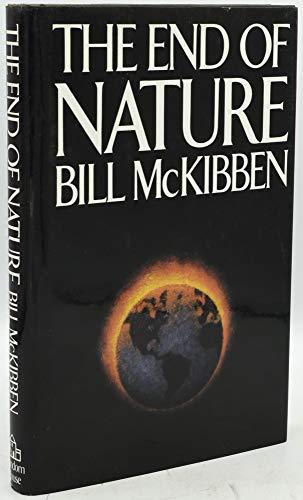

The End of Nature Cover
Podcast Mentions

The End of Nature

Bill McKibben

Reissued on the tenth anniversary of its publication, this classic work on our environmental crisis features a new introduction by the author, reviewing both the progress and ground lost in the fight to save the earth.

Podcasts 3
Quotes 17
The Ezra Klein Show

McKibben's 1989 book was highlighted as a seminal work comparable to Silent Spring and noted for its major impact on the climate movement.

"

His 1989 book The End of Nature, it's often compared to Rachel Carson's Silent Spring and how big of an effect it had on this issue.
— Episode: Bill McKibben on the Power That Could Sa...

Episode: Bill McKibben on the Power That Could Save the Pla...

McKibben's 1989 book was highlighted as a seminal work comparable to Silent Spring and noted for its major impact on the climate movement.

"

His 1989 book The End of Nature, it's often compared to Rachel Carson's Silent Spring and how big of an effect it had on this issue.

The Jordan B. Peterson Podcast

It was a book published around 25 years before the podcast's recording date, predicting catastrophic climate change. It was criticized for its biosentrism and the author's claim that a flourishing biosphere was more important than humans.

"

So this is from your book in a Los Angeles Times review of The End of Nature the Kibben's influential book of 25 years ago predicting catastrophic climate change David M. Graber research biologist for...

— Episode: 312. The Great Climate Con | Alex Epstei...

Episode: 312. The Great Climate Con | Alex Epstein

It was a book published around 25 years before the podcast's recording date, predicting catastrophic climate change. It was criticized for its biosentrism and the author's claim that a flourishing biosphere was more important than humans.

"

So this is from your book in a Los Angeles Times review of The End of Nature the Kibben's influential book of 25 years ago predicting catastrophic climate change David M. Graber research biologist for the National Park Service wrote this summary of McKibben's message McKibben is a biosentrist and so am I we are not interested in the utility of a particular species or free flowing river or ecosystem to mankind they have intrinsic value more value to me than another human being that's a very interesting thing to say or a billion of them which is also a very interesting thing to say human happiness and certainly human fecundity are not as important as a wild and healthy planet are no social scientists who remind me that people are part of nature but that isn't true somewhere along the line at about a billion years ago maybe half that we quit the contract and became a cancer we had become a plague upon ourselves and upon the earth it is cosmically unlikely that the developed world will choose to end its orgy of fossil fuel consumption and the third world its suicidal consumption of landscape until such time as homo sapiens should decide to rejoin nature some of us can only hope for the right virus to come along

On Being with Krista Tippett

It was written in 1989 and discussed the evolving perspective on human responsibility in a changing natural world; it was described as both a book and a change in the direction of the author's life, moving from urban journalism to environmentalism.

"

The tone of that book was less fear than sadness because the big changes weren't yet breaking over our heads the way they are now.

— Episode: [Unedited] Bill McKibben with Krista Tip...

Episode: [Unedited] Bill McKibben with Krista Tippett

It was written in 1989 and discussed the evolving perspective on human responsibility in a changing natural world; it was described as both a book and a change in the direction of the author's life, moving from urban journalism to environmentalism.

"

The tone of that book was less fear than sadness because the big changes weren't yet breaking over our heads the way they are now.

Then it was mostly the anticipation 20 years ago of what it would feel like to live in a world that meant something different not just a world that didn't operate effectively or easily anymore but one that spiritually, psychologically, philosophically meant something different and something less than the one that I'd been born into.

It came out 20 years ago this fall that's right.

In these years since you wrote *The End of Nature* in '89 and now and this turns up in all your writing um you've become much less focused on individual uh life and life in action and on and much more on the value of community and this as the context for all the important changes we need to make.

Episode: Bill McKibben — The Moral Math of Climate Change

This book, published in 1989, was one of the first to discuss climate change for a general audience; it discussed the disappearance of nature as we know it and its importance to human civilization. The author's perspective evolved from personal responsibility to the importance of community.

"

Only in the disappearance of nature as we have known it he warned, May we finally realize how essential it has been to human civilization.

The tone of that book was less fear than sadness because the big changes weren't yet breaking over our heads the way they are now. Then it was mostly the anticipation 20 years ago of what it would feel like to live in a world that meant something different, not just a world that did not operate effectively or easily anymore. But one that spiritually psychologically philosophically meant something different and something less than the one that I'd been born into.

Episode: [Unedited] Bill McKibben with Krista Tippett

McKibben's book, published in 1989, discussed the emerging science of climate change and its implications for the natural world. It expressed less fear than sadness about the anticipated changes and the spiritual and psychological implications of living in a world altered by climate change.

"

The tone of that book was less fear than sadness because the big changes weren't yet breaking over our heads the way they are now.

Then it was mostly the anticipation 20 years ago of what it would feel like to live in a world that meant something different not just a world that didn't operate effectively or easily anymore but one that spiritually, psychologically, philosophically meant something different and something less than the one that I'd been born into.

It came out 20 years ago this fall that's right.

In 1968 when I was a boy Apollo 8 sent back the first pictures of our planet that blue-white marble floating in space. Well those pictures are as out of date as my high school yearbook photo.

The planet doesn't look like that or behave like that anymore. There's more blue and less white, more cyclones swirling in the tropics. It's a different earth.

Episode: Bill McKibben — The Moral Math of Climate Change

It was McKibben's first book on climate change for a general audience, published in 1989. The book discussed the disappearance of nature as we know it and its importance to human civilization.

"

Only in the disappearance of nature as we have known it he warned, May we finally realize how essential it has been to human civilization.

From this vantage point, writing the end of nature seems to have crystallized a change in the entire direction of his life.

The tone of that book was less fear than sadness because the big changes weren't yet breaking over our heads the way they are now.

But one that spiritually psychologically philosophically meant something different and something less than the one that I'd been born into.

Note: The book recommendations on this page are discovered automatically from podcast transcripts, and may be incorrect or incomplete.