
Podcast
Hidden Brain
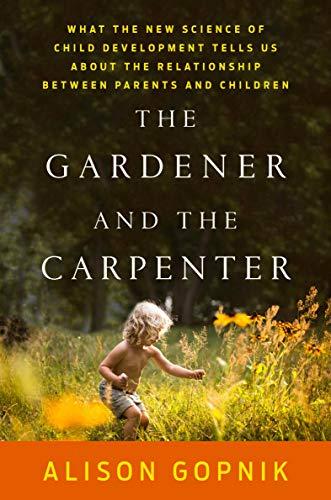
The book was highlighted as the central framework for the episode, with the host and the author using its gardener versus carpenter analogy to contrast nurturing, exploratory parenting with a more structured, goal‑driven approach. Both discussed how the science supports the gardener model and suggested it offers a more effective way to raise children.
Episode: Bringing Up Baby
It was discussed as the core concept of Alison Gopnik's book, presenting two contrasting approaches to parenting, highlighting the gardener's more nurturing and adaptive perspective compared to the carpenter's structured and shaping approach.
Your book is built around an analogy Parents behaving like gardeners Parents behaving like carpenters Unpack those analogies for me
Well if you look at the prevailing culture of parents and caregiving in the United States It's a picture that's a lot like the picture you might imagine if you thought about a carpenter Do the right things, get the right skills read the right books You're going to be able to shape your child into a particular kind of adult
And that picture is very different from the kind of picture that comes from the science The picture that comes from the science is much more like being a gardener
I think the science suggests that being a caregiver for human beings is much more like being a gardener than being a carpenter It's much more about providing a protected space in which unexpected things can happen and shaping a child to come out to be a particular kind of desirable adult
Alison Gopnik is a professor of psychology and philosophy at the University of California Berkeley. She's the author of several books about children's development and her most recent one is The Gardener and The Carpenter
Episode: Radio Replay: Bringing Up Baby
It was discussed extensively in relation to the contrasting approaches of parenting: the carpenter (structured, goal-oriented) versus the gardener (nurturing, allowing for exploration and development).
In her book, The Gardener and the Carpenter, Alison looks at two approaches to being a parent and their consequences.
Your book is built around an analogy. Parents behaving like gardeners, parents behaving like carpenters.
Alison Gopnik is a professor of psychology and philosophy at the University of California, Berkeley. She's the author of several books about children's development and her most recent one is The Gardener and The Carpenter.
Episode: Kinder-Gardening
It was discussed as a metaphor for parenting, suggesting a shift from a structured, goal-oriented approach ('carpenter') to a more nurturing and flexible environment ('gardener').
Your book is built around an analogy. Parents behaving like gardeners, parents behaving like carpenters.
Well, if you look at the prevailing culture of parents and caregiving in the United States, even in Europe now, it's a picture that's a lot like the picture you might imagine if you thought about a carpenter.
And the idea is that if you just do the right things, get the right skills, read the right books, you're going to be able to shape your child into a particular kind of adult.
The picture that comes from the science is much more like being a gardener.
Alison Gopnik is a professor of psychology and philosophy at the University of California, Berkeley. She's the author of several books about children's development, and her most recent one is The Gardener and The Carpenter.
Episode: Kinder-Gardening
It was discussed as a metaphor for parenting styles, contrasting the 'carpenter' approach of shaping children with the 'gardener' approach of nurturing and providing a space for their development.
Your book is built around an analogy, parents behaving like gardeners, parents behaving like carpenters.
Her most recent book, The Gardener and the Carpenter, explores the different ways parents can raise kids and the consequences of those choices.
I think intuitively parents feel that there's something that's crazy about having your teenagers staying up until 2 o'clock at night studying for their SATs and trying to get that little extra edge that's going to get them into the college as opposed to someone else.
And I think that's exactly right. And I think both those messages are there. And my experience in going around and talking about this book is
Alison Gopnik is a professor of psychology and philosophy at the University of California, Berkeley. She's the author of several books about children's development, and her most recent one is The Gardener and The Carpenter.
Episode: Parents: Keep Out!
The book was recommended as a useful read for parents, contrasting two parenting styles and urging a more nurturing approach.
one thing i would recommend to parents is uh is the book by ellison gopnik called the gardener and the carpenter