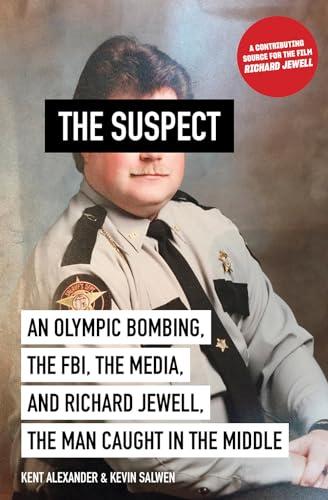
The Suspect
Kent Alexander
Mentioned 1 year ago
The Olympic Park Bombing part 3 - 588
Since its debut in June 2012 with the episode Jury Duty, Generation Why Podcast has been your source for gripping true crime, intriguing mysteries, and fascinating conspiracies every week. Hosted by Justin and Aaron, the podcast combines in-depth research and discussion to bring you cases that chall...
Recently mentioned
Kent Alexander
Mentioned 1 year ago
The Olympic Park Bombing part 3 - 588
Richard Connell
Mentioned 1 year ago
New Zodiac Killer Suspect
Amanda Richardson
Mentioned 1 year ago
Andrew Bagby and Zachary Turner - 583
Richard Marazano
Mentioned 1 year ago
Terrance Yeakey - 582
Maureen Callahan
Mentioned 1 year ago
Max DeVries - 580
Bea Birdsong
Mentioned 1 year ago
Max DeVries - 580
Corey Mead
Mentioned 2 years ago
Marjorie Nugent - 578
Lynn Painter
Mentioned 2 years ago
Libby Caswell - 577
Matt Birkbeck
Mentioned 2 years ago
Girl In The Picture - 576
Myles J Connor Jr.
Mentioned 2 years ago
Isabella Stewart Gardner Museum Heist - 574
Lisa Jewell
Mentioned 2 years ago
Carla Walker - 573
Naomi Klein
Mentioned 2 years ago
Carla Walker - 573
A Life in Death
This book, co-written with a renowned forensic pathologist, delves into the life and career of Dr. Vincent DiMaio, exploring his experiences and insights from over 9000 autopsies. It offers a glimpse into the emotional toll of the profession and the importance of forensic science in achieving justice.
We want a picture of his patients. We want a picture of him. And we want a glimpse not only behind the Morgue door, but we want to we want to see into him a little bit.
— Episode: Author Ron Franscell - 181
This book, co-written with a renowned forensic pathologist, delves into the life and career of Dr. Vincent DiMaio, exploring his experiences and insights from over 9000 autopsies. It offers a glimpse into the emotional toll of the profession and the importance of forensic science in achieving justice.
We want a picture of his patients. We want a picture of him. And we want a glimpse not only behind the Morgue door, but we want to we want to see into him a little bit.
facts, that science leads to facts, facts lead to justice. And justice is the goal.
He's done himself over 9000 autopsies. He's examined over 25000 deaths, you know, and and come to some kind of conclusion about it.
in the end, I think that the long, dark conversations that we had were good for both of us.
it's a very simple case. This wound is exactly what I would expect from that gun. And there's no suggestion that it came from any other direction.
New Research on the Whitechapel Murders (Jack the Ripper Book 2)
The book was presented as a 15‑year collection of essays that introduced previously unpublished research, new witness statements, and revised details about the Whitechapel murders. Its author explained that it aimed to clarify the Ripper’s methods and potential suspects, positioning it as a higher‑quality alternative to the many mediocre titles on the subject. The discussion highlighted the book’s fresh insights and its value for listeners interested in more rigorous Jack the Ripper scholarship.
It is a collection of essays written over 15 years, many of which were written for this book and had never been published before. It includes new information about the Ripper's attacks, possible survivors, and witness statements, and presents updated and corrected information from previously published articles.
So what is old is new again.
And the more we know about how he operated and, you know, and the people involved in the case, the closer, you know, we get a little bit closer each time to deciding who he wasn't because so many suspects have been put forth over the years.
But there are a handful of authors and researchers, myself included, who that's what we do is we look for new things and we present new things to the reading public, people who are interested.
The book is a collection of essays, uh, written by myself, um, over the course of 15 years.
In fact, uh, people who are speaking of documentaries a year or two ago, there came one called the missing evidence, Jack, the Ripper, the missing evidence, which claimed Jack, the Ripper was in fact Charles Letchmere, AKA Charles cross.
It is a collection of essays written over 15 years, many of which were written for this book and had not been published elsewhere. It contains new information about the Ripper's attacks, possible survivors, and witness statements, aiming to present a clearer picture of the Ripper's modus operandi and identity.
More books have been written about the Ripper than about John F. Kennedy or any other president, and there's no end to it.
The majority of Ripper books that come out are not any ... I'm just going to be honest, they're not very good books, most of them.
The book is a collection of essays all written by myself over the course of 15 years.
And I chose to put that out as Ripper Confidential. And it's a potpourri of different things.
In fact, people who are speaking of documentaries, a year or two ago there came one called The Missing Evidence, Jack the Ripper, The Missing Evidence, which claimed Jack the Ripper was in fact Charles Lechmere, aka Charles Cross, the man who discovered Polly Nichols' body. They're arguing that he wasn't the man who discovered her body. He's the man who murdered her.
The True History of the White City Devil
The host strongly recommended the book for listeners wanting deeper insight into H.H. Holmes, noting the author's meticulous research and myth‑busting about the victim count and the infamous “murder castle.” He highlighted the detailed, fact‑focused approach that separates legend from reality. The overall tone was an enthusiastic endorsement.
It was strongly recommended to listeners interested in learning more about H.H. Holmes. The speaker highlighted the author's dedication to detail and his efforts to debunk myths surrounding the number of Holmes' victims.
And that's HH Holmes. The true story of the white city devil by Adam saltzer. If you want to learn more about homes, uh, get that book.
This book was strongly recommended to listeners wanting to learn more about H.H. Holmes. It was described as providing details and dispelling myths around the number of victims and the nature of Holmes's 'murder castle'.
If you want to learn more about Holmes, get that book.
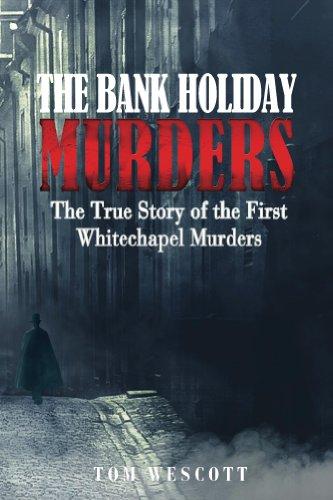
The True Story of the First Whitechapel Murders (Jack the Ripper Book 1)
The host introduced his first book and explained that it examined what he considered the earliest Whitechapel murders, tracing the escalation of violence from beatings to knife mutilations. He also suggested a link between the crimes and a specific street in the East End, offering a new perspective on the early victims.
It discusses what the author believes are the earliest Jack the Ripper victims, starting in late 1887. The book details the progression of the murders, from violent beatings to knife mutilations.
My first book, The Bank Holiday Murders subtitled the, the true story of the first white chapel murders.
This book discusses what the author believes are the earliest Jack the Ripper victims, detailing the progression of violence from beatings to knife mutilations and suggesting a connection to George Street in the East End.
My first book, The Bank Holiday Murders, subtitled The True Story of the First Whitechapel Murders, I discuss what I believe are the very earliest Jack the Ripper victims.
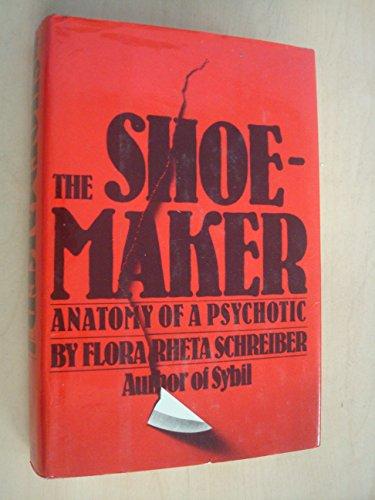
The Anatomy of a Psychotic
The hosts highlighted the book as a highly detailed account that offered deep insight into Joseph Kallinger's psychotic behavior. They noted that many graphic and disturbing details were omitted from the episode, indicating the book contained more explicit content. Aaron explicitly recommended listeners read the book to fully understand the subject's insanity.
The podcast described the book as very detailed, offering insights into Joseph Kallinger's psychosis. Many graphic details were omitted from the podcast episode.
The book is very detailed. I mean, really to understand just how psychotic Joseph was, you probably should read the book.
What did you think of the book, Aaron?
It was described as very detailed, offering a deep insight into Joseph Kallinger's psychosis. Many graphic details were omitted from the podcast discussion of the book.
The book is very detailed. I mean, really to understand just how psychotic Joseph was, you probably should read the book.
We left out a lot of graphic details, some real nasty stuff.
Because as much as it proves the point that he was insane, I think we gave enough examples to get that point across, I hope.
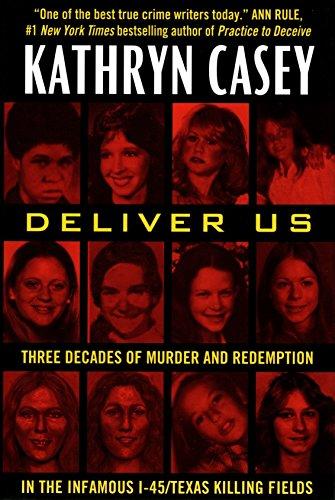
Three Decades of Murder and Redemption in the Infamous I-45/Texas Killing Fields
This true crime book details the I-45 Texas Killing Fields murders, focusing on the stories of the victims, families, killers, and investigators involved over three decades (1971-1997). It highlights the challenges faced by families in dealing with the lack of police assistance in the initial stages of investigations.
My most current book is the one we're talking about tonight, Deliver Us, on the I-45 Texas killing field murders.
— Episode: Texas Killing Fields - 179
This true crime book details the I-45 Texas Killing Fields murders, focusing on the stories of the victims, families, killers, and investigators involved over three decades (1971-1997). It highlights the challenges faced by families in dealing with the lack of police assistance in the initial stages of investigations.
My most current book is the one we're talking about tonight, Deliver Us, on the I-45 Texas killing field murders.
In the book, I look at three decades, 1971 to 1997 and break it down that way.
It gives you an insight into human nature. It shows the very worst that people are capable of. And it also shows the very best
I don't know if I'll ever write another book like Deliver Us again. This was quite a commitment, but it was really fascinating to work on.
I would urge people to pick up and read because this really does explore what true crime is all about. The pain, the loss, and the search for answers and suspects who might seem like they're the ones and then you find out later that they're not.
The book details the stories of over 20 young women murdered along the I-45 corridor in Texas between 1971 and 1997, focusing on the families, killers, and investigators involved. It highlights the challenges in solving these cases across jurisdictions and decades.
My most current book is the one we're talking about tonight, Deliver Us, on the I-45 Texas killing field murders.
In the book, I look at three decades, 1971 to 1997, and break it down that way.
I think it gives you an insight into human nature. It shows the very worst that people are capable of, and it also shows the very best.
I don't know if I'll ever write another book like Deliver Us again. This was quite a commitment but it was really fascinating to work on.
I would urge people to pick up and read because this really does explore what true crime is all about. The pain, the loss, and the search for answers and suspects who might seem like they're the ones and then you find out later that they're not.
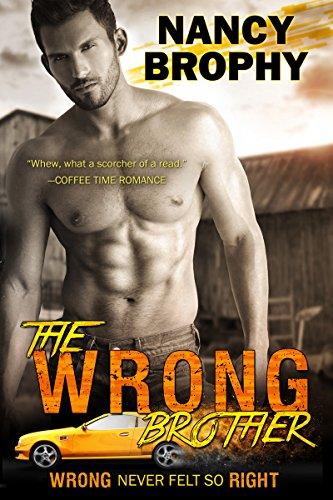
The series was described as being similar with the same main character, a former Navy SEAL, who rescues a beautiful young woman on the run from her dangerous husband. Each book contained various sexually suggestive scenes, including unbuttoned shirts, unzipped dresses, and intimate moments.
She was already on book number two in the Wrong Never Felt So Right series, and she was determined to get through all five books by the end of her trip.
— Episode: Listen Now: Happily Never After: Dan & N...
The series was described as being similar with the same main character, a former Navy SEAL, who rescues a beautiful young woman on the run from her dangerous husband. Each book contained various sexually suggestive scenes, including unbuttoned shirts, unzipped dresses, and intimate moments.
She was already on book number two in the Wrong Never Felt So Right series, and she was determined to get through all five books by the end of her trip.
Every book was more or less the same.
Burleigh, former Navy SEAL, comes to the rescue of beautiful young woman on the run from her dangerous husband.
More shirts were going to be unbuttoned. More dresses were going to get unzipped. And every new chapter, every new scene, could potentially be the one to crack the murder case that was waiting for her back home.
The podcast host mentioned reading this book, which details a home invasion where two men kill an entire family; it was used as a comparison point for the Petit family murders.
I remember the first time I read the book In Cold Blood by Truman Capote.
— Episode: The Petit Family Murders - 484
The podcast host mentioned reading this book, which details a home invasion where two men kill an entire family; it was used as a comparison point for the Petit family murders.
I remember the first time I read the book In Cold Blood by Truman Capote.
Murder, Magic, and Madness at the Fair That Changed America
It was described as an accurate account of H.H. Holmes, initially making him famous again and becoming a popular read, especially in Chicago. However, further research revealed that the real story differs from the sensationalized version presented in the book.
For a while, it seemed like everybody on the El was reading Devil in the White City.
— Episode: H.H. Holmes - 164
It was described as an accurate account of H.H. Holmes, initially making him famous again and becoming a popular read, especially in Chicago. However, further research revealed that the real story differs from the sensationalized version presented in the book.
For a while, it seemed like everybody on the El was reading Devil in the White City.
But after Devil in the White City made him famous all over again, he really became a popular guy around here and especially in Chicago.
Current book, which is sort of a no brainer for this episode, would be The Devil in the White City by Eric Larson based on the true story account of H.A. Holmes and his going ons in the Chicago area during the World's Fair.
After reading the book, it delves really into the fair and the historical times. And H.H. Holmes is a character running through this story, but it really focuses more on the historical aspects of it. And that's what I found that I like the best about the book.
A Tale of Cannibals, Colonialism, and Michael Rockefeller's Tragic Quest for Primitive Art
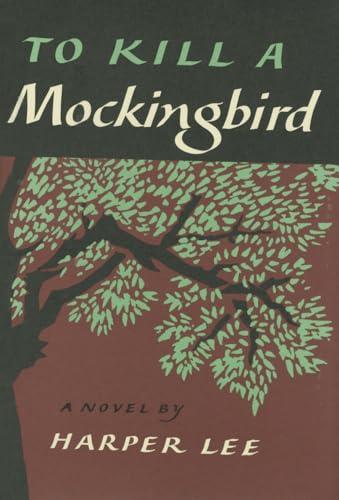
The podcast mentioned Boo Radley, a character from this book, in relation to a neighbor who was described as a mysterious and misunderstood person. The comparison was used to illustrate the neighbor's perceived strangeness and reclusiveness.
For maybe the younger people in the audience, Justin, do you want to talk about who Boo Radley was?
— Episode: The Watcher House - 457
The podcast mentioned Boo Radley, a character from this book, in relation to a neighbor who was described as a mysterious and misunderstood person. The comparison was used to illustrate the neighbor's perceived strangeness and reclusiveness.
For maybe the younger people in the audience, Justin, do you want to talk about who Boo Radley was?
That would be from To Kill a Mockingbird, right? And kind of the questionable creepy guy that lives down the street. The misunderstood character.
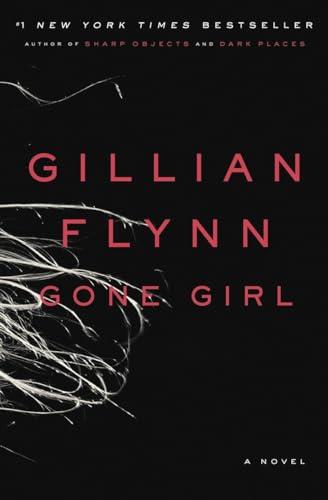
The podcast mentioned the book and movie, comparing a recent case to the plot of the book. The speaker wondered if the woman in the case was inspired by the book.
I saw something in the news the other day that reminded me a lot of Gillian Flynn's Gone Girl book and movie that came out.
— Episode: The Death of Andrew Finch - 490
The podcast mentioned the book and movie, comparing a recent case to the plot of the book. The speaker wondered if the woman in the case was inspired by the book.
I saw something in the news the other day that reminded me a lot of Gillian Flynn's Gone Girl book and movie that came out.
I read Gone Girl back in the day, way before this, I'm wondering if this woman was inspired by the book for some weird reason.
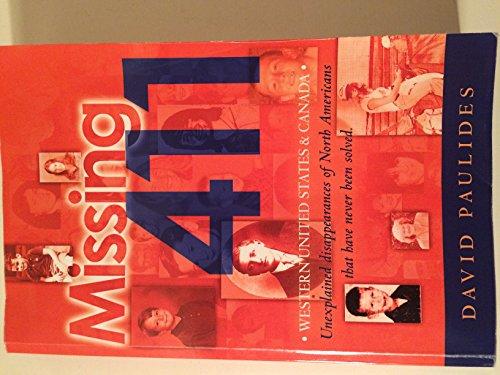
Unexplained Disappearances of North Americans that have never been solved
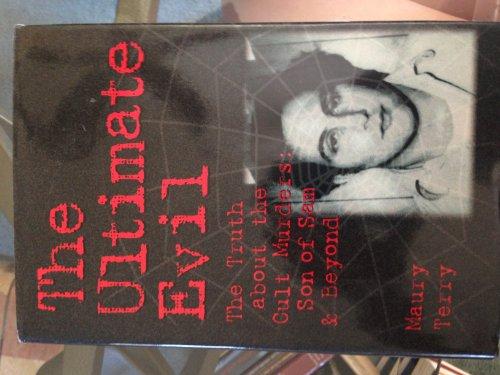
The book was referenced in the context of the satanic panic surrounding the Cropsey case and how it influenced public perception. It was mentioned as providing insight into how religious hysteria impacted the investigation.
If you've ever read Mori Terry's The Ultimate Evil, you will kind of see how that shaded this case.
— Episode: Cropsey & The Killing Season - 205
The book was referenced in the context of the satanic panic surrounding the Cropsey case and how it influenced public perception. It was mentioned as providing insight into how religious hysteria impacted the investigation.
If you've ever read Mori Terry's The Ultimate Evil, you will kind of see how that shaded this case.
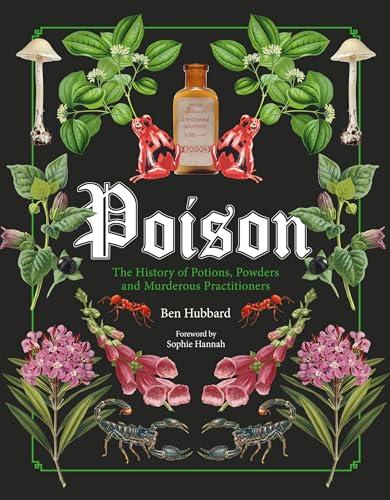
The History of Potions, Powders and Murderous Practitioners
James Lewis, a suspect in the Tylenol murders, self-published a book titled "Poison", which detailed poisoning deaths in Illinois and Missouri, prompting speculation about its relevance to his case.
he's busy self publishing a book called Poison.
— Episode: The Tylenol Murders - 353
James Lewis, a suspect in the Tylenol murders, self-published a book titled "Poison", which detailed poisoning deaths in Illinois and Missouri, prompting speculation about its relevance to his case.
he's busy self publishing a book called Poison.
A series of Poisoning deaths in Illinois and Missouri.
I guess somebody spikes a water supply with mercury or something and kills people by doing that.
It was mentioned that the killer's favorite book was American Psycho; the investigators found this detail interesting. The podcast host stated that they had read the book thirteen times.
His wife knew about it. His wife knew about his girlfriend.
— Episode: Murder of Yingying Zhang - 381
It was mentioned that the killer's favorite book was American Psycho; the investigators found this detail interesting. The podcast host stated that they had read the book thirteen times.
His wife knew about it. His wife knew about his girlfriend.
His favorite book is American Psycho, which for those that haven't heard me mention it before, I've read that book 13 times. I like the book quite a bit, but apparently this was something that investigators found very interesting.
A Novel
The Bayston Revival Device, a system to prevent being buried alive, was mentioned, and it was said that the name comes from Michael Crichton's book "The Great Train Robbery".
The Bayston Revival Device apparently comes from Michael Crichton who's famous for writing Jurassic Park.
— Episode: Halloween Special - 542
The Bayston Revival Device, a system to prevent being buried alive, was mentioned, and it was said that the name comes from Michael Crichton's book "The Great Train Robbery".
The Bayston Revival Device apparently comes from Michael Crichton who's famous for writing Jurassic Park.
The podcast mentioned it in relation to a similar theme of parents losing their child and wanting to bring them back, referencing the book's plot where a child is buried and comes back, but not as their original self. The story is used to illustrate parallels with the Olivia Mabel case and the concept of tulpas.
One of the first stories I ever read by Stephen King was Pet Cemetery. And in that story, this couple loses their little boy.
— Episode: Olivia Mabel - 185
The podcast mentioned it in relation to a similar theme of parents losing their child and wanting to bring them back, referencing the book's plot where a child is buried and comes back, but not as their original self. The story is used to illustrate parallels with the Olivia Mabel case and the concept of tulpas.
One of the first stories I ever read by Stephen King was Pet Cemetery. And in that story, this couple loses their little boy.
You want your child to come back. And it's discovered that he can bury his son in a cemetery beyond the Pet Cemetery. And it's like old Indian culture. It's like old Indian burial ground or something like that. Fertile earth.
And the child comes back, only it's not quite their child. It looks like their child, but it's not really their child. And the same thing with the tulpa.
Note: The book recommendations on this page are discovered automatically from podcast transcripts, and may be incorrect or incomplete.
Podcast Name