Project Hail Mary
Andy Weir
Mentioned 1 week ago
Selects: The First Road Trip
If you've ever wanted to know about champagne, satanism, the Stonewall Uprising, chaos theory, LSD, El Nino, true crime and Rosa Parks, then look no further. Josh and Chuck have you covered.
Recently mentioned
Andy Weir
Mentioned 1 week ago
Selects: The First Road Trip
Stephen King
Mentioned 1 week ago
Selects: The First Road Trip
John Steinbeck
Mentioned 2 weeks ago
Kola: The World’s Deepest Hole
STEINBECK JOHN
Mentioned 2 weeks ago
Kola: The World’s Deepest Hole
Bethany McLean
Mentioned 3 weeks ago
Selects: How Enron Fooled the World
Fyodor Dostoevsky
Mentioned 4 weeks ago
Short Stuff: Why does it feel good to be scared?
Eleanor Johnson
Mentioned 4 weeks ago
Short Stuff: Why does it feel good to be scared?
John Kennedy Toole
Mentioned 4 weeks ago
Some Interesting Curses
Mordecai RICHLER
Mentioned 4 weeks ago
Some Interesting Curses
Michael Crichton
Mentioned 1 month ago
The Stuff You Should Know Doin’ Science Playlist: How Chaos Theory Changed the Universe
Naomi Oreskes
Mentioned 1 month ago
How Global Warming Works
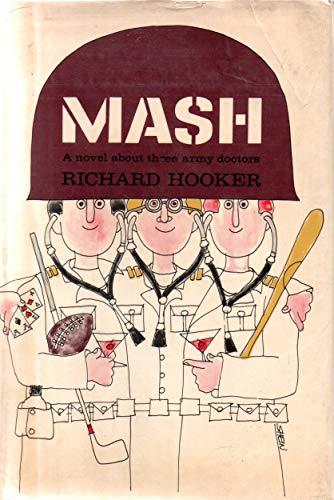
Richard Hooker
Mentioned 1 month ago
M*A*S*H: The Story of the 4077th
A YA Historical Fantasy (More Than Life Book 2)
It was published in 1957, collecting reports and sketches about Loch Ness Monster sightings, helping to reframe the topic from a frivolous one to a scientifically investigable one.
And she started collecting all these different reports and published the reports along with sketches from the people who'd had, who's made these reports into a book called More Than a Legend in 1957.
— Episode: Selects: Could There Be A Loch Ness Mons...
It was published in 1957, collecting reports and sketches about Loch Ness Monster sightings, helping to reframe the topic from a frivolous one to a scientifically investigable one.
And she started collecting all these different reports and published the reports along with sketches from the people who'd had, who's made these reports into a book called More Than a Legend in 1957.
One Hundred Years of Human Progress, Regression, Suffering and Hope
It was described as a book of prophecies that Nostradamus wrote, also known as 'The Prophecies of Michel Nostradamus', but its structure was not chronological and became a bestseller due to the recent invention of the printing press and its timing during a period of strife and instability.
So, Chuck, Nostradamus is settling down in Ceylon. Ceylon. Selectives. And he is deciding to put his awesome thoughts down into quatrains.
— Episode: Selects: Nostradamus: Predictor of the f...
It was described as a book of prophecies that Nostradamus wrote, also known as 'The Prophecies of Michel Nostradamus', but its structure was not chronological and became a bestseller due to the recent invention of the printing press and its timing during a period of strife and instability.
So, Chuck, Nostradamus is settling down in Ceylon. Ceylon. Selectives. And he is deciding to put his awesome thoughts down into quatrains.
That's right. Into a book called The Centuries. But at the time, he just called it The Prophecies.
Yeah, The Prophecies of Michel Nostradamus.
And it wasn't chronological or anything like that?
No, and it became a huge sensation due to a few things. One, simply enough, was that the printing press was a recent invention and books were a big deal now. You know, like widespread books.
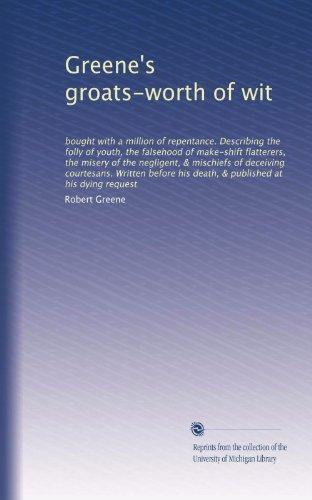
A pamphlet that contained a line referencing Shakespeare, which some interpret as a slight against him for attempting to write plays, while others interpret it as evidence of plagiarism.
So, one of those pieces of documentation early on in London is a pamphlet written by, generally believed to be written by this guy named Robert Greene. It's called Greene's Grotesworth of Wit.
— Episode: Did Shakespeare really write all that st...
A pamphlet that contained a line referencing Shakespeare, which some interpret as a slight against him for attempting to write plays, while others interpret it as evidence of plagiarism.
So, one of those pieces of documentation early on in London is a pamphlet written by, generally believed to be written by this guy named Robert Greene. It's called Greene's Grotesworth of Wit.
And there's a line where he references Shakespeare in it in a contemporaneous fashion. Where he kind of takes a shot at him. He says, it talks about Shakespeare, it says, there's an upstart crow in his own conceit, the only Shakespearean in a country, which kind of translates into he kind of thinks he's the only Shakespeare.
The Third Year of Lincoln's War
It lists William Shakespeare of Avon amongst the great writers of the time, which was considered a golden bullet that could be proof of Shakespeare's authorship, but the counter-argument is that Camden could have simply been playing along.
And one of the guys who defended him was a man named William Camden, who this guy in the video referred to as one of the most learned men in all of England. He was actually Ben Johnson's schoolmaster...
— Episode: Did Shakespeare really write all that st...
It lists William Shakespeare of Avon amongst the great writers of the time, which was considered a golden bullet that could be proof of Shakespeare's authorship, but the counter-argument is that Camden could have simply been playing along.
And one of the guys who defended him was a man named William Camden, who this guy in the video referred to as one of the most learned men in all of England. He was actually Ben Johnson's schoolmaster and apparently just knew everything on happening on the literary scene inside and out. And in one of his books, he, it was called the remains of a greater history. He talks about all the great writers of the time and he lists William Shakespeare of Avon in that book.
Trust for the Journey
It was mentioned as a creepy novella by Christopher Kelly about two boys whose father tries to kill them, published as an ebook.
And one of the guys, Christopher Kelly, who wrote the very cool short story Variable, took us up on that. And he says that he has a creepy novella about two boys whose father tries to kill them called...
— Episode: Selects: How Vampires Work
It was mentioned as a creepy novella by Christopher Kelly about two boys whose father tries to kill them, published as an ebook.
And one of the guys, Christopher Kelly, who wrote the very cool short story Variable, took us up on that. And he says that he has a creepy novella about two boys whose father tries to kill them called Abraham Road, not Bram Road.
It's available on Kindle. You can go find that on Amazon.com, Abraham Road ebook.
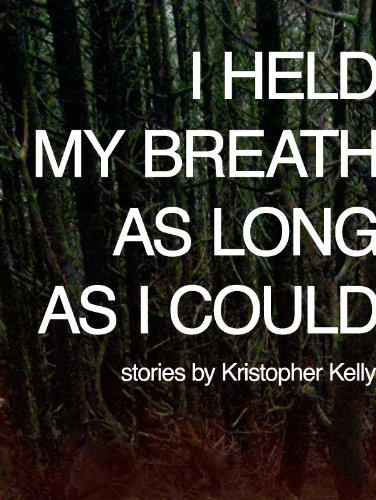
It was mentioned as a short story collection by Christopher Kelly, including stories that were strange, sinister, and literary, published as an ebook.
And then he also has a collection called I Held My Breath as Long as I Could, 23 stories of the strange, the sinister, and the literary. And you can get that on Amazon as well.
— Episode: Selects: How Vampires Work
It was mentioned as a short story collection by Christopher Kelly, including stories that were strange, sinister, and literary, published as an ebook.
And then he also has a collection called I Held My Breath as Long as I Could, 23 stories of the strange, the sinister, and the literary. And you can get that on Amazon as well.
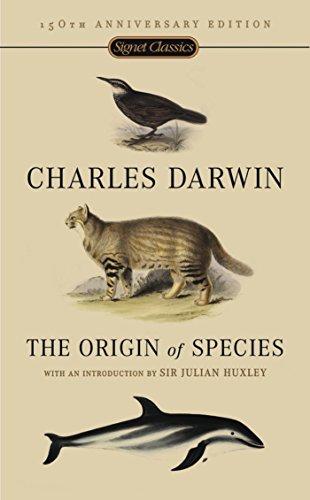
150th Anniversary Edition
It was mentioned as a publication that introduced evolution and natural selection in 1859, helping to give rise to the first wave of fundamentalism.
The publication of On the Origin of the Species from Darwin, which basically, you know, everyone knows what that did.
— Episode: Fundamentalism: Menace II Society
It was mentioned as a publication that introduced evolution and natural selection in 1859, helping to give rise to the first wave of fundamentalism.
The publication of On the Origin of the Species from Darwin, which basically, you know, everyone knows what that did.
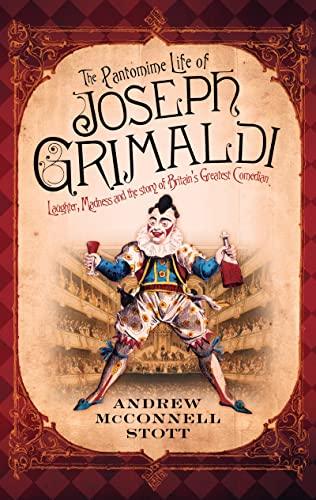
Laughter, Madness and the Story of Britain's Greatest Comedian
It was mentioned that Charles Dickens edited the memoir of Joseph Grimaldi, after his death, and it became a very popular book, which explored the grim reality of his life despite his comedic career.
Charles Dickens wrote the memoir...he basically laid it all out there about what a ghastly, you know, sort of person that this guy was in real life. And it was a huge hit.
— Episode: Selects: How Clowns Work
It was mentioned that Charles Dickens edited the memoir of Joseph Grimaldi, after his death, and it became a very popular book, which explored the grim reality of his life despite his comedic career.
Charles Dickens wrote the memoir...he basically laid it all out there about what a ghastly, you know, sort of person that this guy was in real life. And it was a huge hit.
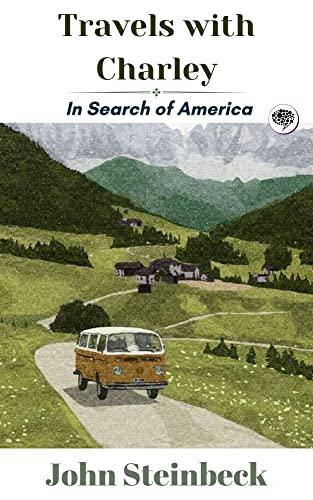
In Search of America
It was mentioned briefly by Chuck in the same context as 'Grapes of Wrath'.
I didn't know that was a Steinbeck book. I knew about Grapes of Wrath as I lay dying mainly because that metal band. Travels with Charlie.
— Episode: Pearls: Second Best Thing About Oysters
It was mentioned briefly by Chuck in the same context as 'Grapes of Wrath'.
I didn't know that was a Steinbeck book. I knew about Grapes of Wrath as I lay dying mainly because that metal band. Travels with Charlie.
It was mentioned as an example of Tom Wolfe's writing in the New Journalism style. It was said that he was very good at drawing the reader into the story.
The Right Stuff is really amazing too.
— Episode: Rolling Stone Magazine
It was mentioned as an example of Tom Wolfe's writing in the New Journalism style. It was said that he was very good at drawing the reader into the story.
The Right Stuff is really amazing too.
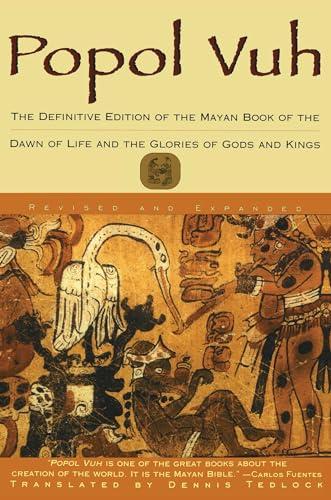
The Definitive Edition of The Mayan Book of The Dawn of Life and The Glories of Gods and Kings
It was discussed as one of the few Mayan sacred texts that survived the burning of books by Christian missionaries, containing their creation story of humans made from maize, dough, and blood.
There were a couple of sacred texts that survived, as we'll see later.
— Episode: The Maya Civilization
It was discussed as one of the few Mayan sacred texts that survived the burning of books by Christian missionaries, containing their creation story of humans made from maize, dough, and blood.
There were a couple of sacred texts that survived, as we'll see later.
A lot of their written history was burned by Christian missionaries who said, you don't need that stuff anymore. You're going to be like us.
And a couple of them, the Popol Vuh and the Chilam Balam had these creation stories wherein there was a god of wind and sky called Huracan, hurricane, sound familiar?
And there was a ceiba tree planted on the earth to create space between the earth and sky for people and animals and plants and things to grow.
And humans came third after the plants and animals.
But in the text, it said that they were made out of mud, sound familiar?
And they could speak but could not think or move.
It sounds like a lot of modern day Americans.
Yeah, all they could say is, please kill me.
So the god said, no, that's not good. So they destroyed them with water.
Then they tried again and created a man from wood and woman from reeds.
And they were sort of like functional humans evidently, but were immortal and didn't have souls.
Zombies.
So the god said, well, that's no good.
Yeah, they got him with boiling water, right?
Yeah, that'll do if you're made of...
Well, I guess I thought if they were made of mud, that would do.
But I guess wood and reeds boiling water would, in their minds, it would kill them.
It sounds more torturous, but it didn't kill all of them because some people survived.
Some of the reed and wood people turned into monkeys.
Also very interesting.
Yes.
In terms of like evolutionary theory.
And then finally, they got it right in their minds.
They created what we think of modern humans in their creation story from maize, dough, and their own blood.
But then the gods thought, hey, they're a little too scary smart.
So they might threaten us one day, but we won't destroy them.
We will just cloud their minds and their eyes and make them not as smart.
Right.
And that's their creation story.
Yeah, it's pretty interesting.
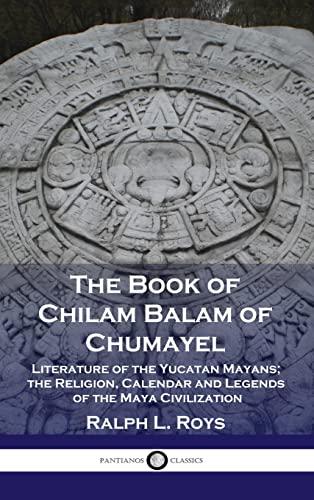
Literature of the Yucatan Mayans; the Religion, Calendar and Legends of the Maya Civilization
It was mentioned as another Mayan sacred text that survived the destruction of books by Christian missionaries, alongside the Popol Vuh.
And a couple of them, the Popol Vuh and the Chilam Balam had these creation stories wherein there was a god of wind and sky called Huracan, hurricane, sound familiar?
— Episode: The Maya Civilization
It was mentioned as another Mayan sacred text that survived the destruction of books by Christian missionaries, alongside the Popol Vuh.
And a couple of them, the Popol Vuh and the Chilam Balam had these creation stories wherein there was a god of wind and sky called Huracan, hurricane, sound familiar?
Twilight Reimagined (The Twilight Saga)
It was described as a very boring book by an astrophysicist, focusing on the concept of communicating with other lifeforms via a radio wave language called Linkos.
Libby included a quote from an astrophysicist that said, it's the most boring book I've ever read. Logarithm tables are cool compared to it.
— Episode: How Alien Contact Might Work
It was described as a very boring book by an astrophysicist, focusing on the concept of communicating with other lifeforms via a radio wave language called Linkos.
Libby included a quote from an astrophysicist that said, it's the most boring book I've ever read. Logarithm tables are cool compared to it.
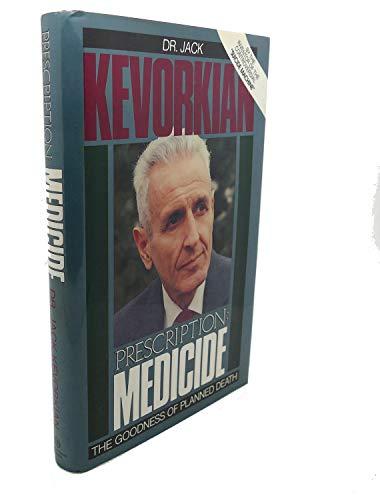
The podcast hosts mentioned a chapter about Jack Kevorkian in a book, where he suggested a way to execute people through organ harvesting in the 1960s or 1970s, an idea that was deemed creepy and unethical.
Remember in our book of that chapter on Jack Kevorkian, he had that idea in the 60s or 70s where he was like, well, if we're going to execute people, let's just execute them through organ harvesting.
— Episode: Kidney Donation: You Could Be A Saint!
The podcast hosts mentioned a chapter about Jack Kevorkian in a book, where he suggested a way to execute people through organ harvesting in the 1960s or 1970s, an idea that was deemed creepy and unethical.
Remember in our book of that chapter on Jack Kevorkian, he had that idea in the 60s or 70s where he was like, well, if we're going to execute people, let's just execute them through organ harvesting.
And Other Stories
Angela Carter, a feminist writer known for her fairy tale rewrites, was mentioned in the context of her writing about the Lizzie Borden house, describing it as a maze-like space with locked doors and limited shared areas.
There's a lady named Angela Carter who wrote about the case. She actually factored into our fairy tales episode. She was the feminist writer who rewrote fairy tales.
— Episode: Selects: How Lizzie Borden Worked
Angela Carter, a feminist writer known for her fairy tale rewrites, was mentioned in the context of her writing about the Lizzie Borden house, describing it as a maze-like space with locked doors and limited shared areas.
There's a lady named Angela Carter who wrote about the case. She actually factored into our fairy tales episode. She was the feminist writer who rewrote fairy tales.
She describes it as this way, a house full of locked doors that open only into other rooms with other locked doors for upstairs and downstairs. All the rooms led in and out of one another like a maze and a bad dream.
It is a house without passages. There is no part of the house that has not been marked as some inmates personal territory.
It is a house with no shared, no common spaces between one room and the next. It is a house of privacies sealed as close as if they had been sealed with wax on a legal document.
It was discussed as a book about the history of civilizations and politics and how they rise and fall, also serving as a bit of an autobiography, mentioning places where the Toynbee tiles appeared.
And he was really, really popular for a while, but then he started to really kind of take an increasingly Christian view, a worldview of history and politics, and placed a greater emphasis on the role...
— Episode: The Mystery of the Toynbee Tiles
It was discussed as a book about the history of civilizations and politics and how they rise and fall, also serving as a bit of an autobiography, mentioning places where the Toynbee tiles appeared.
And he was really, really popular for a while, but then he started to really kind of take an increasingly Christian view, a worldview of history and politics, and placed a greater emphasis on the role of religions and Christianity, I believe, in particular, than historians in general were comfortable with, and his views kind of fell out of favor.
Suffice to say, he was a genuine original thinker who is definitely worth reading about, if not reading directly.
And it's a good thing his name was Toynbee. Yeah. It really made it a lot easier to narrow down the first mystery, basically.
It seems to be the centerpiece of the crux of the idea that the tile maker is, let's just say fixated on, the concept of the soul and the possibility that you could resurrect after death down to the molecular level.
There's apparently something in that book experienced by Arnold Toynbee. It's a bit of an autobiography as well and he talks about going to these places that these tiles appeared in in the 80s.

it's time for SELF-LOVE and it's time for YOU!
It was discussed as a play written by David Mamet in 1983, inspired by a phone call to a Larry King radio show in 1980, featuring the idea of resurrecting the dead on Jupiter, similar to the Toynbee tiles.
Because in 1983 Mamet wrote a play called 4 AM and he said later that it was an homage to Larry King who back in the early, early 80s was a late night radio talk show host long before he had his TV sh...
— Episode: The Mystery of the Toynbee Tiles
It was discussed as a play written by David Mamet in 1983, inspired by a phone call to a Larry King radio show in 1980, featuring the idea of resurrecting the dead on Jupiter, similar to the Toynbee tiles.
Because in 1983 Mamet wrote a play called 4 AM and he said later that it was an homage to Larry King who back in the early, early 80s was a late night radio talk show host long before he had his TV show.
And in the one-act play, the caller who calls into this radio show talks about resurrecting the dead on Jupiter and how people are dead molecules that you could bring back to life.
So David Mamet probably wrote a play based on a call he heard of the tile maker who called into Larry King in 1980 to explain his views on resurrecting the dead on Jupiter.
It's just not possible that it's a coincidence because of the language that's used in the one act like resurrect dead molecules. Just resurrect them on Jupiter. 2001 is mentioned. Toynbee is mentioned.
Crowley's mother referred to him as the Beast, a term derived from this book in the Bible, suggesting she was displeased with his behavior.
And she, in fact, referred to him as the Beast, which was from the Book of Revelations and a name that he would later, I think, kind of keep on using for himself.
— Episode: Aleister Crowley: Blowhard Narcissist?
Crowley's mother referred to him as the Beast, a term derived from this book in the Bible, suggesting she was displeased with his behavior.
And she, in fact, referred to him as the Beast, which was from the Book of Revelations and a name that he would later, I think, kind of keep on using for himself.
Living, Working, and Dying in the National Parks
It was a Vanity Fair article discussing the transition of The National Enquirer from crime scene photography to celebrity scandals and astrology in order to get into supermarkets, where it was said the Enquirer staff were aghast at having to clean up their act.
It was like asking an experienced team of grave robbers to take up gardening.
— Episode: Selects: How Tabloids Work
It was a Vanity Fair article discussing the transition of The National Enquirer from crime scene photography to celebrity scandals and astrology in order to get into supermarkets, where it was said the Enquirer staff were aghast at having to clean up their act.
It was like asking an experienced team of grave robbers to take up gardening.
Note: The book recommendations on this page are discovered automatically from podcast transcripts, and may be incorrect or incomplete.
Podcast Name