The Departed (The FBI Psychics series Book 2)
Shiloh Walker
Mentioned 4 months ago
From Valley of Shadows: The Devil's Punchbowl
Revisionist History is Malcolm Gladwell's journey through the overlooked and the misunderstood. Every episode re-examines something from the past—an event, a person, an idea, even a song—and asks whether we got it right the first time. From Pushkin Industries. Because sometimes the past deserves a s...
Recently mentioned
Shiloh Walker
Mentioned 4 months ago
From Valley of Shadows: The Devil's Punchbowl
Katy Milkman
Mentioned 7 months ago
How to Experience the Joy of Giving Right Now: A Giving Tuesday Special from The Happiness Lab
Malcolm Gladwell
Mentioned 1 year ago
The Tipping Point Revisited: Georgetown Massacre Part 1

J.R.R. Tolkien
Mentioned 1 year ago
Tim's Tolkien Obsession & Amazon Prime's The Rings of Power

J. R. R. Tolkien
Mentioned 1 year ago
Tim's Tolkien Obsession & Amazon Prime's The Rings of Power
Barry Siegel
Mentioned 1 year ago
Hitler’s Olympics, Part 9: A Plague on Both Your Houses.
Margaret Leslie Davis
Mentioned 1 year ago
Hitler’s Olympics, Part 7: Long Jump, Tall Tale

Union Square Kids
Mentioned 1 year ago
Hitler’s Olympics, Part 7: Long Jump, Tall Tale
Mentioned 1 year ago
Hitler’s Olympics Part 5: The Amateur’s Hour
Ayn Rand
Mentioned 2 years ago
Hitler’s Olympics, Part 4: Outcast in Olympia
Peter Churchill
Mentioned 2 years ago
Hitler’s Olympics, Part 4: Outcast in Olympia
SHERRILL Charles H. -
Mentioned 2 years ago
Hitler’s Olympics, Part 3: Mustache to Mustache
Facing Adversity, Building Resilience, and Finding Joy
During a debate between Malcolm Gladwell and Adam Grant, the book was referenced as a bestselling work co‑written by Grant and Sheryl Sandberg that explores resilience and coping with adversity. The hosts mentioned it in passing to illustrate the authors' expertise on the subject.
Evolution of a Game
In the episode, Malcolm Gladwell praised the title as a perfect work and said he would have retired after writing it. He highlighted its compelling narrative and insight into the sport's evolution, presenting it as a standout example of sports literature. The overall tone was an enthusiastic endorsement.
It was mentioned as a film made by John Weitz's sons, but there is no information if it was based on any book.
You've probably seen some of the Weitz brothers' films, About a Boy, The Exquisite In Good Company, American Pie.
— Episode: A Polite Word for Liar
It was mentioned as a film made by John Weitz's sons, but there is no information if it was based on any book.
You've probably seen some of the Weitz brothers' films, About a Boy, The Exquisite In Good Company, American Pie.
The Saga of an American Family (Modern Classics)
It was mentioned when the podcast host discussed the back cover of Sammy Davis Jr.'s autobiography, which featured a blurb by the author of Roots.
If you look at the back cover of Sammy's autobiography, Why Me?, there's a blurb from Alex Haley who wrote Roots, another from Aaron Spelling, the creator of 90210, among a million ot...
— Episode: The Hug Heard Round the World
It was mentioned when the podcast host discussed the back cover of Sammy Davis Jr.'s autobiography, which featured a blurb by the author of Roots.
If you look at the back cover of Sammy's autobiography, Why Me?, there's a blurb from Alex Haley who wrote Roots, another from Aaron Spelling, the creator of 90210, among a million other things.
Truth-Default Theory and the Social Science of Lying and Deception
Host Malcolm Gladwell featured Timothy R. Levine’s book, Duped, as the foundational text for understanding deception and the social science of lying. Gladwell specifically noted that the book details Levine's influential Truth Default Theory. He concluded by asserting that there was "no better place to start" for listeners interested in the mechanics of how deception works.
It was described as a great place to begin understanding how deception works. It covers Tim Levine's Truth Default Theory and explores the social science of lying and deception.
Levine's theories are laid out in his book, Duped, Truth, Default Theory, and the Social Science of Lying and Deception.
If you want to understand how deception works, there is no better place to start.
Racism, Antiracism, and You
The book was highlighted during a discussion on antiracism, where Malcolm Gladwell noted that Dr. Ibram X. Kendi became the youngest ever National Book Award winner for nonfiction in 2016 with this title. He described it as a definitive history of racist ideas in America, underscoring its relevance to the episode’s theme. The hosts presented it as an essential resource for understanding systemic racism.
It was mentioned as Dr. Ibram X. Kendi's first book that won the National Book Award for Nonfiction in 2016, and discussed a definitive history of racist ideas in America.
At 34, he was the youngest person ever to win the National Book Award for Nonfiction. That was in 2016 for his book Stamped from the Beginning. It is, as the subtitle says, a definitive history of racist ideas in America.

Dialectical Lyric By Johannes De Silentio (Penguin Pocket Hardbacks)
The book was brought up by Malcolm Gladwell while discussing disagreeableness and the moral dilemma faced by the protagonist of 'No Good Deed.' He noted that Kierkegaard explored similar themes in the work, using it to illustrate the philosophical background of the dilemma. The reference was brief and not presented as a recommendation.
It was mentioned in relation to the concept of disagreeableness and the film 'No Good Deed', in which the protagonist faces a difficult moral dilemma.
Soren Kierkegaard wrote about it in Fear and Trembling.
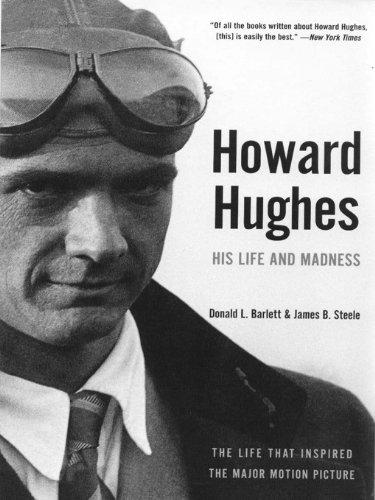
His Life and Madness
It was described as insane and wonderful. It was meant to be an autobiography, but Howard Hughes denied having any involvement with it or the author, Clifford Irving.
From all of us here at Revisionist History, The Autobiography of Howard Hughes gets two thumbs up.
— Episode: "Oh Howard, You Idiot!”
It was described as insane and wonderful. It was meant to be an autobiography, but Howard Hughes denied having any involvement with it or the author, Clifford Irving.
From all of us here at Revisionist History, The Autobiography of Howard Hughes gets two thumbs up.
The world thought the autobiography of Howard Hughes would sell millions upon millions of copies.
I'm not talking about the biography itself because I've never read it.
I never saw him, I never even heard of him until a matter of days ago when this thing first came to my attention.
I never read it. I don't know what's in it.
A thrillingly paced, timely novel about identity and our digital lives
A thrillingly paced, timely novel about identity and our digital lives
It was a non-fiction biography of one of Irving's friends from Ibiza, an art forger named Elmir Dehore. Orson Welles optioned it for a film.
That one was called, and you can't make this up, Fake.
— Episode: "Oh Howard, You Idiot!”
It was a non-fiction biography of one of Irving's friends from Ibiza, an art forger named Elmir Dehore. Orson Welles optioned it for a film.
That one was called, and you can't make this up, Fake.
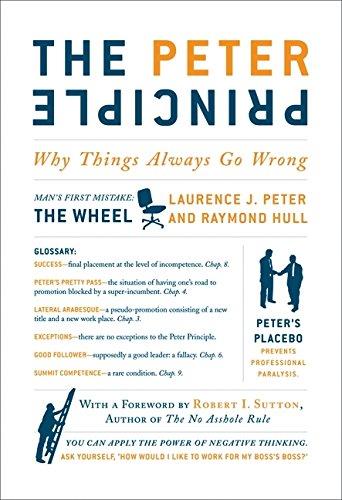
Why Things Always Go Wrong
The Peter Principle states that in a hierarchy, an employee tends to rise to their level of incompetence, and it was discussed as a core element of hiring nihilism.
Lawrence Peter wrote a book called The Peter Principle in 1969.
— Episode: Hamlet Was Wrong
The Peter Principle states that in a hierarchy, an employee tends to rise to their level of incompetence, and it was discussed as a core element of hiring nihilism.
Lawrence Peter wrote a book called The Peter Principle in 1969.
in any hierarchy an employee tends to rise to his level of incompetence.
A How-To-Guide to Special Materials
It was discussed how there was no comprehensive history of napalm and that Robert Neer ended up writing it himself.
So I started looking and it was with a kind of growing sense of disbelief that I discovered that actually there was no history of napalm.
— Episode: Goodbye, Farewell and Amen
It was discussed how there was no comprehensive history of napalm and that Robert Neer ended up writing it himself.
So I started looking and it was with a kind of growing sense of disbelief that I discovered that actually there was no history of napalm.
And the more research that I did on it, the more I discovered that actually really it was true. There was no, not even an article that was, there was no like even a sort of academic journal article that was, this is a comprehensive history of napalm.
A How-To-Guide to Special Materials
It is a book about napalm that was mentioned and the author, Robert Neer, was interviewed for the episode. The author gave insights on the effectiveness of napalm compared to less sticky alternatives.
So if you want an effective incendiary, something that is sticky is much more effective than something that is not sticky because it actually adheres to whatever it is transferring its radiation energ...
— Episode: May the Best Firebomb Win
It is a book about napalm that was mentioned and the author, Robert Neer, was interviewed for the episode. The author gave insights on the effectiveness of napalm compared to less sticky alternatives.
So if you want an effective incendiary, something that is sticky is much more effective than something that is not sticky because it actually adheres to whatever it is transferring its radiation energy into. That's why napalm is so effective.
If the gelled material is too soft or too weak, then it won't actually deliver a very large amount of radiation to whatever it's sticking to.
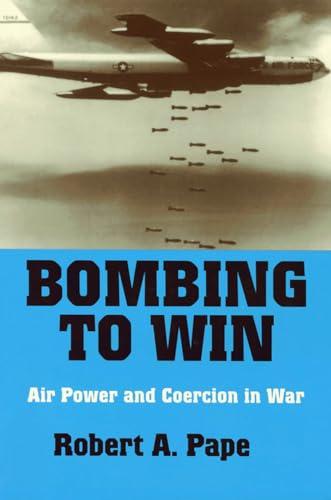
Air Power and Coercion in War (Cornell Studies in Security Affairs)
American Military Styles in Strategy and Analysis
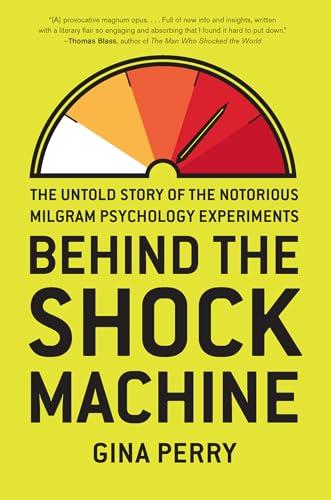
The Untold Story of the Notorious Milgram Psychology Experiments
It was mentioned as a book containing a history of Stanley Milgram's obedience experiments, providing insight into the psychology behind these experiments.
In her fascinating history of Milgram's obedience experiments, Behind the Shock Machine, Gina Perry interviews a retired toolmaker named Joe Deamo, who was one of Milgram's original s...
— Episode: The Queen of Cuba
It was mentioned as a book containing a history of Stanley Milgram's obedience experiments, providing insight into the psychology behind these experiments.
In her fascinating history of Milgram's obedience experiments, Behind the Shock Machine, Gina Perry interviews a retired toolmaker named Joe Deamo, who was one of Milgram's original subjects.
It was a best-selling book that used casuistry to argue that the birth control pill is similar to the rhythm method, as it mimics pregnancy using the same hormones.
The chemical substance in these pills acts in the body exactly like progesterone, which the mother's ovary produces.
— Episode: Dr. Rock’s Taxonomy
It was a best-selling book that used casuistry to argue that the birth control pill is similar to the rhythm method, as it mimics pregnancy using the same hormones.
The chemical substance in these pills acts in the body exactly like progesterone, which the mother's ovary produces.
It has the same effect on the regulating mechanism for ripening eggs and for releasing eggs.
If a woman takes the pill month after month after month, and continuously, not missing any day at all, she is in effect establishing just a pseudo-pregnancy, a make-believe pregnancy.
Note: The book recommendations on this page are discovered automatically from podcast transcripts, and may be incorrect or incomplete.
Podcast Name