This American Woman
Zarna Garg
Mentioned 4 months ago
Why a Doomsday AI Blog Wiped Out $300 Billion
Prof G Markets breaks down the news that’s moving the capital markets, helping you build financial literacy and security. Join Scott Galloway and Ed Elson every weekday for no mercy, no malice insight on high flying stocks, booming sectors, and master of the universe CEOs. Like it or not, we live in...
Recently mentioned
Zarna Garg
Mentioned 4 months ago
Why a Doomsday AI Blog Wiped Out $300 Billion
Scott Galloway
Mentioned 4 months ago
Why Big Tech Is Losing to Boring Stocks
Douglas Murray
Mentioned 5 months ago
Markets are Ignoring Catastrophic Risks — ft. Aswath Damodaran
Eswar S. Prasad
Mentioned 5 months ago
The World Is In a Doom Loop — ft. Eswar Prasad
Scott Nations
Mentioned 6 months ago
Your Brain is the Worst Investor in the Room — ft. Scott Nations
Scott Nations
Mentioned 6 months ago
Your Brain is the Worst Investor in the Room — ft. Scott Nations
Thucydides
Mentioned 6 months ago
Is Imperialism Good for Your Portfolio?
Vivian Tu
Mentioned 6 months ago
Why the AI Bubble Hasn’t Popped — ft. Josh Brown
John Irving
Mentioned 6 months ago
Ask Me Anything — Figma, Dirty Jokes, Running for Office & More

John Irving
Mentioned 6 months ago
Ask Me Anything — Figma, Dirty Jokes, Running for Office & More
Stephen King
Mentioned 6 months ago
Ask Me Anything — Figma, Dirty Jokes, Running for Office & More
Jack Weatherford
Mentioned 6 months ago
Ask Me Anything — Figma, Dirty Jokes, Running for Office & More
Transitions, Change, and Moving Forward
The hosts highlighted the memoir in an episode about tariffs and the FTC, noting it was a recent release that explored the author's post‑divorce life. They presented it as a noteworthy new publication but did not delve deeply into its content. Overall, the mention was brief and neutral.
The podcast highlighted Melinda French-Gates' new memoir, noting it as a recent release discussing her postdivorce life.
we discuss her new memoir, The Next Day
The Art of the Deal
The hosts referenced the title sarcastically, using it to label a recent tariff maneuver as a textbook example of the art of the deal. Their tone suggested they were mocking the notion that such tactics represented clever deal‑making. No endorsement was offered, and the discussion served mainly as a critique of the book's premise.
The hosts referenced the book sarcastically, calling a recent tariff maneuver a textbook example of the art of the deal.
This was brilliantly executed by Donald Trump. Textbook, the art of the deal.
A Confession
The hosts highlighted the book, noting it chronicled the author's experience as a trader and was published in both the US and UK. They emphasized that its paperback had topped the sales charts for nine consecutive weeks, underscoring its popularity. Their discussion conveyed a strong endorsement of the title.
The hosts highlighted Gary's first book, noting it was published in the US and UK and that the paperback had topped the sales charts for nine consecutive weeks.
His first book, The Trading Game, the story of his time as a trader, is published by Crown Currency in the US and Penguin in the UK. The paperback has been number one for nine straight weeks and counting.
Forest of No Mercy - A World War II Novel Inspired by Actual Events (Malice and Mercy Series)
The hosts referenced a No Mercy, No Malice post that discussed how people have become the new brands, noting the post had attracted considerable attention.
I think you wrote about this in a No Mercy, No Malice post. It's got a little too much attention for my liking. But you talked about it's no longer about brands. It's about people. People are the new...
— Episode: Is Reddit Undervalued? + Netflix Goes Af...
The hosts referenced a No Mercy, No Malice post that discussed how people have become the new brands, noting the post had attracted considerable attention.
I think you wrote about this in a No Mercy, No Malice post. It's got a little too much attention for my liking. But you talked about it's no longer about brands. It's about people. People are the new brands.
Forest of No Mercy - A World War II Novel Inspired by Actual Events (Malice and Mercy Series)
In the episode the hosts explained that writing the book was the hardest part of their work, noting that its demanding nature made them want to move on from it quickly. Their comments highlighted the challenges of producing the title rather than endorsing it.
They discussed the difficulty of writing their book "No Mercy, No Malice," describing it as the hardest part of their work and mentioning past involvement.
It's the hardest thing I do is writing books and No Mercy because the written word to do it well requires excellence.
Ed used to work on No Mercy, No Malice, and you got out of that as quickly as you could because it's hard.
In the episode on market risks and opportunities, Tom Lee referenced the biography to illustrate historical government‑spending oversight during World War II, noting that several chapters offered relevant context for his discussion. The mention was neutral and informative rather than a strong endorsement.
Tom Lee mentioned reading a Truman biography by David McCullough to illustrate historical governmentspending oversight during World WarII.
This, to me, harkens back to several chapters of the Truman biography I read by David McCullough, which talks about Truman's work during World War II.
It was noted that Michael Saylor had authored the book titled The Mobile Way.
He's also the founder of Alarm.com, named investor on 48-plus patents and author of the book The Mobile Way.
— Episode: Why MicroStrategy Bought $40 Billion Wor...
It was noted that Michael Saylor had authored the book titled The Mobile Way.
He's also the founder of Alarm.com, named investor on 48-plus patents and author of the book The Mobile Way.
The hosts referenced the 1999 title as a book that Elon Musk often cites when discussing opportunities for individuals in a rapidly changing world. They noted their familiarity with it and suggested it as a relevant resource for the topic. The mention was brief and presented the book in a neutral-to-positive light.
They mentioned the 1999 book as a reference that Elon Musk often cites about what is in it for individuals in a changing world.
And to quote Elon Musk, OK, and this is a book that Scott and you guys are probably familiar with. It's The Sovereign Individual. It was written by Riesmong and Davidson in 1999.
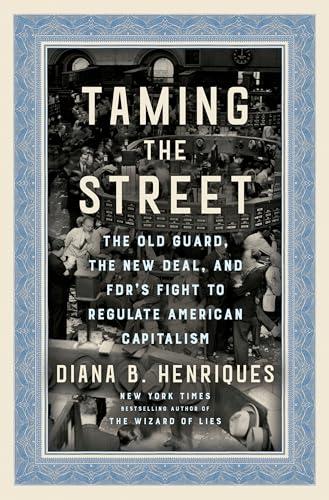
The Old Guard, the New Deal, and FDR's Fight to Regulate American Capitalism
The book was mentioned in the episode featuring Anthony Scaramucci, where the guest highlighted it as a historical account of the early SEC and its role in making capital markets safer. It was described as a concise overview of the New Deal era’s regulatory efforts, offering listeners a useful reference on financial history.
The guest highlighted the book as a history of the early SEC and its role in making capital markets safer.
Susanna Henriquez wrote a book called Taming the Street.
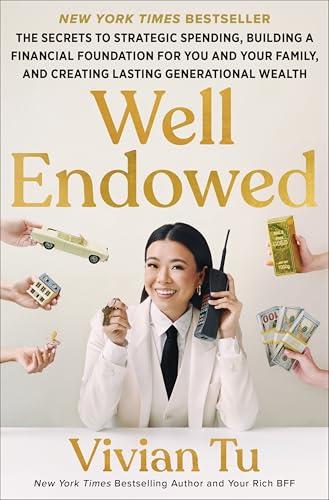
The Secrets to Strategic Spending, Building a Financial Foundation for You and Your Family, and Creating Lasting Generational Wealth – A Self Help Financial Guide
In the episode, host Ed Elson introduced his upcoming personal finance title, describing it as a roadmap that teaches readers how to build generational wealth and take control of their financial destiny. He emphasized that the book offers practical guidance for creating options, freedom, and peace of mind for families. The discussion positioned the title as a valuable tool for anyone seeking lasting financial security.
He introduced his upcoming personalfinance book, describing it as a roadmap that teaches readers how to build generational wealth and take control of their financial destiny.
This week on Net Worth & Chill, I'm giving you an exclusive sneak peek at my new book, Well Endowed, Hitting Shelves, February 3rd. I wrote this book because I believe everyone deserves to build wealth that actually works for their life... It's a roadmap for taking control of your financial destiny and building the kind of wealth that gives you options, freedom, and peace of mind.
Mastering the Mental Game of Investing
The episode introduced the book, noting its opening claim that the human brain is ill‑suited for wise investing. Host Ed highlighted this premise, and author Scott explained that his research identified numerous behavioral biases that collectively cost investors about 150 basis points a year. Their discussion emphasized how the book sheds light on these pitfalls, making it a valuable read for investors.
Ed introduced the book and highlighted its opening line about the brain being illsuited for investment, while Scott explained that writing the book revealed behavioral biases cut returns by about 150 basis points annually.
The opening line from The Anxious Investor is, quote, the human brain is illsuited for making wise investment decisions.
And as I was writing the book and researching the behavioral biases that we all display, it dawned on me that of the 14 or 15 I talk about in the book, none of them ... makes you a better investor.
Stock Market Meltdowns That Defined a Nation
During the episode, Scott Nations referenced the book he had written earlier, explaining that it surveyed five major U.S. market crashes and the novel financial instruments that accompanied each. The host acknowledged his authorship but did not provide a detailed endorsement or critique, merely noting its existence.
Scott mentioned that his earlier book examined five major U.S. market crashes and how each was accompanied by novel financial contraptions, and the episode's outro credited him as the author of that work.
He's also written another book about U.S. market crashes.
the book that I wrote before the anxious investor was A History of the United States in Five Crashes.
Scott Nations is the author of The Anxious Investor, as well as A History of the United States in Five Crashes.
Why the World Economic Order Is Spiraling into Disorder
The host introduced the book as Eswar Prasad's new release and Prasad explained that the work argues the global economic order is caught in a negative feedback "doom loop," a thesis he believes recent events have validated.
Here's our conversation with Eswar Prasad, professor of trade policy and economics at Cornell University, former chief of the Financial Studies Division of the International Monetary Fund and author o...
— Episode: The World Is In a Doom Loop — ft. Eswar...
The host introduced the book as Eswar Prasad's new release and Prasad explained that the work argues the global economic order is caught in a negative feedback "doom loop," a thesis he believes recent events have validated.
Here's our conversation with Eswar Prasad, professor of trade policy and economics at Cornell University, former chief of the Financial Studies Division of the International Monetary Fund and author of the new book, The Doom Loop.
So your new book is out. It's called The Doom Loop. Why the world economic order is spiraling into disorder.
My book came out a couple of weeks after Davos, but I was at Davos and got to talk about the book; the first draft of the book was completed in October 2024, just before the November elections, and I thought the book seemed a little too dark.
I thought, you know, let's wait for the elections and maybe rethink some part of the book, but everything that has happened since November 2024 has sort of validated the thesis of the book.
Prasad's latest book The Doom Loop Why the World Economic Order is Spiraling Into Disorder is out now.
Note: The book recommendations on this page are discovered automatically from podcast transcripts, and may be incorrect or incomplete.
Podcast Name