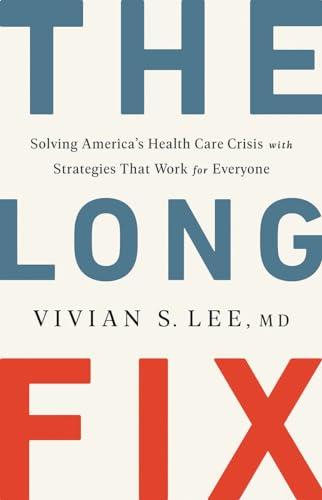
The Long Fix
Solving America's Health Care Crisis with Strategies that Work for Everyone
It was discussed in the context of the US healthcare system and its 'fee-for-service' model, with the author arguing that the system incentivizes more care, regardless of outcomes, and that this leads to increased costs and worse health results.
The U.S. health care system now is a $3.5 trillion industry. It's consuming about 18% of the U.S. economy.
— Episode: The Fee-for-Service Monster
Episode: The Fee-for-Service Monster
It was discussed in the context of the US healthcare system and its 'fee-for-service' model, with the author arguing that the system incentivizes more care, regardless of outcomes, and that this leads to increased costs and worse health results.
The U.S. health care system now is a $3.5 trillion industry. It's consuming about 18% of the U.S. economy.
And that's around 2.5 to 3 times as much as our colleagues say in much of Europe, in Japan, Australia, New Zealand, Canada, and so on.
We're paying for action, but we're not really paying for results.
And so the assumptions are more care is better, more visits are better, more treatment is better.
I'm not necessarily saying that doctors want people to be sick, but the financial incentives of the system seem to be almost against prevention in favor of actually treating problems once they arise.












![The Birth and Death of Meaning( An Interdisciplinary Perspective on the Problem of Man)[BIRTH & DEATH OF MEANING 2/E][Paperback] Cover](https://media.podcastbookpicks.com/books/16326.jpg)