The Book of Mormon, Another Testament of Jesus Christ (An Account Written by the Hand of Mormon)
Jun Joseph Smith
Mentioned 4 months ago
Genesis 24-33 Part 1 • Bro. Mike Harris • Mar. 2-8 • Come, Follow Me

Do you ever feel that preparing for your weekly Come, Follow Me lesson falls short? Join hosts Hank Smith and John Bytheway as they interview experts to make your study for The Church of Jesus Christ of Latter-day Saints’ Come, Follow Me course not only enjoyable but original and educational. If you...
Recently mentioned
Jun Joseph Smith
Mentioned 4 months ago
Genesis 24-33 Part 1 • Bro. Mike Harris • Mar. 2-8 • Come, Follow Me
Thomas Nelson
Mentioned 4 months ago
Genesis 24-33 Part 1 • Bro. Mike Harris • Mar. 2-8 • Come, Follow Me
Dallin H. Oaks
Mentioned 4 months ago
Genesis 24-33 Part 1 • Bro. Mike Harris • Mar. 2-8 • Come, Follow Me
Annabelle Sorensen
Mentioned 5 months ago
Genesis 18-23 Part 2 • Dr. Carli Anderson • Feb. 23 - Mar. 1 • Come, Follow Me
Carli Anderson
Mentioned 5 months ago
Genesis 18-23 Part 1 • Dr. Carli Anderson • Feb. 23 - Mar. 1 • Come, Follow Me
E. Douglas Clark
Mentioned 5 months ago
Genesis 12–17; Abraham 1–2 Part 1 • Dr. Jenae Nelson • Feb. 16-22 • Come, Follow Me
Dellas W. Lee
Mentioned 5 months ago
Genesis 12–17; Abraham 1–2 Part 1 • Dr. Jenae Nelson • Feb. 16-22 • Come, Follow Me
Lisa Harper
Mentioned 5 months ago
Thoughts to Keep in Mind #2 • The Covenant • Dr. Ross Baron • Feb. 9-15
Bryant S. Hinckley
Mentioned 5 months ago
Thoughts to Keep in Mind #2 • The Covenant • Dr. Ross Baron • Feb. 9-15
John Bytheway
Mentioned 5 months ago
Faith at Full Throttle • followHIM Favorites • Feb. 9-15 • Come Follow Me
C. S. Lewis
Mentioned 5 months ago
Genesis 6–11; Moses 8 Part 2 • Bro. Michael Cottle • Feb. 9-15 • Come, Follow Me
Aaron P. Schade
Mentioned 5 months ago
Moses 7 Part 1 • Bro. Danny Ricks • Feb. 2-8 • Come, Follow Me
The host mentioned studying the Book of Revelation in a class and using symbols to teach, noting that it's a genre of apocalyptic literature.
I was teaching The Book of Revelation and I saw how John uses symbols to teach like apocalyptic literature.
— Episode: Alma 23-29 Part 2 • Lori Denning • July...
The host mentioned studying the Book of Revelation in a class and using symbols to teach, noting that it's a genre of apocalyptic literature.
I was teaching The Book of Revelation and I saw how John uses symbols to teach like apocalyptic literature.
The discussion centered on the symbols and visions in the Book of Revelation, interpreting its imagery as representing the church, the kingdom of God, and the battle against evil.
Welcome to Part 2 with Dr. Christopher Blythe, Revelation 6-14.
And he said, 'the opening paragraph of the Come Follow Me manual mentions this chapter...'
The speaker mentioned that the Book of Revelation speaks of calamities coming in the latter days.
We read the book of Revelation, we read the scriptures, we know there are calamities coming in the latter days.
Finding Personal Meaning in the Temple
It was mentioned as one of the many articles and books Dr. S. Michael Wilcox has written.
He's written many articles and books, including House of Glory, 10 Great Souls I Want to Meet in Heaven, Twice Blessed Finding Hope.
— Episode: Alma 32-35 Part 1 • Dr. S. Michael Wilco...
It was mentioned as one of the many articles and books Dr. S. Michael Wilcox has written.
He's written many articles and books, including House of Glory, 10 Great Souls I Want to Meet in Heaven, Twice Blessed Finding Hope.
It was mentioned as one of the many articles and books Dr. S. Michael Wilcox has written.
He's written many articles and books, including House of Glory, 10 Great Souls I Want to Meet in Heaven, Twice Blessed Finding Hope.
— Episode: Alma 32-35 Part 1 • Dr. S. Michael Wilco...
It was mentioned as one of the many articles and books Dr. S. Michael Wilcox has written.
He's written many articles and books, including House of Glory, 10 Great Souls I Want to Meet in Heaven, Twice Blessed Finding Hope.
The book was mentioned as a modern application of the question: "What are you going to do with prophets?" It uses the idea of prophets as watchmen on a tower, able to see things that others can't.
Sheri Du wrote this book called Prophets Can See Around Corners and did a talk at BYU Hawaii called Prophets Can See Around Corners. Coming from her perspective, who has written the biographies of Pre...
— Episode: Mosiah 11-17 Part 1 • Dr. Ryan Sharp • M...
The book was mentioned as a modern application of the question: "What are you going to do with prophets?" It uses the idea of prophets as watchmen on a tower, able to see things that others can't.
Sheri Du wrote this book called Prophets Can See Around Corners and did a talk at BYU Hawaii called Prophets Can See Around Corners. Coming from her perspective, who has written the biographies of President Hinckley and President Benson, it's really fun to hear her testimony of living prophets. We all know as teachers how hard it is to come up with a really good question. She has a series of questions in here. Question number two in her book, is there anyone you would trust to give you better, more inspired advice, meaning counsel unaffected by personal agenda than members of the first presidency and quorum of the 12 apostles?
Sheri Dew's book Prophets Can See Around Corners was mentioned as a modern application of the question of what are you going to do with prophets?
Sheri Du wrote this book called Prophets Can See Around Corners and did a talk at BYU Hawaii called Prophets Can See Around Corners.
She has a series of questions in here. Question number two in her book, is there anyone you would trust to give you better, more inspired advice, meaning counsel unaffected by personal agenda than members of the first presidency and quorum of the 12 apostles?
I have my preferred authors, Sherry continues, commentators, and experts. I cannot think of anyone I would listen to instead or ahead of the living prophet and the 14 other men ordained as prophets, seers, and revelators.
I love the question, if they really are watchmen on a tower, if they can really see things we cannot, who would you rather have in charge? Who would you rather take advice from?
This book contains a story about Elder Ezra Taft Benson's visit to a church in Moscow during the Cold War, highlighting his testimony of Jesus Christ and the profound impact it had on those present. The anecdote emphasizes the enduring power of faith and the long-lasting effects of apostolic testimonies.
This starts on page 84. In 1959, Elder Ezra Taft Benson, then a member of the 12, was serving simultaneously in U.S. President Dwight D. Eisenhower's cabinet as secretary of agriculture.
In that capacity, he undertook a trip to Moscow at the height of the Cold War. Think not Russia, think Soviet Union.
Our Heavenly Father is not far away, he promised. He is our Father. Jesus Christ, the Redeemer of the world, watches over this earth. Be unafraid. Keep his commandments. Love one another. Pray for peace and all will be well.
I believe very firmly in prayer, he said. I know that it is possible to reach out and tap that unseen power which gives us strength in time of need.
I leave you my witness as a church servant for many years that truth will endure. Time is on the side of truth. God bless you and keep you all the days of your life.
The Olive, the Bible, and Jacob 5
Paul Hoskisson wrote a book about the allegory of the olive tree and divided the allegory into seven time periods: founding and aging of the house of Israel; nurturing and scattering of the house of Israel; days of the former day saints; great apostasy; gathering of Israel; millennium; and end of the world. This book is mentioned in relation to a missionary's experience.
This allegory of the olive tree became a book.
— Episode: Jacob 5-7 Part 1 • Dr. Matthew L. Bowen...
Paul Hoskisson wrote a book about the allegory of the olive tree and divided the allegory into seven time periods: founding and aging of the house of Israel; nurturing and scattering of the house of Israel; days of the former day saints; great apostasy; gathering of Israel; millennium; and end of the world. This book is mentioned in relation to a missionary's experience.
This allegory of the olive tree became a book.
This was the first year I was serving as a missionary in the California Roseville Mission, which I'll hopefully get a chance to say something about because it relates to my whole experience with this text.
Pretty early on in its existence, scholars associated with the Foundation for Ancient Research and Mormon Studies put out that book.
And Paul Hoskison has a study in it where he divides this entire allegory into seven time periods.
The book explores the allegory of the olive tree, breaking it down into seven time periods that encompass various aspects of the history of Israel.
This allegory of the olive tree became a book.
It's in this book right here.
The podcast mentioned that it's one of the chapters that people often skip in the Book of Mormon but is important for understanding the scattering and gathering of Israel, particularly Zenos' allegory of the vineyard.
Those are the major gathering chapters and everyone's kind of like, oh, Second Nephi, skip that. Oh, Jacob 5, skip that.
I love this tree. I've got to scatter it in order to save it.
The story features Jill Pol, a girl who finds herself in Narnia, alone and thirsty. She encounters a lion, representing Christ, who offers her water from a stream but refuses to promise her safety. Ultimately, she trusts the lion and drinks from the stream, finding relief.
For on the other side of the stream there was a huge lion and we know it's Aslan but Jill doesn't know it she says if I run the other way he's going to catch me if I keep going forward I'm going to wa...
— Episode: A girl-eating lion • followHIM Favorites...
The story features Jill Pol, a girl who finds herself in Narnia, alone and thirsty. She encounters a lion, representing Christ, who offers her water from a stream but refuses to promise her safety. Ultimately, she trusts the lion and drinks from the stream, finding relief.
For on the other side of the stream there was a huge lion and we know it's Aslan but Jill doesn't know it she says if I run the other way he's going to catch me if I keep going forward I'm going to walk right into his mouth she just stood there still
the lion says are you thirsty and she said yes and he said if you are thirsty come and drink
she's still just sat there frightened and the lion says are you not thirsty and Jill said I'm dying of thirst and the lion says well drink then and Jill said something like do you mind going away while I drink and the lion gave it like a low growl and she said well will you promise not to do anything to me if I drink and the lion said I make no promise and Jill said well I don't dare come and drink and the lion says well then you're you're going to die of thirst and Jill thought oh dear I suppose I must go and look for another stream and then this great moment the lion looks at her calls her name Jill there is no other stream Jill decides to do what she was afraid of doing and comes to the lion and comes to the stream and drinks Lewis writes you didn't need to drink much of it for it quenched your thirst at once that a great story right there is none other way we think to ourselves oh that way of Jesus sounds hard and scary and difficult I don't know if I want to repent or maybe I'll go find another way right yeah and there is no other way I love it that's what the verse is saying and who did CS Lewis have in mind when he was writing about you wonder right you wonder who he had in mind well we hope you enjoyed this story come find us on our full podcast it's called follow him you can get wherever you get your podcasts this week where with doctor Carrie Mielstein incredible mind you're going to love what he does and then come back next week and join us for another follow him favorites
Lewis writes you didn't need to drink much of it for it quenched your thirst at once
In this story, a girl named Jill Pol finds herself alone in Narnia, desperately thirsty and encountering a lion, who she fears may be dangerous. The lion, who is actually Aslan, encourages her to drink from a stream, but she hesitates due to her fear. Ultimately, she overcomes her fear and drinks, discovering that the water quenches her thirst instantly.
there's a girl her name is Jill Pol. Jill ends up in Narnia but away from her friend so she's all alone as she's sitting and waiting and wondering what she should do and if her friends are going to find her she is really thirsty and so she goes in search of water.
she stops dead in her tracks and then Lewis writes this the sight of the water made her feel ten times thirstier than before but she didn't rush forward to drink she stood as if she had been turned into stone.
For on the other side of the stream there was a huge lion and we know it's Aslan but Jill doesn't know it she says if I run the other way he's going to catch me if I keep going forward I'm going to walk right into his mouth she just stood there still but she was so thirsty she kind of wanted to run away and then the lion speaks I don't know if you know John but in this world animals guitar well not our world but in Narnia.
Right the lion says are you thirsty and she said yes and he said if you are thirsty come and drink she's still just sat there frightened and the lion says are you not thirsty and Jill said I'm dying of thirst and the lion says well drink then and Jill said something like do you mind going away while I drink and the lion gave it like a low growl and she said well will you promise not to do anything to me if I drink and the lion said I make no promise and Jill said well I don't dare come and drink and the lion says well then you're you're going to die of thirst and Jill thought oh dear I suppose I must go and look for another stream and then this great moment the lion looks at her calls her name Jill there is no other stream Jill decides to do what she was afraid of doing and comes to the lion and comes to the stream and drinks Lewis writes you didn't need to drink much of it for it quenched your thirst at once that a great story right there is none other way we think to ourselves oh that way of Jesus sounds hard and scary and difficult I don't know if I want to repent or maybe I'll go find another way right yeah and there is no other way I love it that's what the verse is saying and who did CS Lewis have in mind when he was writing about you wonder right you wonder who he had in mind well we hope you enjoyed this story come find us on our full podcast it's called follow him you can get wherever you get your podcasts this week where with doctor Carrie Mielstein incredible mind you're going to love what he does and then come back next week and join us for another follow him favorites
It was used as a story to illustrate how to teach a difficult truth in a loving manner, with the lion, Aslan, representing Christ and the concept of there being no other way.
She is really thirsty and she finds a clear bubbling stream. But to her horror, blocking her path to the stream is a huge, terrifying lion.
And the lion says, are you thirsty? She says, I'm dying of thirst. Then drink, said the lion.
May I? Could I? Would you mind going away while I do? Said Jill. The lion answered this only by a look and a very low growl.
Jill was so thirsty now without noticing it, she had come a step nearer to the lion. Do you eat girls? She said. He answered, I swallow them up. I have consumed girls and boys, women and men, kings and emperors, cities and realms, said the lion.
I don't dare come and drink, said Jill. Then you will die of thirst, said the lion. Oh dear, said Jill, coming another step nearer. I suppose I must go and look for another stream then. And in this great moment, Aslan says, Jill, there is no other stream. There is no other way whereby man can be saved.
Isaiah’s Reception in the Book of Mormon
This was a primarily scholarly book that looked at how the Book of Mormon used Isaiah, focusing on Nephi, Abinadi and Jesus Christ, and how these interpretations compare to how Jewish and Christian readers have interpreted Isaiah.
I think you also have another one coming out called A Word in Season, which the University of Illinois Press did about Isaiah's reception in the Book of Mormon.
— Episode: 2 Nephi 26-30 Part 1 • Dr. Joseph Spence...
This was a primarily scholarly book that looked at how the Book of Mormon used Isaiah, focusing on Nephi, Abinadi and Jesus Christ, and how these interpretations compare to how Jewish and Christian readers have interpreted Isaiah.
I think you also have another one coming out called A Word in Season, which the University of Illinois Press did about Isaiah's reception in the Book of Mormon.
What I'm trying to do in that book is look at not just what does the Book of Mormon do with Isaiah? How does Nephi read Isaiah? How does Abinadi read Isaiah? How does Jesus Christ himself read Isaiah? But also try to put that in conversation with the long history of how Jews and Christians of various types have read Isaiah.
Where Abinadi is reading Isaiah 53, does he read it in a way that's totally unique? Does it sound like other Christians? Trying to put it in a big, broad context and ask how the Book of Mormon sounds in the conversation.
It was discussed briefly by the author, focusing on Isaiah's reception within the Book of Mormon, specifically asking how unique the Book of Mormon's approach to Isaiah is in comparison to Jewish and Christian traditions.
His latest book is called A Word in Season, and the subtitle is Isaiah's Reception in the Book of Mormon. And that will be published in November.
Yeah, I mean, the question I'm trying to sort out in the book is just how unique is the Book of Mormon's handling of Isaiah, if you put it in conversation with the larger history of Christians and Jews and reading Isaiah and making sense of it.
This story is about a man who found a used copy of the Book of Mormon for a quarter and was profoundly affected by it, leading him to pray for the first time in his adult life.
He wrote a book years ago called Hasten My Work.
— Episode: 25¢ for Eternity • followHIM Favorites •...
This story is about a man who found a used copy of the Book of Mormon for a quarter and was profoundly affected by it, leading him to pray for the first time in his adult life.
He wrote a book years ago called Hasten My Work.
On the bus, he started to read the old beaten Book of Mormon.
This fellow got all the way to 2 Nephi 2, when something strange began stirring within him.
2 Nephi 2 is probably the single most doctrinally profound, deeply philosophical and spiritually potent chapter in the entire volume.
There's a couple of books in that box over there. Yeah, it's the cheapest one. You can have any one of those for a quarter.
The speaker shared a story from the book "Hasten My Work" about a man who purchased a cheap Book of Mormon and was converted after reading 2 Nephi 2.
You might remember the name Elder Robert E. Wells. He wrote a book years ago called Hasten My Work.
Yeah, it's the cheapest one. You can have any one of those for a quarter.
There's a couple of books in that box over there.
A story from the book 'Hasten My Work' was shared as an example of how kindness and friendship can lead to conversion.
Do you remember Elder Robert D. Wells years ago? He wrote a little book called Hasten My Work.
The book is mentioned in the context of choosing our glory and the responsibility that comes with our agency. The speaker emphasizes that God doesn't assign or condemn us, we choose what we get.
Now, that's why I do have a book called Choosing Glory and the podcast.
— Episode: 2 Nephi 1-2 Part 2 • Dr. Lili Anderson •...
The book is mentioned in the context of choosing our glory and the responsibility that comes with our agency. The speaker emphasizes that God doesn't assign or condemn us, we choose what we get.
Now, that's why I do have a book called Choosing Glory and the podcast.
To me, that is what we are doing every day.
We are choosing which glory we are preparing for.
It's our choice.
God is not going to assign us or condemn us.
It is our choice.
What we want is what we get.
The speaker mentioned having authored a book titled Choosing Glory while discussing President Oaks's talk on agency and choice.
President Oaks got a lot of negative response to his last conference talk... I have a book called Choosing Glory and the podcast.
It was mentioned as being available in paperback and Kindle format. Dr. Anderson also has a podcast of the same name.
Her book, Choosing Glory, is available in paperback and in Kindle.
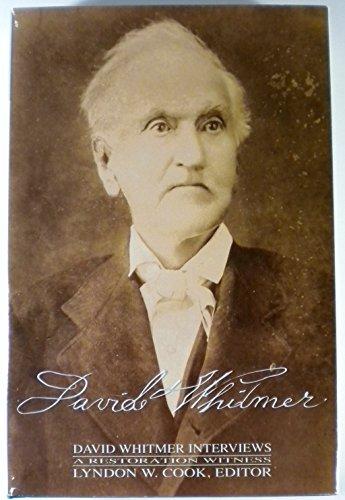
This book was mentioned as a source of interviews on the Book of Mormon, containing various insights and statements from David Whitmer.
I've got a book on my shelf called David Whitmer Interviews that Lyndon Cook put together.
— Episode: Introductory Pages of the Book of Mormon...
This book was mentioned as a source of interviews on the Book of Mormon, containing various insights and statements from David Whitmer.
I've got a book on my shelf called David Whitmer Interviews that Lyndon Cook put together.
It was a book that had numerous interviews from David Whitmer about the Book of Mormon.
I've got a book on my shelf called David Whitmer Interviews that Lyndon Cook put together. It's about this thick and it's just his interviews on the Book of Mormon and he is crystal clear.
It was described as a remarkable read, providing consistency and more details about the early days and the appearance of the angel Moroni, than any other source.
it's a remarkable read first of all for consistency but also because David gives more details about those early days and about the appearance of the angel Maron I even any other person does
The Complete Series
This book was used as a reference for the idea that no one can work out their own salvation, and that those actions belong to God.
As Joseph McConkie and Robert Millet have pointed out in their book, Doctrinal Commentary on the Book of Mormon, and I'm quoting them, in the strictest sense no one can work out is fo...
— Episode: Revelation 15-22 • Part 2 • Dr. Richard...
This book was used as a reference for the idea that no one can work out their own salvation, and that those actions belong to God.
As Joseph McConkie and Robert Millet have pointed out in their book, Doctrinal Commentary on the Book of Mormon, and I'm quoting them, in the strictest sense no one can work out is for her own salvation.
This book was mentioned as a source for a quote about how no one can work out their own salvation.
in the strictest sense no one can work out is for her own salvation. No person can create himself or herself, resurrect himself or herself, ransom himself or herself from sins, or clean their own heart from the taints of the world.
The speaker quoted from Adam Miller's book about when God knocks, to rush to the door and throw it open, not hiding or creeping to see if he looks like you thought he would. They then discussed how this relates to the idea of not hiding from God, as God wants to bless you.
When God knocks, don't creep to the door and look through the peephole to see if he looks like you thought he would. Rush to the door and throw it open.
— Episode: Alma 39-42 Part 2 • Dr. Adam Miller • Au...
The speaker quoted from Adam Miller's book about when God knocks, to rush to the door and throw it open, not hiding or creeping to see if he looks like you thought he would. They then discussed how this relates to the idea of not hiding from God, as God wants to bless you.
When God knocks, don't creep to the door and look through the peephole to see if he looks like you thought he would. Rush to the door and throw it open.
You don't need to hide from him. He wants to bless you.
Dr. Miller's book, 'Letters to a Young Mormon', was briefly mentioned in his introduction as one of his many published works.
Dr. Adam S. Miller is a professor of philosophy at Collin College in McKinney, Texas...The author of more than 10 books including Letters to a Young Mormon...
It was highly praised by Robert L. Millett, who expressed regret that he did not have access to it in his youth, noting the author's beautiful, fresh and honest writing style.
Adam Miller's Letters to a Young Mormon frustrated me. Not that I didn't like it because I enjoyed it immensely. No, it frustrated me because I only wish I had had such a book to read when I was a 1960s teenager with racing mind and hormones.
I just love your writing style. It's beautiful and it's fresh and honest.
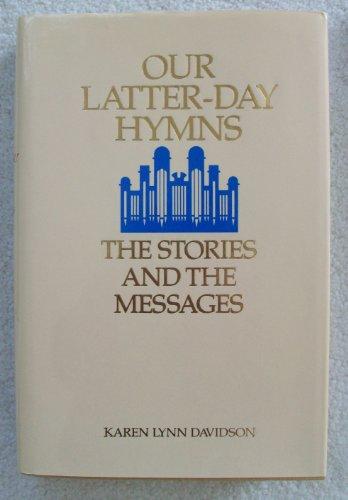
The Stories and the Messages
It was mentioned that Carolyn Davidson wrote a book about the backstory of every Latter-day Saint hymn, including 'Lord, I Would Follow Thee'.
In this great book, Our Latter-day Saint Hymns, Carolyn Davidson sought out the kind of the backstory of every one of our hymns.
— Episode: James Part 2 • Dr. J.B. Haws • Nov 13 -...
It was mentioned that Carolyn Davidson wrote a book about the backstory of every Latter-day Saint hymn, including 'Lord, I Would Follow Thee'.
In this great book, Our Latter-day Saint Hymns, Carolyn Davidson sought out the kind of the backstory of every one of our hymns.
It was recommended as a book that provides the stories behind many Latter-day Saint hymns, including the ones discussed in the episode.
There is a book, Desert Book Sells, our latter day hymns, and it gives the stories for all of them. It's a good one.
It was recommended as a book from Deseret Book that provides the backstories and stories behind many of the hymns, including the ones discussed in the podcast.
There is a book, Desert Book Sells, our latter day hymns, and it gives the stories for all of them. It's a good one.
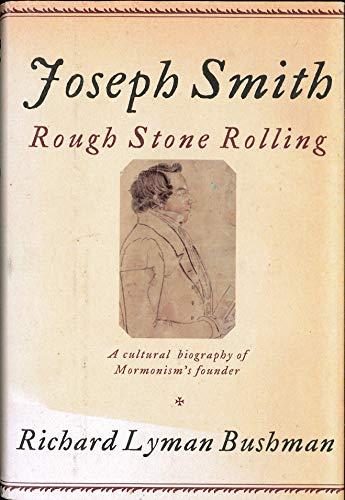
Rough Stone Rolling
It was mentioned as a book about the life of Joseph Smith, which Dr. Haws had been discussing while on a book tour shortly after its publication.
He wrote this book, an author's diary about his experiences the first six months after Rough Stone Rolling was published.
— Episode: James Part 1 • Dr. J.B. Haws • Nov 13 -...
It was mentioned as a book about the life of Joseph Smith, which Dr. Haws had been discussing while on a book tour shortly after its publication.
He wrote this book, an author's diary about his experiences the first six months after Rough Stone Rolling was published.
It was mentioned as a book by Richard Bushman, although not specifically about Doctrine and Covenants 29, it was referenced in relation to the positive impact of the restored gospel.
Richard Bushman has a little quote where he says you have to ask yourself what are the consequences of these beliefs meaning the beliefs of the restored gospel of Jesus Christ have they resulted in good in your life and the life of others you have known if they have then you want to treat them with respect as with science a religion that works and produces results has to be taken seriously
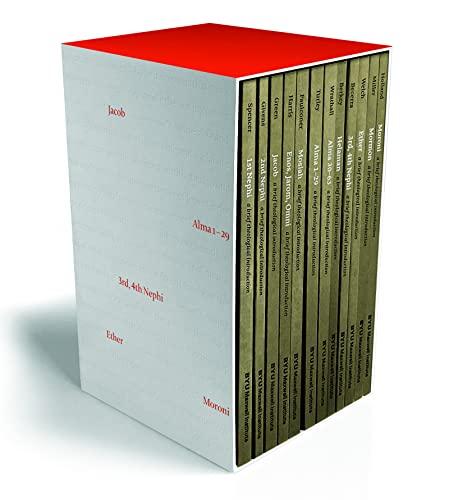
Brief Theological Introductions Boxed Set
Dr. Miller's book, 'Mormon, A Brief Theological Introduction', was briefly mentioned in his introduction as one of his many published works.
Dr. Adam S. Miller is a professor of philosophy at Collin College in McKinney, Texas...The author of more than 10 books including...Mormon, A Brief Theological Introduction.
— Episode: Romans 1-6 Part 1 • Dr. Adam Miller • Au...
Dr. Miller's book, 'Mormon, A Brief Theological Introduction', was briefly mentioned in his introduction as one of his many published works.
Dr. Adam S. Miller is a professor of philosophy at Collin College in McKinney, Texas...The author of more than 10 books including...Mormon, A Brief Theological Introduction.
It was mentioned as a new series of books on the Book of Mormon published by the Maxwell Institute, with the Ether volume containing a chapter exploring Gentile salvation through the example of the brother of Jared.
A couple of years ago, the Maxwell Institute at BYU published a new series of books on The Book of Mormon called The Book of Mormon Brief Theological Introductions and the Ether volume by Rosalind Welch.
She has a chapter where she explores this.
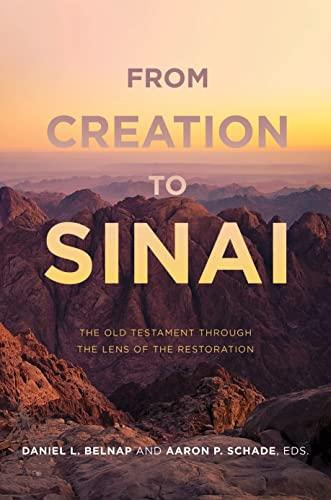
The Old Testament Through the Lens of the Restoration
It was co-edited by Dr. Belnap and Erin Shade, and was mentioned as a book he previously co-edited during the podcast.
Many of our listeners will remember he was the co-editor of that book, From Creation to Sinai.
— Episode: Luke 22; John 18 Part 1 • Dr. Daniel Bel...
It was co-edited by Dr. Belnap and Erin Shade, and was mentioned as a book he previously co-edited during the podcast.
Many of our listeners will remember he was the co-editor of that book, From Creation to Sinai.
It was recently published by Deseret Book and is a compilation of scholarly articles about the Old Testament, particularly the Exodus chapters being discussed in the podcast.
a lot of our listeners have this book, From Creation to Sinai, which a Deseret Book published recently, which is really helpful in making the Old Testament language symbolism and history putting those together in an easier way to understand.
Dan, you co-wrote that book with Aaron Shade?
Yes. From Creation to Sinai.
From Creation to Sinai, right where we are today.
It was described as a recently released, thick and large book that was a landmark publication, with 17 chapters by restoration Old Testament scholars.
This is a brand new book that just came out from the religious study center at BYU. It's called From Creation to Sinai, the Old Testament through the Lens of the Restoration edited by Dan Belknap and Aaron Shade.
This just came out. And this is in a lot of ways, a landmark book. It's really, really thick and big. It's got, I think, 17 chapters written by some of our best Old Testament scholars that we have.
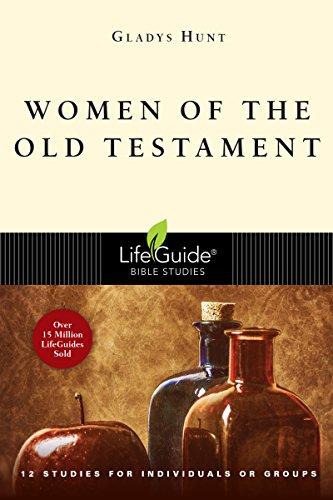
It was mentioned as one of the books written by Dr. Camille Olson, who was a guest speaker on the podcast. Dr. Olson's background and expertise were discussed, with this book being the source of her bio.
I'm reading this bio from the back of one of her many books called Women of the Old Testament.
— Episode: Matthew 26; Mark 14; John 13 Part 1 • Dr...
It was mentioned as one of the books written by Dr. Camille Olson, who was a guest speaker on the podcast. Dr. Olson's background and expertise were discussed, with this book being the source of her bio.
I'm reading this bio from the back of one of her many books called Women of the Old Testament.
That's why I think we wanted her here today, Hank, because we're talking about some of the women in the New Testament a little bit in these chapters.
It was described as one of the most beautiful books on the speaker's shelf, with gorgeous paper and illustrations, and was written by the guest, Camille Fronk Olson, on the topic of women in the Old Testament.
I mean, the paper, the illustrations, Hank, they don't publish my books like this. I get recycled newsprint in my books. And these are gorgeous, beautiful, illustrated,
I love that she has done so much on women in the scriptures and in the Old Testament.
It was described as one of the most beautiful books on the host's shelf due to the paper quality and illustrations, and it focused on the roles of women in the Old Testament.
I mean, the paper, the illustrations, Hank, they don't publish my books like this. I get recycled newsprint in my books. And these are gorgeous, beautiful, illustrated, but I love that she has done so much on women in the scriptures and in the Old Testament.
![Doctrines of Salvation. Complete Three-Volume Work [3-in-1]. Sermons & Writings of Joseph Fielding Smith. Cover](https://media.podcastbookpicks.com/books/22322.jpg)
The discussion cited Volume1, page61, noting Smith's statement that no person is predestined to sin or salvation, emphasizing agency.
Doctrines of Salvation, Volume1, page61. He said, No person was foreordained or appointed to sin or to perform a mission of evil. No person is ever predestined to salvation or damnation. Every person...
— Episode: 2 Nephi 20-25 Part 1 • Dr. Camille F. Ol...
The discussion cited Volume1, page61, noting Smith's statement that no person is predestined to sin or salvation, emphasizing agency.
Doctrines of Salvation, Volume1, page61. He said, No person was foreordained or appointed to sin or to perform a mission of evil. No person is ever predestined to salvation or damnation. Every person has agency.
It was quoted from to explain that no one is predestined to sin or evil, and that Judas Iscariot had agency and was led by Lucifer. It was a counterpoint to the idea that Judas was prophesied to betray Jesus.
This is from Doctrines of Salvation, Volume 1, page 61.
Every soul coming into this world came here with the promise that through obedience he would receive the blessings of salvation. No person was foreordained or appointed to sin or to perform a mission of evil. No person is ever predestined to salvation or damnation. Every person has agency. Cain was promised by the Lord that if he would do well, he would be accepted. Judas had his agency and acted upon it. No pressure was brought to bear on him to cause him to betray the Lord, but he was led by Lucifer. If men were appointed to sin and betray their brethren, then justice could not demand that they be punished for sin and betrayal when they are guilty.
It was mentioned as a source where the author shared his belief that endowments and ordinances were part of the experience on the Mount of Transfiguration, though not official doctrine.
He said, 'I'm convinced in my own mind that when the Savior took the three disciples up on the mount, I'm just going to stop and say here, when you get someone saying, "I'm convinced in my own mind," I think that's their way of saying, "I'm not pronouncing this as official doctrine. This is what I, as a very informed believer, believes." All right?'
That when the Savior took the three disciples up on the mount, which is spoken of as the Mount of Transfiguration, He there gave unto them the ordinances that pertain to the house of the Lord and that they were endowed.
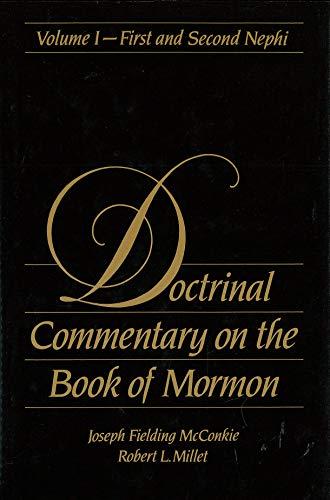
It was mentioned in the context of Jack Welch's interpretation of the parable of the Good Samaritan in the 2007 Ensign, relating the certain man in the parable to Adam and his journey from heaven to earth, and the two deaths discussed in the book of Mormon.
There's two deaths, second Nephi nine, spiritual death and physical death and sins.
— Episode: Mathew 18; Luke 10 Part 2 • Dr. Krystal...
It was mentioned in the context of Jack Welch's interpretation of the parable of the Good Samaritan in the 2007 Ensign, relating the certain man in the parable to Adam and his journey from heaven to earth, and the two deaths discussed in the book of Mormon.
There's two deaths, second Nephi nine, spiritual death and physical death and sins.
It was mentioned in passing as a book that teaches that the devil leads people carefully to hell.
It's a lie. It's absolute deception. Isn't that second Nephi? He leadeth their souls carefully down to hell.
The podcast mentioned that it's one of the chapters that people often skip in the Book of Mormon but is important for understanding the scattering and gathering of Israel.
Those are the major gathering chapters and everyone's kind of like, oh, Second Nephi, skip that. Oh, Jacob 5, skip that.
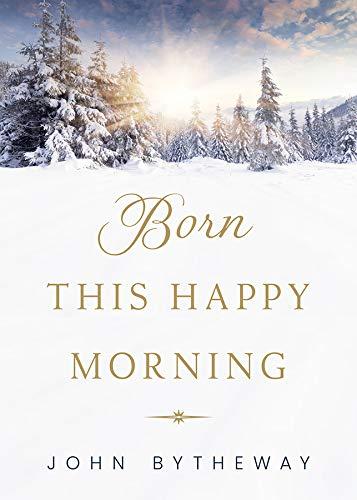
It was referenced by Hank Smith as a Christmas book that features the story of Barbara and her experience with forgiveness after a car accident.
It's from, if I remember right, it's from your book Born This Happy Morning. It's a little Christmas book, right?
— Episode: Mathew 18; Luke 10 Part 1 • Dr. Krystal...
It was referenced by Hank Smith as a Christmas book that features the story of Barbara and her experience with forgiveness after a car accident.
It's from, if I remember right, it's from your book Born This Happy Morning. It's a little Christmas book, right?
It was mentioned as a book written by John Bytheway which included the story of Captain James Ray's experience in the Hanoi Hilton and how the 23rd Psalm brought comfort.
I wrote a little book called Born This Happy Morning, which is one of my favorite lines from a song ever.
John mentioned his own book about Christmas, inspired by the hymn 'O Come All Ye Faithful', that touched on the anticipation and joy surrounding Jesus's birth.
Brad wrote a book about Christmas and so did you, John. You wrote a book about Christmas called Born This Happy Morning. Tell me about it.
Note: The book recommendations on this page are discovered automatically from podcast transcripts, and may be incorrect or incomplete.
Podcast Name