Mother of Normandy
Jeff Stoffer
Mentioned 1 year ago
11. Angels of Mercy
1944. Europe is in the grip of the Nazi war machine. But on the shores of Great Britain, thousands of men and women are planning the great fightback. On the beaches, in the skies, out at sea and behind enemy lines... What will it take to turn the tide of the war? In commemoration of the 80th annive...
Recently mentioned
Jeff Stoffer
Mentioned 1 year ago
11. Angels of Mercy
Tim Luckhurst
Mentioned 1 year ago
10. Journalists on the Front Line

William I. Hitchcock
Mentioned 1 year ago
10. Journalists on the Front Line
Thomas Weber
Mentioned 1 year ago
9. Katastrophe
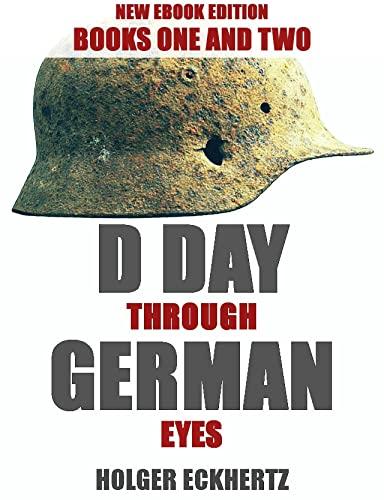
Holger Eckhertz
Mentioned 1 year ago
9. Katastrophe
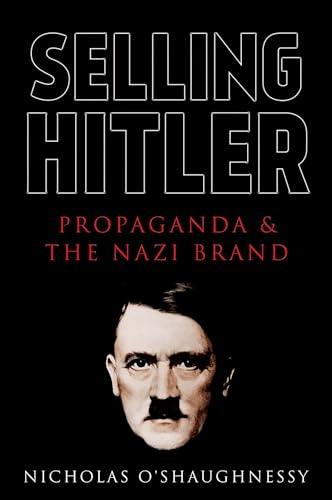
Nicholas O'Shaughnessy
Mentioned 1 year ago
9. Katastrophe
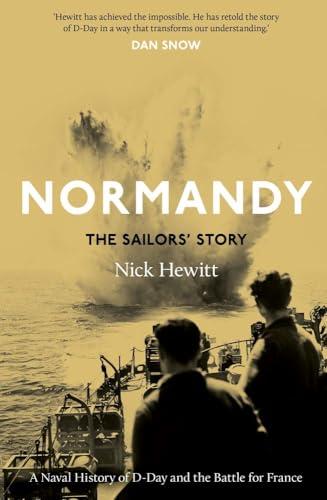
Nick Hewitt
Mentioned 2 years ago
6. The Armada Advances
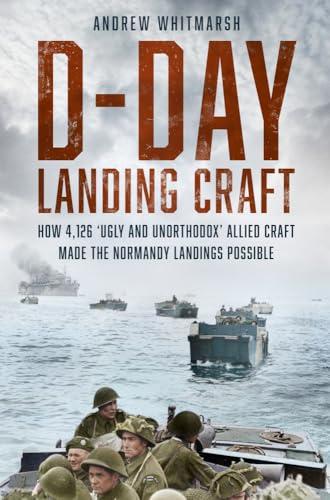
Andrew Whitmarsh
Mentioned 2 years ago
6. The Armada Advances
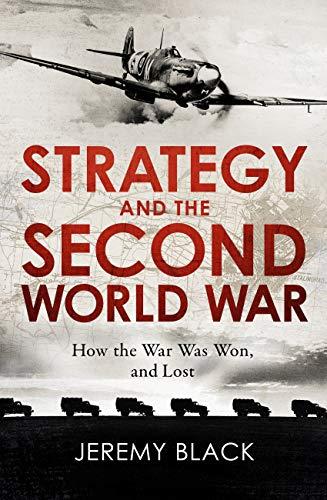
Jeremy Black
Mentioned 2 years ago
5. Crash Landing
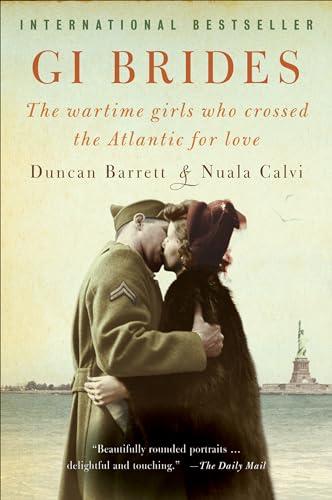
Duncan Barrett
Mentioned 2 years ago
4. The Longest Night…
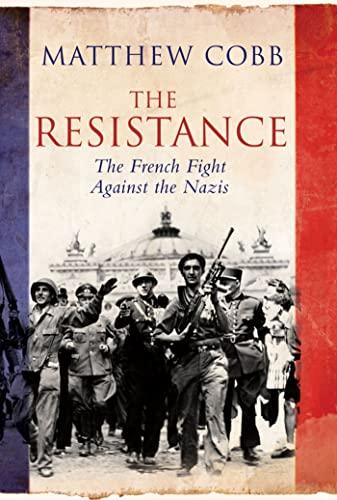
Matthew Cobb
Mentioned 2 years ago
3. Behind Enemy Lines

Olivier Wieviorka
Mentioned 2 years ago
3. Behind Enemy Lines
How the War was Won, and Lost
The author of the title was featured in two episodes, where he explained how the Allied airborne forces aimed to seal the Normandy beach approaches to hinder German reinforcements, and how the 1944 weather forecasts were primitive despite the critical role of weather in planning the invasion. His insights highlighted both the operational challenges of the largest airborne operation to date and the difficulties of meteorological prediction at the time, underscoring the book's depth of strategic analysis.
The book discussed the key initial objectives of the Allied airborne forces, which were to try and seal the approaches to the Normandy beaches from east and west to make it harder for the Germans to bring up reinforcements.
The key initial objectives for the Allied airborne forces were to try and seal the approaches to the Normandy beaches from east and west in order to make it harder for the Germans to bring up reinforcements to a, support their forces in the coastal fortifications and b, to try and drive in the Allied flanks.
I think I'm correct in saying it was the largest airborne operation that had yet existed in history so that that had unprecedented issues of, as it were, getting it right and, you know, the Allies were right to be concerned.
Jeremy Black, author of *Strategy and the Second World War*, said that weather forecasting was extremely difficult, even with modern computers, and that in 1944, it was very primitive.
Weather forecasting is extremely difficult. I live in Exeter, which is where the British Meteorological Office is, and our weather forecast is often episodic, shall we say, in its accuracy. And that is with the advantage of modern computers and the computer crunching of vast amounts of information. In 1944, weather forecasting was, to use the term primitive, would suggest that these people were in some way defective. That's not the case. They were operating within the parameters of the information available. But essentially, you are trying to predict what the weather is going to be by looking at what it is out in the Atlantic.
the Sailors' Story
In the episode, naval historian Nick Hewitt was quoted to illustrate how the D-Day amphibious assault was the largest and most intricate operation ever attempted, likening it to a gigantic game of Tetris. He described the diverse fleet involved, from tiny landing craft to massive converted liners, drawing on insights from his book. The discussion highlighted the book’s detailed naval perspective without explicitly recommending it.
Nick Hewitt, a naval historian, was quoted explaining that Neptune was the biggest and most complex amphibious operation in history, and that amphibious operations are the most complex that armed forces undertake because they are like a giant game of Tetris.
Neptune is still the biggest, most complex amphibious operation in history. And amphibious operations generally are the most complex operations that armed forces can do. Because it's like a gigantic game of Tetris. You're moving around ships and aircraft and soldiers and trying to get them all in the same place at the same time.
The fleet that's used for Neptune is ranging from tiny little assault landing craft of the kind that you see in Saving Private Ryan, right up to really significant size converted liners that are being used as landing ships.
How 4,126 ‘Ugly and Unorthodox’ Allied Craft made the Normandy Landings Possible
The book was brought up when Andrew Whitmarsh, a museum curator, explained how landing craft evolved from cumbersome rowing boats to the more efficient Higgins designs, emphasizing the chaotic and slow nature of earlier beach landings. He used the title to illustrate the technical advancements that made the Normandy landings feasible.
Andrew Whitmarsh, curator at the D-Day Story Museum in Portsmouth, provided insight into the evolution of landing craft, highlighting the historical shift from large rowing boats to the more sophisticated Higgins boats.
The older style of landing on a beach would often be that you would have most of the troops in basically large rowing boats, which might be towed by a smaller number of motorboats.
When you got to the beach, the heavily laden troops would have to climb over the sides of these boats. They might well end up in quite deep water, and it would all be basically chaos. It would be quite a slow process.
The Wartime Girls Who Crossed the Atlantic for Love
The hosts noted that the title was a New York Times bestseller about wartime girls who crossed the Atlantic for love, describing how the first GIs arrived shortly after Pearl Harbor and how local kids flocked to the docks for candy and gum. They presented the book as an interesting historical account but did not give a strong endorsement.
It was a New York Times bestseller, about the wartime girls who crossed the Atlantic for love. The first GIs started arriving two months after Pearl Harbor, and the ships were kitted out with bunks for all the soldiers.
Nuala Calvi is the author of the New York Times bestseller GI Brides, the wartime girls who crossed the Atlantic for love.
And as the ships came in, local kids would rush to the docks to meet them because they'd heard that the GIs had lots of candy and chewing gum.
In the episode, Olivier Villavioca referenced the title while discussing how the French Resistance supplied extensive intelligence to the Allies, noting that it contributed roughly 80% of the information needed for planning the liberation of France. He highlighted the book’s detailed account of these contributions, using it as a source for the historical overview.
This book provides details about the French Resistance, mentioning that it provided a lot of intelligence to the British, and was considered to have provided 80% of the information needed to plan for the liberation of France.
His books include The French Resistance and Normandy, the landings to the liberation of Paris.
Before D-Day, the French Resistance gave many, many pieces of intelligence to the British, mainly, and to a certain extent to the Americans.
General Donovan, who was leading the Office of Strategic Services, OSS, which is the ancestor of the CIA, considered that the French had given 80% of the information necessary to plan our world.
The Landings to the Liberation of Paris
In episode 3, the host referenced the title as one of the author's works that covers the Normandy landings through the liberation of Paris. No detailed endorsement was given, but it was noted for its relevance to the series' focus on World War II operations.
This book is about the Normandy landings and the subsequent liberation of Paris by the Allied forces.
His books include The French Resistance and Normandy, the landings to the liberation of Paris.

The hosts highlighted the title as a biography of Lucie Aubrac, a French Resistance heroine who evaded the Gestapo, noting that it was written by historian Sian Rees. They presented it as a relevant source for understanding her defiance during the war.
This book is a biography of Lucie Aubrac, a French Resistance heroine who successfully evaded the Gestapo.
Sian Rees is a historian and biographer. Her books include Lucie Aubrac, the French Resistance heroine who defied the Gestapo.

The Secrets and Lives of Christine Granville
In the episode, the host listed the title among several works by the author, noting it alongside two other books. No specific praise or critique was offered, and the mention served only to highlight the author's bibliography.
This book is mentioned alongside two other books as part of a list of books written by Claire Molly.
Her books include The Spy Who Loved, The Women Who Flew for Hitler and Agent Zoe.
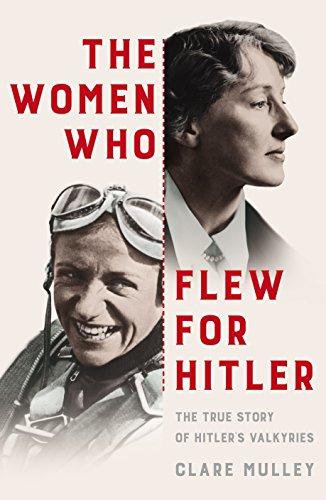
The True Story of Hitler's Valkyries
The hosts mentioned the title while listing the author’s works, noting it alongside two other books by the same writer. No specific endorsement or criticism was offered, so it was presented as a simple reference.
This book is mentioned alongside two other books as part of a list of books written by Claire Molly.
Her books include The Spy Who Loved, The Women Who Flew for Hitler and Agent Zoe.

The hosts noted the title as one of several works attributed to Claire Molly, grouping it with other historical espionage books. No specific endorsement was given, indicating a casual mention of the book.
This book is mentioned alongside two other books as part of a list of books written by Claire Molly.
Her books include The Spy Who Loved, The Women Who Flew for Hitler and Agent Zoe.
The Making of a Nazi
The hosts cited the book to illustrate Hitler’s tendency to summon people late at night for lengthy, dreaded monologues, using the author’s insights as evidence of his behavior. They referenced Professor Thomas Faber’s observations from the title to support this point.
The author described Hitler's habit of summoning people late at night, engaging them in lengthy monologues that could last for hours, often dreaded by those close to him.
Professor Thomas Faber, author of Becoming Hitler, The Making of a Nazi.
Ever since being in power, he had got this tendency to, late at night, to summon people around him.
He would ask them questions, but ultimately he would give these monologues that could last half a night.
They were often actually dreaded by people closest to him, because they knew if they were called into one of those monologues, they wouldn't get much sleep that night.
New Edition - Books One & Two
The book was referenced when Jonathan Trigg, its author, explained Hitler's unusual work routine, noting that he slept in late, stayed up through the early morning hours, and that staff were instructed not to wake him. The discussion highlighted how this night‑owl habit affected decision‑making during the war. The mention served to provide historical context rather than a recommendation.
The author explained Hitler's unusual work routine, noting he slept in late, worked until the early hours, and rarely woke before midday, causing staff to refrain from waking him up.
Jonathan Trigg, author of D-Day Through German Eyes.
Hitler had a very, very strange working routine.
So he would sleep in late, and he would very rarely be up before kind of midday.
But he would work until the early hours.
So he was a night owl. He liked to be up at, you know, three, four, five in the morning.
And of course what that meant was that when he did finally go to bed, all his staff were told, well, don't, whatever you do, don't wake up the Fhrer.
Oh, you know, he's not a morning person.
Propaganda and the Nazi Brand
The episode cited the author as an expert and referenced the book while discussing Hitler's lethargy during the invasion, noting it as typical of his later-war behavior that led to disastrous outcomes. The hosts used the book’s analysis of Nazi propaganda to contextualize the events, but did not explicitly recommend it.
The author highlighted Hitler's sleepiness during the invasion, suggesting it was typical of his behavior in the later stages of the war, ultimately contributing to disastrous outcomes.
Professor Nicholas O'Shaughnessy, author of Selling Hitler, Propaganda and the Nazi Brand.
Hitler's nightmare is happening now. The Allies have landed, but no one dare wake Hitler.
The Fhrer is asleep. King Redbeard is asleep in his mountain.
You mustn't, mustn't wake him because he's the most glorious man in all history.
He must have his sleep.
Rather typical of Hitler in the mid to later war, how utterly disastrous he was.
The Press and the People 1939-1945
Tim Lockhurst, a former war reporter and the book's author, discussed its insights on wartime censorship, noting that although the Ministry of Information often censored copy, journalists could still publish what they wanted. He highlighted the tension between official control and press freedom during the conflict, presenting the title as an informative look at the era's media landscape.
Tim Lockhurst, a former war reporter and author, talked about censorship during the war, stating that copy was often censored by the Ministry of Information, but it didn't have to be, and journalists could publish whatever they liked.
Copy was often censored by the Ministry of Information, but it didn't have to be. You could publish whatever you liked.
The History of the Continent Since 1945
In the episode, the host noted that Chester Wilmot, the Australian BBC reporter who flew into Normandy, later authored a classic history of the Second World War titled the book, emphasizing his background as a frontline journalist. No explicit recommendation or critique was offered.
Chester Wilmot, an Australian BBC reporter who flew into Normandy on D-Day in a glider, later wrote a classic history of the Second World War called "The Struggle for Europe."
And afterwards, Wilmot wrote one of the classic histories of the Second World War, The Struggle for Europe.
The Story of Simone Renaud
Giles Milton, a historian, was mentioned for his writing on the Mulberry harbours, a key part of the D-Day invasion.
The Allies had their secret master plan which was to tow harbours across the Channel, the famous Mulberry Harbours which were then to be installed at Aramanche, which was to allow the delivery of vast...
— Episode: 11. Angels of Mercy
Giles Milton, a historian, was mentioned for his writing on the Mulberry harbours, a key part of the D-Day invasion.
The Allies had their secret master plan which was to tow harbours across the Channel, the famous Mulberry Harbours which were then to be installed at Aramanche, which was to allow the delivery of vast numbers of tanks and general military hardware onto the shores of France.
Note: The book recommendations on this page are discovered automatically from podcast transcripts, and may be incorrect or incomplete.
Podcast Name