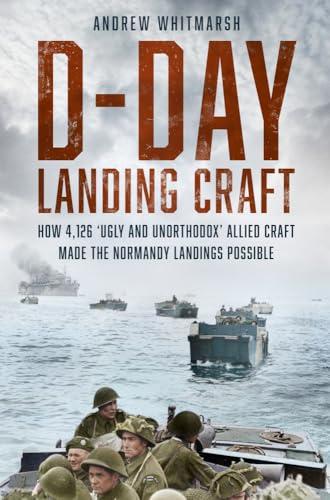

D-Day Landing Craft: How 4,126 ‘Ugly and Unorthodox’ Allied Craft made the Normandy Landings Possible Cover
Podcast Mentions

D-Day Landing Craft How 4,126 ‘Ugly and Unorthodox’ Allied Craft made the Normandy Landings Possible

Andrew Whitmarsh

The contribution of landing craft and their crews to the 1944 Normandy campaign was enormous, and often overlooked. Most of the more than 132,000 Allied troops who landed on the beaches on D-Day came ashore from landing craft. The book examines why so many different types of landing craft were used...

Podcasts 2
Quotes 3
The Rest Is History

They announced the upcoming Rest Is History book titled Landing, slated for release in September, and invited preorders for a signed copy.

"

Our second official book, the Rest Is History Returns, is-- I believe the only word is Landing. It's Landing this September and you can preorder a signed copy of the Rest Is History Returns now.
— Episode: 492. The War on Beards: From Peter the G...

Episode: 492. The War on Beards: From Peter the Great to Jo...

They announced the upcoming Rest Is History book titled Landing, slated for release in September, and invited preorders for a signed copy.

"

Our second official book, the Rest Is History Returns, is-- I believe the only word is Landing. It's Landing this September and you can preorder a signed copy of the Rest Is History Returns now.

D-Day: The Tide Turns

The book was brought up when Andrew Whitmarsh, a museum curator, explained how landing craft evolved from cumbersome rowing boats to the more efficient Higgins designs, emphasizing the chaotic and slow nature of earlier beach landings. He used the title to illustrate the technical advancements that made the Normandy landings feasible.

Episode: 6. The Armada Advances

Andrew Whitmarsh, curator at the D-Day Story Museum in Portsmouth, provided insight into the evolution of landing craft, highlighting the historical shift from large rowing boats to the more sophisticated Higgins boats.

"

The older style of landing on a beach would often be that you would have most of the troops in basically large rowing boats, which might be towed by a smaller number of motorboats.

When you got to the beach, the heavily laden troops would have to climb over the sides of these boats. They might well end up in quite deep water, and it would all be basically chaos. It would be quite a slow process.

Note: The book recommendations on this page are discovered automatically from podcast transcripts, and may be incorrect or incomplete.