
Podcast
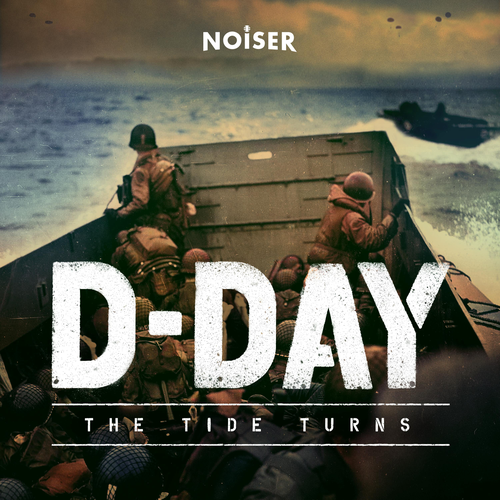
D-Day: The Tide Turns
The author of the title was featured in two episodes, where he explained how the Allied airborne forces aimed to seal the Normandy beach approaches to hinder German reinforcements, and how the 1944 weather forecasts were primitive despite the critical role of weather in planning the invasion. His insights highlighted both the operational challenges of the largest airborne operation to date and the difficulties of meteorological prediction at the time, underscoring the book's depth of strategic analysis.
Episode: 5. Crash Landing
The book discussed the key initial objectives of the Allied airborne forces, which were to try and seal the approaches to the Normandy beaches from east and west to make it harder for the Germans to bring up reinforcements.
The key initial objectives for the Allied airborne forces were to try and seal the approaches to the Normandy beaches from east and west in order to make it harder for the Germans to bring up reinforcements to a, support their forces in the coastal fortifications and b, to try and drive in the Allied flanks.
I think I'm correct in saying it was the largest airborne operation that had yet existed in history so that that had unprecedented issues of, as it were, getting it right and, you know, the Allies were right to be concerned.
Episode: 2. An Imperfect Storm
Jeremy Black, author of *Strategy and the Second World War*, said that weather forecasting was extremely difficult, even with modern computers, and that in 1944, it was very primitive.
Weather forecasting is extremely difficult. I live in Exeter, which is where the British Meteorological Office is, and our weather forecast is often episodic, shall we say, in its accuracy. And that is with the advantage of modern computers and the computer crunching of vast amounts of information. In 1944, weather forecasting was, to use the term primitive, would suggest that these people were in some way defective. That's not the case. They were operating within the parameters of the information available. But essentially, you are trying to predict what the weather is going to be by looking at what it is out in the Atlantic.