The Clash of Civilizations and the Remaking of World Order
Samuel P. Huntington
Mentioned 5 months ago
It Could Happen Here Weekly 220
There’s a reason the History Channel has produced hundreds of documentaries about Hitler but only a few about Dwight D. Eisenhower. Bad guys (and gals) are eternally fascinating. Behind the Bastards dives in past the Cliffs Notes of the worst humans in history and exposes the bizarre realities of th...
Recently mentioned
Samuel P. Huntington
Mentioned 5 months ago
It Could Happen Here Weekly 220
Robert D. Kaplan
Mentioned 5 months ago
It Could Happen Here Weekly 220

Elizabeth J. Perry
Mentioned 5 months ago
It Could Happen Here Weekly 220

J.R.R. Tolkien
Mentioned 5 months ago
Part One: How Jeffrey Epstein Helped Build the Modern World

Joshua Green
Mentioned 5 months ago
Part One: How Jeffrey Epstein Helped Build the Modern World
Professor Gilles Deleuze
Mentioned 5 months ago
It Could Happen Here Weekly 219

Madoka Kishi
Mentioned 5 months ago
It Could Happen Here Weekly 219
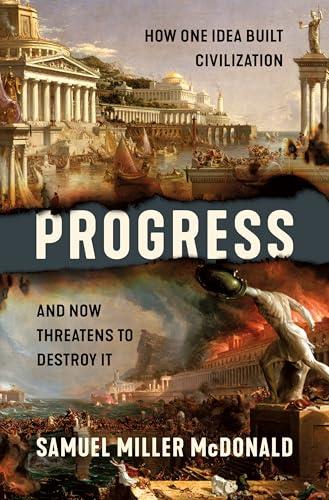
Samuel Miller McDonald
Mentioned 5 months ago
It Could Happen Here Weekly 219

Klaus Mann
Mentioned 5 months ago
It Could Happen Here Weekly 219
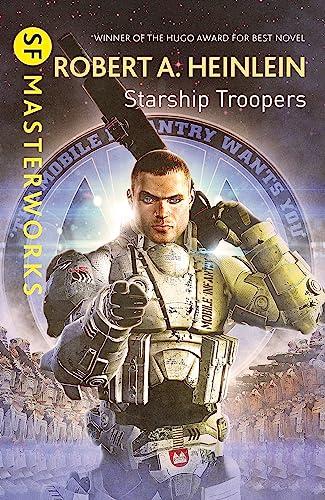
Mentioned 5 months ago
The Greg Bovino Episode Extravaganza!

Robert A. Heinlein
Mentioned 5 months ago
The Greg Bovino Episode Extravaganza!

John Lindsay-Poland
Mentioned 5 months ago
It Could Happen Here Weekly 218
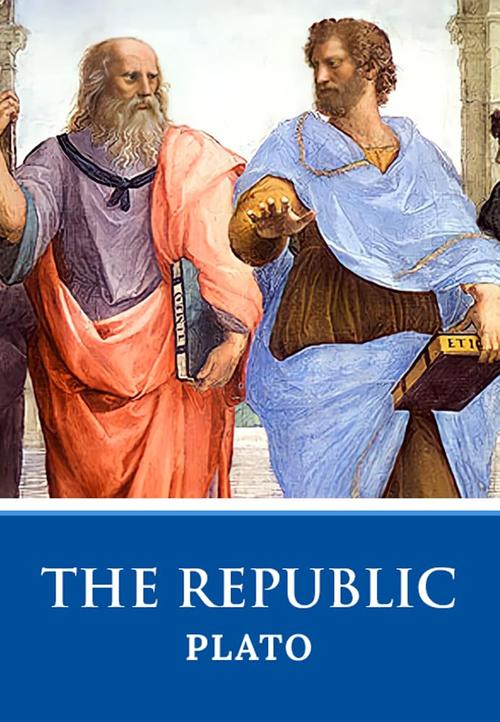
The Original Unabridged And Complete Edition (Plato Classics)
The book was mentioned in the context of a discussion about the perceived value of gold, with Robert Evans referencing Plato's perspective on gold as a rock.
Just a rock that sat out in the sun the most according to Plato.
— Episode: Part Two: Christopher Columbus: Bringer...
The book was mentioned in the context of a discussion about the perceived value of gold, with Robert Evans referencing Plato's perspective on gold as a rock.
Just a rock that sat out in the sun the most according to Plato.
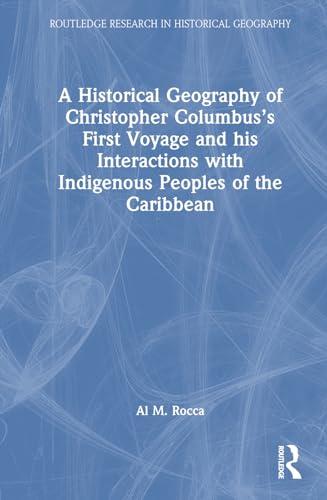
The podcast heavily references and critiques Delaney's book which focuses on Christopher Columbus's writings and attempts to portray him in a more positive light by focusing on seemingly benevolent actions and minimizing the violence and harm inflicted on the indigenous populations. The hosts of the podcast disagreed with her interpretations.
our friend Carol Delaney absolutely fawns over the descriptions Columbus writes of people and geography.
— Episode: Part Two: Christopher Columbus: Bringer...
The podcast heavily references and critiques Delaney's book which focuses on Christopher Columbus's writings and attempts to portray him in a more positive light by focusing on seemingly benevolent actions and minimizing the violence and harm inflicted on the indigenous populations. The hosts of the podcast disagreed with her interpretations.
our friend Carol Delaney absolutely fawns over the descriptions Columbus writes of people and geography.
She glosses over the fact that he like she talks about like what a good like anthropological attention to detail that he does that he has which is interesting because he's also like dismissing all of these different gifts.
So in short order Columbus takes his little fleet away from this first island, which is probably San Salvador and heads towards Cuba, which he thinks is Japan, right?
she assures us that the experience was meant to be reciprocal so that his family could learn it.
It's like a you know, it's like a gap year cultural exchange for these people.
A History of Man's Search to Know His World and Himself
George Bascom, Cochise, and the Start of the Apache Wars

Matt Walsh, known for his anti-trans views, created a children's book called 'Johnny the Walrus,' which is described as unbelievably transphobic and likely disliked by actual children.
I know Johnny the Walrus. Just unbelievably transphobic piece of shit thing that he made like I don't think a single child has ever read willingly the daily wires kind of pushed to like a children's m...
— Episode: It Could Happen Here Weekly 49
Matt Walsh, known for his anti-trans views, created a children's book called 'Johnny the Walrus,' which is described as unbelievably transphobic and likely disliked by actual children.
I know Johnny the Walrus. Just unbelievably transphobic piece of shit thing that he made like I don't think a single child has ever read willingly the daily wires kind of pushed to like a children's media creation has been kind of wacky. It's awful. Like I it's it's I don't know these people like they just they they're all hacks. But the problem is if you want to make a children's book thing, like you actually have no easy like make something but you have to make something that like a child will oh literally just like you don't you don't need to you have to sell it to parents.

Victor Bout, a notorious arms dealer, referenced George Bernard Shaw's play 'Arms and the Man' in a 2003 New York Times article, suggesting that the lack of laws against arms dealing reflects the complexities of international politics.
And then that to the New York Times and yeah in the piece he drinks carrot juice. He's vegetarian. He calls himself a scapegoat and a family man. He's what a hero. Yeah, every day Joe trying to sell s...
— Episode: It Could Happen Here Weekly 49
Victor Bout, a notorious arms dealer, referenced George Bernard Shaw's play 'Arms and the Man' in a 2003 New York Times article, suggesting that the lack of laws against arms dealing reflects the complexities of international politics.
And then that to the New York Times and yeah in the piece he drinks carrot juice. He's vegetarian. He calls himself a scapegoat and a family man. He's what a hero. Yeah, every day Joe trying to sell some Kalashnikovs to people who are doing genocide and he is good. All right. Is this interview how we know a lot about him? Yes that and his this man loves a hand. The home video, right? International crime sprees the best idea we ever had a quirky little dude, but he's not doing crimes in his videos. He just looks like like I from the office who is just like the most mundane dude and ill-fitting suit. He just looks like a salaryman who drives like a regular car and on the weekends likes to let go to Buffalo Wild Wings and what sports events like he? Or to slide with his like white ass body and pot belly at one point in one of these home videos and like he just yeah, he just strikes you as the most boring family guy. Like he's not he seems to be like Martin drugs at one point. It's fascinating and bizarre and what I'm assuming he has children if he's a family man.
He talks about in the article. He's like look they're using me as like this is a thing that like the reason they that it's very hard to prosecute Victor boot is because there are not that many laws against arms dealing and the reason there are not that many laws against arms dealing integral to how we do foreign policy, right? Like we are hosed without people like Victor boot and that's like the other side of this coin that yeah, we need a Nicolas Cage bad to pin this stuff on and yeah, he pretty horrific things or sold weapons to people who did horrific things, but he what he's doing is not that like abnormal and it's not that always illegal and as we'll see when you turn into like gross entrapment to arrest this guy and he is right that like is he really the biggest arms dealer in the world or is that like a dick Cheney or you know, Lockheed Martin or a Raytheon like is he really any more evil than like I live in San Diego right or most of the companies I just mentioned have offices here. I rode past one of them today, you know, and those people also go on the water slide with their kids. He does have a kid. He has a daughter one daughter or child. I don't know boarded in the Emirates and they're 28. So I bet he knows where they are now. Yeah, but he's a great dad. I wore he's been in jail. Yeah, he has a wife to Allah is his wife. Just she was she's a bit younger than him. So also he's really lost weight in jail and he's looking pretty good. Picture of him but with a mustache and stuff. He's really he's having a glow up. I think in jail.

It was Helena Blavatsky's final book, in which she incorporated ideas from Jean-Salvain Bailey and Edward Bulwer-Lytton's 'The Coming Race', and explored themes of Aryan superiority and the supposed degradation of the Semitic race, notably Jewish people.
And that Jamie Loftus, Sophie Lichterman, brings us all the way back around to our old friend from episode one, Jean-Salvain Bailey, the astronomer who crafted the theory of a hyperborean Atlantis.
— Episode: Part Four: Helena Blavatsky: the woman w...
It was Helena Blavatsky's final book, in which she incorporated ideas from Jean-Salvain Bailey and Edward Bulwer-Lytton's 'The Coming Race', and explored themes of Aryan superiority and the supposed degradation of the Semitic race, notably Jewish people.
And that Jamie Loftus, Sophie Lichterman, brings us all the way back around to our old friend from episode one, Jean-Salvain Bailey, the astronomer who crafted the theory of a hyperborean Atlantis.
Blavatsky's text is an anti-Darwinian dissent of man that tells the rise and fall of seven root races.
She quotes his works extensively, no less than 22 times, and credits him with having discovered the truth, or at least part of it, about Atlantis.
Now, while Keid envisioned this underground master race as being like potential conquerors, she sees them as benevolent spirit guides.
Blavatsky just rewrote a couple of other people and like mashed it together with half-understood Eastern religion, and like that's the Asotha Troupe.
A Cat in Atlantis #8
It was a book by Dan Edelstein that was referenced during the podcast as containing information about Helena Blavatsky's writings, particularly her theories on Atlantis and the Aryan race.
When we talked about this earlier, I quoted from Dan Edelstein's Hyperborean Atlantis.
— Episode: Part Four: Helena Blavatsky: the woman w...
It was a book by Dan Edelstein that was referenced during the podcast as containing information about Helena Blavatsky's writings, particularly her theories on Atlantis and the Aryan race.
When we talked about this earlier, I quoted from Dan Edelstein's Hyperborean Atlantis.
Edelstein continues, quote,
Edelstein called this belief in an Aryan Atlantis, the, quote, foundational myth of Nazism.
The Atlanteans transmitted to the Aryans all the known sciences and even highly sophisticated technologies such as aeronautics, knowledge of flying in air vehicles, as Blavatsky put it.
But over time, the Aryan root race also subdivided.
Illustrated Edition
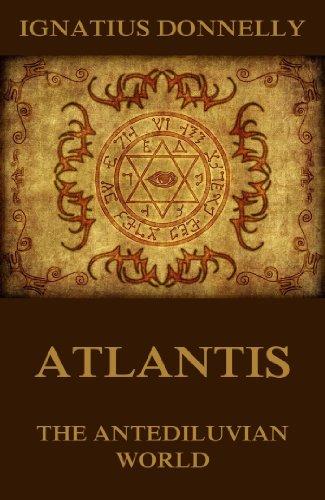
It was a book by Ignatius Donnelly that popularized the concept of Atlantis. Helena Blavatsky's ideas on the subject differed from Donnelly's, placing Atlantis in the far north near the North Pole instead of between Europe and America.
Although writing shortly after Ignatius Donnelly, whose Atlantis, The Antediluvian World, launched the Atlantis craze, Blavatsky did not place Atlantis in between Europe and America a...
— Episode: Part Four: Helena Blavatsky: the woman w...
It was a book by Ignatius Donnelly that popularized the concept of Atlantis. Helena Blavatsky's ideas on the subject differed from Donnelly's, placing Atlantis in the far north near the North Pole instead of between Europe and America.
Although writing shortly after Ignatius Donnelly, whose Atlantis, The Antediluvian World, launched the Atlantis craze, Blavatsky did not place Atlantis in between Europe and America as Donnelly had, but rather in the far north, near the North Pole.

It was a book by Alfred Rosenberg that was heavily influenced by Helena Blavatsky's 'The Secret Doctrine' and became a best-selling book in Nazi Germany, promoting the concept of an Aryan master race and the myth of Hyperborean Atlantis, a key element of Nazi ideology.
Alfred Rosenberg's book, The Myth of the 20th Century, which he publishes in 1930, is the second best selling book in Nazi Germany under Mein Kampf.
— Episode: Part Four: Helena Blavatsky: the woman w...
It was a book by Alfred Rosenberg that was heavily influenced by Helena Blavatsky's 'The Secret Doctrine' and became a best-selling book in Nazi Germany, promoting the concept of an Aryan master race and the myth of Hyperborean Atlantis, a key element of Nazi ideology.
Alfred Rosenberg's book, The Myth of the 20th Century, which he publishes in 1930, is the second best selling book in Nazi Germany under Mein Kampf.
And his whole book is a plagiarism of the secret doctrine.
He opens the book by restating the myth of a Hyperborean Atlantis and insisting that the existence of a, quote, prehistoric Nordic cultural center was the basis of all Nazi race science.

It was mentioned as a book possibly found in a large occult library belonging to Helena Blavatsky's great-grandfather, suggesting it was part of a collection of alchemy and hermetic philosophy books.
there. She found hundreds of decaying books by the 16th and 17th century Masters of alchemy and hermetic philosophy such as Paracelsus Heinrich Cornelius Agrippa and Heinrich Kunrath
— Episode: Part One: Helena Blavatsky: the woman wh...
It was mentioned as a book possibly found in a large occult library belonging to Helena Blavatsky's great-grandfather, suggesting it was part of a collection of alchemy and hermetic philosophy books.
there. She found hundreds of decaying books by the 16th and 17th century Masters of alchemy and hermetic philosophy such as Paracelsus Heinrich Cornelius Agrippa and Heinrich Kunrath

It was possibly found in a large occult library belonging to Helena Blavatsky's great-grandfather, suggesting it was a part of a collection of hermetic philosophy and alchemy books.
there. She found hundreds of decaying books by the 16th and 17th century Masters of alchemy and hermetic philosophy such as Paracelsus Heinrich Cornelius Agrippa and Heinrich Kunrath
— Episode: Part One: Helena Blavatsky: the woman wh...
It was possibly found in a large occult library belonging to Helena Blavatsky's great-grandfather, suggesting it was a part of a collection of hermetic philosophy and alchemy books.
there. She found hundreds of decaying books by the 16th and 17th century Masters of alchemy and hermetic philosophy such as Paracelsus Heinrich Cornelius Agrippa and Heinrich Kunrath
Modern Translations of the Three Founding Documents

A Novel
Miles Gray's book, 'After the Revolution', was promoted at the end of the podcast, and it was available on Amazon and the AK Press website.
I have a book called After the Revolution. You can find it anywhere you want to. You can find it on Amazon. You can find it on the AK Press website. You can find links there to a bunc...
— Episode: Part Four: The Clarence Thomas Story
Miles Gray's book, 'After the Revolution', was promoted at the end of the podcast, and it was available on Amazon and the AK Press website.
I have a book called After the Revolution. You can find it anywhere you want to. You can find it on Amazon. You can find it on the AK Press website. You can find links there to a bunch of local indie book dealers where you can buy it. So go to Google AK Press After the Revolution or get it literally anywhere else.
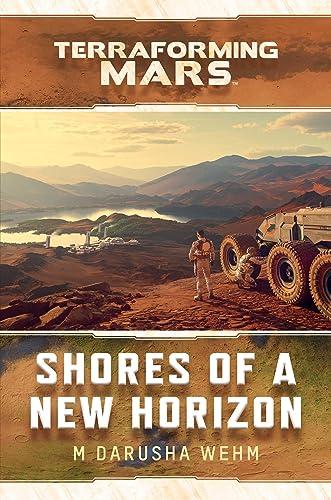
A Terraforming Mars Novel
While plugging his book, Robert Evans also mentioned a book, 'Terraforming Mars', by Jeff Bezos, available on bookshop.org that was seemingly adjacent to the one being plugged.
props book is on there along with the book terraforming Mars by some guy named Jeff Bezos. I'm not sure who that is. I've never heard of that.
— Episode: Part Two: The World Anti-Communist Leagu...
While plugging his book, Robert Evans also mentioned a book, 'Terraforming Mars', by Jeff Bezos, available on bookshop.org that was seemingly adjacent to the one being plugged.
props book is on there along with the book terraforming Mars by some guy named Jeff Bezos. I'm not sure who that is. I've never heard of that.
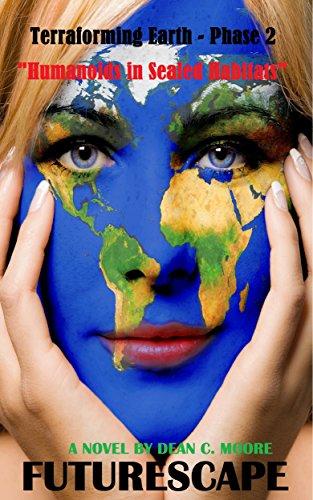
"Humanoids in Sealed Habitats" (FutureScape)
While plugging his book, Robert Evans also mentioned a book, 'Terraforming in Action', by Scott Winkler, on bookshop.org that was seemingly adjacent to the one being plugged.
It's that guy terraform in action by Scott Winkler, which has what looks like an Ottoman Janissary on the front. Not really sure what's going on there. Anyway, bunch of weird books go check them out.
— Episode: Part Two: The World Anti-Communist Leagu...
While plugging his book, Robert Evans also mentioned a book, 'Terraforming in Action', by Scott Winkler, on bookshop.org that was seemingly adjacent to the one being plugged.
It's that guy terraform in action by Scott Winkler, which has what looks like an Ottoman Janissary on the front. Not really sure what's going on there. Anyway, bunch of weird books go check them out.

Note: The book recommendations on this page are discovered automatically from podcast transcripts, and may be incorrect or incomplete.
Podcast Name