The Best of The Police
Police
Mentioned 8 months ago
Truth Under Fire (The Capital Gazette Murders)
A murder case has many layers: the victim, the crime, and the investigation. To truly understand it, you need to dissect each piece of a tragic puzzle. Join Anna-Sigga Nicolazzi and Scott Weinberger every Tuesday for an insider’s perspective, as they reveal to you the Anatomy of Murder.
Recently mentioned
Police
Mentioned 8 months ago
Truth Under Fire (The Capital Gazette Murders)
Alyse Ruriani
Mentioned 10 months ago
The Windshield Murder (Gregory Biggs)
Lisa Pulitzer
Mentioned 1 year ago
A Pane of Glass (Eveline Aguilar)
Ashlee Boyson (Birk)
Mentioned 1 year ago
Something to Fix (Emmett Corrigan)
Elizabeth Brown Pryor
Mentioned 2 years ago
The Reading Man (Warren Barnes)
Phil Stutz
Mentioned 2 years ago
Save the Next Girl - Part 2 (Morgan Harrington, RG, Hannah Graham)
Joe D. Kennedy
Mentioned 2 years ago
Calling Home (Dana Bartlett)
Judy Melinek MD
Mentioned 3 years ago
Without a Trace (Jim Cappello)
William Shakespeare
Mentioned 3 years ago
Elephant Earring in the Room (Lateyfa Lewis)

Mentioned 3 years ago
BONUS: Anna-Sigga & Scott AMA's
Glenn Kenny
Mentioned 3 years ago
Carl & Jackie - Part 2: The Triggermen (Carl Gaimari)
Faye Kellerman
Mentioned 3 years ago
Carl & Jackie - Part 1 (Carl Gaimari)
5 Tools to Help You Find Courage, Creativity, and Willpower--and Inspire You to Live Life in Forward Motion
This passage was written to Morgan by her mother, Jill, in a book that she wrote about the ordeal she and her husband went through following Morgan's death.
Living requires courage. Do not just bob along on the surface near the shore afraid. Most of us live below our spiritual capacity. Dad and I have been pushed into deep waters and choose to be brave an...
— Episode: Save the Next Girl - Part 2 (Morgan Harr...
This passage was written to Morgan by her mother, Jill, in a book that she wrote about the ordeal she and her husband went through following Morgan's death.
Living requires courage. Do not just bob along on the surface near the shore afraid. Most of us live below our spiritual capacity. Dad and I have been pushed into deep waters and choose to be brave and to swim. Knowing that we are here for a purpose, we choose to show up and try to live at the highest level. This is what I learned from you Morgan and from the wisdom in these crashing waves and I just really think that's a beautiful thought for all of us to live by.
Jill Harrington wrote this book as a compilation of her journal entries from after Morgan's death. It was written together with one of Morgan's teachers.
After speaking with Jill she sent me a book that she had written which really was a compilation of her journal entries through much of this ordeal and it was written together with one of Morgan's teachers and there was this passage that she talked about in the years following Morgan's death that they had been in the beach and they used that as their place to heal and recover and there is a piece of it that she wrote directly to Morgan.
She wrote to her daughter, Living requires courage. Do not just bob along on the surface near the shore afraid. Most of us live below our spiritual capacity.
Dad and I have been pushed into deep waters and choose to be brave and to swim. Knowing that we are here for a purpose, we choose to show up and try to live at the highest level.
This is what I learned from you Morgan and from the wisdom in these crashing waves and I just really think that's a beautiful thought for all of us to live by.
Two Years, 262 Bodies, and the Making of a Medical Examiner
Nikki cited the book during two episodes to explain how insulin poisoning could be detected after several days, noting that she had learned the details from a work‑related autopsy text. The discussion centered on the book’s forensic content rather than offering a recommendation, and it served mainly as a plot device for her conversation about a potential murder scenario. The hosts treated the reference as a casual illustration of forensic knowledge.
Nikki mentioned reading a book about autopsies at work, where she learned about insulin as a poison.
I could kill him, you know?
I read it in a book at work, a book on autopsies.
Nikki mentioned reading about insulin poisoning in a book about autopsies at work. She had told her friend Ashley that she could kill Jim with enough insulin, as she had read it was detectable after a few days, though Ashley thought she was joking.
I read it in a book at work, a book on autopsies.
The hosts referenced the title as a classic illustration of a homicide driven by jealousy, noting how the protagonist murders his wife after believing she was unfaithful. They used the story to draw parallels with a real case discussed in the episode, highlighting its relevance to the theme of jealous violence.
The story of Othello was mentioned as a classic example of a homicide motivated by jealousy, where the main character murders his wife because he believes she has been unfaithful.
You know, I think about the case of Othello, which is Shakespeare and being that I was an English major, I remember reading lots of Shakespeare. But Othello in particular really fits because it's that case of jealousy and that case he believed his wife Desdemona had been unfaithful and so he murders her.
The play was referenced in the context of jealousy and murder; the speaker drew parallels between the case and Othello's murderous act, believing his wife Desdemona had been unfaithful.
You know, I think about the case of Othello, which is Shakespeare and being that I was an English major, I remember reading lots of Shakespeare. But Othello in particular really fits because it's that case of jealousy and that case he believed his wife Desdemona had been unfaithful and so he murders her.
A Decker/Lazarus Novel (Decker/Lazarus Novels, 22)
The book was referenced as a cautionary example of advice not to discuss a crime before committing it, with the speaker noting it resembled a textbook of what not to do. Anasiga Nikolazi mentioned it in both episodes to illustrate how Jackie's behavior mirrored the warned‑against actions. The discussion highlighted the title's relevance to the topic rather than endorsing it as a read.
The speaker mentioned "Murder 101" as an example of a book that advises people not to talk about crimes they're about to commit, yet people do it all the time.
It's like if you wrote one of those like Murder 101, like what not to do before you commit a crime.
The speaker compared the case to a 'Murder 101' textbook, suggesting that Jackie's actions were a textbook example of what not to do before committing a crime, specifically, talking about it.
It's like if you wrote one of those like Murder 101, like what not to do before you commit a crime.
Joran van der Sloot, a Murder in Peru, and the Natalee Holloway Mystery
In the episode, the hosts noted that the victim had appeared on a portrait in the book earlier that morning, which was referenced during the discussion of the case. The mention was factual and did not include a recommendation or critique of the title.
The victim was reportedly on her portrait in the book earlier in the day of the murder.
They were able to determine that in the morning she was on her portrait in the book.
Reese's Book Club (A Novel)
In the episode, the speaker cited the book as one of their favorites, noting how it portrayed a young girl finding solace in difficult circumstances, especially on a porch. They highlighted this theme as reminiscent of another character’s comfort at home, emphasizing the book's emotional resonance.
The Story of Goodfellas
The host likened a man he encountered to a character straight out of the book, noting that his behavior and attire mirrored the script-like qualities described in it. The comparison was made by the podcast’s host during the episode, illustrating how the title’s vivid portrayals can reflect real-life personalities. The mention served as a light, illustrative reference rather than a formal endorsement.
The podcast host describes a man he met as being like a character straight out of the pages of this book, referring to the way he acted and dressed.
One of my favorite movies And I have several, by the way Is Goodfellas And the way Mike describes it He jumps right off the pages of a script
A Portrait of Robert E. Lee Through His Private Letters
The hosts noted that the book was the paperback Warren Barnes was absorbed in while sitting behind a local bridal shop. They described his habit of reading it but did not discuss its content or merits, resulting in a brief, casual mention.
The Reading Man was a paperback book that Warren Barnes was engrossed in when he was seen sitting behind a local bridal shop.
He was 69 years old, so he was not a young, buff, big guy. He was not a tough man, but he was somebody who regularly reported for work at People Ready to look for jobs. So I think he was somebody that a lot of our citizens noticed.
He was 69 years old, so he was not a young, buff, big guy. He was not a tough man, but he was somebody who regularly reported for work at People Ready to look for jobs. So I think he was somebody that a lot of our citizens noticed. I think most people would describe him as a quiet, peaceful man who had a regular routine. But unfortunately, Warren suffered from housing insecurity, and his home was actually the streets of Grand Junction.
A lifelong resident of Grand Junction, Barnes was a fixture in the community who could often be found sitting behind a local bridal shop, engrossed in a paperback, or even assisting local store owners with various tasks.
Investigation Techniques and Protocol
In the episode, Anasiga Nikolazi highlighted that the book offered deep insight into the author's thinking and the mindset of cold‑case investigators, describing it as a valuable resource for understanding investigative techniques. He emphasized that the title was highly recommended and noted its availability on Amazon, suggesting it was worth reading for both case specifics and broader cold‑case methodology.
The book was written by Joe Kennedy and it provides insight into how Joe's mind works and the mind of cold case investigators. It was highly recommended and available on Amazon.
It's called Solving Cold Cases, Investigation Techniques and Protocols. It really gives you insight into how Joe's mind works, but also how just the mind of cold case investigators work.
And yes, we're giving him the plug here, but you can find his book on Amazon. We'll put a link on the website. But just as you listen to him or count how he works on this case and the ideology that he employs when it comes to his cases, it really is worth the read both for the various accounts and yes, Dana Bartlett and this case is part of it, but also just the insight he has about cold cases in general. This was the prototype.
Investigation Techniques and Protocol
In the episode, Anasiga Nikolazi highlighted the book as a valuable resource that revealed the investigative strategies and mindset of cold case detectives, using the Bartlett homicide as a case study. The discussion emphasized that the title offered broad insights into cold case protocols and was recommended as worth reading for anyone interested in the field. Joe Kennedy also referenced his own experience with the case, underscoring the practical relevance of the material.
The book, written by Joe Kennedy, gives insight into the strategies and techniques that cold case investigators employ. It includes the account of the Bartlett homicide investigation and is described as worth reading for the various accounts and insights about cold cases in general.
It's called Solving Cold Cases, Investigation Techniques and Protocols. It really gives you insight into how Joe's mind works, but also how just the mind of cold case investigators work.
And yes, we're giving him the plug here, but you can find his book on Amazon. We'll put a link on the website. But just as you listen to him or count how he works on this case and the ideology that he employs when it comes to his cases, it really is worth the read both for the various accounts and yes, Dana Bartlett and this case is part of it, but also just the insight he has about cold cases in general.
This was the prototype. This was the case that when I got back to Washington, I sat down with our director, Roy Nedrow and my boss, Jerry Hanson. They said, hey, what do you think? You want to try to solve some more cases? And of course, that was a silly question.
In a bonus episode, Scott joked that he and Anastasia were working on a cookbook called "pasta and pastrami," but emphasized it was not a serious project. Anastasia playfully acknowledged the possibility of it happening someday, but no concrete plans were discussed.
Scott Weinberger joked that he and Anastasia were working on a cookbook called "Pasta and Pastrami", though it was not a serious proposal.
Well, Courtney, I could announce it right here on this bonus episode. Anastasia and I are working on a book called pasta and pastrami. What? Yeah. Cookbook pasta and pastrami.
By the way, if I am ever part of that cookbook, all of you don't buy it or at least don't make my recipes. No, really, Courtney. I think it's an interesting question. I think, you know, Anastasia is a very talented storyteller. So I would not be surprised that for her, that's, you know, absolutely going to be in her future. I don't know about me, but the second part of your question that actually may happen. I'm giving all of you the virtual wink wink, and we're just going to leave it at that.
He makes this joke about pasta and pastrami, but who knows? Like that just might happen at some day knowing Scott.

In a bonus episode, Scott Weinberger jokingly announced that he and Anastasia might write a future cookbook titled "Pasta and Pastrami," noting the unlikely pairing and playfully suggesting it could turn out well. The hosts treated the mention as a lighthearted aside rather than a serious recommendation.
It was a joke, but Scott's co-host believed that Scott might write a cookbook called "Pasta and Pastrami" in the future.
Well, Courtney, I could announce it right here on this bonus episode. Anastasia and I are working on a book called pasta and pastrami. What? Yeah. Cookbook pasta and pastrami. Why those two, those two things don't go together.
I think it's an interesting question. I think, you know, Anastasia is a very talented storyteller. So I would not be surprised that for her, that's, you know, absolutely going to be in her future. I don't know about me, but the second part of your question that actually may happen. I'm giving all of you the virtual wink wink, and we're just going to leave it at that.
He makes this joke about pasta and pastrami, but who knows? Like that just might happen at some day knowing Scott. And if he does, it's going to be really good.
(Updated in 2024)
In the episode, the book was referenced as a pregnancy guide the family read together while preparing for their expected baby, illustrating their normal preparations amid the investigation. The hosts did not evaluate the book, merely noting its presence.
In the episode, the book was cited as the textbook a prosecutor's colleague relied on to understand how to handle a no‑body homicide case, and it was presented as a valuable resource for other prosecutors working in that field. The host highlighted its practical guidance for navigating complex investigations. The discussion conveyed a strong endorsement of the title as essential reading for legal professionals dealing with similar cases.
It was mentioned as a textbook that a colleague of a prosecutor was using to guide them in the pursuit of a no body case. It was mentioned as being a resource for other prosecutors in the field of no-body homicide prosecutions.
And I'll never forget the book on her desk, the textbook that she said she had to read to understand exactly how best to proceed with this case. And it was Tad's book that he had written.
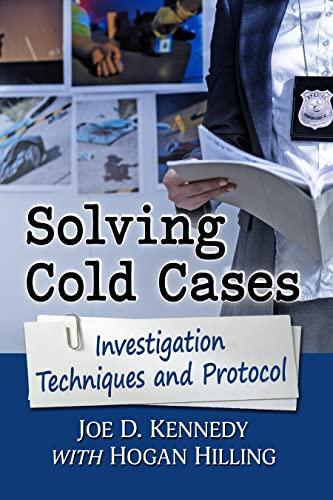
Investigation Techniques and Protocol
The host highlighted that the former NCIS agent had authored a guide on cold‑case investigations, noting it drew directly from his own work on cases like the Pamela Kimbrew murder. He mentioned that the book was available online and served as a practical resource for anyone interested in investigative techniques. The overall tone was enthusiastic, effectively recommending it as essential reading.
Joe Kennedy, the former NCIS agent, wrote this book about his experiences in investigating cold cases, likely including Pamela Kimbrew's case.
Now in retirement, he literally wrote the book on investigating cold cases, appropriately calling it Solving Cold Cases and you can find it online.
Young Dead Soldiers
In the episode, the judge quoted a passage from the book during a sentencing, using its lines to underscore the tragedy of young soldiers who died and to urge that their deaths be given meaning. The excerpt was presented as a solemn reminder to remember those lost. The hosts treated the reference as a poignant illustration rather than a recommendation.
The judge read a poem from this book during Haynes' sentencing, leaving the courtroom with the quote 'We leave you in our deaths. Give them meaning. We were young. We have died. Remember us.'
We leave you in our deaths. Give them meaning. We were young. We have died. Remember us.
The book was referenced when a shooter’s note quoted a line about police response times for mass shootings, and the host noted that the phrase originated from the title after looking it up. No recommendation or critique was offered, simply a factual mention of its content.
The shooter wrote a note containing a specific phrase that was found to be a quote from this book detailing police response times for mass shootings.
And the other thing that he did, he wrote a note and stuffed it into a storage compartment of the gun that said, There are very few problems in the world that cannot be solved by clear and concise communication. The remaining problems can be solved with the proper placement and application of high explosives.
And I googled that phrase and found out it was actually a book on police response times for mass shootings.
A Creative Workbook for Mental Health (74 DBT and Art Therapy Exercises)
In the episode the host likened the way shame and self‑preservation can turn into a distorted coping manual to the book, describing it as a "mental survival book gone sideways" when people panic after hurting someone. The comment was used as a metaphor rather than a direct endorsement, and no specific recommendation was offered.
The speaker suggested that when people panic after hurting someone, their brain immediately shifts into damage control, where rationalization and minimization occur as a form of moral disengagement, like a "mental survival book gone sideways."
Shame and self-preservation in those moments look like a mental survival book gone sideways.
Silence Breaks
The book was introduced when Ashley explained that her blog about personal loss and healing was turned into a book after her grandmother printed each story for friends. The discussion highlighted its purpose to help people coping with grief, widowhood, infidelity and homicide, and praised Ashley’s ability to endure, find love again, and advocate forgiveness. The hosts expressed strong approval of its supportive message.
This was mentioned as a blog Ashley created about her personal journey of loss and healing, which she later turned into a book because her grandmother was printing off every story to send to her friends. The book aims to support those dealing with grief, loss, and trauma, especially related to widowhood, surviving infidelity, and homicide.
On March 13th, 2011, investigators from Meridian Police sat down with Rob Hall... And so he was placed into custody, charged with the murder of Emmett Corrigan, and then transported to the county jail. A traveling judge offered bail, and his mom paid it, and he ended up getting out of jail like 28 days later.
And so what the theory is, is they had time to kind of plan out a new story of what happened. And that's kind of the story she brought to court.
I was so impressed how Ashley was able to endure, find love once again, and raising her now seven children while advocating for others on how to forgive and find a way forward.
And when I turned it into a book, it was mainly because my grandma was printing off every story that I wrote and sending it to all of her friends.
Note: The book recommendations on this page are discovered automatically from podcast transcripts, and may be incorrect or incomplete.
Podcast Name