In Cold Blood (Modern Library 100 Best Nonfiction Books)
Truman Capote
Mentioned 7 months ago
AEE 2525: What Are You Saving Up For?
Are you looking for a new and fun way to learn American English? Come hang out with Lindsay and Michelle from Boston and New York City and have fun while you improve your English listening skills! We are an English as a Second Language (ESL) podcast for intermediate to advanced English learners arou...
Recently mentioned
Truman Capote
Mentioned 7 months ago
AEE 2525: What Are You Saving Up For?
Malcolm Gladwell
Mentioned 1 year ago
AEE 2272: Don't Be an English Outlier

Dave Eggers
Mentioned 1 year ago
AEE 2270: Are You Book Smart or Street Smart?
Gerry Giovinco
Mentioned 1 year ago
AEE 2259: What a Bummer! How to Respond to Misfortune in English
Andrea Dunlop
Mentioned 1 year ago
AEE 2258: Putting Up With Phrasal Verbs Part 3: Pull In
Ernest Hemingway
Mentioned 1 year ago
AEE: Is Your English Just So-So?
Jack Kerouac
Mentioned 1 year ago
AEE: Is Your English Just So-So?

Mary Shelley
Mentioned 2 years ago
AEE 2218: Got Conversational Whiplash? How to Avoid It!
Charles Dickens
Mentioned 2 years ago
AEE 2218: Got Conversational Whiplash? How to Avoid It!
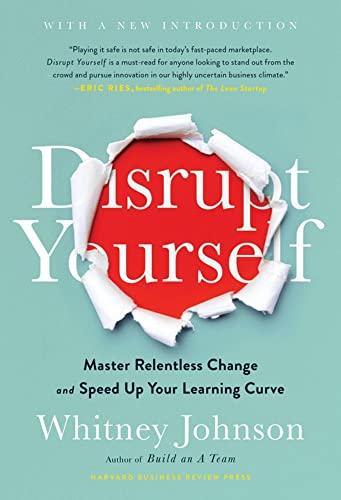
Whitney Johnson
Mentioned 2 years ago
AEE 2216: Whitney Johnson on How to Navigate Change in Your International Life
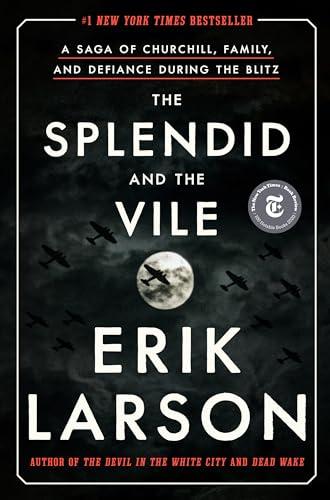
Erik Larson
Mentioned 2 years ago
AEE 2212: What Can You Learn From AI Mispronunciation?

Yeonmi Park
Mentioned 2 years ago
AEE 2212: What Can You Learn From AI Mispronunciation?
The episode highlighted the book as a novel set during the Sudan war, focusing on a young boy's experiences. The speakers described it as sad yet well-written, noting its emotional impact and literary quality. No specific host was singled out as the recommender, and the discussion conveyed a positive but measured appreciation.
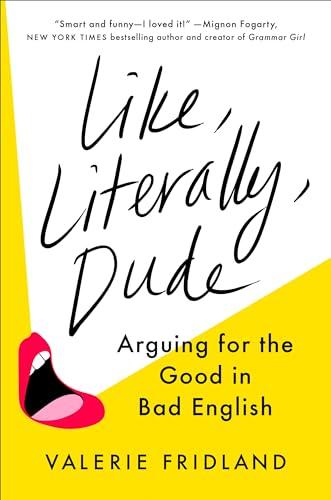
Arguing for the Good in Bad English
The episode introduced the book as a linguist’s argument for the positive aspects of commonly criticized speech features such as "like," "literally," and "dude." Valerie Fridland explained that the work traced the historical and scientific roots of these markers, noting that "like" dates back to the 1700s as a British discourse marker. The hosts presented the title as a compelling defense of what is often dismissed as bad English.
The book was introduced as a discussion arguing for the positive aspects of what is often considered 'bad English,' focusing on features like 'like,' 'literally,' and 'dude.' The author explored the history and scientific basis behind these common speech features, noting that 'like' as a discourse marker has centuries-old roots, even originating as a British feature.
Valerie is a linguist and an author of the new book, Like Literally Dude, Arguing for the Good in Bad English.
The book is, as you mentioned, called Like Literally Dude. And the subtitle is Arguing for the Good in Bad English, because as you can see from our brief discussion, that's essentially what I do.
for example, like first appears as a discourse marker in the 1700s. So it's not the Valley Girls of California. It is actually a British feature.
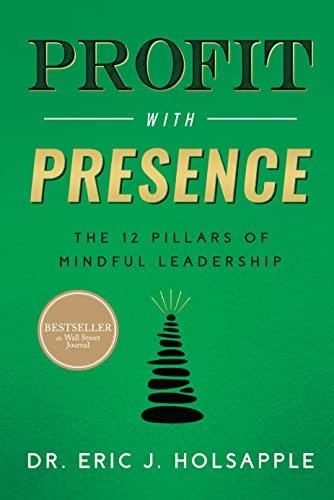
The Twelve Pillars of Mindful Leadership
The author discussed the book, explaining it outlined twelve pillars of mindful leadership and offered readers a flexible way to incorporate mindfulness into business, arguing that mindfulness and profit are not mutually exclusive. He emphasized it could serve as a resource for both beginners and deeper practitioners. The overall tone was positive and promotional, indicating a strong recommendation.
This book detailed the 12 Pillars of Mindful Leadership, showing how one could integrate mindfulness into business practices. The author intended the book to serve as a resource where readers could choose how deep they wanted to go into the practices, noting that choosing between mindfulness and profit was a false choice.
The book I've written just shows how you can go as deep as you want or really just start with a few basic practices and just start to bring mindfulness into your life and into your business.
So the book is Profit with Presence, the 12 Pillars of Mindful Leadership.
Profit with Presence, is available for pre-sale on Amazon, launching March 7th.
It's a resource book. And it shows you that, you know, the choice between mindfulness or profit is a false choice. You can have both.
Note: The book recommendations on this page are discovered automatically from podcast transcripts, and may be incorrect or incomplete.
Podcast Name