Podcast
All Ears English Podcast
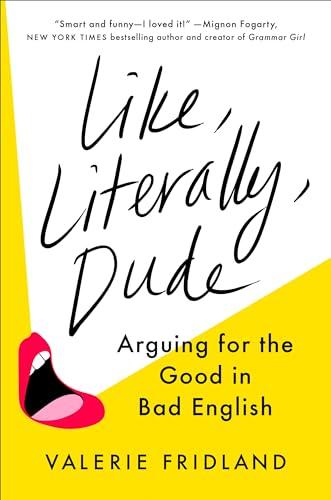
The episode introduced the book as a linguist’s argument for the positive aspects of commonly criticized speech features such as "like," "literally," and "dude." Valerie Fridland explained that the work traced the historical and scientific roots of these markers, noting that "like" dates back to the 1700s as a British discourse marker. The hosts presented the title as a compelling defense of what is often dismissed as bad English.
Episode: AEE 1976: 3 Benefits of 'Like' with Linguist Valer...
The book was introduced as a discussion arguing for the positive aspects of what is often considered 'bad English,' focusing on features like 'like,' 'literally,' and 'dude.' The author explored the history and scientific basis behind these common speech features, noting that 'like' as a discourse marker has centuries-old roots, even originating as a British feature.
Valerie is a linguist and an author of the new book, Like Literally Dude, Arguing for the Good in Bad English.
The book is, as you mentioned, called Like Literally Dude. And the subtitle is Arguing for the Good in Bad English, because as you can see from our brief discussion, that's essentially what I do.
for example, like first appears as a discourse marker in the 1700s. So it's not the Valley Girls of California. It is actually a British feature.