Podcast
Freakonomics Radio
The book discussed the early years of the car industry and how the term 'jaywalking' was promoted to shift blame for accidents from aggressive drivers to pedestrians.
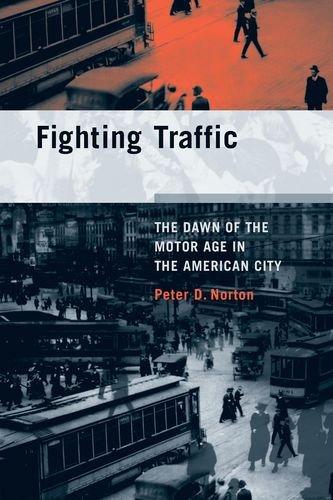
I haven't read. I've flipped through the book Fighting Traffic by Peter D. Norton, which is all about the early years of the car industry.
— Episode: 591. Signs of Progress, One Year at a Ti...
Episode: 591. Signs of Progress, One Year at a Time
The book discussed the early years of the car industry and how the term 'jaywalking' was promoted to shift blame for accidents from aggressive drivers to pedestrians.
I haven't read. I've flipped through the book Fighting Traffic by Peter D. Norton, which is all about the early years of the car industry.
I am only basing my evidence on Mr. Norton's book, but he tells a very clear story that the relationship between the American Automobile Association and the National Safety Council got closer.
Episode: The Perfect Crime (Rebroadcast)
It was mentioned as a book that talks about the dawn of the motor age in the American city, and how roads were built for cars, not people, which has persisted to the modern day.
If I say, what's a street for? Somebody's going to say car right away. It's like free association in psychology.
You know, it's just automatic. And I think that's really interesting because if you had asked that same question to a random person a hundred years ago, I think they would have had more different answers, like a variety of different answers and none of them would have said that a street is for cars even though there were a lot of cars then.
Episode: 165. The Perfect Crime
The book 'Fighting Traffic' was discussed in the context of how the American landscape has been built to prioritize cars over pedestrians, with a focus on traffic flow and speed.
I'm the author of Fighting Traffic, The Dawn of the Motor Age in the American City.
To Norton, there is no mystery here. A street's for cars. It's automatic. If I say what's a street for? Somebody is going to say car right away. It's like free association in psychology.