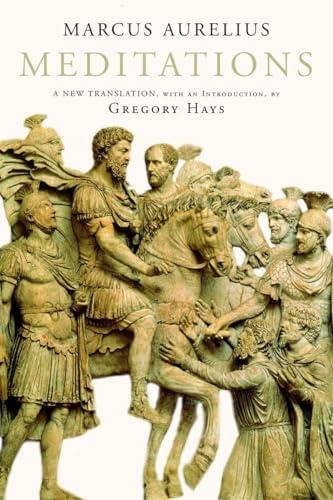
The podcast host mentioned a quote from 'Meditations' by Marcus Aurelius, relating it to the near-assassination attempt on Donald Trump and the nation's subsequent reflection.
"
There is a very famous quote by Marcus Aurelius and meditations, which is Marcus Aurelius's kind of diary, if you will. And a lot of the other or a lot of I should say stoic philosophers have become v...
— Episode: Hour 2 - GOP Becomes the Party of Fun
Episode: Hour 2 - GOP Becomes the Party of Fun
The podcast host mentioned a quote from 'Meditations' by Marcus Aurelius, relating it to the near-assassination attempt on Donald Trump and the nation's subsequent reflection.
"
There is a very famous quote by Marcus Aurelius and meditations, which is Marcus Aurelius's kind of diary, if you will. And a lot of the other or a lot of I should say stoic philosophers have become very popular in recent years, especially on social media. But the Marcus Aurelius quote is think of yourself as dead. You have lived your life now. Take what's left and live it properly.
The hosts mentioned the book as a classic alternative to modern self‑help titles, suggesting that readers who prefer the essays of ancient thinkers might find it more satisfying than works by Dale Carnegie. Stephen Dubner highlighted its relevance both as a source of timeless philosophical insight and as the origin of the idea that imitation is a form of flattery. The discussion presented the title as a thoughtful, if niche, reading option for discerning listeners.
Episode: 99. Do You Mind if I Borrow Your Personality?
It was noted that a version of the idea 'imitation is the highest form of flattery' originated with the Roman emperor in his work, Meditations.
"
a version of the idea originated with second century Roman emperor Marcus Aurelius, who in meditations wrote, 'you should consider that imitation is the most acceptable part of worship and that the gods had much rather mankind should resemble than flatter them.'
Episode: 37. How Do You Know if People Don’t Like You?
It was discussed as an alternative to more modern self-help books, perhaps more palatable for those who are more discerning about their reading.
"
Yeah, Marcus Aurelius, right?
Maybe the snob in you would feel better reading meditations or reading the essays of Michel de Montaigne than reading Dale Carnegie.
Episode: 37. How Do You Know if People Don’t Like You?
This work was mentioned as a possible reading choice for someone who might feel better reading the essays of classical figures over modern self-help authors like Dale Carnegie.
"
And maybe the snob in you would feel better reading Meditations or reading the essays of Michel de Montaigne than reading Dale Carnegie.
The Penguin Classics version of Meditations by Marcus Aurelius was mentioned as an example of a self-help book available on Audible.
"
And Audible's incredible selection of wellness titles can help, like the Penguin Classics version of Meditations by Marcus Aurelius, maybe the original self-help book.
— Episode: The Manhattan Project | Devastating Succ...
Episode: The Manhattan Project | Devastating Success | 3
The Penguin Classics version of Meditations by Marcus Aurelius was mentioned as an example of a self-help book available on Audible.
"
And Audible's incredible selection of wellness titles can help, like the Penguin Classics version of Meditations by Marcus Aurelius, maybe the original self-help book.
It was described as a journal where the Roman emperor wrote notes about himself and others he cared about, focusing on what he noticed as constant amidst chaos. The speaker noted its usefulness in managing life's stresses and finding meaning.
"
One of the things that's really cool about Marcus Aurelius is he led this action-packed life. He was emperor of Rome when they were having their own massive pandemic. He's fighting this huge war with...
— Episode: In Search of Lost Time
Episode: In Search of Lost Time
It was described as a journal where the Roman emperor wrote notes about himself and others he cared about, focusing on what he noticed as constant amidst chaos. The speaker noted its usefulness in managing life's stresses and finding meaning.
"
One of the things that's really cool about Marcus Aurelius is he led this action-packed life. He was emperor of Rome when they were having their own massive pandemic. He's fighting this huge war with the tribes in Germany. He's got all of these day-to-day pressures. But if you read Marcus' journal, The Meditations, he doesn't talk that much about how he's handling his day-to-day stresses. And instead, he writes himself little notes every day about things that he's noticing about himself and things he's noticing about other people that he really cares about that he wants to remember and he thinks are constant in the midst of all of the chaos.
It was described as a good book, enjoyable from the start.
"
One of the books I'm reading right now at home in the bar, the cigar bar, is Meditations by Marcus Aurelius. Okay. That's really cool. I never read that book before and it gets good right away. It's r...
— Episode: 456. Q&AF: Struggling To Take Time Off,...
Episode: 456. Q&AF: Struggling To Take Time Off, Building Y...
It was described as a good book, enjoyable from the start.
"
One of the books I'm reading right now at home in the bar, the cigar bar, is Meditations by Marcus Aurelius. Okay. That's really cool. I never read that book before and it gets good right away. It's really, really good.
The podcast repeatedly highlighted the book as Marcus Aurelius’s private journal of Stoic reflections, noting its unique origin as a personal notebook rather than a published work. Host Ryan Holiday and fellow guests praised it for offering timeless guidance on self‑discipline, handling adversity, and focusing on virtue over external success. They emphasized its practical advice—such as confronting difficult people, embracing obstacles, and remembering mortality—as transformative for listeners. The overall tone was one of strong endorsement, presenting the title as essential reading for anyone seeking personal growth.
Highly Recommended
Episode: How To Live in an Imperfect World | Practice Gentl...
In his book Meditations, Marcus Aurelius offers advice on maintaining gentleness, even in the face of anger and frustration, and advocates for self-control in managing emotions.
"
As you move forward along the path of reason, people will stand in your way. They will never be able to keep you from doing what's sound, so don't let them knock out your goodwill.
Keep a steady watch on both fronts, not only for well-based judgments and actions, but also for gentleness with those who would obstruct our path or create difficulties.
For getting angry is a weakness, just as much as abandoning the task or surrendering to panic. That's Marcus Aurelius' Meditations 11.9.
As Plato said, every soul is deprived of truth against its will. The same holds true for justice, self-control, and goodwill to others, and every similar virtue.
It's essential to constantly keep this in your mind, for it will make you more gentle for all. And finally, Meditations 11.18, he says, keep this thought handy when you feel a fit of rage coming on.
It's not manly to be enraged. Rather, gentleness and civility are more human and therefore manlier. A real man doesn't give way to anger or discontent. Such a person has strength, courage, and endurance.
You know, he says how much worse the consequences of anger are than the things that caused it.
Episode: You Don’t Get To Do This Anymore | Don’t Look For...
Marcus Aurelius wrote *Meditations* to himself, however he only wrote positively about people he knew. The book is said to have no gossip or complaints.
"
Never be overheard complaining at court, he wrote, as a reminder, not even to yourself.
That's why there's no gossip anywhere in meditations.
It's Marcus Aurelius' Meditations 5-6.
When you've done well and another has benefited by it, why like a fool do you look for the third thing on top, credit for the good deed or favor in return?
That's Marcus Aurelius' Meditations 7-7-3.
Episode: Living With Justice: Will Guidara Interviews Ryan...
The speaker referenced "Meditations" by Marcus Aurelius, the Roman Emperor and Stoic philosopher, and spoke about the book's themes and its relevance to living a virtuous life. He contrasted the book's potentially 'depressing' nature with the incredible resilience and hope that Marcus Aurelius embodied despite his challenges.
"
I think to me you know there's this idea that Marx wrote his meditations is depressing because he talks about some dark themes yes but when you look at this guy's life he buries six children he's betrayed in a coup he suffers crippling health issues he lives through a plague and floods and wars basically everything that could go wrong goes wrong in his life getting out of bed every day was an act of incredible hope and determination and optimism like that he wrote meditations was proof that stoicism is not a hopeless depressing philosophy he clearly believed in something and he believed that things mattered and he really cared and that to me is the sort of the hope that runs through the books
Well yeah what gets talked about is ultimately what gets thought about right he was doing that through those books yeah
Episode: How To Be A King | What Stoicism Gets Wrong
The author shared his personal views on Meditations by Marcus Aurelius, and how it presents a strong and empowering perspective on dealing with emotions and not being controlled by them.
"
And then there's maybe a second category. Actually, I maybe say there's three. A second category would be the mistakes that the stoics make. So Marcus Aurelius deciding to elevate his son Commodus to succeed him is obviously a catastrophic error.
The problem in our society today, it's all feelings.
And the reason that people read Meditations and it changes their life is because it's like, huh, I don't have to be shackled to those feelings.
But the truth is that if you stop with just what Marcus says in the Meditations, it's not enough.
At the beginning of Meditations, Marcus Aurelius talks about one of his teachers taught him to be free of passion, but full of love.
Episode: The Earth Is A Boneyard (But Pretty in Sunlight) |...
The author discusses the impermanence of life and the inevitability of death, comparing the fates of emperors and their servants who end up in the same grave.
"
He thinks about all the emperors who have come before him, listing not just their names but the names of luminaries and power brokers who filled their courts. Where are they now, he asks? What's left of them?
In another passage, he points out that the same thing happened to both Alexander the Great and his mule driver, and they're now both buried in the same ground.
Dig deep within yourself, Marcus writes in Meditation 759, for there is a fountain of goodness ever ready to flow.
Episode: Don’t Wake Up and Choose Violence | No Self-Flagel...
Marcus Aurelius' Meditations are filled with self-criticism, but not self-flagellation. He did not punish himself excessively or believe he was a terrible person, but instead used self-criticism constructively to improve himself.
"
Marcus Aurelius' meditations are filled with self-criticisms, and so are the writings of the other Stoics.
There was no self-flagellation, no paying penance, no self-esteem issues from guilt or self-loathing. You never hear themselves call themselves a piece of crap, nor do they ever starve themselves or cut themselves as punishment. Their self-criticism was constructive.
Laying into yourself, unduly depriving yourself, punishing yourself, that's self-flagellation and not self-improvement.
Hold yourself to a higher standard, not an impossible one, and forgive yourself if and when you screw up.
There's a wonderful story about an early Stoic named Cleanthes, who's the successor to Zeno, that I should have known because I'd read Diogenes Laertes and I don't know why I didn't include this story in that entry because it goes so well with that quote.
Stoicism is strict with ourselves, tolerant with others, as Marcus Aurelius says, but not so strict with ourselves that we're being abusive because who does that serve?
I think what you see in meditations is yes, Marcus Aurelius is strict and firm with himself but he's also building himself up. There's as much positive self-talk as there is negative self-talk and I think it's worth noting, you know, Marcus was writing post the rise of Christianity, Seneca is writing around the same time as the rise of Christianity, he's born in the same year as Christ.
Episode: Paper Trails: How Notebooks Changed The World | Ro...
The book is seen as an example of a notebook-style work, with Marcus Aurelius writing his own thoughts and reflections on paper. However, there is debate about whether the work was intended for publication or just personal use.
"
This is where Marcus Aurelius is going to appear. Marcus Aurelius' meditations is going to appear here. And he never does.
Do you think of Marcus Aurelius' meditations as a sort of notebook style of work? Or did you see it as something different? To me, it's a classic example of what we're talking about.
The conventional wisdom is yes.
What's he writing for himself?
Are you disputing? You think it was more of a...
Episode: All Success Comes From This | 9 Stoic Tips For Bea...
It was mentioned as an example of procrastination, as the author said that people often choose to do things tomorrow instead of today.
"
In Meditations, Mark Shule says, you could be good today. Instead, you choose tomorrow.
Episode: Why You Should Do The Right Thing | Ryan Holiday S...
Ryan Holiday bought the rights to Meditations from his publisher and wanted to publish a premium edition that would stand the test of time.
"
A couple years ago, I bought the rights from my publisher for Mark Shrewes' Meditations.
Episode: It’s Not About The Words. It’s About This.
Marcus Aurelius wrote about the ideal of a society governed by equality of statute and speech, but his own words were a far cry from reality as he lived in a slave society. He also admitted that doing nothing can be an injustice in itself.
"
It's as beautiful a sentence as any written by Thomas Jefferson, but of course, a long way from Epictetus's personal experience.
In 1910, Theodore Roosevelt would remind his fellow citizens of the critical distinction between words and deeds.
In name, we had the Declaration of Independence in 1776, he said, but we gave the lie by our acts to the words of the Declaration of Independence until 1865.
words count for nothing except insofar as they represent deeds.
acta non verba, deeds, not words.
that you can commit an injustice by doing nothing also.
Episode: It Could Just As Easily Be Us… | Stoicism's Formul...
The author discussed the concept of assembling one's life through small actions, a concept mentioned in this book.
"
This is actually something Mark Shrews talks about in meditations.
He says action by action, step by step.
Episode: Avoid This Form Of Insanity | Take A Walk
Marcus Aurelius talks about how crazy it is that we just go on staying the same person we've always been trying the same things we've always tried.
"
If there are rambles in the path, just go around.
Pass through this brief patch of time in harmony with nature and come to your final resting place gracefully just as a ripened olive might drop, praising the earth that nourished it and grateful to the tree that gave it growth.
Episode: We Face The Path Of Time
The book was a collection of Marcus Aurelius' personal reflections on life and death. He was increasingly aware of his own mortality and the passage of time. It was a poignant reminder that everyone faces death.
"
He had always meditated on death--that's the practice of memento mori--but now he was no longer a young man. In fact, he was a marked man.
We catch Marcus in meditations as the reality of this is sinking in.
Episode: How Marcus Aurelius Became Marcus Aurelius
The speaker said that the first time he read *Meditations* he immediately wanted to read an amazing biography of Marcus Aurelius.
"
I think I've talked about this before, but when I read Meditations for the first time, my first thought was, where is a biography of this person? I want to read an amazing biography of Marcus Aurelius. I want to know everything about him.
Episode: Look Through The Window | Finding The Right Mentor...
The Stoic philosopher Marcus Aurelius wrote Meditations. He tried to understand why people did what they did, even when they hurt him.
"
Marcus Aurelius writes about this very thing, not just in the opening of Book Two of Meditations, but throughout the book.
And that's actually the second part of that passage in Meditations.
Marcus Aurelius is writing about how he recognizes that the wrongdoer has a nature related to my own. They're a relative, he says, and he does not want to turn his back on them.
Episode: It Says Everything About You | 97th Floor Q&A
The book by Marcus Aurelius, an emperor, contains an entry where he thanks his teacher Rusticus for giving him a copy of Epictetus, suggesting that the book significantly influenced Aurelius's life and thinking.
"
Actually, if you read Meditations, so the book of an emperor written 2,000 years ago, at the beginning of it, he's sort of thanking all the people who changed his life.
Episode: You’ve Got Another Think Coming | How To Get and S...
Marcus Aurelius had the power to do whatever he wanted, but chose to work for the benefit of the world. He was motivated to do his job, to fulfill his duty as a human, even when it was hard to get out of bed in the morning.
"
He says at dawn, when you have trouble getting out of bed, tell yourself, I have to go to work as a human being.
What do I have to complain of?
I'm going to do what I was born to do the things I was brought into the world to do.
And he says, or is this what I was created for to huddle under the blankets and stay warm?
He says, but it's nicer here.
Episode: We All Carry A Debt (Will We Repay?) | Role Models
Marcus Aurelius's Meditations is a catalog of people he learned from and the lessons he took from their lives. The speaker compared this to how people can choose their own role models and mentors.
"
The first book of Marcus Aurelius's Meditations, in fact, is a catalog of all the people that Marcus had learned from and the lessons he had taken from their lives.
Episode: The Seeds Of Virtue | Oikeiosis
The podcast host mentioned that Harry S. Truman, a central figure in his new book, kept a well-worn copy of Meditations. He underlined a passage that read 'If it's not right, do not do it. If it's not true, do not say it.'
"
If it's not right, do not do it. If it's not true, do not say it.
Episode: Justice As A Verb | We Have But One Obligation
The Stoics believed our job on this earth is to be a good human being. This is a basic duty, and we are experts at coming up with excuses for avoiding it. Meditations 11.5 says we have but one obligation: to be a good person.
"
We have but one obligation.
What is your vocation? To be a good person. Marcus Aurelius Meditations 11.5.
The Stoics believed above all else that our job on this earth is to be a good human being. It is a basic duty.
And yet we are experts at coming up with excuses for avoiding it.
Episode: How Will This Change You?
Marcus Aurelius talks about how events can only harm you if they harm your character and that the best revenge is not to be like that.
"
Marcus Aurelius talks in Meditations about how events can only harm you if they harm your character.
Episode: Which Will You Be? | 10 Stoic Exercises To Get You...
The author of the podcast, Ryan Holiday, refers to this book as a journal, as Marcus Aurelius wrote about his struggles in it. The book is a source of wisdom about responding to obstacles in life.
"
He writes in meditations that it's unfortunate that this happened, which is a little bit of an understatement.
Marx realizes meditations is to himself. It's his journal to himself.
Episode: At All Costs, Keep This | M Financial Group Talk
The book, actually a collection of personal writings by Marcus Aurelius, was mentioned as a diary of his life. Ryan highlighted a particular passage where Aurelius acknowledges the difficulties he faced as emperor, but chooses to focus on the opportunities within those challenges.
"
And he keeps a diary. This is sort of a diary of his life. He writes a diary of his life. This is sort of how we know how he's able to respond to it. He keeps this diary, which survives to us as meditations.
And he writes, you know, it's unfortunate that this happened, which is like the understatement of the century. And it is unfortunate that it happened, but he catches himself and he goes, you know what? No, it's fortunate that this happens to me and that I've remained unharmed by it.
And he tries to work himself back to a place where instead of feeling sorry for himself, he sees the opportunity inside it, not just the big opportunity, but the little day to day opportunities.
Episode: The Art of Asking Questions for Deeper Connection...
The speaker mentions that Marcus Aurelius had many loving relationships that were important to him, despite the Stoics generally not talking about relationships in depth.
"
And you can't read the debts and lessons section of meditations though, and not see that Marcus Aurelius did have many loving relationships and that they were deeply important, not just to his happiness, but his development as a human being.
Episode: Do Your Best. Then Do This. | Making Your Own Good...
The podcast host discovered a mistake in the Daily Stoic book, specifically the number of the meditation being read in this episode.
"
We have a quote from Marcus Aurelius' Meditations 536.
You say good fortune used to meet you at every corner.
But the fortunate person is the one who gives themselves good fortune.
And good fortunes are a well-tuned soul, good impulses and good actions.
Just because I have in front of me here, I thought what we might do is also read the Gregory Hayes translation of today's entry also.
So let's pull up 536.
Is that right?
Looking at 536, is this not right?
Maybe I labeled it wrong.
This is very interesting.
We found... problem.
Ah, it's 537.
Interesting.
Well, you heard it here first.
There is a mistake in the Daily Stoic, and I am reading it to you now.
And I'm going to have to make a correction.
Very exciting.
OK, so it's actually today's entry is from 537.
And Marcus Aurelius is saying, I was once a fortunate man, but at some point fortune abandoned me.
But true good fortune is what you make for yourself.
Good fortune, colon.
Good character, good intentions and good actions.
Let's see if the notes... I think the best part of the Gregory Hayes translation are the notes.
The Robin Waterfeld Annotated Edition is also quite good.
And I've been doing this now for almost 20 years.
Whenever I read one of the passages, I go, hmm, what's that about? I pull up the end notes and see if he says anything.
He doesn't.
I just wondered if that was a quote or anything, because there's not a lot of eyes and meditations that way.
He tends to refer to himself as you.
But let's get into today's entry, and then I'm going to shoot an email to Steve Anselman, my agent and my editor over at Portfolio to make this little correction.
Episode: Let These Make You Better | Bastrop Library Q&A
Ryan bought a copy of Meditations but found out later it belonged to his wife, whom he was dating at the time. The book has stayed with them ever since.
"
And I remember waiting for it to arrive. I remember I had to buy some other books because Prime didn't exist. And for you kids, you used to have to spend $25 on Amazon for giga free shipping. And so I bought it and that book changed my life.
And so it's her copy.
Episode: What Does Your Calendar Say? | 12 (Stoic) Secrets...
The speaker quotes Marcus Aurelius' Meditations (Book 5) about how difficult people are an opportunity to practice virtue, a chance to grow and change. He also references Book 2 about people presenting opportunities to learn and do good.
"
Famous quote from Mark Surreales, the impediment to action advances action, what stands in the way becomes the way.
And it's funny, it's actually in book five of meditations.
What Mark Surreales is talking about is people.
He says, in a sense, people are our proper occupation.
Our job is to do them good and put up with them.
But when they obstruct our proper tasks, they become irrelevant to us like sun and wind and animals.
He says our actions may be impeded by them, but there can be no impeding our intentions or our dispositions because we can accommodate and adapt.
The mind adapts and converts to its own purposes. The obstacle to our acting, the impediment to action advances action. What stands in the way becomes the way.
So when he's saying the obstacle is the way he's specifically talking about difficult people, he's saying that people are an opportunity to practice virtue, difficult people, most of all.
What these people are is a chance for you to try to do things differently.
I think it's a wonderful phrase that people are our proper occupation.
We are put here for each other.
We are social, political animals, as the ancients would say, and our job is to figure out how to work with people, to get things out of them, to not be corrupted by them, to not be broken by them, to not let them turn us into assholes or sons of bitches, not to let them change us in a negative way.
But actually, when we deal with difficult, frustrated or annoying or obnoxious people, as Marcus Ruiz starts book two of meditations, lamenting all the things that people are going to do, people are therefore is to present us opportunities to grow and change and learn and do good for them and the world.
In Meditations, Mark Shruler says, ambition is tying your success to what other people do or say, right?
If they select you, if they approve of you, if they cheer for you.
He says sanity is tying it to your own actions.
It doesn't matter how good a life you've led, there will still be people standing around the bed who will welcome the sad event.
His point was if you're doing this for validation, if you're doing this to be loved, if you're doing this to be remembered, I mean, to be remembered, he says is silly because you're not going to be around.
Episode: Balancing Power As An Emperor | Donald Robertson P...
It was mentioned that the book is covered in underlines and notes on the four virtues.
"
I remember very vividly reading meditations for the first time and going, wow, what is this? I want to know everything about this.
I remember I bought The Rise of Theodore Roosevelt along with it, which is this amazing Edmund Morris biography of Theodore Roosevelt.
I told him this when I read it.
We immediately started carrying it in the store. I've written a bunch of daily stoic emails about it. It's just awesome. And I'm so happy that he did it. And I'm glad he did it so I don't have to do it and I can tell you about it. It's a wonderful book.
We ran an excerpt of it on the podcast a couple months back, but I asked if Donald would come out.
Episode: This Is How To Be Fearless | The Stoic Is A Work I...
The book is used as an example of a person evolving and changing, with passages that show Marcus Aurelius' frustration with himself for not yet achieving perfect Stoicism. The author uses this as an example that even great Stoics still have room for improvement.
"
They can stab you with knives and shower you with curses, Mark Sibrilis writes in Meditations.
But why should that stop you from acting with justice and courage?
No one can stop you from that, he says in Meditations, because there's a fountain of goodness inside us, in the world.
And it's up to each and every one of us to make sure that fountain keeps bubbling up no matter how many obstacles they throw in our way.
There's a reason that different passages hit differently.
And sometimes they feel like they contradict each other. There's a reason that even at the end, right, the passages have Marcus Aurelius sort of near death, we think, show an evolution of a person because he's evolving and changing. But there's also in those pages, some frustration with himself that he's not there yet.
He says, you've been studying this your whole life. You're an old man and you're not getting any better.
Episode: There’s A Reason People Like This Line | Ask DS
This is the book with the famous quote "Choose not to be harmed and you won't feel harmed. Don't feel harmed and you haven't been." It was highlighted over 11,000 times in the Kindle edition.
"
Choose not to be harmed and you won't feel harmed. Don't feel harmed and you haven't been.
This passage has been highlighted over 11,000 times in the Kindle edition of Gregory Hayes' translation of Meditations, one of my all-time favorites.
It's not events themselves that cause our suffering, but how we choose to interpret them.
Events are objective, our interpretations of them are not.
They are a guess, a story, an opinion as to what's happened and what it means.
Episode: This Is What You Need To Get Better At | Count You...
Marcus Aurelius' Meditations, a collection of personal reflections, was mentioned in relation to the Stoic concept of counting blessings. Marcus Aurelius reminded himself to appreciate what he had, imagining life without those blessings.
"
Don't set your mind on things you don't possess as if they were yours, but count the blessings you actually possess and think about how much you would desire them if they weren't already yours.
But watch yourself that you don't value these things to the point of being troubled that if you should lose them.
Episode: Life Comes At You Fast (Pt III) | Don't Be Inspire...
Marcus Aurelius' Meditations, specifically book 114, details his gratitude towards his brother Severus, who taught him to love family, truth, and justice. He also credits Severus for introducing him to Thracia, Helvidius, Cato, Dion, and Brutus, and inspiring his vision of a society governed by equal laws and respect for liberty.
"
There's a passage at the beginning of Meditations.
This is Mark's realist book 114.
He says that basically Severus taught him to love my family, truth and justice.
And he says, it was through him that I encountered Thracia, Helvidius, Cato, Dion, Brutus, and conceived of a society of equal laws governed by equality of status and speech and of rulers who respect the liberty of their subjects above all else.
Episode: The Most Important Thing | Ask DS
The speaker mentioned that Marcus Aurelius talks about doing what's right and the virtue of justice over 30 times in Meditations. He also references the common good being mentioned over 80 times.
"
Yet a quick textual analysis of Marcus Aurelius obliterates this notion.
More than 20 times in meditations, Marcus Aurelius talks about the importance of doing what's right, talks about the right thing more than 30 times.
He talks about the virtue of justice. He's not talking about court cases and the law here.
And roughly 80 times, Marcus Aurelius talks about the common good, which he said one ought to serve above all and always.
Literally in so many words, stoicism is a philosophy about doing good in the world, about doing what's right, not in your own self-interests, but in the interests of others too.
The fruit of this life is good character and acts for the common good, Marcus Aurelius writes in meditations.
Just that you do the right thing, says Marcus Aurelius in meditations. The rest doesn't matter.
Episode: You Can, But Should You? | 12 (Stoic) Remedies For...
The book is an example of how even the most powerful person in the world struggles with feelings of anxiety, frustration, isolation, and self-doubt. The author mentioned the book several times in the podcast, specifically when referencing how small we are in the grand scheme of things.
"
In Mark Surilis's meditations, that's what you're seeing.
You're seeing the most powerful man in the world struggle with his emotions, struggle with feelings of anxiety and frustration and isolation and self-doubt and try to work his way through.
And yet amidst this darkness, the Stoics understood, as Mark Surilis would say in meditations, that our soul is dyed by the color of our thoughts.
In meditations, a handful of times, Mark's really talks about zooming out and taking Plato's view.
That's the famous biblical verse about how one generation comes, another goes. But the earth abideth forever. The sun also rises. That's where Hemingway gets the title there. It says the sun goeth down and hastens to the place where he arose.
Episode: This is Calling You | We Are A Product Of Our Habi...
It was mentioned that Meditations by Marcus Aurelius is considered journaling from a Stoic perspective.
"
Meditations is Marcus Aurelius journaling and talking to himself.
Episode: How To Be Free | Epictetus
The book was mentioned as being lent to Marcus Aurelius by his philosophy teacher, Rusticus, and it changed his life.
"
We know from the beginning of meditations that Marcus Aurelius is lent by Rusticus, his philosophy teacher, his copy of Epictetus's lectures.
And this book changes Marcus Aurelius's life.
Episode: The Ordinary Brilliance Of President Harry S. Trum...
The speaker was intrigued to learn that Truman kept a copy of Meditations, and he has even tried to track down this specific copy in the Truman library and in private collections.
"
And he comes back with his copy of Marcus Reles' Meditations, and he gives it to Miller who goes through it and he sees- Truman had a copy?
So I don't know if it's in somebody's private collection or it was lost at some point.
And he gives it to Miller who goes through it and he sees- Truman had a copy?
I'm going to go there this summer.
You know, he had- they say he was a great reader of history.
Episode: These Are The Burdens Of Planet Earth | Things Hap...
It was mentioned as a book by Marcus Aurelius, where he discusses the annoying and ever-present nature of humans, and how their hypocrisy can be an opportunity for us to practice virtue. It was also mentioned in relation to the famous passage on how the obstacle can be the way.
"
Marcus Aurelius opens meditations with a list of how obnoxious people can be that they can be dishonest and jealous and surly and ungrateful and arrogant.
He says later in the book that future people, the ones we hope to be remembered or admired by will also be annoying and ever the same. He wasn't wrong. This is what humans are. This is what life is like.
The obnoxious people that Marcus returns to again and again in meditations, that's also who he's talking about in his famous passage on how the obstacle can be the way.
Their hypocrisy, their hypocrisy, their annoyingness is an opportunity for us to practice virtue.
When your sparring partner scratches or headbutts you, you don't make a show of it. You don't protest or view him with suspicion or his plotting against you. And yet you keep an eye on him, not as an enemy or with suspicion but with a healthy avoidance.
Episode: You Can't Get Even | The Freedom Of Contempt
Marcus Aurelius used to remind himself that wine is simply grape juice and that an Emperor's purple cloak is just dyed sheep's wool.
"
Why should we be angry at the world as if the world would notice?
The only way, Marcus Aurelius said, was to not be like that.
Life is short, Marcus Aurelius reminds us.
Marcus Aurelius talks about taking the 10,000 foot view.
Just as when meat or other foods are set before us, we think this is a dead fish or a dead bird or a pig. Also, this fine wine is only the juice of a bunch of grapes.
Episode: This Is How To Capture The Magic | Ask Daily Stoic
It was recommended to read in small increments due to its length, straightforward style, and lack of complex philosophical jargon. The author stated that he has worked for a decade to make Marcus Aurelius' writings practical and successful for people. It was mentioned that the book has a lack of pretense or performance.
"
It should be the easiest book in the world to read. It's only depending on the translation a couple hundred pages which are made up of short passages making it easy to read in small increments.
It's written in a straightforward and accessible style without any complex philosophical jargon.
Unlike most books there's no pretense, no performance, no intent to impress an audience.
And yet so many people struggle with and get frustrated by Marcus's releases meditations and they have ever since it was first discovered after the emperor's death nearly two thousand years ago.
We've been working hard here at DailyStone for the last decade to try to make Marcus really successful and practical for people.
Episode: If You Had The World Enough and Time… | The Stoic...
Marcus Aurelius mentions washing off the dust of earthly life in his book Meditations, which relates to the concept of cold plunges as a way to be present in the moment.
"
In Meditations Marcus Reales talks about washing off the dust of earthly life.
Episode: How Many Are Left? | Impulse Control
Marcus Aurelius quoted Epictetus from his book "Meditations", referring to good fortune and well-tuned souls.
"
It's Marcus Aurelius' meditations 1137. I just love that you have Marcus Aurelius quoting Epictetus.
You say good fortune used to meet you at every corner, but the fortunate person is the one who gives themselves a good fortune.
And good fortunes are a well-tuned soul, good impulses, and good actions.
That's Marcus Aurelius' meditations 536.
Episode: When You Wake Up Every Morning, Tell Yourself… | A...
The passage is about learning to accept people for who they are, understanding their flaws and not letting them affect your own happiness. Marcus Aurelius wrote about the inherent divinity within each person, reminding us that no one can truly hurt us.
"
When you wake up in the morning, per the Gregory Hayes translation, tell yourself the people I deal with today will be meddling ungrateful, arrogant, dishonest, jealous, and surly. They are like this because they can't tell good from evil.
But I have seen the beauty of good and the ugliness of evil, Marcus Aurelius wrote, and have recognized that the wrong doer has a nature related to my own, not of the same blood or birth but of the same mind and possessing a share of the divine.
So none of them can hurt me, no one can implicate me in ugliness. Nor can I feel angry at my relative or hate him.
We were born to work together like feet and hands and eyes like the two rows of teeth upper and lower. To obstruct each other is unnatural. To feel anger at someone to turn your back on him. These are obstructions.
I could walk you through chapter and verse how I was justified in my anger. He said, justified in my argument, I could point out chapter and verse the fallacy of their argument.
Episode: Waste No More Time Doing This | Keeping "The News"...
The speaker quoted 'Meditations', written by Marcus Aurelius, with two specific quotes related to the topic of news and how not to let it distract you.
"
Are you distracted by breaking news? Then take some leisure time to learn something good and stop bouncing around. But when you do, keep in mind the other mistake, to be so distracted by getting control that you wear yourself out and lose a purpose by which you can direct your thoughts and impulses.
Don't tell yourself anything more than what the initial impressions report. It's been reported to you that someone is speaking badly about you. This is the report. The report wasn't that you've been harmed. I see that my son is sick, but not that his life is at risk. So always stay within your first impressions and don't add them to your head. This way nothing can happen to you.
Episode: Taming the Ego | Overcoming the Enemy Within
The speaker mentioned this book and that Marcus Aurelius wrote it while he was emperor of Rome and facing a pandemic. He was writing personal notes to himself about how to deal with the pandemic and the plague.
"
He writes this book called Meditations.
He wrote this line to himself that he was talking about the way that people react to pandemics or plagues or any kind of crises. I think he's also talking about ego here when he says that an infected mind is a far more dangerous pestilence than any plague.
Episode: No One Escapes This | When Good Men Do Nothing
Marcus Aurelius' Meditations is a book of personal reflections and Stoic philosophy, including the idea that injustice can be found in inaction as well as action.
"
Often injustice lies in what you aren't doing, not only in what you are doing. That's Marcus Aurelius' Meditations 9-5.
And that's what Marcus Realist is talking about.
Episode: How Much Sad Do You Think You Have? | 10 Stoic Tip...
It was mentioned that Marcus Aurelius wrote the book Meditations, where he discusses the importance of not dwelling on negative things and the concept of "the impediment to action advances action." The book emphasizes the significance of dealing with difficult people with kindness and patience.
"
Don't delve too much into what lies underneath you. What are you going to do about it?
The best revenge is to not be like that.
Be careful not to treat human beings the way that inhumanity treats human beings.
The impediment to action advances action. What stands in the way becomes the way.
People are our proper occupation. Our job is to do them good and put up with them.
Episode: Unlocking Self-Discovery Through Shadow Work Journ...
Ryan Holiday mentioned Marcus Aurelius' Meditations as being a journal that helped him work through his problems, especially those that no one else could relate to.
"
I think about why is Marcus Aurelius writing this book, Meditations? It's because he's the emperor of Rome and it's not like he's got a group of friends that you can talk to about how hard it is to be the emperor of Rome or how weird it is.
Episode: It’s A Very Special Thing | We Can Work Any Way
Meditations is a book of personal writings by Marcus Aurelius, not intended for publication, that has become a popular read for its insights on philosophy, especially Stoicism. It was not conceived for us to read, but rather as a vehicle for Aurelius to question himself.
"
What we see in Meditations is not the finished product of a philosopher, but the process of philosophy. We are watching Marcus Aurelius philosophize to himself about right and wrong, about his temper, about his fears, about death, about power, about the meaning of life in a dark and a painful world.
In Pierre Hedot's fascinating book on Meditations called The Inner Citadel, he describes this as a series of spiritual exercises.
It's like we get to eavesdrop on one of the world's greatest singers giving the most earnest performance of their lifetime totally to themselves.
Episode: You Gotta Start Sometime | What Young Men Get Wron...
It was described as a 'quake book' that greatly impacted the speaker's understanding of the world, especially Marcus Aurelius's notes on how to be a good person despite having immense power.
"
When I got Mark Shrevely's Meditations, when this book landed on the table of my college apartment, it hit me like a ton of bricks.
I described it as a quake book, a book that shook everything that I thought I knew about the world.
And here you have like this guy that I'd heard about in movies or in the history channel. The most powerful man in the world was writing notes to himself about how to be a badass, how to be great.
And that's what stoicism was for me and what it opened up in me.
Mark Sturlus talks about the common good like 80 times in meditations. He talks about doing the right thing. He talks about justice dozens of other times and all these really important ideas over and over and for a guy that had unlimited power, he never lost his compassion and his empathy and his love for his fellow human beings.
Episode: It’s A Very Timeless Thing | A Cure For Procrastin...
It was mentioned as being relatable despite being written centuries ago, and the Gregory Hays translation was recommended for its readability.
"
If you haven't read meditations, you absolutely should.
My favorite translation is the Hayes translation, the Modern Library.
And then Mark Cerrillo's again Meditations 822. You get what you deserve instead of being a good person today. You choose instead to be one tomorrow.
Episode: 50 Harsh Stoic Truths That Will Improve Your Life
It was mentioned multiple times throughout the podcast as a source of Stoic wisdom, particularly for its emphasis on self-discipline and inner peace, and how to remain unfazed by external events.
"
Mark Struthers says no role is so well suited to philosophy as the one you're in right now.
Mark Struthers says in one passage in meditation he's trying to amp himself to get out of bed in the morning.
Mark Struthers reminds himself in meditations he says remember you can commit an injustice by doing nothing also.
Mark Struthers reminds us like we should stop trying to escape other people's faults. We should try to escape our own, Mark Struthers tells us.
In meditations, Mark Cerulli says, remember tolerant with others, strict with yourself.
Episode: You Can’t Get Your Dawns Back | Ask DS
The podcast discussed 'Meditations' in relation to teaching Stoicism to children, highlighting the use of stories and fables, such as Aesop's fables, as a way to convey ancient wisdom.
"
And I think telling it in the form of a story and these sort of little exchanges has been great because I can, as we experience things, I can call back to this sort of character he's familiar with.
So I do think stories are a way that we sort of teach these lessons, which is by the way how they were taught in the ancient world.
One of the cute things in meditations is Marcus Aurelius is quoting like Aesop's fables that he obviously remembers from his own childhood.
Episode: Their Hearts Were Touched By Fire | 12 Valuable St...
It was mentioned in the context of Marcus Aurelius's philosophy, particularly his idea of finding peace and contentment within oneself, rather than relying on external factors.
"
It's funny, in meditations, there's a passage where Marcus Aurelius is doing exactly that. I know you think you want to get away from it all, in the country or the beach or whatever.
Episode: What Has It Stolen From You? | Ask DS
It was mentioned that Marcus Aurelius wrote in Meditations that anxiety comes from within oneself and not from external sources, and that individuals have the power to control their anxieties.
"
Today I escaped from anxiety. Or no, I discarded it, because it was within me, in my own perceptions--not outside.
Episode: You Can’t Be Afraid To Get Up There | Marcus Aurel...
It was written as a personal journal for self-reflection and was used to calm his mind and achieve a state of tranquility. It focuses on themes like death and living a virtuous life.
"
The title Meditations which dates to 167 AD translates as To Himself.
This captures the essence of the book perfectly for Marcus was truly writing for himself as anyone who has read Meditations can easily feel.
It is obvious in retrospect that Marcus used the pages of his journal to calm himself, to quiet his active mind, to get to the place of apotheia, the absence of passions.
Think of yourself as dead he writes you have lived your life now take what's left and live it properly.
On another page he says you could leave life right now let that determine what you do and say and think.
Episode: What Jimmy Carter Can Teach Us About Justice | Rya...
The speaker mentioned Meditations, highlighting its focus on virtues and how Marcus Aurelius acknowledged the people who inspired him and the lessons learned.
"
In Meditations, Marcus Aurelius says, you could be good today. Instead, you choose tomorrow.
In Meditations, Mark Strelitz would talk about how when we need encouragement, we should look at the virtues embodied by the people we admire most, the people around us.
Almost a full 10% of the book is titled Debts and Lessons, and it's Marcus Aurelius enumerating and articulating all the things he learned from the people who inspired him, who taught him, who embodied the virtues that he wanted to live by.
He said, nothing is as encouraging as when the virtues are visibly embodied in the people around us when we're practically showered with them.
Episode: Don’t Say You’re One Of These | Stick With Just Th...
It was mentioned that Marcus Aurelius never explicitly called himself a Stoic, but was one nonetheless, and his private thoughts were recorded in this book. It was also mentioned as the source for a specific quote.
"
But it's the example of his life rising from slavery and overcoming literal torture to become a great man worthy of teaching an emperor that makes these works worth reading.
Our quote today is from Marcus Aurelius' 849. Don't tell yourself anything more than what the initial impressions report. It has been reported to you that someone is speaking badly about you. This is the report.
Episode: This is Our Great Fortune | Ask DS
It was discussed as a source of wisdom in which the author tried to remind himself of important principles while facing adversity. The author also expressed love within his philosophy.
"
If he just intuitively knew it and naturally did it, he probably wouldn't have needed to write it in his diary.
He's trying to remind himself as the world is literally falling apart, hey, it's not unfortunate that this happened to me, it's fortunate and I'm going to be better for it.
So that's like roiling, disruptive, destructive emotions, he says, but full of love.
And so that's a love isn't a word that we think of when we think of stoicism, but it's there right in the beginning of meditations.
He's trying not to be angry or jealous or anxious, these being emotions that, you know, are largely about sort of worrying about things that are outside of our control.
Episode: This is Our Great Fortune | Ask DS
It was discussed as a practice and a reminder to oneself, particularly during challenging times. The author was said to have learned from the Stoics to be free of destructive emotions, yet be full of love.
"
If he just intuitively knew it and naturally did it, he probably wouldn't have needed to write it in his diary.
He's trying to remind himself as the world is literally falling apart, hey, it's not unfortunate that this happened to me, it's fortunate and I'm going to be better for it.
So that's like roiling, disruptive, destructive emotions, he says, but full of love.
And so that's a love isn't a word that we think of when we think of stoicism, but it's there right in the beginning of meditations.
He's trying not to be angry or jealous or anxious, these being emotions that, you know, are largely about sort of worrying about things that are outside of our control.
Episode: This is Our Great Fortune | Ask DS
It was discussed how Marcus Aurelius used the book as a reminder, writing his thoughts and reflections repeatedly, and how it shows his pursuit of self-improvement amidst challenging circumstances.
"
If he just intuitively knew it and naturally did it, he probably wouldn't have needed to write it in his diary.
He's trying to remind himself as the world is literally falling apart, hey, it's not unfortunate that this happened to me, it's fortunate and I'm going to be better for it.
One of my favorite passages at the beginning of meditations, Marcus Rios talks about how he says he learned from the Stoics to be free of the passions.
So that's like roiling, disruptive, destructive emotions, he says, but full of love.
Episode: Nothing Can Stop You From This | This Is The (Stoi...
The speaker described keeping a copy of this book by their bedside, and how they frequently consult it for guidance and inspiration, referencing the author's practice of writing personal reflections.
"
When I read this for the first time as a young man, it hit me incredibly hard. He says, at dawn, when you have trouble getting out of bed, tell yourself, I have to go to work as a human being. He says, or is this what I was created for? To huddle under the blankets and stay warm. And he says, but it's nicer here. And he goes, so you were born to feel nice.
He says, people who love what they do, wear themselves down doing it. They forget even to wash or eat.
I have this copy of Meditations next to my bed and I pick up this book that I've had for so many years. I flip through it and I always find something in it.
We can imagine Marcus Aurelius, the most powerful man in the world, writing in the midnight dimness, as one historian described it, these little notes to himself, having this continuing that great conversations with the ancients. He's talking to Epictetus, he's talking to Zeno, he's talking to Cleanthes and Chrysippus because their words survived to him.
Episode: You Don’t Get Credit For This | On Handling Haters
A reference was made to a passage within the book, where the author discusses being unstained by corruption despite having power.
"
Nobody threw Marcus Aurelius a parade for not being stained purple, as he wrote in meditations, even if it's an absolute rule that absolute power corrupts absolutely.
Episode: The Stoic Athlete | Ryan Holiday Speaks to the Uni...
The speaker mentioned reading Marcus Aurelius's "Meditations" in college and how it impacted his life; the book's insights on stoicism, particularly the journal entries and reflections, were highlighted.
"
I learned about philosophy when I was in college and it set me on the course that I was in.
I was in college in California and someone gave me a copy of Mark Shrevely's Meditations and that book opened up my eyes to this whole other world that, again, it wasn't what my professor wearing a turtleneck was talking about. That wasn't what philosophy was.
For 40 years of deployments, he would bring Mark Surreles' meditations with him and he said that what he found both in war and in politics and in business, that the biggest problem that leaders have is not enough space and time for reflection.
Episode: They’re Difficult But They Can Make You Better | P...
Book One of Meditations was referenced, where Marcus Aurelius discusses his stepbrother's challenging character and how it contributed to his own growth.
"
In Book One of Meditations, Marcus Aurelius thanks the gods for blessing him with a stepbrother very different from his own, one that he says who had a character that challenged me to improve my own.
Episode: Today, Let This Be The Answer
The podcast mentioned Marcus Aurelius's "Meditations", specifically Book One, where he details lessons learned throughout his life, including being free of passion yet full of love, a concept discussed in relation to Brian Sweeney's final message.
"
In Book One of Meditations, where Marcus Riles catalogs the most important things he learned throughout his life, he said that he learned from a teacher named Sextus to be free of passion yet full of love.
Episode: Don’t Boo, Do This | How To Overcome Your Depressi...
It was discussed as a source of strength and guidance for Marcus Aurelius, detailing his personal reflections and struggles, and his belief in the importance of living a virtuous life. The podcast highlighted several passages, emphasizing themes of self-control, duty, and the importance of focusing on what one can control.
"
at dawn when you have trouble getting out of bed, tell yourself, I have to go to work as a human being. What do I have to complain of? If I'm going to go do what I was born for the things I was brought into this world to do.
I wasn't put here to huddle under the covers and be warm, he writes. Don't you see the plants and the birds and the ants and the spiders all going about their individual tasks, putting the world in order as best they can?
concentrate on what you have to do. Fix your eyes on it. Remind yourself that your task is to be a good human being. Remind yourself what nature demands of people. Then do it without hesitation and speak the truth as you see it. But with kindness, with humility, without hypocrisy.
When you awake in the morning, tell yourself that the people I deal with today will be meddling and ungrateful and arrogant and dishonest and jealous and surly.
I can't let them implicate me in their ugliness. I can't let them drag me down. And he said, I can't forget why I'm here. Why they're here. We're all meant to work together. We're all doing this together.
Episode: They’re Going To Do You Wrong | A New Way To Pray
A paperback copy of the Gregory Hayes Modern Library translation was bought by the podcast host; this translation is also available in a premium leather edition sold on the Daily Stoic website. The host considers it a good translation and highly recommends it.
"
I personally love the Gregory Hayes translation. Actually, I was just at a bookstore here. I'm on vacation with the family and I didn't have a copy with me and I grabbed a copy of the paperback Gregory Hayes Modern Library translation. That's the one with the bird on it. It's like black and red. That's also the one we have the leather edition of it that we sell at Daily Stoic.
But if you haven't read Meditations yet, you gotta.
Marcus Aurelius reminded himself not to present the gods with a list of demands for pleasures or comforts, but instead ask for help not needing those things.
Marcus writes in Meditations 940. See what happens. Instead of asking for a way to sleep with her, try asking for a way to stop desiring to sleep with her. Instead of asking for a way to get rid of him, try asking for a way not to crave his demise. Instead of a way not to lose my child, try asking for a way to lose my fear of it.
Episode: Always Try To Do It The Hard Way
The podcast mentioned Marcus Aurelius's practice of using his non-dominant hand to hold the reins as an exercise and metaphor for embracing difficulty, aiming to improve in all areas, rather than solely relying on strengths.
"
Actually in Meditations, Marcus Aurelius writes about holding the reins in his non-dominant hand, both as an exercise to practice and as a metaphor for going towards the more difficult thing.
Episode: Turn The Tables | Billy Oppenheimer Asks Ryan Holi...
Its straightforward style and impactful quotes, particularly about good fortune being determined by character, intentions and actions, were cited as stylistically influential. The author was discussed as both a philosophical and stylistic influence.
"
I was once a fortunate man, but at some point fortune abandoned me. But true good fortune is what you make for yourself. Good fortune. And then he says, colon, good character, good intentions and good actions.
objective action now at this very moment, unselfish action now at this very moment, willing acceptance now at this very moment, that's all you need.
Episode: It Was Ancient To The Ancients, Too | Ask DS
The speaker mentioned that George Long's famous translation of Meditations was published in 1862, and that the book now feels ancient to us. The speaker also referenced Marcus Aurelius's writing about dates and names and places feeling unfamiliar due to the passage of time.
"
As Marcus Aurelius writes in meditations, the dates and names and places feel so unfamiliar to us with the passage of time.
George Long's famous translation of Meditations was published in 1862.
Episode: Richard Dawkins’ Perspective on Faith, Philosophy,...
Paul Giamatti's character in the movie 'The Holdovers' gives a copy of this book to a kid and calls it one of the greatest books ever written.
"
there's a scene where Paul Giamatti's character gives the kid a copy of Marcus Aurelius' Meditations and he says it's one of the greatest books ever written.
Episode: This Is What You Do | What Will Prosperity Reveal?
Meditations by Marcus Aurelius was mentioned in relation to a quote that helped Francis Ford Coppola cope with the loss of his wife. Coppola paraphrased a quote about honoring a loved one by trying to be more like them, thereby carrying on their spirit through one's actions.
"
if you lose a loved one, honor her and in a sense try to be more like her, and then she'll live in your actions.
I lost his wife of 60 years, and it's sort of devastating, but there was a Marcus Aurelius quote that really lifted me
Episode: This Is What You Do | What Will Prosperity Reveal?
The speaker relayed a quote from Marcus Aurelius' Meditations that helped him cope with the loss of his wife. The quote suggested honoring the deceased by emulating their virtues.
"
if you lose a loved one, honor her and in a sense try to be more like her, and then she'll live in your actions.
Episode: Let This Be Our Legacy | Robert Greene's Stoic Les...
The book was cited as an example of a commonplace book, where the author recorded thoughts and reflections. It was also discussed in terms of the author's flexibility and pragmatism despite his idealism.
"
We can think about Marcus Aurelius' Meditations being Marcus Aurelius riffing and talking and recording things.
It's what I'm doing in my note cards, and it's what Robert did in his.
I see Marcus Aurelius in meditations as actually being really flexible, being pragmatic. Although he's idealistic, he has virtues, he has things he won't do. He also has a sense that he, even as this extremely powerful person, has to be flexible.
Episode: It’s Always Happening | What Little Wins Can You F...
It was mentioned in relation to the timeless and unstoppable process of death. A quote from the book was used to illustrate the importance of small steps.
"
Do what your nature demands,
Get right to it if it's in your power. Don't look around to see if people will know about it. Don't await the perfection of Plato's Republic, but be satisfied with even the smallest step forward and regard the outcome itself as a small thing.
regarded as a small thing
I made the smallest step forward, as Marcus said.
Episode: Can You Build a Castle? | Ask DS
It was mentioned as a source of wisdom and self-reminder for maintaining inner peace and justice in the face of adversity. The speaker reflected on its timeless relevance and its author's personal struggle with criticism.
"
They kill you, cut you with knives, shower you with curses. That somehow cuts off your mind from clearness and sanity and self-control and justice.
Episode: Patrick Dempsey on Ethical Dilemmas, Being of Serv...
The speaker mentioned their well-worn copy, highlighting repeated readings and new insights gained over time. The book's relevance during the COVID-19 pandemic was noted due to its historical context.
"
My copy of Meditations is like the covers taped on and the pages are all torn and stuff because I just put so many miles on it.
I don't know how many times I'd read Meditations, but it didn't hit me that it was a plague book until COVID and that he was writing during what's called the Antonine Play.
Episode: Everyone (And Everything) Is Like A River | Ask DS
It was mentioned that the book has been translated many times over the centuries, with each translation offering a slightly different interpretation of the original text. The speaker shared their personal experience of reading and rereading the book over many years, noting how their understanding of it changed with time and circumstance.
"
Everyone and everything is like a river.
Often think of the rapidity with which things pass by and disappear, both the things which are and the things which are produced. For substance is like a river in a continual flow and the activities of things are in constant change and the causes work in infinite varieties and there is hardly anything which stands still.
Think often about the rapidity with which beings and events pass and disappear. For substances like a river in perpetual flux activities are in constant transformation and causes are in a myriad of modes. Almost nothing is stable even that which is close to you.
Keep in mind how fast things pass by and are gone. Those that are now and those to come. Existence flows past us like a river. The what is in constant flux. The why has a thousand variations. Nothing is stable, not even what's right here.
Remind yourself at frequent intervals how quickly things and events are carried past and swept away. Reality is like an endlessly flowing river. Its activities constantly changing. Its causes variable beyond counting. It's hardly an exaggeration to say that nothing is stable, even what is close to us in time.
Episode: How To Stand Before Kings | Everything You Need To...
The podcast extensively discussed this book, highlighting its enduring relevance and impact. It was described as one of the greatest books ever written and a unique work of philosophical and spiritual creation.
"
This is not only one of the greatest books ever. It's maybe the only one of its kind.
In book five, Marcus Aurelius talks about the proper role of philosophy in life.
What's incredible about this book, one of the best-selling philosophy books of all time, one of the most influential philosophy books of all time, one of the most unique philosophy books of all time because what Marcus Aurelius' Meditation starts with is his list of debts and lessons, the things he learned, the people who made him who he was, the lessons that he wants to pass on.
So this is not only one of the greatest books ever written, it's maybe the only book like it ever written.
It's a multi-year ongoing journey that you go through it over and over and over again because you get something different out of it each time you read it
Episode: How Patrick Dempsey Applies Stoicism in Acting and...
Patrick Dempsey mentioned reading this book while filming in Rome, and it helped him manage his emotions during challenging production situations. He also discussed how the book's themes of emotional control and self-command resonated with him.
"
I was in Rome. I was doing a movie called Devils, a financial book and I was walking around and I was like, you know, I hear so much about this meditation, Marcus Aurelius, I'm here in Rome and I'm starting to read them like, well, I get stoic.
So I kept returning back to that and I go, this is going to be my challenge. This is my obstacle through this entire production, is to keep in control of my emotions and to kindly direct the energy and create the culture.
There's an interesting passage where he's talking about, he's like, it's not manly to yell at people.
Episode: This Is What Is Making You So Stressed
The book was mentioned in relation to the author's advice on managing stress and catastrophizing by sticking to the first impression without adding extra commentary or judgment. It was used as an example of Stoic philosophy in dealing with stress.
"
I see that my child is ill. That's what I see but I don't want to see that he's in any danger,
Marcus Reales writes in Meditations. He was talking about stopping that very human, very natural extrapolation that we all do.
An extrapolation is a nice word here because more often than not it's better described as catastrophizing.
His advice to himself as a leader, as a parent, as a philosopher was to stick with the first impression, adding no commentary of your own from within.
Meaning the cough can just be a cough. The subpar presentation can just be a single data point.
Episode: Who Possesses You? | 12 Must-Read Stoic Books To G...
Written by the most powerful man in the world, it is a private journal offering reflections on justice, self-discipline, wisdom, and courage; its intimate and universal nature makes it unique.
"
This is not only one of the greatest books ever written. It's maybe the only one of its kind. It's written by the most powerful man in the world who has no intention of publication.
And the writing is so beautiful, so specific and yet so universal at the same time that there's never been a book like it before and there'll probably never be a book like it again.
Episode: The Smallest Man Who Ever Lived… | Some Simple Rul...
A passage from entry 851 of Marcus Aurelius' Meditations was discussed, focusing on the importance of avoiding procrastination, confusion, and wandering thoughts, and maintaining balance in life, rather than solely focusing on business. The podcast host read and discussed Waterfield's translation of this entry.
"
In your actions don't procrastinate. In your conversations don't confuse. In your thoughts don't wander. In your soul don't be passive or aggressive. In your life don't be all about business.
when doing something don't be sluggish. When talking to people don't be muddled. When thinking don't be vague. Don't ever let your soul contract or leap. Don't fill your life with busyness.
they can kill you, butcher you, hound you with curses. But does this stop you? Does it stop you from doing those things? Does it stop you from preserving the purity, lucidity, moderation, and justice of your mind?
Don't be all about business. Don't let your mind wander. Don't procrastinate. Don't be passive, aggressive or passive aggressive. Don't be muddled. Be clear. Be good.
Episode: Nobody Won Afraid Of Losing | Ask DS
The speaker discussed the opening passage of Book 5, where Marcus Aurelius describes his reluctance to get out of bed in the morning. This relatable anecdote highlighted the timeless relevance of Stoic philosophy.
"
book five of meditations speaking of what we're talking about the opening passage in book five of meditations is Marcus really is having a discussion with himself about not wanting to get out of bed in the morning and he says oh but it's so warm here under the covers and you're like this is he is me and I am him like we are the same you know so wait we tend to think of history as the thing in the past but you know we are living through history and it gives you a sense of you know people are people and things have always been this way
Episode: Little is Needed for the Happy Life
It was mentioned as a source of wisdom regarding the concept that very little is needed for a happy life, focusing on inner peace and self-sufficiency. The author's personal experiences and philosophy were discussed in relation to the book's themes.
"
Very little is needed to make a happy life, Marcus Aurelius would write in meditations, it is all within yourself and your way of thinking.
Episode: The Anthem of (Y)our Dying Day + This Single Word...
It was mentioned as the most popular book sold in the Daily Stoic store; although not initially intended for publication, it is widely admired and remembered.
"
the book he wrote meditations wasn't intended for publication but it was in it still sell my crazy I mean we have our own leather edition in the daily stoke store I mean it's like the most popular book that we sell at the paid in porch it's pretty nuts
Episode: How to be an Honorable Leader and Combat Imposter...
The podcast discussed the aphoristic nature of this book and how it was written by the author for his own reflection. The final entry, written near his death, was discussed.
"
You've lived as a citizen in a great city 500 five years or a hundred What's the difference the laws make no distinction But he's like oh, I've only gotten through three acts. He said well This will be a drama in three acts the lengths fixed by the power that directed your creation And now direct your dissolution neither was yours to determine So make your exit with grace the same grace shown to you
Episode: Solve The Problem First
The podcast discussed how Marcus Aurelius wrote about the importance of solving problems first, before focusing on blame or emotional reactions, and that it is easy to waste energy on investigating causes instead of focusing on solutions. The host referenced it as advice to prioritize dealing with the issue at hand before addressing accountability.
"
You don't have to turn this into something, Marcus really has wrote in meditations. It doesn't have to upset you.
Episode: Do This While You Can | The Portable Retreat
The speaker discussed Marcus Aurelius's Meditations, highlighting the idea of finding inner peace and tranquility as a form of retreat, rather than relying on external escapes like vacations. The speaker also mentioned specific passages from Meditations 3 and 8.48.
"
people seek retreats for themselves in the country by the sea or in the mountains
you are very much in the habit of yearning for those same things but this is entirely the trait of a base person when you can at any moment find such a retreat in yourself
for nowhere can you find a more peaceful and less busy treat than inside your own soul especially if on close inspection it is filled with ease which I say has nothing more than being well ordered treat yourself often to this retreat and be renewed
remember that your ruling reason becomes unconquerable when it rallies and relies on itself so that it won't do anything contrary to its own will even if its position is irrational how much more unconquerable if its judgments are carefully and made rationally therefore the mind freed from passions is an impenetrable fortress and a person has no more secure place of refuge for all time
Episode: Every Day Is A Chance For This | The Present Is Al...
A quote from Marcus Aurelius' Meditations was discussed, focusing on the importance of living in the present moment and not dwelling on the past or future. The speaker highlighted the passage's emphasis on appreciating the present.
"
Were you to live 3000 years or even accountless multiple of that keep in mind that no one ever loses a life other than the one they are living and no one ever lives a life other than the one they are losing the longest and the shortest then amount to the same for the present moment last the same for all and is all anyone possesses no one can lose either the past or the future for how can someone be deprived of what's not theirs.
Episode: You Don't Want To See This | The Stoic Guide To Fr...
It was mentioned in the context of Marcus Aurelius's reflection on encountering unpleasant people and the inevitability of their existence in the world. The podcast host used a quote from the book to illustrate this point.
"
"Is a world without shameless people possible?" Marcus Aurelius asks in Meditations. No, it isn't, he reminds himself. So why am I surprised to find one he says? Somebody has to be that person and this person is it.
Episode: Everybody Is Doing Their Job | Think About It From...
It was mentioned in relation to the idea that everyone is doing their job, even those who are unpleasant. The author's quote was used to illustrate the idea that some people have to take on less desirable roles.
"
Is a world without shameless people possible? Marcus Aurelius asks in meditations?
No, it isn't he reminds himself. So why am I surprised to find one? He says somebody has to be that person and this is that person.
whenever someone has done wrong by you, immediately consider what notion of good or evil they had in doing it. For when you see that, you'll feel compassion instead of astonishment or rage.
when your sparring partner scratches or headbutts you, you don't make a show of it or protest, review him with suspicion or his plotting against you.
Episode: Everybody Wants To Rule The World | Don't Unintent...
It was described as a remarkable and unprecedented text, a refutation of the idea that one should want to rule the world; the author, the most powerful man in the world, found that power, fame, and being remembered were ultimately worthless.
"
Meditations is Marcus Aurelius' refutation of the idea that you should want to rule the world. It strips it of its glamour and its delusions.
Being famous is empty, he tells us. Being remembered is worthless. Power is corrupting and an immense burden.
Episode: You Aren’t Killing Time. Time Is Killing You | Rya...
It was described as an incredible book, unlike any other, with a unique perspective due to the author writing to himself about his struggles. It was highly recommended.
"
Mark Suiwis' meditation is an incredible book that I recommend to everyone because there's really no book like it.
You have the most powerful person in the world, writing not even as I write, which is for an audience. He's writing to himself about what he's struggling with and that makes such a unique perspective on light.
Episode: No One is Self-Made | What Expensive Things Cost
The podcast discussed Marcus Aurelius's Meditations, focusing on his humility in acknowledging the influence of others on his life and rejecting the idea of a self-made man. The podcast highlighted the book's 'Debts and Lessons' section, which comprises nearly 10% of the entire book.
"
Marcus Aurelius opens meditations reflecting upon what he has learned from various influential individuals in his life. It's titled Debts and Lessons. In the 17 entries spanning nine pages and more than 2000 words, make up nearly 10% of the entire book.
Marcus Realis writes with the humility of someone in the final act of their life taking stock about how lucky they are to be where they are. And it's beautiful. It totally dispenses with the notion of the self made man, the idea that someone got somewhere all on their own.
Episode: How To Remain Calm | 9 Tips From The Stoics
It was referenced for its discussion on focusing on what is within one's control and the importance of using time wisely; the podcast drew parallels between Aurelius's time as emperor and modern crises.
"
Marcus Aurelius meditations in atomic habits
examine the costs of panicking or emotional reaction how much more harmful are the consequences of anger and grief than the circumstances that aroused them in us Marcus Aurelius
Marcus Aurelius has said about space travel that there is no problem so bad you can't make it worse the same concept applies to everyday life
have confidence in your ability to make the best of anything the impediment to action advances action what stands in the way becomes the way marcus arelius
a blazing fire makes flame and brightness out of everything that is thrown into it this coming from a man who during his time as emperor had to lead his people through a crisis much like the one we're facing now except with almost none of the benefits of modern medicine seems particularly fitting now remember epictetus's words the true man is revealed in difficult times so when trouble comes think of yourself as a wrestler whom god like a trainer has paired with a tough young buck for what purpose to turn you into a limpic class material both of these men knew that there's no use in bimmoning the obstacle in front of us and that's more than anything these obstacles provide the necessary fuel to make us stronger better and more resilient remember what marcus said to comfort himself during the antinine plague to bear in mind constantly that all of this has happened before and will happen again the same plot from beginning to end the identical staging if we stop and look at those that came before us those that faced unimaginable hardship and yet still not only over came it but became better for it we can gain the necessary perspective to know that we are capable of doing the same thing and by doing so we can inspire others to do the same have confidence in your ability to make the best of anything
limit your news consumption do the things external which fall upon you distract you give yourself time to learn something new and good and cease to be world around marcus arelius
Episode: Robert Greene and Ryan Holiday on Ego and Power |...
It was mentioned that the speaker read this book and that a single intervention of a person, idea, or book at the right time can change someone's life. It's also mentioned that this book's existence is dependent upon various historical events.
"
I think when something that struck me as I'm reading meditations his marks really as thanks his philosophy T. T. T. Roussicus who gives him his copy of epic T. T. T. T. S. lectures and so if that doesn't happen if the teacher doesn't recommend a book to the student and then the student doesn't read the book the book that I'm reading in this moment doesn't exist and then the whole notion of the philosophy of King Marcus really his life goes perhaps differently
Episode: Why Humans are Wired for Status, Not Happiness | M...
Its accessibility and relatable nature, in contrast to other philosophical texts, were discussed. The speaker noted its timeless relevance, describing it as a personal conversation.
"
When you read Mark's Realist as Meditations, you're like, oh, this is just a person talking to himself the way that people talk to themselves, which is not sort of long winded and pretentious and accessible.
He was every year my goals are something to do with focusing and reading more, trying to get better, get healthier. If that's one of your goals, if one of your goals this year is to focus on your wellbeing, then you should give Audible a try. Audible offers an incredible selection of audio books from every genre, including best
sellers, new releases, memoirs they translated it to English and it's one of the best selling nonfiction books of all time.
Episode: It’s Producing Something Good | 20 Inspiring Momen...
The book was described as one of the greatest ever written, offering unique insights into the thoughts of a powerful figure. A passage where Marcus Aurelius reflects on finding inner peace and realizing that what we need is already within us was discussed.
"
This is not only one of the greatest books ever written. It's maybe the only one of its kind. It's written by the most powerful man in the world who has no intention of publication,
he says, we suffer more in imagination than in reality.
Things don't make us anxious, let that determine what you do, and say, and think.
actually I discarded it because it was within me.
And he's like, but actually whatever you need is inside of you right now. You can retreat, you can go on vacation inside your own soul right now.
Episode: Reading And Learning From The Stoics | Austin Cent...
It was described as a transformative experience, unlike any other book ever published; the speaker has had it for 15-16 years and read it multiple times, noting changes in their understanding over time.
"
If you recommended meditations from Mark's Reel, this is my Amazon receipt long before Amazon Prime existed so I had to buy these other two books to get free shipping. It came to my college to an college apartment and it blew my mind, this is the book, there's a private thoughts of the emperor from Mark's Reel Ace and it's a book I think unlike any book ever published it's not meant for publication and probably being mortified but anyone was reading it a lot of the way in 2000 years later it was when the economist had a account called a quick book, it sort of shook everything that I thought I knew about the book which at 20 years old was not much but it was a transformative experience and I've put quite a few miles on that copy over the years since this is 15-16 years old.
There's one passage at the beginning of meditations, Mark has begins meditations with a section that's titled Dets and Lessons where he talks about the things that he learned from the most influential people in his life and one of those people is his philosophy teacher Rousticus and he says thanking Risticus a number of great things that he learned but he says through him too I can't know epictetus's discourses of which he gave me a copy from his own library.
I want to come back to the idea of sort of putting miles on a book but there's one passage at the beginning of meditations, Mark has begins meditations with a section that's titled Dets and Lessons where he talks about the things that he learned from the most influential people in his life and one of those people is his philosophy teacher Rousticus and he says thanking Risticus a number of great things that he learned but he says through him too I can't know epictetus's discourses of which he gave me a copy from his own library.
I reread Fairhide 451 a few years ago I've read it a couple of times since but it's a book I read at high school and I remember taking from this the idea that the government tries to censor what people can read and it was only later in the context of the time that we live in now that I realize it's actually not what Bradbury is trying to tell us at all.
he says what were you put on this first to do to how long the covers and stay warm now as a college sophomore with early morning classes that I didn't want to go to this struck me as a really important advice it was quite helpful now as a writer whose routine is rooted around getting up early I love the mornings now I don't need any help with it at all I actually sometimes need the opposite reminder that hey this is the weekend you could sleep in if you want to you've got two young kids you're probably going to wake you up in the middle of the night tomorrow right you need to catch up on your sleep so we take different things out of the book and that's why we have to go back to that over and over again we can't be satisfied just getting the gist we can't be I mean we can't be satisfied but just understanding what our experiences up until that point allowed us to understand and so by coming back and then we get to the new one of my favorite things about reading Marcus is this is not the only translation of of markers that I have and I particularly like this translation from Gregory Hayes for the modern library I think it's the most beautiful lyrical of all the transitions that I've read the really antiquated ones I mean the new translations when they come out a Robin Waterfield I just did a new translation annotated edition that I really enjoyed every time I go and then he realized oh not even it's not even that you can miss something in a book that you read for the first time but that the translator has so much leeway so much discretion over what they emphasize or what they take out and that many of the books that are particularly the translations are reflections of not only the time in which they were translated right when you read an edition from Marcus from the 1700s and he says thou dost not thou shalt not he was not saying that he was writing a degree to himself he would have been totally unfamiliar with these figures of speech or this style of English that's the transverse insertion and so when you when you go back and you read these books and read different translations you get something new because each time you're seeing it from a slightly different angle I would say his notes also reminds us that we have to read and it is more important than ever we have to read people that we disagree senator talks about reading like a spy in the enemies can right and my favorite line from from senator he says all quote of that author if the line is good and he does this he's not just saying this in centric letters the philosopher that he quotes the most is not another stoic it's not a philosopher you would think that he would agree with at all the philosopher that centric quotes the most is epicurus ostensibly his his moral rival the school that he would disagree the most with and that's his point is that he's reading like a spy in the enemies can and he's quoting the epicurus not just where he disagrees with him and is using you know iron sharpens iron and this explaining why he disagrees and why the epicurians were wrong for instance the stoics believed he says that this is the epicurians believe that we should not be involved in politics if we if we don't have to be and centric says the the stoics are involved in politics contribute to unless something prevents us right they have these diametrical differences in centric is not afraid to debate these or discuss them but they're also much more aligned than you might think and he has no problem citing a bad author if the line is good right so he's reading deeply he is intimately familiar with all sorts of schools of philosophy that you might not think he would or that you might think he might want to push away so he is adamant about reading people that we disagree with to go back to rusticist's advice to Marcus really as I think following the same path of he never quotes a centric in Indian his writings sort of a peculiar mission but Marcus says that one of the things and this is what I think we are struggling with as a society engage with points that we disagree with Marcus says that rusticist teaches him not to fall for every smooth thinker right or smooth talker and his point was you can we should be reading the things you should be engaging with the things it doesn't say that you should be sucked out of grab it all you should lose your grasp on reality you have to still go with the poor what they're saying you have to put what they're saying to the destiny of leadership
Episode: You Don’t Get a Choice | Circumstances Have No car...
The book, Meditations, was mentioned in relation to Joan Didion's response to her husband's anxieties. A quote from the book was also discussed, highlighting the Stoic concept of accepting life's challenges and focusing on one's response.
"
"You don't get a choice."
Shouldn't give circumstances the power to rouse anger for they don't care at all.
And why should we feel anger at the world as if the world would notice?
Episode: Why Stoicism is Having a Modern Resurgence | Mick...
It was mentioned numerous times as a source of wisdom and guidance, particularly its impact on leaders and its timeless relevance. The podcast hosts discussed its contents, quotes, and the author's daily practice of writing in it.
"
Don't just talk about being a good man but be one.
If someone points out that I am in error, they have done me a favor.
It's about people, it's about other people, it's about the common good.
The privilege of command is command. You don't get a bigger tent.
If you want to command a great empire, you must first command yourself.
Episode: Remind Yourself Of This
Marcus Aurelius's personal journal was mentioned, in which he reflects on his own shortcomings and the importance of returning to Stoic principles to maintain inner goodness. The podcast highlighted his belief in an inner spring of goodness that persists despite setbacks.
"
You might be low and awful right now, Marx-Rillis writes in meditations, but in just a few days you can be worthy of being seen as a God.
Episode: You Ain’t Got Time | 10 Habits That Made Marcus Au...
It was mentioned as a book of self-reflection and advice where the author detailed his personal struggles and reflections on Stoic principles. The speaker highlighted that it was a record of Marcus Aurelius's efforts to live according to Stoic philosophy.
"
Things are not asking to be judged by you, Marcus says later in Meditations, leave them alone.
fight to be the person philosophy tried to make you
this guy Marcus Aurelius was the emperor of Rome, the most powerful man in the world and you might think that his life was easy that he hadn't made in fact Marcus Aurelius experiences incredible difficulty and adversity from the get-go
our actions can be impeded but there can be no impeding our intentions or dispositions because we can accommodate an adapt impediment to action advances action stands in the way it comes the way the situation can be terrible it can be not your choice at all it can be the exact opposite of what you want and yet it's still a chance to practice virtue
I'm off to see Sextius the philosopher to learn that which I do not yet know
Episode: Mick Mulroy on the Beauty of Marcus Aurelius’ Medi...
It was discussed as a personal journal, not originally intended for publication, offering an honest and vulnerable glimpse into the emperor's thoughts and struggles. The book's authenticity and self-critical nature were highlighted as reasons for its enduring appeal.
"
Marcus talks about how Rousticus gives him a copy of Epic Titus' lectures from his own library.
One of my favorite passages is Marcus is talking about at the beginning he goes...
In meditations where Marcus says you know don't go around expecting Plato's Republic...
be careful not to be cesarified cesar to be dying purple
In meditations and marks really says it's it's it's he compares it to a treatment to for a painful illness that's what philosophy could be
Episode: This is Why You Can’t Try To Avoid Criticism
The podcast discussed how Marcus Aurelius wrote "Meditations" from a personal and vulnerable place, and that had he written it for an audience, the outcome may have been different. The speaker used the book as an example to illustrate that criticism is inevitable, regardless of one's actions.
"
Imagine if he had tried to conform to their expectations, to fit more clearly in the box they wanted him to be in.
Imagine if he tried to win the mob's favor or respect of future generations by conquest or dazzling deed.
Imagine if he'd written meditations for an audience instead of from a far more personal and vulnerable place.
Episode: You Can Have This Joy | The Stoic Art Of Stillness...
The podcast discussed how Marcus Aurelius's "Meditations" begins with observations about annoying people, but his personal letters show affection and wit, balancing the book's somber tone with appreciation for nature and life's gifts.
"
Sure, Mark's really opens meditations with some observations about how annoying and obnoxious people are, but his personal letters to Fronto are filled with affection. And wait, he even tells of a prank that he pulled. The downloads in meditations are equally matched by reveries for the beauty of the natural world and for and gratitude for the gifts that life has given him.
Episode: Try Not To Be So Slow | Suspend Your Opinions
The podcast mentioned this book multiple times and quoted it directly. The quotes highlight themes of suspending opinions, avoiding assumptions about the world and others, and finding contentment.
"
Today I escaped from the crush of circumstances or better put I threw them out for the crush wasn't from outside me but in my own assumptions.
It's Marcus Aurelius in Meditations. There are two things that must be rooted out in human beings. Arrogant opinion and mistrust.
You have the power to have no opinion. That's such a beautiful freeing idea from Marcus Aurelius
Episode: Until You Get There, Try This | Ask DS
The podcast discussed the Stoic insight from Marcus Aurelius's *Meditations*, focusing on the idea that we should avoid judging things that do not require our judgment and that we have the power to not form opinions.
"
Maybe after a lifetime of study and practice, a Stoic can come to not just understand but to live up to the insight that Marcus Aurelius writes about in *Meditations*--that things aren't asking to be judged by us, that we always 'have the power to have no opinion.'
Episode: Dr. Michael Gervais on Not Caring What People Thin...
The podcast discussed how it is a unique book because it's a private journal, not intended for publication, giving it a raw and relatable quality. It was described as an unprecedented book.
"
what's incredible about meditations is that it's one of the only books certainly one of the only philosophy books that's not written with an audience in mind it's his private thoughts
it's one of the only books certainly one of the only philosophy books that's not written with an audience in mind it's his private thoughts so you know that he goes and Frank Connor
Episode: You Have To Look This Way | Focus On The Present M...
The podcast references this book multiple times, focusing on the author's practice of 'taking Plato's view' to gain perspective and the concept of mantras as a form of self-reflection. The speaker mentions that the book is repetitive but that is intentional on the part of the author.
"
At least twice in Meditations, Marx really talks of taking Plato's view and by that he means getting up high and looking down at humanity. To see them from above, he writes the thousands of animal hurts, the rituals, the voyages on column, restore me seas, the different ways we come into the world share it with one another and leave.
In fact, that's one of the criticisms ironically of meditations that Marcus Aurelius is repetitive but that's what he's doing he's repeating to himself what he feels needs to be repeated this isn't what he thinks the reader needs to hear or what he thinks would be most compelling or entertaining for the reader she's not thinking about the reader at all he's thinking about himself and yet what he's saying and what I was trying to say there is actually some very similar to what they talk about in meditations that you have this power over your own thoughts
Episode: Somebody Lit From Within | 10 Stoic Habits To Prac...
The speaker referenced passages from this book, highlighting themes of escaping anxieties and the importance of accepting change. One passage emphasizes that everything in life originates from change and that resisting change prevents opportunities.
"
one of the passages in meditations marks this is today I escaped anxieties and where we know that's not right this is actually I discarded it.
one of the beautiful passages in meditation's marks reminds themselves that everything in life comes from change good and bad and by trying to keep things the same not only are you of course focused on something that you don't control but you're preventing yourself from all the wonderful opportunities that exist that could come your way
Episode: You Can Do Better Now | The Wake Up
It was mentioned that Marcus Aurelius wrote in a passage of his book "Meditations" about a devastating moment in his life, initially feeling self-pity and anger, but later correcting himself, recognizing the fortunate aspect of remaining unharmed.
"
It's unfortunate that this happened," Marcus writes in one passage in Meditations. He was pitying himself. He was pissed off. But then he corrected himself. "No, it's fortunate," he said, "and I've remained unharmed by it -- not shattered by the present or frightened of the future. It could have happened to anyone. But not everyone could have remained unharmed by it.
Episode: What Part Will You Play? | Ask DS
The speaker discussed this book and its message about everyone playing a role in life's bigger project, and how understanding this can lead to more patience and tolerance.
"
What park will you play everyone is playing a role in life everyone is playing a part in meditations marks to realize reminds himself that everyone is working on the same project even if they don't realize it in fact we ourselves sometimes don't realize it.
Episode: You Can’t Make Them Appreciate It |The Most Import...
It was described as offering insight into why Marcus Aurelius was a great leader; it was not published as a book in the way that modern CEOs might publish memoirs or how-to books, but rather as a private journal intended for self-reflection and improvement. The speaker noted its repetitive nature, explaining that Aurelius wrote over a long period, and that it served his self-improvement.
"
Marcus Aurelius's Meditations is itself I think an insight into why he was a great leader he's not publishing this book the way that people might publish today like a CEO is writing memoirs or how to book is they want to get some attention maybe it's good PR right it furnishes their image
Marcus really this was an intending anyone to read meditation he was writing it to himself whether he's leading the Roman army whether he's dealing with business in Rome but he's traveling he's writing these notes to himself about how to be better.
Meditations is a book for Marcus to be as he says in meditation she says you have to fight to be the person that philosophy tried to make you well that's what he's doing in these pages of his journal talking to himself about where he fell short talking about where he could do better
he's doing a kind of a daily interrogation also a restatement of values and principles and I think it's important that he's doing this on the pages of his private journal not vomiting his stress or his disagreements or his grievances on other people.
it's kind of repetitive it's repetitive sure but he was doing it over a long period of time you might have wrote one entry and then another one seven years later it could have been seven days apart it's what he needed this is what he was struggling he wasn't writing the journal for you he was writing them for himself and actually in Caridian that's what we what survives to us from epic teetha
Episode: It’s a Beautiful Tradition | The Sphere Of Choice
The podcast mentioned Marcus Aurelius's Meditations, noting that he frequently quoted Epictetus from memory, suggesting deep familiarity with the work. It was likely a well-worn copy, reread repeatedly.
"
considering how many times Marcus quotes Epictetus from memory in meditations it's likely that he treated this copy of discourses like a Bible returning to a time and time again
Episode: Do This Every Day | Clarify Your Intentions
The podcast discussed how Marcus Aurelius used his journal, similar to journaling today, to process stress, anxieties, and fears; it provided him with space to think, calm down, gain perspective, and practice gratitude.
"
The pages were a safe space. A place away from the intrigues of court. A place away from war and death and pestilence. A place to process his stress, his anxieties, his fears.
We can see in meditations what these meditations were doing for Marcus Aurelius--they were doing what journaling can do for all of us. Give us space to think, space to calm down, space to get perspective, space to be grateful, space to remind ourselves of what's important.
Episode: The Thing We Never Want To Do | Ask DS
It was described as the most powerful man in the world talking to himself about what he's going through; the speaker found it continually gave something new each time he picked it up.
"
When you wake up in the morning tell yourself the people I will deal with today will be meddling and ungrateful and arrogant and dishonest and jealous and serially right
Episode: If You Want It To Take Hold In Your Mind…
The podcast mentioned that Marcus Aurelius's Meditations contains many direct quotes or allusions to Epictetus; almost every page has a reference to him. The speaker's copy of the book is well-worn, showing the extent of his engagement with the text.
"
Almost every page has some direct quote or illusions to epictetus.
It's about the reading and the re-reading, writing, and journaling, and discussing and reflecting an experience in.
When I published the Daily Stoic back in 2016, by the way it's for sale for $1.99 on Amazon as an e-book right now that's pretty cool.
I've seen some people's copies there are a little worse for where my copy of meditations for instance, the front cover is taped back on because I put so many miles on it.
Episode: Turn The Colors On | These 14 Small Mindset Shifts...
The podcast discussed how Marcus Aurelius frequently returned to the theme of self-improvement and changing one's perspective on the world, rather than trying to change external factors. His writings were mentioned as containing passages and quotes forcing a shift in perspective.
"
Alexander the Great and his Mule driver
they both died both entered the earth
in the same way.
the impediment to action advances action
the mind adapts and converts
to its own purposes obstacle.
Episode: The One Thing All Humans Have In Common | What’s U...
The podcast discussed how Marcus Aurelius's Meditations emphasizes the importance of quickly recovering and regaining one's rhythm when life's circumstances disrupt us. The speaker highlighted a quote about reverting to oneself and not losing rhythm.
"
the key is how quickly you can repair, pick up the pieces when jarred unavoidably by circumstances he writes, revert at once to yourself and don't lose the rhythm anymore than you can help. You'll have a better grasp of the harmony if you keep going back to it.
Episode: 100 Life Lessons From Marcus Aurelius
The podcast host discussed 100 life lessons from his many readings of this book, detailing its impact on his life and philosophy. He highlighted the book's honesty, bluntness, and underlying care, emphasizing the importance of rereading it for deeper understanding.
"
Today, the people you will meet will be jealous and stupid and annoying and frustrating
you cannot allow them to implicate you in their ugliness
selling the doughstone services waste no more time arguing what a good man should be be one
the impediment to action advances action; what stands in the way becomes the way
a strong stomach digest what it eats; a fire turns whatever you throw on top of it into flame and brightness and heat
Episode: Will You Receive This Gift? | Turn Words Into Work...
The podcast discussed how Marcus Aurelius, despite being a great philosopher, still struggled with self-improvement and urged himself to stop wandering and focus on his purpose. His writings were mentioned as a source of quotes, emphasizing the importance of turning words into action.
"
Stop wandering about...get active in your own rescue.
You have proof in the extent of your wanderings that you never found the art of living anywhere...where is it then? In doing what human nature demands.
Episode: This Is Not For The Weak | Stake Your Own Claim
The podcast mentioned Marcus Aurelius's metaphor in his book "Meditations", comparing obstacles to fuel for a fire, and how a strong fire can overcome these obstacles. The speaker also discussed the interpretation of this metaphor and what it truly means.
"
In Meditations, Marcus really says that what we throw on top of a fire is fuel for the fire. But anyone who has ever had a little campfire going knows how easily you can snuff out flames with a poorly placed log or even a few sticks.
Marcus is speaking metaphorically of obstacles, not an actual campfire, but the metaphor only works with a few assumptions.
A strong stomach digests what it eats, he says.
Episode: When You Come To The Crossroads… | Ask Ds
The podcast discussed how Marcus Aurelius's "Meditations" is a unique work, offering a glimpse into the private thoughts of a powerful emperor, a philosophical dialogue with himself. His writings, though originally private, resonate deeply with readers even two millennia later.
"
Marcus Aurelius is writing it exclusively privately. He's writing to himself.
at dawn when you awake and you have trouble getting out of bed, he's talking to you and I
primarily and in fact, exclusively Marcus is talking to himself right?
in his second language, Marcus is writing a series of passages that are so good that they come down to us two thousand years later and they feel like they're written for you and I.
Episode: We’re All Playing a Part | 11 Ways Stoicism Can Im...
The podcast mentioned it to highlight the Stoic idea that everyone contributes to the world, even those who obstruct progress. The speaker quoted a passage emphasizing this collaborative nature of existence.
"
all of us are working on the same project. Some consciously, with understanding; some without knowing it. Some of us work in one way, some in others. And those who complain and try to obstruct and thwart things--they help as much as anyone. The world needs them as well.
Episode: What Are You A Slave To? | Stake Your Claim
The podcast host mentions Marcus Aurelius' Meditations and reflects on a quote about self-reliance and avoiding dependence on external factors for happiness or success. The quote was used as an example of how to incorporate ancient wisdom with personal insights.
"
don't act grudgingly or selfishly or without due diligence or be a contrarian don't over dress your thoughts and find language don't be a person of too many words or too many deeds be cheerful not wanting outside help or the relief that others might bring a person needs to stand on their own not be propped up.
Episode: It’s Time To Change
The podcast discussed how Marcus Aurelius used *Meditations* as a tool for self-improvement, battling his fear of complacency and striving for continuous growth even in old age.
"
You could argue that Meditations as Marcus are really this daily philosophical battle with himself to overcome this natural fear of change, to avoid getting trapped and avail of it right. It was him telling himself to not get complacent and even into old age Marcus was talking to himself firmly, pushing himself to do better to try not to stay the same as he always was.
It's why he was famously seen leaving the palace as an old man trying to learn as he said that which I do not yet know.
Episode: You Must Seek This Out | Ask Ds
The speaker started with "Meditations" and found it incredible; later, they realized other works contained similar ideas.
"
I started with meditations and I was like this is the most incredible thing
That came later and then you're like wow these are all the same thing
Episode: Do You Have This Ability?
The book is described as a result of the author's ability to reflect and gain mental distance, even amidst challenging situations; James Mattis, a general, reportedly read it to gain perspective on the battlefield.
"
James Mattis, he says one of the best American generals in our recent wars made a habit of carrying in his combat knapsack a copy of the works of Marcus Aurelius and reading that Roman Emperor and Stoic philosopher for a half hour at night, he explained, helped him gain some mental distance from the battlefield.
Marcus was taking time to think and reflect, to distance himself from the very battlefield he was writing from in his tent.
Episode: Becoming a More Effective Leader and Decision Make...
It was described as a private diary and notes on leadership philosophy. The speaker mentioned a passage about getting out of bed early and the importance of fulfilling one's purpose.
"
at dawn when you have trouble getting out of bed tell yourself I have to go to work as a human being this is what I was born for
or is this what I was created for to huddle under the blankets and stay warm
so you were born to feel nice instead of doing things and experiencing them
my actions can be impeded right my plans the program I was trying to lay out how I wanted my administration to go right how I wanted today to go he goes that can be impeded but nothing can impede our intentions or our dispositions
we want to be like the rock that the waves crash over and eventually the sea falls still
Episode: Are You Willing To Be Taught? | 11 Stoic Books Th...
It was described as one of the greatest books ever written, unique in its kind, written by the most powerful man in the world with no intention for publication; its contents range from thoughts on losing his temper to the fear of death, exploring justice, self-discipline, wisdom, and courage. The writing style was praised for its beauty, specificity, and universality.
"
This is not only one of the greatest books ever written. It's maybe the only one of its kind.
It's written by the most powerful man in the world who has no intention of publication.
It's a person who had enormous wealth, enormous fame and yet he's talking to himself about justice, self-discipline, wisdom and courage.
And the writing is so beautiful, so specific and yet so universal at the same time that there has never been a book like it before and there will probably never be a book like it again.
Everything about Marcus Aurelius' meditations, if you haven't read it, you must.
Episode: Lives Of The Stoics |Marcus Aurelius The Philosoph...
The podcast discussed Marcus Aurelius's personal journal, "Meditations," which was not intended for publication but offers insights into his thoughts, struggles, and application of Stoic philosophy in his life. The work reveals his emotional depth, self-reflection, and commitment to virtue despite personal and political turmoil.
"
when you need encouragement think of the qualities the people around you have this one's energy that one's monstery and others generosity and so on nothing is as encouraging as when virtues are visibly embodied in the people around us when we're practically showered with them
no one can implicate me in ugliness nor could you
when you have trouble getting up in the morning reminds yourself that you have been made by nature for the purpose of working with others
think of yourself as dead you have lived your life now take what's left and live it properly
make your exit with grace the same grace shown to you
Episode: Don't Let Them Turn You Into This | Ask DS
Several translations of Book Seven were discussed, focusing on Marcus Aurelius's advice against letting the negativity of others affect one's own humanity. A special edition and a paperback version were both mentioned.
"
Take care that you don't treat inhumanity as it treats human beings.
be sure not to behave towards anti social people as people behave towards other people
don't feel for myth and tropes what they feel for mankind
take care not to feel towards the inhuman as they feel towards men
see to it that you don't hold feelings towards myths and tropes like they do for other people
Episode: The Only Revenge Worth Getting | 25 Essential Rule...
It was discussed extensively, highlighting its personal and universal themes, and its continued relevance two thousand years after being written. The speaker shared multiple passages and personal reflections on the book's impact.
"
It's fascinating that Marcus Realis de Emperer-Rome is writing this work for himself. He's never expecting it to be published and yet in this inherently private and personal pursuit he manages to touch on things that are so universal that they manage to become rules for living.
One of my favorite lines in Meditations is to accept it without arrogance to let it go within difference.
Another translation it says receive without pride, let go without attachment.
Waste no more kind arguing what a good man should be, be one.
One passage I marked down in meditations when I first read it, Marx really says go straight to the seat of intelligence writing and reading require a master so to does light.
The remarkable thing about meditations is that it's really a book for the writer, not for the reader.
In book 537, Mark Srelis says I was a fortunate man but at some point fortunate abandoned me
Good fortune he says is good character, good intentions and good actions and I just I love that idea so much right it wasn't what was happening to him in the outside.
I've been thinking about it ever since.
In meditations Marcus Srelis talks about washing off the dust of earthly life we know the Romans had bath houses they had cold plunges they would alternate between the hot and the cold and it's hard to be anything but present when I'm sitting here in this cold plunge this is a plunge cold plunge it's just one of the absolute best decisions I've made and then getting in it every day try to do about 11 or so minutes a week that's one of the best decisions that I make every day
Marcus Srelis is hero of heroes is Antoninus is adopted stepfather as far as we know Antoninus Pius doesn't write anything down he writes no works of stoic philosophy he probably wouldn't have even identified as a stoic or as a philosopher and yet to Marcus he was the embodiment of both stoicism and philosophy he was clearly naturally this way and I suspect some people naturally are I think we can deduce that because Marcus did have to write this book Marcus wasn't naturally this way he was struggling like you and I are struggling he was trying to get there he needed the extra help and it is inevitable that we will fall short which is why in meditations Marcus really says to pick yourself back up when you fall but he also says to celebrate the fact that you're a human being what matters he says is that you come back to the rhythm of it right we're going to be jarred by circumstances we're going to be messed up we're going to slip on our diet on our New Year's resolution on the goal we have that's okay what matters is that you get back up what matters is that more often than not you stick to it that you always come back home to it
what's remarkable about Marcus are really is that he's perhaps the only exception to this rule that we know he's given absolute power what is the first thing he does with it he gives half of it away to his stepbrother he isn't corrupted by it's a remarkable testament to the power of this philosophy the idea of what stoicism can make a person and and that's not an accident in in meditations Marcus really warns himself against being cesarified of being died purple of being changed by the power and fame and money that the position has given him and we all have to be worried about being cesarified or died purple we have to be worried about being changed by by the number of followers that we have by the promotion that we just got by the famous name that we inherited you're not special the rules do apply to you power doesn't have to corrupt what it can do is reveal who you actually are but you actually are good or bad one thing work is doesn't talk a lot about in meditations is happiness we're joy but i think that goes back to the idea that he wasn't talking about things they didn't need help with he's not having to remind himself that jokes are funny that sex feels good in fact he's mining himself the opposite that sex might feel good in the moment but it can cause regrets complications or problems later on he's reminding himself of the things that he needs the most help with nice fancy bed is better than a hard uncomfortable one he doesn't need a reminder of that so meditations as Marcus are really is talking about the things that are important but we should not hate that omission as meaning anything more than that the stoics were happy the stoics had joy the stoics loved and we know Marcus did these things the stoics were just Marcus had some sense of what human flourishing or happiness was that's just not what he was talking the most about
in meditations Marcus really says to pick yourself back up when you fall but he also says to celebrate the fact that you're a human being what matters he says is that you come back to the rhythm of it right we're going to be jarred by circumstances we're going to be messed up we're going to slip on our diet on our New Year's resolution on the goal we have that's okay what matters is that you get back up what matters is that more often than not you stick to it that you always come back home to it
meditations Marcus really says to pick yourself back up when you fall but he also says to celebrate the fact that you're a human being what matters he says is that you come back to the rhythm of it
nowhere in meditations what he thinks is his private diary that no one is going to read we never once see him complain about any of this he doesn't complain about being unappreciated doesn't complain about being abused he doesn't complain about being put upon it doesn't complain about the stress because as he says in meditations we should never be overheard complaining not even to ourselves
concentrate like a roman marks realises concentrate on doing the thing in front of you as if it was the last thing you were doing in your life
it could be the last time you send this email it could be the last time you have this conversation it could be the last time that i sit down to write or that i sit down to make a video so am i going to be fully present am i going to concentrate am i going to do my job am i going to meet the standards of my people of my profession my history i'm going to concentrate like a roman and i'm going to do it like this thing matters like i might not get another opportunity to do it to me that's the test that's the standard to try to meet every day that you are lucky enough to be alive
Marcus really is as perfect he wasn't perfect because no one is perfect he's a human being Marcus instead was trying to get better always meditations was Marcus really is writing notes to himself when Marcus really is warned against having a temper or being afraid of death or being ambitious or any of the things that he talks about he's not lecturing you he's lecturing him probably because he just lost his temper probably because he struggled with that so you don't want to see Marcus as perfect you want to see Marcus as a fellow human being striving to be care best just as you and i are striving to be our best
in book four meditations this is 437 says on the verge of dying and you're still weighed down still turbulent still convinced that external things can harm you still lead to other people still not acknowledging the truth that wisdom is justice
I just love the the intensity with which he's addressing himself Marcus again isn't perfect he's still struggling with it he's saying it's the end of your life and you still haven't gotten this right and he's repeating to himself who he wants to be how he should be and i think and this is the important part he's also saying it's not too late it's never too late
the fruit of this life Marcus says at one point in meditations it's good character and acts with a common good elsewhere he talks about those epithets for the self those are two pretty good ones right that you should be good character always and do good things for other people always and to Marcus that's what he was striving to do always good character good deeds it's hard to come up with a better summation for a good life than that
Episode: Here’s The Deal | Balance The Books Of Life
The podcast mentioned the book in relation to the way bread cracks open when taken out of the oven, comparing it to nature's inadvertence. The speaker noted that the book is not filled with shopping lists or platitudes about gratitude but focuses on helping others.
"
Perhaps when we took the rolls out of the oven we noted, as Marcus Aurelius did in Meditations, the way the bread cracks open on top, a nod to nature's inadvertence.
Marcus really says meditations is not filled with lists of items he wants to buy nor platitudes about gratitude instead he talks actively about helping others lending a hand doing this part.
The great fortune of his life marks really says at one point is not just that he himself has never known serious want it's that he's been lucky enough to be able to help so many people.
Episode: Overcoming Adversity In Leadership Roles
It was described as a diary that the author kept during a period of personal and political turmoil, containing reflections on Stoic philosophy and its application to daily life. The speaker mentioned how the author used Stoicism to cope with adversity.
"
It's unfortunate that this happened and it's sort of the understatement of the century it kind of catches himself he says no it's fortunate that this happens to me but few actually saw it that way at the time
the impediment action advances action it stands in the way it becomes the way
our actions can be impeded right certainly this isn't what he wanted to be dealing with he'd had 20 years of peace and prosperity before they hand him over the reins and then everything goes sideways but we can always accommodate and adapt it adjust we can decide to do something different we can decide step up and meet this we can decide it's an opportunity to do things we couldn't ordinarily do
Episode: It’s All A Gift | Ask Ds
The podcast discussed how Marcus Aurelius, in his book *Meditations*, focuses extensively on gratitude despite living through plagues and other tragedies. A significant portion (10%) of the book details his gratitude towards those who helped him.
"
In meditations, Marcus is vague about some things and very specific about others.
as a general rule Marcus does not talk much about the plague he lived through or the grief he felt nowhere does he bemoan the disasters which happened with such frequency that one ancient historian described Marcus Aurelius' reign as an unending series of troubles.
Marcus skips over all of this but you know what he spends a full 10% of meditations talking about in very clear detail the gratitude he felt towards the people who had helped him who had inspired him who had taught him
Episode: What Comes Next Matters Less
The podcast mentioned Marcus Aurelius's Meditations, highlighting his reflections on grief and the acceptance of loss. The speaker noted that Aurelius grieved the loss of his children.
"
In Meditations Marcus Aurelius talks about how just a day, just a minute of happiness of perfection of peace is enough.
Episode: Put All Of Your Energy Into This | Practice Lettin...
The book is mentioned in relation to a quote about the past and future not being in our power, only the present.
"
well as marks really says we must remind ourselves that the past in the future are not in our power only the present is
Episode: What Do You See? | Ask Ds
The podcast host discussed how Marcus Aurelius's Meditations helped him cope with hardship, emphasizing that even emperors faced difficulties. The host also mentioned that a significant portion of the book was potentially written in a Roman military camp outside Budapest.
"
It's easy to get feel really soft feel really protected
Get kind of in a bubble of your own experience and just expect the life to be
Kind and amazing and everything you want
One of the things you realize from reading Marcus really is it's like this guy had
Everything and life was still hard.
There's a story from epictetus about a thief breaking into his house and stealing a lamp
And what he takes from that and I think this is the second thing he goes like look you can only lose what you have
Is this tomorrow? I'm gonna go out and buy a cheaper lamp and that way I'm not gonna be as paranoid about it
He spent like years of his life there
I think it's a Quinn come I'm terrible pronouncing these words but market
There was a Roman military camp outside Budapest on the Danube River
And that's where Marcus really spent like several months they think he actually wrote a large chunk of meditations there
That's what the obstacle is the way the impediment to action advances action as Marcus really says everything that happens
presents us an opportunity to practice a different virtue
Episode: You Can’t Deny This |10 Stoic Tips For Being A Bet...
The podcast mentioned Marcus Aurelius's book, highlighting his self-criticism, pushing himself to improve, and the importance of self-accountability even for powerful individuals. His actions during the Antonine plague were cited as an example of leadership.
"
Marcus really should write in meditations that false friends should be avoided at all costs.
He spoke of needing to understand the true character of those you're dealing with
In meditations, Marx really says no role is so well suited to philosophy as the one you're in right now.
my all-time favorite marks to really store it comes at the depths of the Antonine plague ravage Rome
Marcus could have made this somebody else's problem he could have denied there was a problem he could have kicked the can down the road instead he stepped up and he did the hard thing and he did the hard thing as a bit of demonstrated leadership
Episode: It’s All In How You See It | Judge Yourself Not Ot...
The podcast host discussed various translations of Meditations, highlighting a leather-bound edition they worked on, featuring custom illustrations and a gold-foil stamped box. They mentioned having several different editions at home, including paperback and hardcover copies.
"
I have the hayes edition here, I have the waterfield edition here. Obviously I have my leather bound edition of the hayes translation and that's my favorite of course we worked really hard on that here at Daily Stoic you can check that out in the Daily Stoic store I'll link to that in today's show notes.
we've got the paperback edition also of course we've got the roberton waterfield one
Episode: Steven Pressfield On Work Without Attachments (Par...
The book was discussed extensively, highlighting its timeless relevance and ability to connect with readers across centuries. Its impact on both the speakers and their friend, a four-star Marine General, was noted.
"
I was thinking about uh I was thinking about your books like they've had this weird life too where you've got generals reading them and then you've got new recruits reading them and then you've got regular people like also something that manages to work on multiple levels which Robert's does is the sign I think of something that has some kind of deeper truth to it
I'm also surprised but I've I've found at the more I've thought about Marx's realises meditations the more I am in awe of it right because in one sense this the book should be inaccessible and incomprehensible to us
he's writing in shorthand and he's he's referencing you know he goes you know like that time with the customs operator and insert distant province or you know he's like like that story about Socrates and the coat you know and we don't know what he's talking about he references plays and literature that is lost it's the only instance of that line from Euripides or whoever
he was he was authentically being himself and in that way manages to speak to millions for all time
I was at a conference in college I was writing for my college newspaper and I went up to the guy afterwards and I said you seem smart you know what books you read yeah and he he said you know I'm reading this guy epititus maybe you would like epititus so I went to Amazon and I typed in you know epititus and it came up but then also marks the relays came up and I'd seen gladiator so I was like maybe I'll start with that so I got meditations Amazon and Amazon Prime didn't exist so like I did buy some other books and they all came I would have I would have read Gates of fire right around this time also because I remember buying that on Amazon and then it got lost and I did buy I remember writing to Amazon customers who are supposed to get another copy and so I which is still the one that I have upstairs in my office but you know it just came and I opened this book and it's not ancient philosophy at all you know the first passage in meditations Marcus is you know when you wake up this morning you're going to meet people who were annoying and obnoxious and frustrating and we're and he just lists you know the sort of perennial you know types of human beings and you go wow like suddenly all the all the distance in all the centuries disappear and it's two humans yeah talking to each other
when you have trouble waking up in the morning yeah say it yourself you know I was put here to get up and do things not to huddle under the covers and say warm
so now I had to now I had to read it because he you know he's got a rooms like this you know you know him he's a friend of yours he's like a great great reader and he's read you know and for that to be like his book his number one book but for what he was doing obviously at the level he was at you know four-star marine general going up to Baghdad being trumps you know living in that world trying to be in secretary defense against with that sort of horror that was going on
Episode: All Success Is A Lagging Indicator | Always The Sa...
The speaker discussed having a worn paperback copy and then purchasing a more durable leather edition. He noted making similar notes in the same places as he had in the past.
"
I've actually got the leather edition right here in my hands which you should check out which we're just launching it I've so worn through my paperback edition that I wanted something a little bit more hardcore and sturdy but it's just remarkable to me as I hold this addition I've usually been since I got my first copy of meditation I've been going through that one like I had a very worn copy has lots of notes in it but when I compare this new one because I got one of the first meditations leather ones off the presses I went through and I've been rereading it so my nightstand as I've been going through and rereading it what strikes me most when I look at that one in this new one when I look at this new one and the old one is that I'm still making notes in the same spots about the same things just as other people have been doing for thousands of years
Episode: This is Why You Can’t Try To Avoid Criticism | Ask...
It was mentioned multiple times, and was reread during the pandemic. The speaker found new meaning and relevance in the text upon rereading.
"
Yeah, the Stoic State we never step in the same marriage life. And so one of the powerful things about reading and then rereading is that the book is the same but you're different and what you are open to hearing is different. The experiences you bring to it are different.
And so yeah, I think even in the case of Mark's Realist's meditations, read it many times over the course of my life and then I read it again in the early days of the pandemic and you go, oh wait he was going through the exact same thing that we're going through and you don't think about it as a plague or a pandemic book because you have no conception unless you're a hundred years old. You have no conception of what that even is.
one of the passages in meditations again it's so interesting this guy he's trading to be a philosopher and then he's just sort of thrust into this extremely powerful important position which he didn't want which actually when he was told he would get he sort of breaks down in tears, sort of has this imposter syndrome of every person before me who has ever taken this job it has not ended well for them right so that kind of I think can sound familiar to people.
remember you always have the power to have no opinion and he says things are not asking to be judged by you
what's always struck me about meditations which i know i've been talking about quite a bit but here you have the most powerful man in the world writing this journal to himself he never expects it to be published he doesn't he's not thinking about anyone or anything he's just trying to get his thoughts down on paper and yet he clearly has these incredibly high standards because he's writing in Greek which is the language of philosophy instead of Latin which is the sort of the more common language at the time and there's these beautiful sentences and phrases it kind of reminds me of Steve Jobs that he learned from his father was a carpenter that even the back of the cabinets should be beautiful and even though the customer will never see them and if you open a MacBook inside the MacBook even like the circuitry and the the the boards are these were beautifully done they're not just oh this is ugly so let's hide it and i i've always been struck by in meditations this sense of like really mastering what you're doing even if not not because you're trying to impress people not because you want them to to marvel at how great you are but for treating as it a masterpiece because it's something new control and that's the standard you set for yourself that you don't cut corners you don't phone in you know you don't let yourself off the hook these are all cliches but the the idea is like i take what i do extremely seriously and i'm doing it great for me you know i'm keep my workspace clean you know i am not handing things half finished to someone else i am you know doing everything i can do like i think those are that's just such a beautiful way of thinking about it and then you know that's not a lesson that we all learned as a kid and maybe at different jobs you know the the expectations were different but i think that's a great sort of standard to impose on yourself that i'm not sloppy i'm not i don't leave anything half done i just i care about how it looks and comes off and is because i care about and i know ultimately that does tend to translate into greater success but it's it's sort of intrinsically rewarding just to make things as good as they can be because that's what you want to do and and what's incredible about meditations is here is this work that's not intended for the audience that he'd probably be mortified that we're talking about but we are talking about two thousand years later that's how good it is and it's accessible to all of these people because it's so personal because he's slain over every sentence you know he actually did make something that sort of stood the test of time.
Episode: This Is Where You Are | Marcus Aurelius' 12 Fundam...
It was described as the private thoughts of the most powerful man in the world, admonishing himself on how to be more virtuous. It was mentioned as a landmark of Stoic philosophy that guided some of history's greatest men and women, and that President Bill Clinton rereads it every year.
"
the private thoughts of the most powerful man in the world, admonishing himself on how to be more virtuous, more just, more immune to temptation, wiser.
what was so great about Lincoln is that Lincoln did not expect perfection of anyone in fact he did not even hold other people to the same standards he held himself to and this is a trait of Marcus Aurelius' leadership also his dictum in meditation.
how much his brothers character helped him improve and shape his own maybe even in that he didn't want to be like his stepbrother at all
when you read Meditations it feels so perfectly done it's almost inconceivable that this was a man's private diaries this is what he settled on after crossing out 100 extra versions this is the best of his insights over years decades of his life
there's an American president who re-reads Marcus Aurelius' Meditations every single year some research turned up he was talking then about President Bill Clinton obviously
Episode: Which Limits Do You Respect? | The Real Power You...
The podcast mentioned a passage from this book about the importance of sleep and the limits nature sets on it. It was referenced in relation to self-control and respecting limits.
"
If a cool video this by the way it's something like two million views on YouTube. The voice in Marcus's hand tries to make the case for the importance of sleep. Yes, sleep is important he says but nature set limits on that too you can't just spend the day in bed pretending itself care.
Marcus Aurelius in Meditations 1219 says understand at last that you have something in you more powerful and divine that causes the bodily passions and pulls you like a mere puppet. What thoughts now occupy my mind is it not fear, suspicion, desire or something like that.
Episode: This Matters Way More Than The Details | Ask DS
The speaker described this book as one of the most incredible books on leadership that they've ever read and one they highly recommend.
"
Marx realizes meditations one of the most incredible books on leadership I've ever read
Episode: A Measure Of Greatness | Accepting What Is
The podcast discussed Meditations by Marcus Aurelius, highlighting his actions as emperor and how his philosophy withstood the test of absolute power. His compassion, hard work, and lack of self-indulgence were contrasted with the actions of his predecessors.
"
all you need are these certainty of judgment in the present moment action for the common good in the present moment and an attitude of gratitude in the present moment for anything that comes your way.
Episode: Steven Rinella On Rockhounding, Stoic Wisdom & Con...
It was mentioned that the speaker bought his first copy of this book at Borders bookstore.
"
where I bought my first copy of meditations they didn't have anything like that
Episode: We Can Never Not Be All Of Us
Book six of "Meditations" was discussed, focusing on the interconnectedness of all things in the universe and the Stoic concept of Sympatheia, emphasizing our interdependence.
"
Meditate often," he writes, on the interconnectedness and mutual interdependence of all the things in the universe.
Episode: Don’t Let This Crush You | Make Honesty Your Only...
The podcast referenced Marcus Aurelius's Meditations, focusing on his views on honesty and how it should be a default behavior, not an exception. A quote from 11.15 was shared, illustrating his perspective on straightforwardness.
"
how rotten and fraudulent when people say they intend to give it to you straight what are you up to friend it shouldn't need to be your announcement but be seen readily as if written on your forehead heard in the ring of your voice a flash in your eyes just as the beloved sees it all in a lover's glance in short the straight forward and good person should be like the smelly goat you know it when they're in the room with you
Episode: This Is Why You Can't Wait Until Late
The podcast mentioned Marcus Aurelius's Meditations, highlighting the quote about the possibility of death at any moment and how that should influence one's actions and thoughts.
"
You could leave life right now. Let that determine what you do and say and think.
Episode: No One Has The Time For This |14 Choices A Stoic S...
It was discussed how Marcus Aurelius's work on self-discipline and choices is relevant to daily life. His writings on eliminating the inessential and focusing on essential things were highlighted, along with his emphasis on self-improvement and striving towards a virtuous life.
"
"You were probably thinking I was going to open this letter with idle chit chat about the weather," Seneca begins one of his letters, "but I'm not, because who has the time?""Not to live as if you had endless years ahead of you," Marcus Aurelius said. "Death overshadows you."
"What would you do if you found out you were diagnosed with a terminal illness?"
you have to ask yourself is this essential?
when you eliminate the inessential, you get the double benefit of doing essential things better.
My job is to be good and he meant also to do good to help other people to be a force for good in the world to be this place better than you found it.
Episode: The Beautiful Language Of Marcus’s Philosophy | As...
The podcast host discussed the beautiful language and poetic observations within the book, highlighting its enduring quality despite being written in a non-native tongue for personal reflection. He mentioned his own copy, purchased in 2006, and a new, beautifully designed edition released by Daily Stoic.
"
There's so many beautiful passages in Meditations
The way loaves of bread split open at the top of the oven, Marcus writes in book three. The ridges are just a byproduct of baking he says and yet pleasing somehow they rouse our appetite without our knowing why
his poetic observation on the way stocks of wheat bend over under their own weight his reflection on the way things in life are often made by their imperfections
It's also crazy to think he was writing in his non native tongue to himself never expecting anyone would see it
I still have my addition of meditations that I bought in 2006 from Amazon the Gregory Hayes translation and it's beautiful to me but it's certainly showing the wastes and where of time it's got you together
Episode: You’re Not Dead Yet… | 9 Stoic Secrets For Self-Ma...
It was written by Marcus Aurelius while he was old, sick, and surrounded by plague. He still managed to bring it to a perfect conclusion.
"
Marcus Aurelius was already quite old while writing meditations he was sick and surrounded by the plague.
Marcus really managed to bring meditations to the most perfect conclusion
Episode: You Should Ask Yourself This Question When You Mes...
It was described as a book of calm, firm admonishments to himself after messing up; examples given included entries on controlling anger after being cruel to someone, and on the shortness of life after wasting time. The podcast host highlighted its memorable one-liner about asking 'why' people do things, starting with oneself.
"
One way to look at marks really says meditations is that this is a book of calm firm admonishments to himself after messing up he was cruel to someone and so the next morning you wrote about controlling his anger.
He'd been wasting time recently and so he wrote about the shortness of life.
when he says that we should look at every action and ask why are they doing that.
to accept it without arrogance to let it go within difference
receive without pride let go without attachment
Episode: Jake Seliger On Cancer, Acceptance, And The Gift O...
The podcast host shared the final words from the book, written by Marcus Aurelius as he was dying of the plague; this passage resonated deeply with the host, particularly after sharing it with the episode's guest, Jake Seliger.
"
You've lived as a citizen in a great city 500 five years or 100 what's the difference the laws make no distinction. And to be sent away from it not by a tyrant or dishonest judge but by nature who first invited you in why is that so terrible.
Like the impressario ringing down the curtain on an actor but I've only gotten through three acts yes this will be a drama in three acts the length fixed by the power that directed your creation and now directs your dissolution neither was yours to determine so make your exit with grace the same grace that was shown to you
Episode: You’ve Just Got To Keep Going Back | Ask DS
It was mentioned that the speaker had read this book and found a passage relatable, even though it was written 2000 years ago. This passage discussed the struggle to get out of bed in the morning, something the speaker found relatable in their own life.
"
there's a passage in book five of meditations where Marcus talks about struggling to get out of bed in the morning says that dawn when you awake you have trouble getting out of bed
he says something like is this what you are put here to do to huddle under the blankets and be warm right he says go and do what you're put here to do
Episode: This Is What Leaders Do | On Handling Haters
It was referenced for its stoic teachings on handling hate and despising others. Passages were quoted regarding responding to hate with kindness and goodness.
"
What if someone despises me? He says, let them see to it, but I will see to it that I won't be found doing or saying anything contemptible. What if someone hates me? Let them see to that, but I will see to it that I'm kind and good nature to at all and be prepared to show even the hate or where they went wrong, not in a critical way or to show off my patience, but genuinely and usefully.
Kindness is invincible, but only when it's sincere and with no hypocrisy or faking. For what even can the most malicious person do if you keep showing kindness? And if given the chance, you gently try to point out where they went wrong, right, as they were trying to harm you.
Episode: Bring Love To Every Situation You Face | A New Way...
The podcast mentioned the book in the context of the author's personal growth and learning from his teacher, Sextus. The speaker highlighted Marcus Aurelius's focus on being free from passion while remaining full of love.
"
In book one of meditations where Marcus really catalogs the most important things he learned throughout his life he said that he learned from a teacher named sex to be free of passion yet full of love.
Marcus really reminded himself not to present the gods with the list of demands for pleasures or comforts but instead ask for help not needing those things.
Marcus writes in Meditations 940, see what happens.
Episode: How Stoicism Makes Coaches Better
The podcast discussed how Marcus Aurelius, despite facing numerous crises such as plagues and wars, maintained composure and used the challenges to improve himself and his empire. His journal entries, Meditations, were referenced as showing this.
"
It's unfortunate that this happened
no it's fortunate that it happened to me. It's basically it's fortunate that it happened on my watch and not someone else's
I had this ability to accommodate and adapt and choose to use what I'm dealing with for my own purposes
the impediment to action advances action what stands in the way becomes the way
I for my part admire Marcus all the more because amidst unusual and extraordinary circumstances he both preserves himself and the empire.
Episode: How Do You Know If You're A Good Leader? | What Ma...
The podcast discussed Marcus Aurelius's father's influence on his leadership style, highlighting qualities such as compassion, adherence to decisions, and altruism, all gleaned from personal anecdotes and observations from the book.
"
I learned from my adopted father compassion unwavering adherence to decisions once he'd reach them indifference to superficial honors hard work persistence listening to anyone who could contribute to the public good his doggy determination to treat people as they deserved a sense of when to push and when to back off his altruism not expecting his friends to keep him entertained at dinner or to travel with him unless they wanted to and anyone who had to stay behind to take care of always found him the same when he returned his searching questions at meetings a kind of single-mindedness almost never content with first impressions or breaking off the discussion prematurely his constancy to his friends never getting fed up with them or playing favorites self-reliance always and cheerfulness and his advanced planning well in advance and his discrete attention to even minor things his restrictions on acclimations and all attempts to flatter him his constant devotion to the empires needs his stewardship of the treasury his willingness to take responsibility and blame for both his attitude to the gods no superstitiousness and his attitude to men no demigodgery no currying favor no pandering always sober always steady and never vulgar or pray to fads the way he handled the material comforts that fortune had supplied him in such abundance without arrogance and without apology if they were there he took advantage of them if not he didn't miss them no one ever called him glib or shameless or pedantic they saw him for what he was a man tested by life accomplished unsway by flattery qualified to govern both himself and them his respect for people who practiced philosophy at least those who were sincere about it but without denigrating the others or listening to them his ability to feel at ease with people and put them at their ease without being pushy his willingness to take adequate care of himself not a hypochondriac or obsessed with his appearance but not ignoring things either with the result that he hardly ever needed medical attention or drugs or any sort of salve or ointment this in particular his willingness to yield the floor to experts in oratory law psychology whatever and to support them energetically so that each of them could fulfill his potential that he respected tradition without needing to constantly congratulate himself for safeguarding our traditional values not prone to go off on tangents or pulled in all directions but sticking with the same old places and the same old things the way he could have one of his migraines and then go right back to what he was doing fresh and at the top of his game that he had so few secrets only state secrets in fact and not all that many of those the way he kept public actions within reasonable bounds games building projects distributions of money and so on because he looked to what needed doing and not the credit to be gained from doing it no bathing at strange hours no self indulge in building projects no concern for food or the cut and color of his clothes or having attractive slaves the robe from his farm at lorium most of the things at linouvium the way he accepted the customs agents of apology at tuskelum etc he never exhibited rudeness lost control of himself for turned violent no one ever saw him sweat everything was to be approached logically and with due consideration in a calm and orderly fashion but decisively and with no loose ends you could have said of him as they say of socrates that he knew how to enjoy and abstain from things that most people find it hard to abstain from and all too easy to enjoy strength perseverance self-control in both areas the mark of a soul in readiness indomitable
make sure you remain straightforward upright reverent serious unadorned an ally of justice pious kind affectionate in doing your duty with a will fight to be the person philosophy tried to make you revere the gods watch over human beings our lives are short the only rewards of our existence here are an unstained character and unselfish acts take antoninus as your model always his energy in doing what was rational his steadiness in any situation his sense of reverence his calm expression his gentleness his modesty his eagerness to grasp things and how he never let things go before he was sure he had examined them thoroughly understood them perfectly the way he put up with unfair criticism without returning it how he couldn't be hurried how he wouldn't listen to informers how reliable he was a judge of character and of actions not prone to backbiting or cowardice or jealousy or empty rhetoric content with the basics in living quarters bedding clothes food servants how hard he worked how much he put up with his ability to work straight through till dusk because of his simple diet he didn't even need to relieve himself except at set times his constancy and reliability as a friend his tolerance of people who openly questioned his views in his delight at seeing his ideas improved on his piety without a trace of superstition so that when your time comes your conscience will be as clear as his
Episode: What American Legacy Company US Steel Can Learn Fr...
The speaker repeatedly referenced Aurelius's "Meditations" to illustrate Stoic principles like turning obstacles into opportunities and the importance of virtue. His writings were used to support the talk's themes on courage, discipline, justice, and wisdom.
"
the impediment to action advances action. What stands in the way becomes the way
our job is to be good and do good for other people
it's not the job that makes the person, it's the person that makes the job
Episode: Rainn Wilson On How His Deepest Struggles Led To H...
The book was mentioned in relation to the Stoic philosophy, with specific quotes and ideas from the book being referenced by both speakers.
"
The impediment to action advances action. What stands in the way becomes the way.
which does not transmit light creates its own darkness
Episode: Rainn Wilson On Stoicism’s Role In The Spiritual R...
Ryan Holiday referenced Marcus Aurelius's "Meditations," describing it as notes to himself on improving his job and life. He highlighted its insightful content from a strong, brilliant individual.
"
Mark's really writes this book, Meditations, which are notes to himself to be better at his job and his life and there's a ton of great stuff in there from this productive, strong, powerful, brilliant individual.
Episode: In Spite Of Everything, We Must Do This | How Stoi...
The podcast discussed how the author continued to find meaning and goodness in life despite hardship and loss, emphasizing gratitude and resilience. A significant portion of the book is dedicated to expressions of gratitude.
"
a full 10% of the book is given over to things he's grateful for.
At one point in meditations Marcus Aurelius says avoid false friendship at all costs says nothing is more painful nothing is worse
Marcus Aurelius says tolerant with others strict with yourself
in book 654 he says what injures the hive injures the bee what's bad for the hive is bad for the bee what's bad for the bee is bad for the hive
One of the most haunting passages of Marcus Aurelius is he talks about how as you tuck your child in at night says you should say to yourself they will not make it to the morning
Episode: What Stoic Rules Make Life Less Erratic? | A Cure...
The podcast discussed a leather-bound edition of "Meditations," highlighting Gregory Hays' translation as the best and most readable. The episode also quoted several passages from the book, focusing on Stoic principles.
"
to be tolerant with others and strict with yourself
don't be overheard complaining not even to yourself
limit yourself to the present
choose not to be harmed and you won't feel harmed
don't feel harmed and you haven't been harmed, no matter what anyone says or does
Episode: Be This Kind Of Person | Ask DS
It was mentioned that the speaker initially picked up Marcus Aurelius's *Meditations* because he remembered him as the old guy in the movie *Gladiator*.
"
The reason I went and picked up Marcus Reale's first is that I remembered him as the old guy in the movie climator.
Episode: Christina Pazsitzky On Teaching Comedians Philosop...
A passage about the difficulty of waking up in the morning resonated with Christina Pazsitzky, particularly the internal dialogue about getting out of bed. She found it relatable and accessible.
"
there's this passage in meditation that I think hit me especially as a college kid um he just talks about like how hard it is to wake up in the morning you know like he's like he's like he literally goes to this like I don't when you awake and then he like interrupts himself and he goes but it's warm under the covers and he goes is this what you were put here to do you know to huddle under the covers and be warm and like so he has this like dialogue with himself about getting out of bed in the morning and that's not what we think of philosophy as being philosophies like how do you know if you have free will or you know what like it's it's questions that are interesting but it's not like let me let me help you get out of bed early you know I just I just fucking loved that and it's so readable and accessible
Episode: The Biggest Lie In The World | Toxic Habits The St...
The podcast discussed Marcus Aurelius's "Meditations" and its ideas on managing emotions. The speaker highlighted Aurelius's views on controlling opinions and focusing on what one can influence.
"
Marcus Aurelius says, reminder is a life-changing one. He says you don't need to have an opinion about this.
You always have the power of having no opinion if it's pointless gossip, if it's trivia, if it's something that doesn't concern you, if it's something you have zero control or influence over, just let it be. Don't have an opinion.
It's not things that upset us, it's our opinions about those things. It's our judgment about those things. We have the power to not think about it, to tune it out, to focus on what really matters.
Don't be overheard complaining, Marcus Aurelius is right, some meditations, not even to yourself.
Episode: Turn Down These Voices Inside Your Head | Always A...
The podcast discussed how Marcus Aurelius used his journal, "Meditations," to quiet the negative voices in his head and develop inner peace. It was mentioned as an example of turning down internal noise and focusing on essential actions.
"
And this is what Marcus Aurelius was really doing in meditations he was trying to turn down the voices inside his head.
Episode: Troy Baker, Molly Bloom, Alexander Ludwig, And Cam...
It was mentioned multiple times as a pivotal book in several guests' journeys, helping them find meaning and cope with difficult life experiences. One guest described reading a specific translation and taking their time to absorb each entry, finding great solace and growth.
"
I made this commitment that I wasn't going to just burn through this book
I will either stop when this book stops me, or I will only read an entry a day
I got to the end of that night, cried, and I got to the end of Meditations and I cried.
depart this life satisfied
don't react... curtain. Don't get upset because your time is done, you did your thing, to get off stage, it's done, it's okay.
Episode: We’re Broken…But Not Fixed | What Little Wins Can...
The podcast mentioned Marcus Aurelius's Meditations, referencing a passage about the potential for personal growth and transformation, suggesting a significant impact.
"
We must remember the hopeful note that Marcus really strikes at the end of meditations within 10 days he says you will seem a God to those to whom you are now a beast in an ape if you return to your principles and the worship of reason.
Episode: How Stoicism, Eastern Philosophy, And Fitness Work...
The speaker discussed Marcus Aurelius's approach to challenges and adversity, highlighting his resilience in the face of hardship. A quote from the book about obstacles becoming opportunities was referenced.
"
the impediment to action advances action, what stands in the way becomes the way. He says the obstacle is the way.
Episode: Will You Understand Or Be Understood? | Ask DS
The speaker read from book 5, chapter 8, referencing the concept of amor fati, explaining that events are predetermined and should be accepted. He also referenced another passage about a fire consuming fuel, relating it to the idea of turning obstacles into opportunities.
"
He says there are two reasons then why you should gladly accept whatever happens to you. First because the experience happened to you was prescribed for you was the product of a web somehow woven just for you way back in time out of the most ancient causes. Second because for the directing principle of the universe, even what happens to each of us as individuals plays a part in its advancement perfection and that by Zeus it's very preservation.
So this is what Robin Waterfield says in his annotation. He says, because there is an unending chain of cause and effects since time began, what happens to you today has been ordained since the beginning of time.
He says, a fire consumes what you throw in front of it. He says, but a small fire like if you had a small flame and you just threw a log on top of it, it would put the fire out, right? It would squash it. But if it was a strong fire, it would turn that into fuel, right?
Episode: What Is The Function of Worry? | How Stoicism Can...
The podcast discussed how the book advocates for self-reflection and resilience in the face of setbacks, emphasizing the importance of getting back on track after failures and maintaining a consistent routine despite challenges.
"
Marcus really says to pick yourself back up when you fall but he also says to celebrate the fact that you're a human being what matters he says that you come back to the rhythm of it we're going to be jarred by circumstances we're going to be messed up we're going to slip on our diet on our New Year's resolution on the progress we were making that's okay.
Episode: How Stoicism Can Help Make Health Care Better
This journal, kept by Marcus Aurelius, was discussed extensively. His reflections on overcoming adversity, dealing with difficult people, and accepting life's challenges were highlighted, demonstrating his human struggles and wisdom.
"
at dawn when you have trouble getting out of bed tell yourself I have to go to work as a human being what do I have to complain of if I was going to do what I was born to do the things I was brought into this world to do and then he says or is this what I was created for to huddle under the blankets and stay warm.
just as you overhear people saying that the doctor prescribes such and such for him like writing or cold baths or walking barefoot again they didn't have the gale and may have been the first physician but his understanding of medicine is pretty rudimentary if he's if he's prescribing writing a horse as a medicine but he says just as the doctor prescribes such and such for him say this nature prescribed illness for him or blindness or loss of limb or whatever their prescribed means something like ordered so as to further his recovery and so to hear what happens to each of us is ordered it furthers our destiny
the impediment to action advances action what stands in the way becomes the way
when you wake up in the morning tell yourself the people I will deal with today will be meddling and ungrateful and arrogant and dishonest and jealous and surly
remember you shouldn't be surprised that a fig tree produces figs nor the world what it produces he says a good doctor isn't surprised when his patients have fevers and or a helmsman when the wind blows against him
Episode: Let It Pound Your Head | Stoicism's Secrets To Bei...
The book was mentioned in relation to the fleeting nature of life and achievements, describing them as 'ashes or bones' and ultimately insignificant. The speaker highlighted Aurelius's views on the emptiness of worldly pursuits, referencing his description of them as 'shadows and dust'.
"
Soon you'll be ashes or bones Marcus Aurelius writes in meditations, a mere name at most and even that is just a sound and echo.
The things we want in life are empty, stale and trivial he says, shadows and dust, shadows and dust.
Episode: Ryan Speaks To The YMCA About Courage, Perseveranc...
It was mentioned as a journal or diary that Marcus Aurelius kept to himself in Greek while he was dealing with difficulties. The speaker reflects on a passage about the choice of how to view unfortunate events.
"
It's unfortunate that this happened. And in fact an ancient historian agrees he says that this is again almost 2000 years ago he says you know Marcus does not meet with the good fortune that he deserved for his whole reign was involved in a series of troubles.
is it unfortunate that this happened to me or is it fortunate that this happened to me
2020 is a choice will it make you a better person or a worse one?
Episode: Austin Kleon On Maintaining Healthy Habits, Growin...
The podcast host mentioned this book and noted that fragments of lost lines from a play were found in the book. The host praised Marcus Aurelius for being steeped in many art forms.
"
there's lines in there and they put this isn't this sounds like more like a quote than they tracked it down it's like oh this is a lost line from a play from your rippity or something it was like we never this is the only existing fragment from that thing and he's almost certainly quoting it from memory right just to himself for there's little lines from the great poets like this is a person steeped in all the great forms of art in addition to being a politician and a parent and then nobody's journal was that good right incredible
Episode: How To Create Change | Made For Working Together
The speaker discussed a passage from Book 8, section 12, about the importance of socially useful work and cooperation, contrasting human purpose with that of animals. Multiple translations were compared and analyzed.
"
Whenever you have trouble getting up in the morning, remind yourself that you've been made by nature for the purpose of working with others whereas even unthinking animals share sleeping and it's our own natural purpose that is more fitting and satisfying.
so when you have trouble getting out of bed in the morning remember that you're defining characteristic what defines a human being is to work with others. Even animals know how to sleep and it's the characteristic activity that's the more natural one more innate and more satisfying.
whenever you find it difficult to wake up remind yourself that doing socially useful work is proper to your constitution and your humanity while sleeping is something you share with irrational animals as well and anything that's proper to an individual's nature has a greater affinity to him and his second nature to him and moreover is more refreshing.
Episode: When You’re Tired Of Life… | Ask DS
The podcast discussed Marcus Aurelius's Meditations, highlighting the world-weariness present in his writing due to his difficult life experiences, yet emphasizing his resilience and perseverance despite these hardships.
"
So yeah there is a hint of world-wearingness in Marcus Aurelius' meditations.
While critics are wrong to call Marcus Aurelius depressing or negative he was unquestionably in pain, tired and frustrated.
He did not blame anyone. He did not resent the hand he was dealt with the painful cards he had to play.
Marcus Aurelius not only kept getting out of bed each morning but he pushed himself to do it early.
Inside your soul, Marcus Aurelius would remind you there is peace that you can retreat to anytime you like.
Episode: Don’t Let Them Steal This Too
The podcast discussed how Marcus Aurelius addressed being betrayed; he chose not to become cynical or bitter but instead sought to use the experience to show how conflict could be resolved peacefully. His writings emphasize the importance of not letting adversity drive one away from humanity.
"
In Meditations, Marcus really talks about being in the ring with someone who was fighting dirty. He says, you can't let them turn you into a dirty fighter or worse drive you from the ring altogether.
Episode: This Is All There Is | 10 Stoic Quotes That Will M...
The speaker discussed multiple quotes from this book by Marcus Aurelius, focusing on themes of transience, self-control, and resilience. The speaker highlighted Aurelius' perspective on dealing with obstacles and maintaining inner peace.
"
It calls to mind Marcus Realius' observation about how everything is transitory, the nowhere and the known, the ones who got the joke are gone and so were the ones who didn't, even the guy who made it. It's gone.
Marcus Realius Bay have said that all this was transitory but he also said that it was plenty. That in afternoon or in evening or a handful of seconds of it was enough and it is. It's all there is.
At one point in meditations Mark's really says avoid false friendship at all costs. Says nothing is more painful nothing is worse and he knows this from experience I tell an obstacle is the way the story of Marcus being betrayed by a videos Cassius his most trusted general one of his best friends.
And it is inevitable that we will fall short. Marcus did I do everyone does and tonight as Pius probably did too which is why in meditation's Mark's really says to pick yourself back up when you fall but he also says to celebrate the fact that you're a human being what matters he says is that you come back to the rhythm of it.
In book 654 he says what injures the hive injures the bee what's bad for the hive is bad for the bee what's bad for the bee is bad for the hive and this was a time of such immense cruelty and selfishness and in difference to what was happening elsewhere. The Marcus really says saying no your job as a human being is to care about other human beings not just the ones immediately nearest to you or related to you but once you'll never know, once you'll never meet ones who have never even been born.
Episode: What Are You Fueling? | Don't Look For The Third T...
The podcast discussed Marcus Aurelius's ideas on doing good deeds without expecting anything in return, focusing on the internal satisfaction derived from the act itself. The speaker mentioned several quotes from the book, illustrating the Stoic principle of not seeking external validation for good actions.
"
One person on doing well by others immediately accounts the expected favor in return. Another is not so quick but still considers the person a debtor and knows the favor. A third kind of person acts as if not conscious of the deed...
when you've done well and another has benefited by it why like a fool you look for the third thing on top credit for the good deed or favor in return
Episode: Can You Embrace The Challenge Like They Did? | How...
The podcast host mentioned leaning on this book for direct access to the thoughts of a man who lived 2000 years ago. It was described as providing wisdom.
"
If you think about Marcus Aurelius's Meditations, one of the books that I lean on, you're getting direct access to the brain of a man who lived 2000 years ago.
Episode: You Must Play It Like A Game | Protect Your Own Go...
The podcast discussed Marcus Aurelius's Meditations, highlighting his philosophy and its relevance to Stoic principles. A quote from Meditations was shared, emphasizing the innate goodness within individuals.
"
dig deep within yourself Marcus writes in meditations 759 for there is a fountain of goodness ever ready to flow
Episode: Yes, This Is How It Is | The Obstacle Is The Way
The speaker referenced this book multiple times, discussing specific passages and its significance in Stoic philosophy. He mentioned using quotes from it in his own work.
"
This is people don't know this quote that I derived the obstacles away from comes from meditations 520.
Here's haze is rendering of the same passage meditations 520.
Episode: The Most Beautiful Model Of A Perfect Life
Marcus Aurelius's Meditations, a collection of his personal writings, were mentioned as containing reflections on lessons learned from his adopted father, Antoninus. These lessons, embodied in Antoninus's actions, deeply impacted Marcus and were recorded in his personal journal.
"
And these lessons, the impact in Marcus so deeply he remembered them far into adulthood and recorded them for his own reference in what would become meditations.
Episode: How To Not Be Afraid of Criticism | Marcus Aureliu...
The podcast discussed how Marcus Aurelius's writings on handling criticism were relevant to modern life. His perspective on accepting valid criticism and disregarding unfounded critiques was highlighted.
"
if the criticism is correct and we are in error then the person criticizing us has done a favor by correcting it. If they are wrong, what do we care?
Episode: You Must Stay Outside of Time | 24 Life Changing Q...
The speaker's copy is twenty years old, but still feels fresh; only the physical book itself has aged. A new leather-bound edition is available.
"
My copy is 20 years old now but it feels just as fresh as when I first cracked it. The only thing that's struggled to keep up is the physical book itself.
Episode: Troy Baker On How Stoicism Helps Him Be A Better A...
The book was described as having beautiful, mystic passages; the author cried when reading it for the first time, and found it profoundly hopeful despite its dark and depressing initial tone. He found the book's message about cooperation and overcoming anger inspiring and impactful.
"
I cried reading Meditations for the first time.
the amount of people guys and girls that have that tattoo on their arm is remarkable
if you only skim the first part and you don't let the second half sink in, you get the wrong impression but if you read it all the way through and you sit with it and most importantly you try to apply it it's actually beautiful it's actually inspiring and it's actually profoundly hopeful
two one from it really yeah because i think it's funny right because it ends or it begins so darkly right the world sucks people suck your day is going to suck right list all the all the shitty attributes of the people and the worst people you're gonna will meet today and then it kind of about midway through it takes a surprising turn which as he goes but you can't hate them and he says you can't agree with the game you can't even me angry with him and he says and you can't let them implicate you in ugliness and he says we're made to work together like two hands or two rows of teeth the upper and lower rows of the teeth we are made for cooperation
go to the rising sun for i am setting
Episode: Just Keep Going | Solve Problems Early
This book was mentioned as a source that some potential Stoic fans have turned away from after reading a few passages.
"
Certainly, many critics of The Stoics have registered that or potential fans of The Stoics have turned away after a few passages of Marcus Aurelius' Meditations or Epictetus' writings.
Episode: Late Is Better Than Never | Robert Greene's Favori...
A quote from the book, about the key to happiness being free of passion but full of love, was discussed and interpreted.
"
That the key to happiness is to be free of passion but full of love.
Episode: Help Them Be Better | Role Models
It was described as a catalog of people Marcus Aurelius learned from and the lessons he took from their lives. The speaker mentioned using it as an example of someone to learn from.
"
The first book of Marcus really says meditations in fact is a catalog of all the people that Marcus had learned from and the lessons he had taken from their lives
Episode: What Do You Pledge Your Sacred Honor To? | The Vie...
The podcast discussed Marcus Aurelius's Meditations, highlighting his practice of taking a "view from above" to gain perspective on life's problems. The host mentioned specific quotes from the book about the impermanence of things and the importance of considering a larger perspective.
"
how beautifully Plato put it whenever you want to talk about people it's best to take a bird's eye view and see everything all at once of gatherings armies farms weddings and divorces births and deaths noisy courtrooms or silent spaces every foreign people holidays memorials markets all blended together and arranged in a pairing of opposites this is from meditations 748
watch the stars in their courses and imagine yourself running alongside them
think constantly on the changes of the elements into each other for such thoughts wash away the dust of earthly life
Episode: Stoicism and Thought Leadership
The speaker found this book simple and straightforward, yet still capable of teaching new things even after multiple readings and writing about it extensively. It was impactful upon their initial reading years prior.
"
I just remember being hit by this book and uh uh Marcus Aurelius's meditations I just remember being hit by the simplicity of it the straightforwardness of it and yet when I picked it up this morning to prepare for this talk I was still being struck by things sentences that I've touched a hundred times uh sentences that I've written about I've written whole books about uh you know remain ever fascinating to me and and always remain uh capable of teaching me new things
Episode: How The Stoics Got Rich | Stop Caring What People...
The podcast refers to this book as a source for a quote about self-love versus valuing the opinions of others. A passage was quoted and discussed in relation to self-reliance and not seeking external validation.
"
I'm constantly amazed by how easily we love ourselves above all others yet we put more stock in the opinions of others than in our own estimation of self. How much credence we give to the opinions of our peers and how little to our very own. Then the Meditations says, how quickly we disregard our own feelings about something and adopt someone else's we think a shirt looks good at the store but view it with shame and scorn if our spouse or a coworker makes an offhanded remark.
Episode: It’s Never Too Late To Get Back | Ask DS
The podcast host discussed Marcus Aurelius's "Meditations," focusing on how the Stoic philosopher emphasized self-improvement and maintaining personal standards despite observing others' actions or behaviors. The host also mentioned how Aurelius's writings are relevant to modern-day challenges.
"
Marcus really would have you know that not only is all not lost but that you can redeem yourself within 10 days you will see a god to those to whom you are now a beast and an ape he said to himself likely after some kind of slip or laps in leadership in his own life.
All he had to do he said was return to his principles and the worship of reason.
throughout reading meditations Marcus talks about how we should be how we should be helpful to other other people you know human nature like we're all on the same team however I find it kind of hard to like not develop some sense of superiority while doing this type of learning and studying especially when you have a tedious with how he's talking down to like on these rants to other people
Episode: Ask Yourself These Crucial Questions | Practice Tr...
The book was mentioned in relation to a discussion about wealth and the various types of people who might attain it; a quote from it was used to illustrate the point that those with money aren't always virtuous.
"
Robbers, perverts, killers, and tyrants--gather for your inspection their so-called pleasures!
Joy for human beings lies in proper human work and proper human work consists in acts of kindness to other human beings, disdain for the stirring of the senses and identifying trustworthy impressions and contemplating the natural order and all that happens in keeping with it.
the fruit of this life is good character and acts for the common good.
Episode: When Are You Going To Get This Together? | Count Y...
The speaker mentioned Marcus Aurelius's writing in Meditations, highlighting his understanding of procrastination and the importance of starting now rather than delaying tasks, especially concerning personal finances. The podcast host emphasizes the value of immediately acting on necessary steps towards financial security.
"
As Marcus really writes in meditations we know what we need to do to be good today but instead we choose tomorrow.
He says don't set your mind on things you don't possess as if they were yours but count the blessings you actually possess and think about how much you would desire them if they weren't already yours.
Episode: The Personal Is Universal | Short Stoic Lessons Fr...
It was described as a work of brilliant philosophy that has endured for thousands of years due to its unflinching honesty and universally human themes. A leather edition was mentioned as a desirable, durable version.
"
I have my leather copy of meditations here on my desk that I was actually just going through almost two decades ago I grabbed the Gregory Hayes translation of Marcus Simrelius off Amazon and that book changed my life.
And now I have published by edition of that translation with all the features and perks and durability that I wanted my old paperback having now seen better days and we haven't foresaid at store.dailystoke.com I'll link to it in today's show notes
I wanted to make an edition of meditations that you could put miles and miles and miles on it that generations could pass to each other.
And that's what we did with this wonderful universal yet so uniquely specific work of art, work of brilliant philosophy if you haven't read it yet this is a great edition to start with if you have read it and you want to you know a really high end copy this is for you
this wasn't even intended for publication it's for his own private use but it's so honest and authentic and vulnerable and real that it lasts for two thousand years even for a guy who who didn't care about posthumous fame
Episode: This Is A Great Pleasure | We Are A Product Of Our...
The podcast discussed Marcus Aurelius's journal, *Meditations*, highlighting its significance as an example of Stoic journaling and self-reflection. It was mentioned as a source of insight into his views on justice and habits.
"
Meditations is Marcus Aurelius journaling and talking to himself.
Episode: Ryan And Guy Raz On Controlling Only What You Can
It was discussed in detail, focusing on its structure, content, and the lessons Marcus Aurelius learned from others. The book's emphasis on kindness and love, despite common misconceptions of Stoicism, was highlighted.
"
there's this beautiful line in in the beginning of meditation so meditations we don't know how it was organized when he wrote it um maybe it's exactly as we got it or maybe someone put it all in an order that they liked but the first book in meditations almost 10% of the book is called debts and lessons and it's all the things that Marcus learned from people in his life and it's really remarkable to think that again he wasn't publishing it so the debts and lessons he this is a personal balance sheet that he's keeping and it's so beautiful what he says that he learned from all these people and how how a few if he is in their praise in his praise for them even though he wouldn't they didn't know he was writing this but he he learns from just as sex to the philosopher and he says one of the things he learned um he says uh the key is to be free of passion so free of like strong emotions it's as but full of love and that's not the image that we have of the stoics right we have the stoic we have the stoics as being free of passion when we forget this extra part which is full of love and then towards the end of meditations he talks about um being uh strict with yourself but tolerant of others and and so I I think we get these snapshots or these slices of Marcus as a remarkably patient person a loving person person who cared about common good and humanity as a whole and sure yes the Rome was a violent barbaric like they were they called the the the strangers the barbarians but they were barbaric in every sense of the word and Marcus you know would have participated in this and more or less given the green light but we do get the sense that as you said when he had a choice when it was him and another person he tried to be kind and cared about them and thought about you know the stoics say like um you know don't you can't take offense right like try to not get offended by other people but I don't think they I don't think Marcus was going around saying politically incorrect things not giving a shit about how other people thought I don't think that's Marcus so yeah he was not a troll yes exactly yeah exactly
Episode: The Trouble Of Too Many Opinions | Ask DS
A passage from this book, where Marcus Aurelius reflects on his military experience, was discussed. The passage emphasizes the normalcy and importance of seeking help when needed.
"
one of my favorite passages in Marcus Ruele's The Notifications one of the few passages where he deals with his sort of military experience directly he says we're like soldier storming or wall he says if you fall he says and you need to reach up to a conrad for help this is so what right his point is like so like asking for help is not something to be issued it's so normal to him it's so part of being a so-and-so philosopher it is he's like shrugging at it but he's having clearly not shrugging out because he's having to remind himself that this is natural and normal and you should be able to do it
Episode: You Can Never Do This Twice | The Freedom Of Conte...
The speaker mentioned rereading this book multiple times over several years, gaining new insights each time. It was described as providing something different with each reading.
"
I'm on, read, what, 150 of Meditations, I don't even know, but every time I pick it up I get something else out of it.
Episode: Can You Fight To See Their Side? | Ask DS
The podcast mentioned Marcus Aurelius's "Meditations", referencing a passage about maintaining balance in life and not neglecting personal development for professional pursuits. A quote from the book about ceasing to be "all about business" was discussed.
"
stop being all about business
Episode: Comedian Katherine Blanford on Laughing At Life
It was mentioned that the author's work was sometimes difficult to understand, but the interviewee appreciated the relatable way the book's ideas were conveyed to a modern audience. The interviewee also mentioned using the book as a guide for their own work.
"
I was trying to read Seneca from listening to him and I'll just say it I think I have a lot of spirit with a simple mind. Sure and what I enjoy about you in reading your books though is you you you kind of relay it in a more relatable you in a very relatable way to somebody who um sometimes this when I was trying to read Seneca I uh I wasn't retaining an hour of what I read.
people who long for posthumous fame forget that people in the future will be just as stupid and annoying as the people who are alive right now
he says in meditations he was uh remember that Alexander the great is buried next to his mule driver they're both in the same ground and the same thing happened to both you're like that's that's both that's it like obviously there's a more serious way to make that same point so I think he's choosing to be absurd and ridiculous
Episode: There Are Dreams That Cannot Be | 9 Habits The Sto...
The speaker discussed several quotes from this book regarding anxiety, change, and justice. The book was referenced multiple times throughout the podcast as a source of Stoic wisdom.
"
Today I escaped anxiety. Or no, anxiety escaped me.
Everything in life comes from change, good and bad.
You can commit an injustice by doing nothing.
The third thing is asking to be recognized for it, asking to be thanked for it, asking to be paid in return for it.
Episode: It Works If You Work It | Impulse Control
The speaker mentioned having a copy on their bedside table, and later described their new leather edition of the Gregory Hays translation, which they designed to be durable and useful.
"
That copy of meditations has been gathering dust on the bedside table who knows when it was last cracked.
I cracked myself yesterday my new leather edition.
That's Marcus Aurelius' meditations 1137 I just love that it marks a really quoting epititas you say.
Marcus Aurelius' meditations 536 frame your thoughts like this you're an old person you won't let yourself be enslaved by this any longer no longer pulled like a puppet by every impulse and you'll stop complaining about your present fortune or dreading the future.
Episode: This is What Winners Do | Ask DS
The speaker mentioned that Marcus Aurelius' Meditations is how he accumulated wisdom by writing down lessons and observations, and engaging deeply with them. It was discussed as a source of Stoic wisdom.
"
Marcus Aurelius' meditations is the way that he gets to where he gets at the end of his life. That's how he accumulates wisdom.
Marcus really opens book five of the meditations talking about waking up early, about getting out from under the covers.
Episode: You Must Make This Shift | How Stoicism Helps You...
The podcast discussed how Marcus Aurelius focused on his own actions rather than others' opinions, as seen in his writings. This focus, though seemingly self-centered, resulted in the love and admiration of millions.
"
We see that throughout meditations where we see him repeatedly talk about focusing more on his own actions than other people's opinions.
Episode: Try To See The World This Way | Why Facing Death I...
It was mentioned that the speaker was given a copy of this book as a teenager, which sparked his interest in philosophy and shaped his life. The book's insights are still frequently applied by the speaker in his daily life.
"
What I find most helpful from Marcus Aurelius is something I still frequently apply in my own life
As Marcus Aurelius says, it's inappropriate to be angry at anyone for doing what's natural for them to do.
When you come across these people, Marcus Aurelius writes, you can hold your breath until you're blue in the face and they'll just go on doing it. Or you can remind yourself that they're like squirrels, that they're doing what's natural to them. It's just their nature and it's pointless to get mad at nature.
Marcus Aurelius says you can leave life right now. Let that determine what you do and say and think.
Episode: Have You Been Infected Yet? | There is Philosophy...
The speaker found the book helpful during the pandemic, gaining new insights and understanding from it that he did not previously have. He also mentions a leather edition of the book.
"
I think for me coming to read meditations as a plague book, as I did starting in 2020, it just totally changed what I got out of Marcus and it helped me so much over the last few years.
It was in those early days of the pandemic that I wrote the boy who would be king to my own sons to sort of pass along some of the messages of Marcus are really as I had the time I tried to decide it. I'd use it productively and it's also when we decided to do the leather edition of meditations, the one that I turned to the most during the pandemic, which you can also check out at store.dailystoic.com.
when I had Robin Waterfeld on the podcast when we were talking about meditation see us this great new translation annotated edition of Mark's series which you should check out we carried in the painted porch and I did like a three hour interview with him for the podcast but as I was reading it I just I never really I obviously knew Mark's realized as a father but only once I had kids I came to understand some of the things that Marcus was writing about as a father more deeply that there were that it was there hidden in plain sight
obviously I've read Mark's realized many many times but in the pandemic it just hit me in this different way I realize well pandemic and having kids there's two examples but the pandemic you know realizing oh he was writing this during a during the play and that this was a lens of filter this was affecting the mood and style and tone and directing even what he was thinking about and then so as we've gone through COVID I just came to understand Marcus in this whole other way my experiences as as Plutarch was saying my personal experience of events allowed me to follow closely the meaning of the words or rather it helped me understand the words at a deeper more profound level
Episode: They’ll Never GIVE It To You | 6 Simple Stoic Less...
It was mentioned that Marcus Aurelius, in his "Meditations," wrote about finding peace internally rather than relying on external circumstances, highlighting that true peace must come from within. His writings were referenced in the context of finding inner peace and resilience despite challenging external situations.
"
Instead he wrote in meditations that the only break he was going to get, the only real piece it had to come from the inside. It wasn't going to be at a beautiful seaside resorder, a few weeks in the country that was going to give him peace, it had to come from the inside.
Mark's really says in meditation, it's the causes of our emotions are often worse than the thing we're worried or emoting about.
Episode: Rob Dyrdek on the Power of Living With Intention
The podcast discussed the lasting impact of Marcus Aurelius's Meditations, highlighting its ability to resonate with people two thousand years later. Rob Dyrdek's purchase of a statue of Marcus Aurelius was also mentioned, emphasizing the lasting legacy of his work.
"
I like to think about who owned it before me and how fucking dead they are.
But isn't it funny though he would he writes in meditations about how worthless posthumous fame is and how it's what he's not trying for it and yet he managed he managed to do it anyway.
The statue is then the body of the Roman male emperor and then then it goes to the neck and then the head was replaceable. So each new emperor would come along and they would just carve a new head.
life isn't short we just waste a lot of it
life without design is erratic
Episode: How Well Do You Know These Backroads? | The Beauty...
It was described as Marcus Aurelius exploring himself, his fears, desires, flaws, and virtues; a journey of self-discovery that philosophy took him on from his youth until near his death. The podcast also noted that the book's title literally means "things to oneself," highlighting its personal and introspective nature.
"
Meditations, you could say, is Marcus Aurelius exploring himself. That's literally what the title of the book means. The book isn't for you and I, it's things to oneself, to himself.
He's exploring his fears, his desires, his flaws, his virtues.
But how about you? How well do you know the back roads of the self as Marcus calls them in book four?
Episode: You Can Keep It To Yourself | Ask DS
The podcast mentioned the conspicuous absence of criticism of Seneca in Marcus Aurelius's "Meditations", leaving only deduction about his feelings towards Seneca's actions while serving Nero.
"
All we're left with is a conspicuous absence in meditations.
and speaking again I thought he was being figurative until we had our own pandemic but he said there's two types of plagues. He says there's the one that destroys your life and then he's like there's the one that destroys your character
Episode: Mark Your Exit With Grace
The speaker reflected on a passage from the book, describing it as inspiring and a solace to those living today. He praised Gregory Hays' translation, calling it masterful and mentioning a leather edition he owns.
"
And to be sent away from it not by a tyrant or dishonest judge, but by nature who first invited you in. Why is this so terrible? Like the imprasario ringing down the curtain on an actor, but I've only gotten through three acts. Yes, he writes this will be a drama in three acts. The length fixed by the power that directed your creation and now directs your dissolution. Neither was yours to determine.
That's actually Gregory Hays is masterful translation, which I love more than any of the others. It's actually the one in the leather edition that I'm holding in my hands right now, which we published here at daily stoic and on Marcus really says anniversary of his death not a bad day to remind you to pick that up if you haven't read it already.
Episode: The Only Experience Worth Chasing | These Stoic Qu...
A quote from Marcus Aurelius's *Meditations* (6.1) was discussed. The quote emphasizes the importance of maintaining rhythm and quickly returning to one's routine after disruptions.
"
when forced as it seems by circumstances into utter confusion get a hold of yourself quickly don't be locked out of the rhythm any more than necessary you'll be able to keep the beat if you are constantly returning to it
Episode: This Is What Discipline Looks Like | Think About I...
The podcast mentioned specific passages from the book, focusing on the importance of considering others' perspectives and understanding their motivations before reacting negatively.
"
whenever someone has done wrong by you immediately consider what notion of good or evil they had in doing it for when you see that you'll find compassion instead of astonishment or rage for you yourself may have had the same notions of good and evil or similar ones in which case you'll make an allowance for what they've done but if you no longer hold the same notion you'll be more readily gracious for their heir Marcus Aurelius meditations 726
when your sparring partner scratches or headbutts you you don't then make a show of it or protest or view him with suspicion or as plotting against you and yet you keep an eye on him not as an enemy or with suspicion but with a healthy avoidance you should act this way with all things in life we should give a past of many things with our fellow trainees for as I've said it's possible to avoid without suspicion or hate.
Episode: Why You Can’t Worry | Ask DS
The podcast host mentioned that Marcus Aurelius spent months in a Roman military camp outside Budapest and may have written a large chunk of Meditations there. The host also described visiting a public bath that may have been used by Marcus Aurelius 2000 years ago.
"
It's like this guy had everything and life was still hard.
Episode: Marcus Had A Dream | The Most Life Changing Marcus...
The podcast host discussed how Marcus Aurelius's journal, Meditations, has survived for 2000 years and continues to offer wisdom, justice, discipline, and courage. They mentioned a leather edition of the book that they particularly enjoyed.
"
2000 years later, Meditations continues to provide a profound prescription for wisdom and justice and discipline, courage.
If you want to read it, we have this amazing leather edition set to stand the test of time to stick with you through thick and thin. It's the translation that I first read many years ago and now this special edition sits on my nightstand and on my desk and I just love it so much.
Episode: The Best New Ideas Come From Old Books
It was mentioned as an 1800-year-old diary that can teach leaders about controlling their temper, working with difficult people, and avoiding corruption by power.
"
How incredible is it that an 1800 year old diary like meditations can teach a leader today about how to control their temper, how to work with difficult people, how not to be corrupted by power?
Episode: Rick Rubin on The Creative Act Part One
The podcast host described it as the most influential book in his life, highlighting the surreal aspect of a powerful person's personal journal resonating universally after 2000 years.
"
I think about that obviously the book that's influenced my life the most is Marx releases meditations and what I think is so surreal about that book is you have the most powerful person in the world 2000 years ago writing a journal to themselves never intending it to be published in multiple cases he's speaking only of his personal experience he's trying to give no philosophical lessons to anyone other than himself in multiple times in the book he's like posthumous famous worthless it doesn't matter if you're remembered after you die nothing lasts and then somehow he writes a universal accessible practical guide to living that resonates with ordinary average people 2000 years later
Episode: You Must Do This Dance | Cultivate Indifference
Referenced in relation to Stoic philosophy and indifference, particularly regarding the control one has over life's events. A specific quote from book 8, number 56 was cited.
"
Marcus Aurelius's meditations, 856
Episode: Life Is Too Short To Read Bad Books
It was described as a transformative book, unlike any other ever published; the speaker found new things in it every time they reread it, noting different passages resonated at different stages of their life.
"
This is the book. There's a private thoughts of the emperor of Mark's really is. And it's a book I think unlike any book ever published, it's not meant for publication. It probably been mortified that anyone was reading it, let alone two thousand years later.
It was what the economist Tyler Cowan calls a quick book. It sort of shook everything that I thought I knew about the book which at 20 years old was not much but it was this transformative experience that I've put quite a few miles on that copy over the years since 15, 16 years old.
It's starting to show somewhere as you can see I want to come back to the idea of sort of putting miles on a book but there's one passage at the beginning of meditation.
He says through him too I came to know Epic T this is discourses of which he gave me a copy from his own library.
I got this at 19 years old you can't quite tell from this photo but that cover is taped on was scotch tape because it is ripped off after spending so much time in my bags over the years but what I love about every time I pick up the book is not just that I get something new out of it but I also have this strange relationship where I get to see what's struck me when I was 19 what struck me when I was 20 and what struck me at all the different ages that I read this book because I had a different pen in my hand at each time or at a different highlighter I fold the different page and I can see what these different notes to myself were about and sometimes I shake my head what was striking to me and sometimes I am reminded why that struck me
Episode: You Can’t Turn Away From Things That Are Hard
The podcast mentioned that the book contains passages similar to those in "Memoirs of Hadrian," focusing on turning obstacles into fuel and viewing impediments as pathways to action.
"
Marcus writes about how a fire turns everything that is thrown into it, into flame. He says that obstacles are actually fuel the impediment to action advances action he writes what stands in the way becomes the way.
Episode: Have You Considered This? | 60 Stoic Lessons In 1...
The book was discussed extensively, focusing on its insights into self-improvement, emotional regulation, and handling difficult people. Many quotes from the book were shared throughout the podcast.
"
The impediment to action allows us an opportunity to move forward to try a different action.
Ask yourself at every moment is this essential? Do I really need to do this?
When you do less, you get the double benefit of doing less better.
You could leave life right now. Let that determine what you do and say and think. Let every action, every decision, every thought be that of a dying person.
We love ourselves more than other people but for some reason we care about their opinions more than our own.
You always have the right to have no opinion about this.
You could be good today but instead you choose tomorrow.
How much more harmful are the consequences of anger and grief than the circumstances that arouse them in us?
You have to recognize in the wrong do a nature similar to your own.
The way you get even is by not being like that.
But no one can implicate me in ugliness.
You could leave life right now. Let that determine what you do and say and think.
The best revenge is to not be like that.
Episode: The Right Time Is Right Now | The Virtue That Made...
The podcast discussed Marcus Aurelius's "Meditations," highlighting its reflection of his philosophy and the influence of his mentor, Antoninus Pius. The speaker mentioned passages showing Marcus Aurelius's commitment to self-control and purposeful actions.
"
He says, concentrate on the task in front of you like it's the most important thing in your life like it's the last thing you're doing in your life.
Marcus really says, concentrate every moment like a Roman.
Episode: You Must Practice This Ritual This Year | Suspend...
The podcast discussed Marcus Aurelius's practice of journaling in his tent, emphasizing that he wrote for self-improvement, not for an audience. The speaker mentioned that Aurelius's journal, Meditations, was not intended for publication.
"
Marcus Aurelius was a busy man. He was a smart, enable and talented man. So why did he need to spend so many precious hours in his tent writing by the lamp light practicing philosophy in his journals?
It wasn't for our benefit. No, we never expected meditations would see an audience. He was writing for himself to himself trying to get better by himself.
Today I escaped from the crush of circumstances or better put, I threw them out for the crush wasn't from outside me but in my own assumptions.
There are two things that must be rooted out in human beings, arrogant opinion and mistrust.
Leave other people's mistakes to their makers.
Episode: Why Did Marcus Write His Meditations? | The Source...
The podcast discussed the book's purpose, suggesting it was primarily a personal journal for self-improvement, focusing on the virtues of others to encourage himself rather than for publication or to display his rhetorical skills. The opening section, "Debts and Lessons," is highlighted as a significant portion of the book.
"
Why did Marcus Aurelius write his meditations? It wasn't for an audience. It wasn't simply to practice his Greek or his rhetorical abilities. He was already good at all these things. The book lacks an author's note and he never seems to have told anyone about his intentions so we can't know for sure.
But there are two clues that when put together provide an answer as good as any. Have you ever noticed how much of meditations is about other people? The opening debts and lessons make up nearly 10% of the book almost every other page has at least one quote or one story or one mention of a story about somebody else.
when you need encouragement think of the qualities the people around you have. This one's energy that one's monstery another generosity and so on.
Nothing is as encouraging as when the virtues are visibly embodied in the people around us. When we are practically showered with them it's good to keep this in mind.
Episode: Very Little Is Needed | Ask Daily Stoic
It was mentioned in relation to the concept that very little is needed for a happy life. The speaker cited a passage from the book supporting this idea.
"
very little is needed to make a happy life
Episode: Are You Great Like This? | Ask Daily Stoic
The speaker mentioned liking Marcus Aurelius' Meditations.
"
I have Mark's Realises Meditations, which I like.
Episode: Lean Into Their Strengths Rather Than Disdain Thei...
The podcast discussed how Marcus Aurelius grappled with his feelings toward his fellow man in *Meditations*, detailing his frustrations with their flaws while also acknowledging his love and kindness.
"
You can see in meditations how he wrestled with these feelings in the opening passage he talks about just how obnoxious and annoying and awful the people he was likely to meet in the course of the upcoming day were
Episode: Come Back To The Rhythm | A Stoic Idea Worth Tatto...
The podcast host discussed how Marcus Aurelius, in his "Meditations," reminded himself to return to good habits such as a simple diet and rising early, highlighting the human tendency to let good habits slip. The book's insights on self-discipline and returning to a rhythm were mentioned.
"
when jarred unavoidably by circumstances revert at once to yourself and don't lose the rhythm more than you can help, you'll have a better grasp of the harmony if you can keep coming back to it.
when you tie your success to what other people say or do that's insanity. This sanity is tying it to your own actions, your own sense of self, to your own values.
being present, stillness
the waves are crashing over it but it stands still and he says eventually the waves fall still around it.
Episode: Don’t Abuse This Power | A Little Better Every Day
The podcast discussed a passage where Marcus Aurelius expressed pride in never having harmed his female slaves, highlighting self-discipline rather than boasting of an achievement. The passage was described as a private reflection, not intended for publication.
"
In one of the weirdest passages of Meditations, Marcus Aurelius notes with pride that he never laid a hand on any of his female slaves.
When considered through the lens of meditations as a set of private reflections never meant for publication, one could easily view this entry as a kind of self-reassurance of his goodness,
that as the head of a wealthy household and the leader of one of history's largest empires, Marcus could have had sex with his female slaves, but by choice did not.
Episode: Molly Bloom on Turning Down 5 Million Dollars
The podcast host mentioned the book in relation to Molly Bloom's journey back to virtue. The book's principles were discussed in the context of returning to a virtuous path.
"
how to find the rhythm, your character, your character, come back to virtue as Mark's Relius writes about in meditations.
Episode: It’s Just Happening | Ask Daily Stoic
The podcast speaker prefers the Gregory Hayes translation and also mentioned a Robin Waterfield annotated edition as favorites. It was described as a private diary offering insight into the thoughts of a person under immense pressure, written during campaigns and battles.
"
It's a remarkable book because it is the private diary of a human being under enormous stress and difficulty writing notes to himself about how to be better.
I prefer the Gregory Hayes translation here from Marcus Aurelius from the modern library.
Another edition I like, this is an annotated edition that came out this year. Marcus Aurelius is Meditations translated by Robin Waterfeld.
These are my two favorite translations here, the Gregory Hayes translation and the Robin Waterfeld edition.
It's been my sort of Bible over these last decade and a half. It's been what I've tried to base my life on. It's been what I've tried to live up to.
Episode: Are You In Touch With Your Future? | Wherever You...
The podcast mentioned the book in relation to a discussion about death and how age does not matter; it was referenced in the context of Marcus Aurelius's writings on mortality.
"
This puts me in touch with my future he said with a smile. He was joking about his mortality just as the Stoics and all wise philosophers have. The reporter who was sitting there with him was a bit surprised you were so young he said and that's when Gandhi reminded him as Marcus Relius did in meditations that age didn't matter. Death was the common lot of all people he said some in a hundred years but all sooner or later will die.
Episode: The Things You Own…Can’t Own You | The Wake Up
A passage from Marcus Aurelius's Meditations resonated with the speaker. The book's message about starting the day intentionally was highlighted.
"
On those mornings when you struggle with getting up, keep this thought in mind. I am awakening to the work of a human being. Why then am I annoyed that I was going to do what I am made for for the very things for which I was put into this world? Was I made for this to snuggle under the covers and keep warm? It's so pleasurable. What then were you made for pleasure? It's short to be coddled or to exert yourself.
I think maybe my, maybe the first passage it really hit me in meditations.
Episode: Steven Pressfield on Creating Work That Lasts
The book was mentioned as a source of wisdom and repeated readings, with each read offering new insights. The speaker finds the repetition of key concepts important.
"
people would complain academics have complained about meditations that Mark has really has repeats himself and it's like let's not get hit by this bike he's he's repeating himself because it's important right and because even though he understands it intellectually he still needs to be reminded of it each time
Episode: Humble, The Poet on Being Free of Passion but Full...
Several quotes from Marcus Aurelius' *Meditations* were discussed, focusing on themes of love, acceptance, and shared purpose in relationships. His ideas on being free of passion but full of love were a central theme of the discussion.
"
things were dain't for you teach yourself to be at one with those and the people who share them with you treat them with love with real love
the point of life is to be free of passion but full of love full of love
what does it transmit light creates its own darkness
The speaker mentioned a passage from Book Five that inspired him to wake up early, emphasizing the importance of fulfilling one's purpose as a human being.
"
at dawn when you have trouble getting out of bed, you know tell yourself you were born to do the work of a human being, you know not to to how to lend the covers and stay warm you gotta get up you gotta get move it
Episode: Are You Ready For Combat? | Clarify Your Intention...
The podcast discussed Marcus Aurelius's "Meditations" as an example of a book used for active training and practice in Stoic philosophy, emphasizing the iterative process of reading, journaling, and applying the principles to real-life situations.
"
the most effective form of which was done as Marcus Aurelius did in the pages of meditations, meditating on the ideas over and over and over again until he absorbed them.
Episode: Don’t Make It Someone Else’s Problem
It was mentioned that Marcus Aurelius wrote in his book, "If it is not right, do not do it; if it is not true, do not say it." The podcast also discussed how Stoicism demands more than just avoiding negativity, highlighting a quote about injustice lying in inaction as well as action.
"
If it is not right, do not do it; if it is not true, do not say it.
Often injustice lies in what you aren't doing, not only in what you are doing.
Episode: 100 Lessons from Marcus Aurelius
The podcast host discussed Meditations, a collection of personal writings by Roman Emperor Marcus Aurelius, highlighting its impact on his life and philosophy. He detailed many lessons learned from multiple readings and described the book as one of the greatest ever written.
"
Professor Hayes, you changed my life. Thank you. That's the most beautiful translation of Meditations. I've read all the other ones...
He says today the people you will meet will be jealous and stupid and annoying and frustrating. He lists all the things that people are going to be like today.
Waste no more time arguing about what a good man should be.
The best revenge is to not be like your enemy.
Can only ruin your life, if it ruins your character.
Episode: What We Want (And Deserve) More Than Anything | Wh...
The podcast discussed how the book focuses on inner work rather than external achievements or legacy. The speaker highlighted the author's lack of concern for historical remembrance.
"
Notice he speaks nowhere in those pages about how he will be remembered by history, how long his accomplishments will stand.
He did not bring his inner world into harmony with his philosophy because no one is going to remember all the things we've accomplished after we're gone. But we will never forget how little joy they brought us when we were alive.
Episode: 5 Usable Practices From Stoicism | Ryan Holiday Sp...
This book was described as a life-changing experience for the speaker when he was in college, shaping how he thinks. It's mentioned multiple times throughout the podcast.
"
I came across a book when I was your age, when I was in college, I was sitting in my college department and this book came and it changed the course of my life and the philosophy in that book is what I want to talk about today because it's what helps me do that.
This book, The Medications of Marcus Aurelius. Marcus Aurelius is the emperor of Rome.
This is my copy. I put some miles on it over the years. It's all taped together. But this book, it shapes and it changes me.
And he catches himself and says no, it's fortunate that this happened to me because I'm strong enough to deal with it. I'm going to turn it into something.
Episode: Tony Gonzalez, Keita Bates-Diop, Courtney Dauwalte...
The podcast mentioned Marcus Aurelius's Meditations, referencing a story about the emperor Hadrian's selection of Marcus Aurelius as a successor and Marcus Aurelius's initial self-doubt. The speaker connected this to the concept of imposter syndrome and self-discovery.
"
there's there's a story about Marcus really it says this young boy because he's not his father is an emperor he's chosen to be emperor he's this young Katie has his potential and so the emperor Hadrian selects Marcus but he realizes that Marcus isn't ready so he picks this other guy so basically Hadrian adopts a man named Antoninus Pius who in turn adopts Marcus really so they set in motion this chain but Marcus when he's told like hey you're going to become emperor in the future he's like I can't do it I don't have what it takes like it's impossible and and so that to me is that doubt that we all have but then he has a dream and in the dream he in the dream he has shoulders made of ivory and this is he said this is the the story is that he realizes that he's stronger than he thought he was right and I think that's the journey that we go on instead of being like I'm perfect I'm the best I deserve this you want you almost want a little bit of that imposter syndrome right that little doubt and then you prove it to yourself that actually you're more capable than you know
Episode: This Will Not Free You | The Secret To Better Habi...
It was mentioned as a book that reveals something new or better with each rereading; the speaker encourages listeners to reread influential books from their youth or books that feel relevant currently.
"
what about a book like Marcus Realis's meditations that every time you read it something new or better appears in it
think about going back to books that were influential when you were younger that you didn't like when you were younger that challenged you when you were younger or just feel apropos or of the moment right now go back and read them this year and you'll be surprised what you find out and learn
Episode: How Much Longer Are You Going To Wait? | Turn Word...
The podcast host mentioned this book multiple times, highlighting its importance for self-reflection and turning words into actions. Specific passages were quoted to emphasize the need for self-improvement and avoiding procrastination.
"
Stop wandering about, Marcus says you aren't likely to read your own notebooks or ancient histories or anthologies you've collected to enjoy in your old age. Get busy with life's purpose toss aside empty hopes. Get active in your own rescue if you care for yourself at all, do it while you can.
You have proof in the extent of your wanderings that you never found the art of living anywhere not in logic nor in wealth nor in fame or in any indulgence nowhere. Where is it then? In doing what human nature demands and how is a person to do this? By having principles be the source of desire and action. What principles? Those to do with good and evil, indeed in the belief that there is no good for a human being except what creates justice, self-control, courage and freedom. And nothing evil except what destroys these things.
We should waste no more time arguing what a good person is be one
Episode: Push Through To The Finish Line | Ask Daily Stoic
Many strong passages were written by an older Marcus Aurelius; he is still frustrated with himself for his anxiety, passions, and less than perfect record of upholding his beliefs.
"
How long are you going to keep doing this? You're old and you still can't get it right.
Episode: Former NBA Star Cuttino Mobley on Pursuing Greatne...
A passage from this book was mentioned, where the author talks about asking a comrade for help if one slips while storming a wall.
"
we're like soldier storming a wall if you have to ask if he says if you slip and you have to ask a comrade for help he says so what right like so what that's what comrades are there for
Episode: This Is The Greatest Pleasure | 9 Habits the Stoic...
The book was mentioned in relation to escaping anxiety and the importance of self-reflection. Passages from the book were quoted.
"
In one of the passages in Meditations, Marcus really says today I escaped anxiety and said, well we know that's not right. This is actually I discarded it. It was within me.
In one of the beautiful passages in Meditations, Marks Rooz reminds himself, everything in life comes from change. Good and bad. If I'm trying to keep things the same, not only are you, of course, focused on something that you don't control, but you're preventing yourself from all the wonderful opportunities that exist that could come your way.
Marks Rooz talks about justice over and over again in Meditations the things that we have to do. But he reminds himself that I said and remember, you can commit an injustice by doing nothing also.
In meditations, Mark Sruly says, okay, you did something good. Someone benefit from it. That's one and two. The third thing he said is asking to be recognized for it, asking to be thanked for it, asking to be paid in return for it. This is no, you have to stop looking for the third thing.
My favorite quotes from Mark's really says you could be good today instead you choose tomorrow.
Episode: You’re Not There Now (That’s A Good Thing) | Stake...
It was referenced in the context of not acting grudgingly or selfishly, overdressing thoughts in fine language, or being a person of too many words or deeds.
"
don't act grudgingly or selfishly or without due diligence or be a contrarian. Don't overdress your thoughts in fine language. Don't be a person of too many words or too many deeds. Be cheerful not wanting outside help or the relief that others might bring a person needs to stand on their own. Not be propped up.
Episode: 18 Things You Didn’t Know About Marcus Aurelius
It was described as incredibly timely and timeless, having endured for almost twenty centuries; even after countless readings, new secrets continued to emerge. A new leather-bound edition was mentioned.
"
It is amazing that Meditations, year after year and read after read, feels both incredibly timely and incredibly timeless (there's a reason the book has endured now for almost twenty centuries).
It's amazing that a person so famous--known to millions in his own lifetime and subject to countless books and articles and movies--could still be giving off new secrets, but indeed that's what he's doing.
I first read my Gregory Hayes translations of Marcus really is almost 15 years ago and it changed my life opened me up to so many things.
He says there are two types of plagues. There's the one that destroys your life and the one that destroys your character.
In the midnight dimness that Marcus made his great contribution to philosophy that he wrote as meditations.
Episode: There is Only One Thing To Do | Don’t Hide From Yo...
The podcast host reread this leather-bound edition, noting passages about loss and children; he found it both humanizing and haunting.
"
as i've been going back through meditations we have this leather bound edition and I rereading it like a fresh copy and for whatever reason i was just skipping through and i found all like in one sitting i found all the different instances where marcus was talking about like loss and children which is extra haunting when you think about how many he lost five six we don't know exactly but almost more of his children did not survive to adulthood than did he buried five six children just the magnitude of that grief and if we take meditations then as a much more personal book a book of a man working through his grief trying to conquer it not to see it it's both very humanizing and haunting at the same time
Episode: It’s Not A Bad Experience | Living Like A Stoic Fo...
The podcast host keeps a copy of this book by his bedside and rereads it regularly. It's described as a book he reads frequently.
"
I keep a copy of meditations on my bedside so I went through that
Episode: The Only Thing New In The World | Pretend Today Is...
The podcast host mentioned that the idea of nothing being new in the world except the history you do not know may have been inspired by President Truman's copy of Marcus Aurelius's Meditations.
"
There is nothing new in the world except the history you do not know he said. It sounds like something Marcus would have said himself and indeed the idea might well have been inspired from Truman's own warn and underlined copy of meditations.
Episode: The Best Stuff Is An Accidental Byproduct
The podcast host discussed this book, highlighting its exploration of nature's inadvertence and using the example of bread-making to illustrate the concept of accidental byproducts. It was described as one of the greatest works ever written and a result of the author's daily routine.
"
In Meditations, Marcus Aurelius marbles at nature's inadvertence. A baker he writes makes the dough needs it and puts it in the oven, then physics the nature takes over. The way loaves of bread split open he writes in meditations, the ridges are just byproducts of the baking. And yet pleasing somehow they arouse our appetite without knowing why.
Marcus Aurelius' philosophy dictated that he sit down, that he think that he keep ideas in mind and read and reread about them and talk about them with others and write about them. And that's what he did day after day, year after year. Not for us, not for publication, not to impress anyone or to make money. And yet what emerged from that, the accidental byproduct is one of the greatest works ever written, the very thing we are talking about today.
It's such a beautiful observation about such a banal part of life, something that only a poet could see.
So it's worth taking a moment to step back and realize that that sentence that Marcus Aurelius' meditations is itself a kind of meta example of the same phenomenon, a bit of natures in inadvertence.
That's what the inadvertence is all about. Yet at the same time, you can be certain there will be something pure and true and real there, which is what meditations is.
Episode: No One Can Take This Away | Why Seeking Out Challe...
The beginning of the book, where Aurelius lists those who shaped him, was discussed as a powerful part that details death and lessons. It was mentioned as an example of how to find role models and virtues.
"
the impediment to action advances action what stands in the way becomes the way
how much more harmful are the consequences of anger and grief in the circumstances that aroused it
Episode: Convince Yourself That Everything Is A Gift | Trai...
A premium leather-bound edition was released; the podcast host discussed how Marcus Aurelius spent 10% of his Meditations detailing gratitude for those who helped him, showcasing his focus on positivity and acceptance.
"
In Marcus's meditations he's vague about some things and very specific about others.
As a general rule Marcus does not talk much about the specifics or the consequences of the plague he lived through or the grief that he felt but do you know what he spends a full 10% of meditations talking about in very clear detail the gratitude he felt to the people who had helped him who had inspired him who taught him
Convince yourself that everything is a gift from the gods was how Marcus put it that things are good and always will be
Episode: Professor Jennifer Baker on Understanding Modern S...
The podcast discussed Meditations, highlighting its use for self-improvement and the importance of understanding that Marcus Aurelius wasn't setting unattainable standards but rather recording his own struggles.
"
I mean, one read of meditations I've talked about this before is Marcus Aurelius, this is not setting impossible standards for himself, no he is struggling to meet the standards has set for himself so when Marcus says like Marcus isn't saying let's say he's talking about temper so if we if we realize that he's writing to himself with no view towards publication then he's probably talking about when he says you know you've got to stop losing your temper or whatever he's not lecturing someone else right he is admonishing himself after having lost his temper right so if we see the still looks like we were talking about Seneca's this hypocrite earlier I mean maybe hypocrite maybe Seneca had a sense that he was falling short and that this was something he was really struggling with and it's only because only his essays and letters survived none of his internal thoughts yeah were admissions that we don't get how much he wrestled with that thing
Episode: Pity Is More Appropriate Than Anger
The book discusses the author's reflections on various aspects of life, including dealing with difficult people. The podcast mentions how the author describes encountering difficult individuals daily and the need for pity instead of anger.
"
At the beginning of meditations, Marcus Aurelius laments the kind of people he's going to meet each day, the bitter, the stoop, the jealous, the petty.
Throughout the book he mentions other undesirables, the shameless, the evil, the greedy, the ignorant, the manipulative.
Episode: The Last Words Of Marcus Aurelius | Practice Letti...
The speaker mentioned that the book's last lines are worth musing on, and that even if one has read it many times, they should study Marcus's life and example. A quote from the book was also shared.
"
you have lived as a citizen in a great city. Five years or a hundred what's the difference? The law makes no distinction Marcus writes. And to be sent away from it not by a tyrant or a dishonest judge but by nature who first invited you in why is that so terrible like the impresaria ringing down the curtain on an actor, but I've only gotten through three acts. Yes this will be a drama in three acts. The length fixed by the power that directed your creation and now directs your dissolution neither was yours to determine so make your exit with grace the same grace that was shown to you.
Episode: Clinical Psychologist Dr. Sue Johnson on Building...
A passage from the book was read and discussed, focusing on dealing with difficult people and maintaining inner peace. The discussion touched on the concepts of harm vs. hurt, and the ability to choose one's response to external events.
"
when you wake up in the morning tell yourself the people I will deal with today will be meddling and ungrateful and arrogant and dishonest and jealous and so but but he says they're like this because they can't tell good from evil but I have seen the beauty of good and the ugliness and have recognized that the wrongdoer has a nature related to my own not the same bread blood or breath but the same mind and possessing a share of the divine and so none of them can hurt me no one can implicate me in ugliness nor can I feel angry at my relative or hate him we were born to work together like feet and hands and eyes like two rows of teeth upper and lower to obstruct each other is unnatural to feel anger at someone to turn your back on him these are obstructions
Episode: Where Is Your Command Center? | Casey Neistat's 10...
The podcast discussed Robin Waterfield's annotated edition of "Meditations," highlighting its use of the military metaphor 'command center' to explain Marcus Aurelius's concept of the hegemonikon.
"
One of the best translators of the stoics robin waterfield and you must read his new annotated edition of meditations and we had him on the podcast as well.
Episode: The Virtue That Made Marcus Aurelius So Great
The book's first part, "Debts and Lessons," expresses gratitude towards mentors and teachers who shaped Marcus Aurelius into a great leader. It highlights the importance of his philosophy, rhetoric, and Antoninus Pius's mentorship in his development.
"
The first ten percent of the book--Debts and Lessons--thanks people who groomed him into one of history's greatest leaders.
Episode: There’s Nothing Like This | Always The Same
The speaker discussed having both a well-worn paperback and a new leather edition of this book. The speaker noted that they still make notes in the same places, highlighting the timelessness of the content.
"
I've actually got the leather edition right here in my hands which you should check out which we're just launching it. I've so worn through my paperback edition that I wanted something a little bit more hardcore and sturdy but it's just remarkable to me as I hold this edition and I just went like I've usually been since I got my first copy of meditation.
I've been going through that one. Like I have a very worn copy has lots of notes in it but when I compare this new one because I got one of the first meditations leather ones off the presses, I went through and I've been rereading it since on my nightstand as I've been going through and rereading it what strikes me most when I look at this new one and the old one is that I'm still making notes in the same spots about the same things just as other people have been doing for thousands of years.
Maybe you have Seneca on your nightstand just as Jefferson had Seneca on his nightstand when he died just as you know, Cato died holding the copy of Socrates right it's a timeless tradition we're a part of both intentionally and unintentionally and there's something beautiful and terrifying in that.
Episode: You Become What You Give Your Attention To | The R...
A premium leather-bound edition of "Meditations" was created and is available for purchase; the speaker mentioned that his personal copy is well-worn from years of use, prompting the creation of a durable edition.
"
I keep meditations on my bedside table and having done this for 16 or so years now my copy is a little worse for where and that's why I wanted to make something like a Bible that could really stand the test of time.
It's the perfect thing to sit on your nightstand.
Marcus Aurelius in Meditations 12-19 says understand at last that you have something in you more powerful and divine that causes the bodily passions and pulls you like a mere puppet.
Episode: The Most Life Changing Marcus Aurelius Quotes
The podcast host discussed his favorite quotes from this book, highlighting its impact on his life. He mentioned having both a well-worn paperback and a new leather-bound edition.
"
I've got it sitting here on my desk. I have not just my 16 year old Gregory Hayes paperback but I also have the new leather bound edition that we've done which you can grab at dailystoic.com/meditations
I put enough miles on this paperback that now I'm going to put it in a place of safekeeping so I can preserve it and then I've got my new Daily Read that I can put some miles and miles and miles on and then hopefully give to my kids and they can put some miles on
This is my first copy of meditation. It's almost 15 years old. I've read it more times that I can count. This is my new edition which is the same translation but hopefully going to stand the test of time better.
This is a leather bound edition of Gregory Hayes' Meditations.
Episode: Kate Courtney, Karen Duffy, Meg Mason, and Susan C...
The podcast host described this book as having a radiant intelligence and felt that the author was writing directly to them; they stated that the book's specificity made it almost universal.
"
I mean that's that's what's so incredible about what Marcus manages to do in meditations is that his life should be utterly incomprehensible and unrelated all to us he's literally worshipped as a god he's the most famous person in the world he's the most powerful person in the world plus he lived 2000 years ago on a society that had slaves and you know cults and all these ridiculous things right and then somehow you pick up meditations and you're like this is my god like that we I know exactly what he's talking about and I think that's what art does right by getting very specific you manage to become almost universal but there is something incredible about you Santa Couture you feels like he's writing to you or epititus it feels like he's calling you out instead of whoever it was in the lecture hall that he's speaking to in discourses it's one of the most remarkable things I've ever come across in my life it is this radiant intelligence and the fact is the metaphor you used earlier this torch has been carried and how lucky you are how lucky we are that you read the book that changed your life and that has now put you on a path that will illuminate people for centuries to come that's a real gift so thank you for doing this I mean it takes a lot out of you I mean I this is you are dedicated and I think that should really be honored so thank you for this
Episode: A Sense of Urgency | Following The Doctor’s Orders
The podcast host discussed Marcus Aurelius's self-reproach for procrastination and his emphasis on urgency in completing tasks, drawing parallels to the need for urgency in various aspects of life. The host also mentioned a premium leather-bound edition of the book.
"
In Meditations, Marcus Rios chides himself for acting as if he's going to live forever as if he has unlimited time. You could be good today he writes instead you choose tomorrow.
Marcus Aurelius' Meditations 5-8.
In meditations Marcus really talks about how it's unfortunate that this happened and then it catches up with no it's fortunate that it happens to me right. He's saying oh no wait this was chosen for me I am right for this this is right for me.
Episode: Why We Admire Marcus Aurelius | Ancient Strategies...
It was described as a notebook of thoughts, focusing on ideals and aspirations, rather than daily events. A leather-bound edition of the book was also mentioned.
"
Few care now about the marches and countermarches of the Roman commanders. What the centuries have clung to is a notebook of thoughts by a man whose real life was largely unknown who put down in the midnight dimness not the events of the day or the plans of the morrow, but something of far more permanent interest, the ideals and aspirations that a rare spirit lived by.
In book three, he said he'd never found anything better in life than courage, discipline, justice and wisdom.
Values, he said, should not be traded for any others: upright, modest, straightforward, sane, cooperative, disinterested.
If you maintain your claim to these epithets, he wrote, without caring if others apply them to you or not, you become a new person living a new life.
Episode: We Are Not Alone | Accepting What Is
Picking up a copy evokes a feeling of connection to the Stoics and those who have followed their philosophy.
"
picking up a yellowed and crumbling edition of meditations you feel not just the presence of the stoics themselves but all the people who have followed since.
Episode: Atticus the Poet on Modern Media and Remaining Ano...
The speaker discussed various translations and interpretations of this book, highlighting the challenges and creative liberties involved in translating ancient texts. They mentioned specific quotes and their own experiences with translation.
"
when I did when I did daily stokes Stephen Hanselman is also my agent it's those weird unusual collaboration where I did a book with my agent but he he did all the translations because he can translate both Greek and Latin and you know so I picked all my favorite quote like I went through my edition of meditations I'm like I like meditations five six and I like meditations 12 one I went through and then he gave me back these translations in a lot of cases I was like but this isn't what I love at all you know like like like this isn't this isn't it like I was just thinking about this uh there's this quote uh in in the Hayes translation he says um how trivial the things we want so passionately are right which I think is this beautiful expression and then only in realizing the translation and then probably my own I wouldn't say dyslexic but semi sort of weird way of reading things I thought he was saying so passionately are like I thought passionate uh passionately was connected to art but he was saying how trivial the things we want so badly are right so I thought it was this kind of like poetic take of the language but in fact that that's a different translators sees it totally differently and uh you you just realize that not only do translators bring a lot to the text and there's a huge amount of discretion you know um yeah like when I was on Rogan I was talking about this where like like look like um you know uh they weren't using like we have clichs or expressions now that did not exist two thousand years ago but you translate or make total sense just as some of the idioms or expressions that are in a addition from meditations from the 1800s like are not actually there so not only does it translator have this you know a a ment's about of translate uh of interpretation but then you the reader are projecting and interpreting like I'm sure your poems mean things to people they'd say them back to you and you're like that's not what it's about at all
I mean I feel like you kind of you see that in in meditations too you sometimes have like references we're like I wonder what he's talking about and you look it up I mean you probably know them but I've often had to like look them up and just see exactly what he's referring to but yeah sometimes he's referring to poems or plays that like that's all we know of them like like he was weirdly it was like this weird service he was providing history because like he's right it's like it's like if I went and saw a movie and then I wrote in my diary some great line from the movie that struck me but then the print of that movie was destroyed you know over the next 2000 years and all that remained was my diary of quoting like the hangover tree I was thinking more like it's like you know you know never take your family your problems outside the family or you know some line from the guy father and you're like oh that's so brilliant and wise and it's like yeah Ryan stole that from the movie but you don't know that
there's a line from your rippie d's and meditations I love he says um and why should we be angry at the world as if the world would notice hmm and they're like that's beautiful yeah and then you're like I wonder like that's a that's a play that's the only line from that play that survives I don't even think we know the title of that play but like it also stripped of contexts is pretty pretty awesome in and of itself
Episode: More Often Than Not | Ask Daily Stoic
The podcast discussed how Marcus Aurelius's "Meditations" reveals that even he, a Stoic, struggled with things like anger and time management, highlighting that Stoicism is about striving for virtue, not achieving perfection. The book is presented as a series of personal reminders to himself, revealing his own shortcomings.
"
The stoics were not perfect and nothing illustrates this more than Marcus really is meditation
Episode: This Book Was Not Meant For Us | Build Up, Don’t T...
It was originally written for the author's personal use and not intended for publication; however, it later became a very popular and influential work of philosophy.
"
When you need encouragement think of the qualities the people around you have. Marcus writes in a passage this one's energy that one's modesty another's generosity and so on. Nothing is as encouraging as when virtues are visibly embodied in the people around us. When we're practically showered with them it's good to keep this in mind.
Meditations is filled with the stuff that Marcus thought he needed to keep in mind. He was writing to encourage himself he was thinking of the qualities of the people around him. He was showering himself in their virtues so that he might be improved by the association and as far as we can tell it worked because he was a good man despite facing incredible temptations and pressures.
It's an added benefit a bit of nature's inadvertence to borrow a phrase from Marcus that the byproduct of this was one of the most brilliant accessible practical and popular works of philosophy ever written we are the lucky recipients of this unintended beneficence.
so someone's good at taking down an opponent that doesn't make them more community-minded or modest or well prepared for any circumstances are more tolerant for the faults of others
whenever you have trouble getting up in the morning remind yourself that you are made by nature for the purpose of working with others and that our own natural purpose that is more fitting and more satisfying
Episode: Maya Smart on Transforming Education and the Power...
The book was discussed in the context of Marcus Aurelius's habit of rereading and reflecting on Epictetus's work, emphasizing the value of deep engagement with texts.
"
and loaning me his own copy and so you have the emperor of rome you know 2000 years ago getting a recommendation from a teacher to a book that he might write from from a slave right to the most the future most powerful man in the world reading you know the works of what was thought to be uh you know an alliterate slave um and it it changes the course of his life and meditations he clearly isn't satisfied with just getting the gist of meditations i mean he reads it so many times he quotes epictetus from memory throughout the book like that is the power of somebody paying it forward saying hey this book worked for me it might work for you
Episode: The Truly Wise Make Time For Leisure | Ask Daily S...
The speaker mentioned how Marcus Aurelius, in his "Meditations," reflected on hardships and found it fortunate that he experienced them, showing a stoic perspective on challenges.
"
there's something similar in meditations where Marcus Aurelius reflecting on the plague and the wars and the troubles that be set his reign actually says to himself it's fortunate that this happened to me
Episode: Can You Play Ball? | How To Read Books Effectively...
It was mentioned that Marcus Aurelius's Meditations was reread multiple times throughout one's life, gaining new insights each time. The speaker also noted that Marcus Aurelius himself advised throwing away books sometimes to focus on applying philosophy to real life.
"
just as reading and writing require a master so does life
multiple times in meditations Marcus tells himself to throw away his books get active in life's purpose while he can
Marcus realises mentor franto he says against your will you must put on the purple cloak of the emperor meaning you can't stay here with your books you can't retreat to the ivory tower you have to go out in the world and live these ideas apply these ideas struggle with difficult people struggle with difficult challenges apply this stuff in the imperfect world
don't go around expecting Plato's Republic because you live here in the real world and that's where we apply the philosophy we stop arguing about what good people are and we try to be one we try to apply the philosopher in real life where it belongs
Episode: This Will Sustain You | Make Honesty Your Only Pol...
The speaker discussed how reading this book provides stillness and helps one to return to philosophy when feeling adrift. It was referenced as a source of comfort and guidance.
"
How rotten and fraudulent when people say they intend to give it to you straight.
If you are good, straightforward and well meaning it should show in your eyes and not escape notice.
Episode: Is it Resilience, or Are You Just Naive? | Ask Dai...
Marcus Aurelius, while reflecting on hardships during his reign, notably said that it was fortunate these events occurred.
"
It's fortunate that this happened to me.
Episode: You Can’t Not Think It | 12 Stoic Lessons From Las...
The speaker referenced Marcus Aurelius's Meditations, highlighting its enduring impact and the focus on inner work and self-improvement rather than external achievements. The book's lasting legacy was emphasized.
"
Marcus really reminds himself not to be cesarified not to be stained purple by the cloak of the emperor
what we remember about markus are really is is what he wrote down in meditations that he wasn't even intending for publication it was on the inner work it was on focusing on being a better person it was his philosophical thoughts that have survived by focusing on the specific not on accomplishing things not on impressing other people not on performance not on projecting some image that he's remembered he's remembered because the good work he did on himself he's remembered because of the perfection that he found in his soul and that's what we want to remember
Episode: Memento Mori: The Reminder You Desperately Need
The podcast discussed Marcus Aurelius's Meditations, describing it as his personal journal where he wrote about the importance of living a virtuous life and being prepared for death at any moment. The speaker referenced a quote from the book regarding this concept.
"
You could leave life right now. Let that determine what you do and say and think.
You could leave life right now. Let that determine what you do and say and think.
You could leave life right now. Let that determine what you do and say and think.
You could leave life right now. Let that determine what you do and say and think.
You could leave life right now. Let that determine what you do and say and think.
Episode: This Is Why You Should Stick Around | Ask Daily St...
The Gregory Hayes translation of Marcus Aurelius' Meditations was recommended as a favorite by the podcast host. An annotated edition by Robin Waterfield was also mentioned and discussed at length.
"
This is the Gregory Hayes translation for the modern library.
It's my absolute favorite.
But as I read in a book, I just read the annotated edition from Robin Waterfield which I thought was quite good and then I did a two hour set of interviews with him on the podcast.
Episode: Tyler Cowen on Identifying Talent and Self-Improve...
The podcast host described "Meditations" as a "quake book"--a book that profoundly impacted his worldview. It was referenced multiple times as a transformative and influential work.
"
one of the most influential conversations I had with Tyler's I just read meditations.
he said, hey have you ever read meditations? It just totally shook me upside down and he said yes that's called a quake book and he said one of the sad things is you encounter fewer of those as you get older and he's right and you know that concept of quake books books that shake you that's what meditations was for me for so many of you.
Well that was an interesting one right before the pandemic I was in Budapest and I knew vaguely that Marcus Aurelius had died in Vienna and had gotten there on his way through Budapest and then when you're in this little town that he lived while he was writing it you do get an extra sense of like the place and the life
Episode: How Are You Still Not Doing This? | How Stoicism C...
The podcast discussed how Marcus Aurelius's journal, Meditations, offers a glimpse into his personal struggles and battles, showcasing his efforts to align his actions with his philosophy. It was described as a play-by-play account of his internal conflicts.
"
His journal is the play by play of that fight. It's his battles with his temper, with his urges, with his fears even with his mortality.
Episode: It Blows You Away | Just Say No to Future Misery
It was described as a powerful experience, where space, time, and status fall away, allowing the reader to connect with the Emperor of Rome. The podcast host mentioned that even a half-decent translation has this effect.
"
You pick up even a half decent translation of Marcus Realis and somehow space and time and status falls away and you're commuting with the Emperor of Rome.
Episode: Will MacAskill on Creating Lasting Change
The book was mentioned in relation to the concept of the common good, emphasizing that what harms society also harms the individual. It was described as a guiding principle in the speaker's life.
"
Meditations Mark's really says what's bad for the hive is bad for the bee talks about the common good dozens and dozens of times in meditations for a reason it was the guiding idea of his life than his north star as a leader as the emperor but also as a stoic.
Episode: Why You Must Build A Deep Bookshelf | The Best Adv...
The speaker mentioned that Marcus Aurelius begins his book by cataloging things he learned from others, with some receiving pages and others a sentence or two.
"
In fact, Marcus begins meditations by cataloging all the things that he learned from other people in his life bigger small some people he names him. He doesn't some people get whole pages or paragraphs and some people get a sentence or two.
Episode: The Power Of Courage | Ryan Holiday Speaks To The...
It was mentioned as one of the greatest books ever written, and the speaker reflected on its message of finding opportunity in difficult situations and the importance of always striving to do one's best. The book's message about turning impediments into opportunities was highlighted.
"
It's unfortunate that this happened...no it's fortunate that it happens to me
Our actions can be impeded, stuff can go wrong, we can find ourselves in difficult situations, but we can always convert and adapt these circumstances to our own acting.
The impediment to action advances action. What stands in the way becomes the way.
Not to be ashamed to ask for help
Episode: This Is The Meaning of Life | Ask Daily Stoic
It was written by Marcus Aurelius in his old age, and he reflected on the same beliefs and challenges he had grappled with since boyhood; the speaker found it inspiring that he continued to work on these challenges even in his later years.
"
The most pathetic thing is for the mind to give up while the body's still going
Episode: Donald Robertson on Marcus Aurelius and Understand...
The book was repeatedly referenced throughout the podcast, with several quotes and discussions centered around its content and its author's life. His mother, his relationship with Hadrian, and his experience during the Antonine Plague were all discussed in the context of the book.
"
Marcus writes quite beautifully about his mother at the beginning of meditation here actually let me grab it because it might people might like he says he says some very beautiful things about his mother
my mother her reverence for the divine her generosity her inability not only to do wrong but to even conceive of doing it in the simple way she lived not in the least like the rich
the more you study Marcus's life the more interesting the meditation becomes because you know that suddenly this all the scenery starts appearing around him yeah and this constellation of people that you know allows to to read more between the lines and the in the meditations
I've been I've been reading Henry Sedgwick wrote this little biography of Marx really said I'm reading right now sort of lost or forgotten by every every time I read a new perspective on Marcus I end up respecting or admiring him more
every morning when you wake up tell yourself you're going to meet troublesome treacherous and medley people
there's two types of plagues there's the one that can destroy your life and the one that can destroy your character
if it's not true don't say it yeah or if it's not true don't think it
life is very short he says you could leave life right now let that determine what you do and say and think
Episode: This is All It’s Good For | 3 Stoic Mantras To Bui...
The podcast discussed how Marcus Aurelius reflects on the fleeting nature of fame and recognition in his work, highlighting the insignificance of external validation compared to inner virtue and character.
"
In Meditations, Marcus really tries to remind himself what applause really is just a bunch of idiots slapping their hands together.
What is cheering in praise he says just the clacking of tongues
What happened to Alexander, the great, the most famous and accomplished man in the world in the end. He was buried in the same ground as an ordinary mule driver.
the fruit of this life is good character and acts for the common good
Marcus really says you could leave life right now let that determine what you do and say and think never forget your mortal you don't have forever you could go at any moment
Episode: You Can’t Resent Them | What Little Wins Can You F...
The podcast discussed Marcus Aurelius's discipline and self-control as emperor, contrasting it with the behavior of other less powerful but more corrupt leaders. His ability to maintain strict self-discipline while tolerating others' shortcomings was highlighted.
"
do what your nature demands
get right to it if it's in your power. Don't look around to see if people will know about it. Don't await the perfection of Plato's Republic, but be satisfied with even the smallest step forward in regard the outcome itself as a small thing
Episode: Life is a Team Sport | Ask Daily Stoic
It was described as a brilliant work, and the speaker noted that Marcus Aurelius's writings reveal that he struggled with anger and frustration. The speaker also said that they encourage everyone to read it.
"
I think when you read meditations what you see quite profoundly is that Mark's really says an anger problem.
He would not be talking about temper and frustration and how stupid other people were all the time if he was not getting upset quite often and it must have been a very difficult job.
Episode: Don’t Just Be Tough, Be Practical | 7 Stoic Storie...
The narrator's favorite translation is by Gregory Hayes. The book's passage about responding to obstacles was discussed.
"
the response to brambles in the path is not to plunge into them unnecessarily but to go around them. Unless of course there is no other alternative in which case the obstacle was the way.
Episode: We Are Free…and Not Free | Ask Daily Stoic
A children's book about Marcus Aurelius was written, which is a parable of leadership, focusing on his doubts and eventual success as emperor. The author discussed the book and its themes with his children.
"
What I think so fascinating about Marcus Aurelius is his father was an emperor. He was just chosen. He's one of the only times in history that just like a random person is just chosen to be emperor.
He knows from a relatively young age that he will someday be king but he doesn't know when he doesn't feel like it's in his blood. He feels like it's this thing that he has to earn, which to me is such an interesting parallel to leadership.
He says Caesarified, like stained by the cloak that they wear.
But he has this dream the night before he's supposed to ascend to the throne. And he dreams that his shoulders are made of ivory.
But this dream is that he has stronger shoulders than he knows, that he is capable of it and that he can do it.
Episode: You Can’t Only See This | Where To Start With Stoi...
The speaker discussed how Marcus Aurelius's Meditations contained reflections on beauty found in ordinary things and a practice of imagining himself from a vast distance to gain perspective and calm. The journal was written in part in Budapest.
"
It's not Marcus Aurelius describing the colossus of Rhodes or the aqueducts or the Colosseum. It's Marcus Aurelius writing about the way a stalk of grain is bending under its own weight, the sound that plucked in the grapevines make, talking about the furrowed brow of a lion.
What's even more interesting is that he wrote a big chunk of it here in Budapest right up in the Roman camp, not far from the city.
And what he writes in Meditations, he asks this question, he asks it to himself. He never knew that we would read it but he says, stop whatever you're doing at this moment and ask yourself am I afraid of death because I won't be able to do this anymore.
Episode: Wisdom Is Wisdom | 7 Lessons From Famous Stoics (M...
The speaker keeps a copy in their rucksack; they found the book helpful for maintaining perspective, especially during challenging times, and appreciated the humility and dignity conveyed despite the author's difficult life.
"
I think if there was one book that I would read it would be Marcus Aurelius meditations you know especially in Washington DC with all the political heave and hoe that I try to keep department defense out of there there can be a sense at times my fine young cadet it's the first time anyone dealt with something like xy or z and certainly in combat the reason I kept a catered copy in my rug sack the poetic times was it allowed me to look at things with a little distance and so Marcus Aurelius had a very tough life you know he's the emperor of Rome he's got everything going wrong in his home life his wife and his son we're not people that you'd want to spend much time with he spends almost all of his time up on the fringes of the empire trying to protect the thing and the one time he leaves the german for us seems to be to go kill one of his friends who's revolted against him in another place I mean it was a tough life and yet the humility and the dignity with which he conducted his life the commitment to to his country to his troops really comes through it you read those pages and while the name of the book is meditations if you were to get the real translation it would be to himself he's writing these chapters to himself because he knows he faces nothing new under the sun
Episode: How Much Did They Take You For? | Practice Gentlen...
The speaker discussed the book's relevance to controlling anger and maintaining goodwill, mentioning specific entries (119, 763, and 1118) that offer guidance on replacing anger with gentleness. He uses the book daily as part of his routine and finds the daily prompts insightful.
"
As you move forward along the path of reason, people will stand in your way. They will never be able to keep you from doing what's sound so don't let them knock out your goodwill.
Forgetting angry is a weakness just as much as abandoning the task or surrendering to panic.
As Plato said, every soul is deprived of truth against its will. The same holds true for justice, self-control and goodwill to others. Every similar virtue.
keep this thought handy when you feel a fit of rage coming on. It's not manly to be enraged. Rather gentleness and civility are more human and therefore manlier.
how much worse the consequences of anger are than the things that caused it.
Episode: Stress Is a Fact. Being Stressed Is A Choice | A L...
The podcast discussed how Marcus Aurelius used journaling to process his anxiety and stress, as evidenced in his personal writings. His methods of managing stress and maintaining perspective were highlighted.
"
Today I escaped my anxiety, or no, I discarded it because it was within me in my own perceptions, not outside.
The infinity of past and future gapes before us, a chasm whose depths we cannot see, so it would take an idiot to feel self-importance or distress.
No one can stop you from that. He said, concentrate like a Roman, he said, on what's in front of you. It's the last thing you're doing in your life.
man is not worried by real problems so much as by his imagined anxieties about real problems.
If you seek tranquility, he said do less. But then he makes a critical clarification. He says, or more accurately do what's essential because most of what we say and do is not essential. If you can eliminate that, he said you'll have more time.
Episode: You Must Attack The Day | Stillness Is The Key Sum...
The book opens with the main character trying to convince himself to get up and do what his nature demands--to attack the day and get the most he can from life; however, this was difficult due to his struggles with insomnia.
"
Isn't that what Marcus Aurelius is doing at the opening of book five of meditations trying to convince himself that he has to get up and do what his nature demands that he has to attack the dawn to get what he can from life.
Episode: It’s An Extraordinary Thing Indeed | Our Duty To L...
It was mentioned as a book to get at The Painted Porch Bookshop. The podcast host discussed Marcus Aurelius's view on love and how it relates to Stoic virtues.
"
It's an extraordinary thing indeed. Marcus really said that if you ever found anything better in life than courage discipline justice and wisdom those four stoke virtues that it must be an extraordinary thing indeed which raises the question is there anything better.
Marcus really some self says in meditations that he learned from his teacher sex this the key to life was to be free of passion full of love.
Episode: The Heart is a Muscle | Ask Daily Stoic
The podcast host mentioned Marcus Aurelius's Meditations, referencing his internal debates about rising early and fulfilling his purpose. The book was discussed in relation to productivity and self-discipline.
"
Marcus really says this debate with himself in book five meditations hey I know you don't want to get out of bed I know the covers are warm he's saying but look you you were put on this plan to do something and it's time to do it
Episode: They Punish Themselves First | The Obstacle Is The...
The podcast host read and discussed several passages from this book. He contrasted his interpretation of the "obstacle is the way" quote with another translation.
"
While it's true that someone can impede our actions they can't impede our intentions and our attitudes which have the power of being conditional and adaptable for the mind adapts and converts any obstacle to its actions into a means of achieving it.
In a sense people are our proper occupation our job is to do them good and to put up with them but when they obstruct our proper tasks they become irrelevant to us like suned and wind and animals are actions may be impeded by the. But there can be no impeding our intentions or our dispositions because we can accommodate and adapt the mind adapts and converts to its own purposes the obstacle to our acting the impediment to action advances action what stands in the way becomes the way.
Episode: How To Get Out Of A Slump | The Long Way Around
The podcast host recommended rereading Marcus Aurelius' *Meditations*, suggesting that readers might gain new perspectives from a different translation.
"
Grab a new translation of Marcus Aurelius and see him from a different view.
Episode: These Are The Luckiest People | Take A Walk
It was mentioned that Marcus Aurelius's Meditations details his lessons learned from Antoninus, including compassion, hard work, and self-reliance. The book's wisdom was highlighted as embodying principles of multigenerational impact.
"
the gods gave him Antoninus as a ruler and a father
he learned the importance of compassion and hard work and persistence and altruism and self-reliance and insurefulness and constancy to friends.
He learned how to keep an open mind and to listen to anyone who can contribute how to take responsibility and blame how to put other people at ease.
He learned how to yield the Florida experts and use their advice how to respect tradition how to keep a good schedule how to never get worked up.
Antoninus taught Marcus how to be indifferent to superficial honors and to treat people as they deserved to be treated.
Episode: Where Are You Rushing To? | No Shame In Needing He...
A quote from Marcus Aurelius' Meditations 7.7 was discussed, emphasizing that there is no shame in needing help and that seeking assistance is a sign of strength, not weakness.
"
Marcus Aurelius is don't be ashamed of needing help you have a duty to fulfill just like a soldier on the wall of battle so what if you're injured and can't climb up without another soldier's help so what that's Marcus are realises meditations 7-7
no one ever said you were born with all the tools you need to solve every problem you'd face in life in fact as a newborn you were practically helpless someone helped you then and you came to understand that you could ask for help it's how you knew that you were loved well you are still loved and you can ask for help from anyone you don't have to face everything on your own if you need help calm rad just ask
Episode: How The Stoics Dealt With Anxiety (10 Strategies)
The author mentioned that Marcus Aurelius's private journal is filled with notes to himself on how to escape anxiety. His writings were cited as evidence of his struggles with anxiety and offered strategies for dealing with it.
"
You don't have to have an opinion about that
the tranquility that comes when you stop caring what other people say what other people think what other people are doing
the tranquility that comes when you care about only what you do and say
no one can harm you
we choose to feel harmed
Episode: This Surprises You? | Role Models
The podcast discussed Meditations, highlighting its catalog of people Marcus Aurelius learned from and lessons he took from their lives. It was mentioned as a source of inspiration and a guide for choosing role models.
"
the first book of markis eriolis's meditations in fact is a catalog of all the people that markis had learned from in the lessons he had taken from their lives
Episode: Jack Carr on Writing, Becoming World Class, and Bu...
A quote from Marcus Aurelius's "Meditations" was used to illustrate the idea that if something is humanly possible, one can do it too.
"
there's a Marcus quote I love he says if it's humanly possible know that you can do it also right
Episode: It Doesn’t Matter What You Do, It Matters How You...
The podcast discussed Marcus Aurelius's writing on joy, emphasizing that it's found in virtuous acts and service to others, contrasting with the misconception of Stoicism as joyless. His ideas on proper human work and acts of kindness were highlighted.
"
Joy for human beings lies in proper human work and proper human work consists in acts of kindness to other human beings, disdain for the stirring of the senses and identifying trustworthy impressions and contemplating the natural order and all that happens in keeping with it.
Episode: Michael Ian Black on Vulnerability, Becoming an Ac...
A passage was quoted where the author likens soldiers storming a wall to needing help from a comrade, emphasizing that seeking assistance isn't weakness but a way to accomplish the mission and avoid hindering the unit.
"
you're like soldier you're like a soldier storming wall so what if you have to reach up to a comrade for help like that's what we're here for
Episode: This Was Marcus Aurelius’s Biggest Weakness
The podcast discussed how Marcus Aurelius's meditations reveal his struggles with anger, highlighting it as a recurring theme. The host emphasized that the book was for Aurelius' personal reflection, not a lecture.
"
The curbing of anger is such a strong theme in the book.
His translator Robin Waterfield writes his new translation at the annotated edition I carry at the painting porch. It's fantastic, you should read it.
He wasn't lecturing you directly. He was lecturing himself first.
He was talking about what he struggled with most.
Episode: How To Change The World | Count Your Blessings
The speaker mentioned how Marcus Aurelius' life was changed by a single book recommendation, specifically Epictetus' lectures, which were given to him by his philosophy teacher, Rusticus. The speaker highlighted its impact on the arc of history.
"
In book one of meditations he thanks his philosophy teacher Rousticus for introducing me to Epic Titus' lectures and loaning me his own copy.
Don't set your mind on things you don't possess as if they were yours but count the blessings you actually possess and think about how much you would desire them if they weren't already yours.
Episode: Why You Should Never Stop Studying | We Are a Prod...
The podcast host mentioned Meditations as Marcus Aurelius's journal and self-reflection, highlighting its importance in understanding Stoic philosophy and habit formation.
"
Meditations is Marcus Aurelius journaling and talking to himself.
Episode: This Is What They’re Going To Say | The Freedom of...
The podcast discussed Meditations, highlighting Marcus Aurelius's reflections on mortality, the insignificance of posthumous fame, and the ultimate reduction of life's complexities to simple exchanges after death. His writings on these themes were used to illustrate the Stoic virtue of humility.
"
He mentions the worthlessness of posthumous fame. He mentions how Alexander the Great and his mule driver both died and were both buried and how that was the end of that.
Could Marcus have known that his ashes would be stolen and lost when Rome was sacked by the Visigoths in the years after his death?
Your whole life, your whole struggle, the most painful thing you and your family will experience will ultimately be reduced down to a trivial exchange between acquaintances.
Marcus Aurelis's meditation 613.
That's Marcus Aurelis's meditation 1227.
Episode: Is This The Only Story? | Becoming An Expert In Wh...
The book is mentioned as a source for a quote by Marcus Aurelius advising against mere book study and advocating for introspection and self-examination; the speaker's interpretation is that the recommendation is not about literally abandoning books but prioritizing self-reflection.
"
Marcus really says throw away your books. He says this in meditations and I don't think that meant you know then go watch the gladiatorial games. I think he meant throw away your books and sit there and think, sit there and get in touch with yourself, sit there and really examine, think about the things you've already learned.
Episode: 8 Stoic Habits That Will Improve Your Life
It was described as one of the few philosophical books that wasn't published as a book; it was a personal journal that survived by accident. The speaker finds it fascinating because it shows the powerful man's inner thoughts and feelings, highlighting philosophy as an active practice rather than just something to read.
"
It's one of the few philosophical books that we have that wasn't published as a book.
He was writing what he felt he needed to know for himself and it's only a complete accident that this work survives to us.
Episode: Yes, Even Those People…
The podcast mentioned a passage from this book about how everyone, even those who obstruct, contribute to the world and are needed. It was used to illustrate the Stoic point of view on adversity.
"
All of us are working on the same project, Marcus Aurelius writes in Meditations, some consciously with understanding, some without knowing it.
Episode: 7 Life Changing Stoic Ideas That You Can Practice...
It was mentioned that Marcus Aurelius's Meditations includes reflections on virtue, doing the right thing, and the common good, with the quote 'the impediment to action, advances action'.
"
Marcus Aurelius wanted to remind himself that you have to do the right thing. Just that you do the right thing the rest doesn't matter.
the impediment to action, advances action, which stands in the way becomes the way
Something like 80 times Marcus Reeles talks about the common good in meditation.
Marcus Reeles says you know what's bad for the hive is bad for the bee.
Episode: This Is How To Own Everything | You’re a Product o...
A passage from Meditation 5.17 was read and discussed, offering different translations. The speaker shared their own interpretation, relating the passage to the importance of self-discipline and avoiding the pursuit of the impossible.
"
Chasing what can't be done is madness, but the base person is unable to do anything else. Marcus Arelius Meditations 517.
He says it is crazy to want what is impossible and impossible for the wicked not to do so.
to pursue impossibilities is madness. It's impossible for bad men not to behave like that.
Episode: This is the Critical Difference | There is Philoso...
The podcast host discussed Marcus Aurelius's Meditations, relating his personal experiences of parenthood and the COVID-19 pandemic to his understanding of the book. He described gaining a deeper understanding after having children and experiencing the pandemic.
"
This is mother he writes in book one of meditations was generous unable to even conceive of doing wrong and lived simply not in the least like the rich.
obviously I've read marks released many many times but in the pandemic it just hit me in this different way I realize well pandemic and having kids there's two examples but the pandemic you know realizing oh he was writing this during the play and that this was a lens of filter affecting the mood and style and tone and and directing even what he was thinking about and then so as we've gone through covid I just came to understand Marcus in this whole other way my experiences as Plutarch was saying my personal experience of events allowed me to follow closely the meaning of the words or rather it helped me understand the words at a deeper more profound level when I had Robin Waterfeld on the podcast when we were talking about meditation CS is great new translation annotated additional marks really so she should check out we carried in the painted porch and I did like a three hour interview with him for the podcast but as I was reading it I just I never really I obviously knew Marx realized as a father but only once I had kids I came to understand some of the things that Marcus was writing about as a father more deeply that there was that it was there hidden in plain sight this is that idea we don't step in the same room tries you come back to the book you experience something different it hits you different you're you're looking at it from a different angle your experiences are forming what's going on so realizing that Marcus was talking about having children so often in his relationship with this children it just I got something different out of the book and then of course covid and parenting you know when you're just worried that something could happen to your kids as many things did happen to Marx really so skids I just got something out of it at a deeper level
Episode: Do You Want To Join These Ranks? | The Portable Re...
The podcast discussed how Theodore Roosevelt, Thomas Jefferson, and General James Mattis all carried copies of "Meditations" with them. The speaker highlighted its use as a source of wisdom and guidance in various situations.
"
Theodore Roosevelt brought Epictetus and Marcus Aurelius on his deadly river of doubt expedition.
Thomas Jefferson had sent a copy on his nightstand when he died.
To sainth Levantur the leader of the Haitian revolution studied Epictetus as he rose against Napoleon.
Whenever General James Mattis is deployed he packed a copy of Meditations with him.
People seek retreat for themselves in the country by the sea or in the mountains...but this is entirely the trait of a base person when you can at any moment find such a retreat in yourself for nowhere can you find a more peaceful and less busy retreat than in your own soul...
Episode: 7 Ways Marcus Aurelius Will Help You Journal Like...
The podcast discussed Marcus Aurelius's journal, "Meditations," highlighting its importance as a tool for self-improvement and its survival as a testament to his consistent journaling habit. The journal's contents were described as containing countless pieces of wisdom and important lessons.
"
tell yourself that the people I will deal with today will be meddling, ungrateful, arrogant, dishonest, jealous and surly. they are like this because they can't tell good from evil.
a healthy mind should be prepared for anything
I don't journal to be productive. I don't do it to find great ideas to put down prose I can later publish. These pages aren't intended for anyone but me.
remember your mortality. not to live as if you had endless years ahead of you. Death overshadows you while you're alive and able to be good. You could leave life right now. Let that determine what you do and say and think.
we should hunt out the helpful pieces of teachings and the spirited and noble-minded sayings which are capable of immediate practical application...we should learn them so that words become works.
Episode: So, How Did You Do? | Think About It from the Othe...
The podcast host mentioned two quotes from this book by Marcus Aurelius, one about being gracious and another about avoiding suspicion in daily life interactions.
"
If you no longer hold the same notion you'll be more readily gracious for their heir.
when your sparring partner scratches or headbutts you don't then make a show of it or protest or view him with suspicion or as plotting against you and yet you keep an eye on him not as an enemy or with suspicion but with a healthy avoidance. You should act this way with all things in life.
Episode: 9 Stoic Rules For A Better Life (From Marcus Aurel...
The podcast host discussed Marcus Aurelius's "Meditations," highlighting its insights into self-awareness, anxiety, and the importance of daily routines. The book was mentioned as a source of Stoic principles and practices.
"
He says I escaped anxiety and then he goes no, actually I discarded it. He writes this during a play, I know less, but he goes I discarded it because it was within me.
Episode: Andrew Sullivan on The Classics, Independence, and...
A passage from Marcus Aurelius' Meditations was referenced; the speaker noted the length of time between Aurelius and contemporary thinkers, highlighting the vastness of history.
"
I was reading a passage in Marx's Relic's Meditations where he decides this this line from Euripides that I didn't recognize so I was looking it up
even yeah you go to the founders and they're sort of obsession with those classic texts how weirdly similar their lives were to those ancient people
Episode: 5 Life Changing Journaling Habits from the Stoics
It was described as one of the few philosophical books that wasn't published as a book; the author was writing for himself, and its survival is considered accidental. The podcast host finds it a valuable work.
"
what's really interesting about philosophy is that that's what Marcus really is his meditations was it's one of the few philosophical books that we have that wasn't published as a book he wasn't the most powerful man in the world wasn't writing what he thought he was writing what he felt he needed to know for himself and it's only a complete accident that this work survives to us he'd probably be mortified that we're reading his his diary or journal but he's dead so it doesn't matter
Episode: You Must Learn From History | Watch Over Your Perc...
The speaker mentioned this book as an example of a work that allows a conversation with someone from the past and noted the author's experience with plagues.
"
Want to learn how to endure exile or loss tricinacus letters, his consolations, or the lectures of Musonius Rufus? Trying to navigate a terrible pandemic you can talk to the survivors and the victims of the plagues of history. Marcus Aurelius being a good example of both.
Episode: You Have Time, If You Make It | Focus On The Prese...
The podcast discussed how Marcus Aurelius, while ruling during a turbulent time, coped by focusing on the present moment and duties at hand. His practice of staying present is recommended as a coping strategy for stress.
"
Don't let your reflection of the whole sweep of life crush you. Don't fill your mind with all the bad things that might still happen. Stay focused on the present situation and ask yourself why it is so unbearable and can't be survived.
no one ever loses a life other than the one they are living and no one ever lives a life other than the one they are losing
Episode: It's Ok To Stumble | A Little Better Every Day
The podcast host mentioned that Marcus Aurelius's "Meditations" is filled with self-admonishments, showing that even he was imperfect and made mistakes. It was used as an example to illustrate the importance of self-reflection and getting back on track after setbacks.
"
when jarred unavoidably by circumstance revert at once to yourself and don't lose the rhythm more than you can help. You'll have a better grasp of harmony if you keep going back to it.
Episode: Robert Greene on the Wisdom of the Stoics
Several quotes from this book were discussed, focusing on Stoic philosophy and its application to life. The book's wisdom on emotions, conflict resolution, and the pursuit of happiness was highlighted.
"
It's better to be a boxer than a fencer or a swordsman because the boxer's weapon is a part of them and the swordsman has to pick up their weapon.
The key to happiness is to be free of passion but full of love.
You can't go around expecting Plato's Republic.
A strong stomach digests what it eats; a fire turns everything you throw on top of it into flame and brightness.
Look at things as they are.
Episode: Make Good On Your Promise | The Wake Up
The speaker referenced this book, highlighting a passage about starting the day intentionally. The passage emphasizes the importance of beginning the day with purpose and not being annoyed by the work ahead.
"
that's from Marcus realises meditations 5.1 i think maybe my maybe the first passage it really hit me in meditations anyway this idea of owning the morning starting the day off right is really so important
i am awakening to the work of a human being why then am I annoyed that i was going to do what i am made for for the very things for which i was put into this world was i made for this to snuggle under the covers and keep warm so pleasurable what then were you made for pleasure and short to be coddled or to exert yourself
Episode: No Man Ever Reads The Same Book Twice | The Sphere...
Marcus Aurelius's Meditations was mentioned as a book that was reread multiple times throughout the years, providing new insights with each reading. The speaker, Ryan Holiday, stated he rereads it annually.
"
This is why Marcus was reading Epictetus was when he was in line for the throne and when he was emperor that book that he read it 25 was with him always and each time you picked it up it was different.
I'm going to be rereading Marcus Arelius as I do every year and a bunch of the stoics because every time I step into there i bring something back out and I reread a bunch of books last year including some of my favorite novels that I took a lot out of as well so I hope you're reading and rereading this year and do check out this discounted edition of the Daily Stoke.
Episode: You Have Two Options | Turn Words Into Works
It was mentioned that Marcus Aurelius wrote in his Meditations about holding the reins in his non-dominant hand as an exercise and a metaphor for doing difficult things. His journals were also discussed, with the speaker noting that Aurelius admonished himself to throw them away to avoid using them as an excuse to avoid essential tasks.
"
holding the reins in his non dominant hand as both an exercise to practice and a metaphor for doing the difficult thing
Stop wandering about, you aren't likely to read your own notebooks or ancient histories or anthologies you've collected to enjoy in your old age. Get busy with life's purpose, toss aside empty hopes. Get active in your own rescue. If you care for yourself at all, do it while you can.
You have proof in the extent of your wanderings that you never found the art of living anywhere, not in logic nor in wealth nor in fame or in any indulgence. Nowhere. Where is it then? In doing what human nature demands? And how is a person to do this? By having principles be the source of desire and action. What principles? Those to do with good and evil, indeed in the belief that there is no good for a human being except what creates justice, self-control, courage and freedom. And nothing evil except what destroys these things.
Episode: How To Be Beautiful | Stake Your Claim
A quote from Marcus Aurelius' Meditations was shared, advising against acting selfishly or without diligence, and encouraging self-reliance and avoiding excessive words or deeds.
"
Don't act grudgingly or selfishly or without due diligence or be a contrarian don't overdress your thoughts and find language don't be a person of too many words or too many deeds be cheerful not wanting outside help or the relief that others might bring a person needs to stand on their own not be propped up
Episode: Live Q&A with Ryan Holiday | The 2021 New Year, Ne...
The podcast host discussed his favorite copy of "Meditations," specifically the Gregory Hayes translation from the Modern Library, praising its lyrical and readable quality. He also mentioned a newer version with a black cover and a bird on it.
"
someone asks my favorite copy of meditations all right so this is my favorite copy of meditations this is the Gregory Hayes translation for the modern library you can see that here there's a newer version i don't know what it looks i don't know where it is there's a there's a new version of the same book that's got a sort of a black cover with like oh there it is with a bird on it uh robert here oh so you'd see it here robert has it um anyways i like the Gregory Hayes translation i think it's the best one um it's i think the most lyrical and readable uh it's just it's just great um the tricky thing about it especially if you're international is amazon sort of sometimes lumps together some of the more mediocre uh translations so just be really clear you're getting that one there is a hardcover version of the uh the Hayes translation but um just make sure you get that one if you're looking and i don't think there's an audiobook so if you're trying to buy the audiobook it's not great
Episode: 7 Viral Speeches About Stoicism | Ryan Holiday Spe...
It was described as a "quake book" that profoundly impacted the speaker's worldview at age 19, particularly a passage about adapting the mind to any situation and turning obstacles into opportunities. The book's impact is further shown by a picture of the speaker reading it and another of him visiting the Appian Way in Rome.
"
Our actions may be impeded, but there can be no impeding our intentions or dispositions, because we can accommodate and adapt. The mind adapts and converts to its own purposes the obstacle to our acting.
The impediment to action advances action. What stands in the way becomes the way.
Episode: CrossFit Athlete Brooke Wells on Training The Mind...
The podcast host recommended "Meditations" by Marcus Aurelius as a way to communicate with the dead, referencing its ability to offer insight from the past. It was described as a way to have a conversation with Aurelius even though he is long deceased.
"
Although Marcus Aurelius is long since passed, you can have a conversation with him by picking up meditations.
He says that your he says that books are the weight training for the mind.
Episode: What Are Your Panic Rules? | Don’t Mind Me, I’m On...
The podcast host mentioned Marcus Aurelius' Meditations as a source of wisdom. A passage from the book was read, emphasizing the importance of living each day as if it were one's last.
"
Let each thing you would do or say or intend, be like that of a dying person.
Marcus Aurelius' Meditations 2-11
the momentum worry coin on my desk, why I carry it in my pocket. The idea as Marcus says that you could leave life right now, let that determine what you do and say and think is just so important.
Let each thing you would do say or intend as Marcus Realize reminds us be like that of a dying person.
Episode: This Is Real Wealth
The podcast discussed Marcus Aurelius's perspective on wealth, highlighting that his definition of wealth was not solely based on material possessions like palaces or the treasury, but rather on his ability to help those in need.
"
In Meditations, Marcus writes that he's fortunate not due to his palaces or the treasury.
Episode: Courage is Contagious | Four Habits Of The Stoic M...
The podcast features a reading and discussion of Marcus Aurelius' Meditations, focusing on four key Stoic habits. Different translations were compared, highlighting the core message of the text.
"
Marcus Aurelius' Meditations.
Our rational nature moves freely forward in its impressions when number one, it accepts nothing false or uncertain. Two, it directs its impulses only to acts for the common good. Three, it limits its desires and aversion only to what's in its own power. And four, embraces everything nature assigns to it.
So those are four key Stoic habits we should practice on a daily basis. I love them. They're clear enough. I think clarified a bit in today's entry. I think Marcus may who about a criticized Marcus but I think he might make them a little more complicated than they needed to be. I think he was just giving himself four quick reminders, reminders that I needed today. I hope you did too.
Episode: Practice Everything. Be Ready for Anything. | The...
The book was referenced as containing a quote about understanding that there is something more powerful and divine within oneself.
"
understand at last that you have something in you more powerful and divine that causes the bodily passions and pulls you like a mere puppet.
Episode: Why You Should Re-Read, Not Just Read Books
Reread over a hundred times, with the speaker gaining new insights each time. Passages were even hand-typed multiple times for various uses.
"
I've probably read Meditations a hundred times. I've probably personally typed out almost every passage in that book at one time or another.
The text stays the same but we change, right?
Episode: The Best Way To Arm Yourself | We Were Made For Ea...
The speaker referenced Marcus Aurelius' Meditations, quoting a passage about the interconnectedness of humans and the importance of caring for one another. The speaker also mentioned the book's frequent discussion of the common good.
"
You'll more quickly find an earthly thing kept from the earth and you will find a person cut off from other human beings. Marcus Arelius' Meditations 99.
one of my favorite quotes from Marcus Arelius...he says that fruit of this life is good character and acts for the common good.
Marcus Arelius talks about common good. This idea of our connectedness, this idea of sympathy, like 80 or so times in meditations.
Episode: Ali Abdaal on the Keys to Productivity and Re-Defi...
The podcast discussed Marcus Aurelius's Meditations, focusing on his motto of cherishing a man of high character and keeping him ever before one's eyes. The first 17 entries of the book were mentioned as reflecting on such men and women.
"
Though Marcus never mentioned Seneca in his meditations it is clear that he heard and took this motto to heart.
The first 17 entries in meditations 10% of the entire book are spent reflecting on the men and women of high character. He kept before his eyes over his lifetime.
Episode: There Have Always Been Haters (and Always Will Be)
The podcast mentioned that in his book "Meditations", Marcus Aurelius wrote about the realities of leadership and how one earns a bad reputation by doing good deeds, regardless of who they are or what they do. He believed that those who don't want haters should avoid doing anything of note.
"
In meditations, he writes that one of the realities of leadership is that you earn a bad reputation by good deeds no matter who you are or what you do you'll have haters.
If you don't want any then it's best not to try anything, to do anything or be worth talking about at all.
Episode: Ask Yourself This Question About Every Thought | H...
The podcast episode extensively discussed this book, focusing on the author's internal battle for self-mastery and his indifference to legacy. The book's continued relevance was highlighted as an accidental byproduct of the author's personal growth.
"
Mark Sirelia says 618 and I'm reading to you today from the Daily Stoic 366 meditations on wisdom, perseverance and the art of living by yours truly my co author and translator Steve Enhancelman.
Marcus really fights a more internal battle to be great to master himself rather than master the world the conquer himself rather than conquer the world and he tries in his writings not to impress future generations not to show people how smart and brilliant he is but instead to get so personal and vulnerable and raw and real and true.
I think marks really is uniquely suited to talk to us about this because he was famous and powerful he was a peer of these great emperors but even then he was reminding himself like how many people even remember Antoninus is predecessor or.
Episode: This Is How To Become Wise | Make Honesty Your Onl...
The speaker cited quotes from this book to emphasize the importance of honesty and straightforwardness, contrasting it with insincere attempts at honesty.
"
How rotten and fraudulent when people say they intend to give it to you straight?
What are you up to friend? It shouldn't need to be your announcement but be seen readily as if written on your fore had heard in the ring of your voice a flash in your eyes just as the beloved sees it all in a lover's glance.
In short, the straightforward and good person should be like the smelly goat. You know it when they're in the room with you.
if you are good straight forward and well meaning it should show in your eyes and not escape notice.
Episode: How Stoicism Can Help You Be Brave (7 Practical Ti...
The speaker discussed how Marcus Aurelius's work in "Meditations" involves confronting fears by analyzing and understanding their true nature, stripping away the embellishments and using logic to break them down.
"
Marcus Realey's in meditations is working through stuff all the time. He says, look at this, why is that so scary? He says look at what it really is. He says strip it of the legend that encrusted. See it for what it actually is, use logic to break it down.
Episode: 50 (Short) Rules For Life From The Stoics
The book was discussed extensively, focusing on its insightful reflections and journaling nature. The speaker shared that he carries a coin with a quote from the book.
"
one of the really beautiful things in meditations is all the observations Marcus makes about nature the flex of foam on a boris mouth way olives fall right from the tree that the way that we bends low under its own weight the furrowed brow of the lion
what is stoicism but journaling that's what meditations is the journal of the most powerful man in the world but it's not banal notes about what he had for breakfast and how he worked out it's it's a conversation with himself about how to be better how to do better how to become how to fight to be the person that philosophy wants him to be
Episode: Brad Stulberg on the Practice of Groundedness | Th...
Marcus Aurelius's Meditations was mentioned; the podcast host noted that 10% of the book reflects on people of high moral character who guided Aurelius.
"
The first 17 entries in meditations, 10% of the entire book are spent reflecting on the men and women of high character. He kept before his eyes over his lifetime.
Episode: MLB Pitcher Scott Oberg on Overcoming Adversity wi...
A passage from Book 10 was inscribed on a baseball given to a young fan by Scott Oberg; the passage discussed the ability to endure anything by treating it as in one's interest to do so.
"
just remember, you can endure anything your mind can make indurable by treating it as in your interest to do so.
Episode: It's Not Unfair, It Just Is | Corralling The Unnec...
The podcast host mentioned reading a passage from this book, specifically referencing a translation by Robin Waterfield. The passage discussed the importance of focusing on necessary actions and thoughts.
"
That's Marcus in Meditations 424. I read the Gregory Hayes translation before, but I thought I would give you the Robin Waterfield translation of that same line, because again it's so good. He says, do little if you want to be content. But wouldn't it be better to do what's necessary? Everything the reason of a naturally social being requires. In the manner it requires it. The upshot will not only be the contentment that comes from doing the right thing, but also the contentment that comes from doing little. After all, most of our words and actions are unnecessary, and dispensing with them gives one more freedom and greater peace of mind. It follows that you should prod yourself every time by asking, is this really necessary? And it's important to dispense not only with the unnecessary actions but unnecessary thoughts as well, because it will ensure that no redundant actions follow either.
Episode: Why Are You Surprised? | What Little Wins Can You...
The podcast host references Marcus Aurelius's "Meditations" in the context of taking small steps forward and not waiting for perfection. A quote from the book is discussed.
"
get right to it if it's in your power don't look around to see if people will know about it don't await the perfection of Plato's Republic but be satisfied with even the smallest step forward and regard the outcome itself as a small thing
I'm not going to get too high about this I'm not going to get too excited I'm going to as Marcus says regarded as a small thing but I'm also confident enough experienced enough to know that these small things add up
Episode: Seneca on Being
The podcast host mentioned his favorite translation of this book, published around 2003 or earlier, noting that audiobooks weren't common then.
"
For instance, The Translation I Love of Meditations. It was published in like 2003 maybe earlier. So audiobooks weren't even really a thing.
Episode: Leaders Are Made Not Born | Keeping “The News” In...
The book's first part details the author's gratitude towards mentors and teachers who shaped his leadership skills over 23 years, emphasizing the process of becoming a leader rather than it being innate. It was mentioned that the book shows his thanks to those who helped make him one of history's greatest leaders.
"
Leaders are made not born. Marcus Aurelius does not come out of the womb a leader, nor was he emperor by blood.
Book one of meditations shows us in the first 10% of the book, Debt and Lessons as it's called. He thanks people who groomed him into becoming one of history's greatest leaders.
He knew that without his philosophy teachers and rhetoric teachers and most importantly his mentor Antoninus Pius he wouldn't have become who he became.
It was nearly two and a half decades between the time Hadrian first set in motion his plan for Marcus and the day he would become the emperor of Rome.
don't tell yourself anything more than what the initial impressions report it's been reported to you that someone is speaking badly about you this is the report the report wasn't that you've been harmed I see that my son is sick but not that his life is at risk so always stay within your first impressions and don't add them to your head this way nothing can happen to you
Episode: Keep Returning Home
The podcast mentioned that the speaker rereads Meditations, highlighting its timeless principles that remain the same despite personal changes. It was mentioned as a source of Stoic wisdom.
"
keep returning to it
Episode: You Don’t Need To Be So Reachable | Practice Gentl...
Meditations by Marcus Aurelius was referenced multiple times throughout the podcast. Specific quotes from the book were shared, highlighting the Stoic principles of gentleness and self-control.
"
This is from this week's entry in the Daily Stoic Journal, 366 Days of Writing on Reflection in the Art of Living. I think I'm on my fourth or my fifth way through the book.
This is Meditations 11.9. Then in Meditations 7.6.3 he quotes Plato, As Plato said, Every soul is deprived of truth against its will. The same holds true for justice, self-control and goodwill to others and every similar virtue. It's essential to constantly keep this in your mind for it will make you more gentle for all.
And finally, Meditations 11.18 He says, Keep this thought handy when you feel a fit of rage coming on. It's not manly to be enraged. Rather, gentleness and civility are more human and therefore manlier. A real man doesn't give way to anger or discontent. Such a person has strength, courage and endurance.
Episode: 10 Pieces of Life Changing Wisdom From the Stoics
The podcast host mentioned Marcus Aurelius's Meditations multiple times, referencing specific passages about concentration, self-talk, and the importance of action and acceptance in the face of adversity. The host highlighted how the book's wisdom remains relevant and applicable to modern life.
"
in another place in meditations he says it reminds yourself that if it's humanly possible know that you can do it also
I think of one that marx really is wrote to himself in meditations he said of course you can do it he said if you concentrate like a roman if you do this like it's the last thing you're doing in your life
if you don't have to read meditations you have to read Seneca you don't have to read epictetus you don't have to get a degree from Harvard in ancient philosophy to get any more out of stoicism than that right
Marcus Aurelius has a has a great passage he says it can only ruin your life if it ruins your character otherwise it cannot harm you inside and out and that's a theme you see Marcus talk about over and over again he basically goes like look does this prevent me from acting with the virtues or with the character that I hold to be important basically does this stop me from acting with wisdom justice temperance or courage the answer is like no it never does almost nothing does and in fact most of the bad stuff that happens to us you know getting fired running out of money being humiliated you know being rejected most of the stuff that happens is actually only an opportunity for those virtues right there is no situation that ruins our character because our character the stokes would say is something that only we possess it's inside us we can decide to abandon our character we can abandon our principles we can choose not to act with virtue temperance justice and courage and in that case we are harmed
Episode: Do You Have A Heart for Any Fate? | Don’t Look For...
Meditations by Marcus Aurelius was referenced several times, with specific passages cited (5.6 and 7.7.3) to illustrate Stoic principles on doing good and avoiding the expectation of reciprocal favors. The speaker commented on the repetition of ideas in the Meditations.
"
One person on doing well by others immediately accounts the expected favor in return. Another is not so quick, but still considers the person a debtor and knows the favor. A third kind of person acts as if not conscious of the deed, rather like a vine producing a cluster of grapes without making further demands, like a horse after its race or a dog after its walk or a bee after making its honey. Such a person having done a good deed won't go shouting from rooftops but simply moves on to the next deed just like the vine produces another bunch of grapes in the right season. It's Marcus Reales' Meditations 5.6.
When you've done well and another has benefited by it, why like a fool do you look for the third thing on top? Credit for the good deed or favor in return. Marcus Reales' Meditations 7.7.3.
Episode: 4 Strategies For Achieving Calm In Troubled Times
The speaker discussed this book, noting its unique nature as a personal journal that wasn't intended for publication, and highlighted its value as an example of philosophy as an active practice.
"
What's really interesting about philosophy is that that's what Marcus Aurelius' Meditations was. It's one of the few philosophical books that we have that wasn't published as a book.
Episode: Brad Stone on the Rise of Amazon and Leading With...
Ryan Holiday recounted purchasing a copy of this book in 2006 and how it changed his life. He specified the Gregory Hayes translation for the Modern Library.
"
I bought my first copy of Marcus Aurelius' Meditations on Amazon in the fall of 2006.
But that for whatever reason, Amazon's algorithm surfaced the right translation for me at the time. They didn't value some chintzy or cheap ripoff translation or whatever. The algorithm in that moment gave me exactly what I needed.
That book came two days later, changed my life completely.
Episode: Not Just To Read, But To Read Critically | Stop Mo...
A passage from Marcus Aurelius' Meditations, specifically entry 937, was read and discussed. The podcast highlighted the vulnerability and self-reflection present in the passage.
"
Marcus Aurelius' Meditations 937.
Episode: Paul Skallas on the Lindy Effect and Standing the...
The podcast highlighted the enduring relevance of Marcus Aurelius's "Meditations", noting that his thoughts remain relatable and insightful even after 2000 years.
"
That's what draws me to Stoicism, of course, that you can read the thoughts of Marcus Aurelius and 2,000 years later, there still feels like he wrote them yesterday.
Episode: Here's How To Be Right
The podcast mentioned Marcus Aurelius's "Meditations" to exemplify how he comported himself, suggesting that his wisdom is applicable to modern times.
"
From the literary critic Alexander Marcus says that he learned not to be constantly correcting people or in particular not to jump on them whenever they make an error of usage, or a grammatical mistake, or mispronounce something.
Episode: Freedom to Do What? | Protect Your Own Good
The podcast referenced Marcus Aurelius's choices to be good, care for others, and practice moderation, wisdom, and justice, highlighting his courage in choosing virtue over self-indulgence.
"
Marcus Aurelius could do whatever he wanted. He could have been Nero or Tiberius or Hadrian. Instead, he chose to be good. He chose to care about other people. He chose moderation. He chose wisdom. He chose justice. It was a deeply courageous thing to do.
Marx-Realius as it happens is introduced to stoicism through Junius Rusticus who loans him his copy of Epictetus. Dig deep within yourself, Marx writes in Meditation 759, for there is a fountain of goodness ever ready to flow. You will keep digging.
Episode: This Work Must Continue
The podcast host discussed how the speaker's actions did and did not live up to the ideals expressed in the book. He used it as an example of how to critically examine historical figures and their philosophies.
"
how did you live up to this? And how did you fail to live up to this?
Episode: 7 Stoic Productivity Strategies That Will Change Y...
The podcast discussed how Marcus Aurelius, despite being the emperor of Rome, managed to maintain a productive routine through journaling and prioritizing tasks, emphasizing the importance of starting the day early and focusing on essential work. His journaling was highlighted as a key component of self-reflection and preparation for the day ahead.
"
Know that you are getting up to do the work of a human being.
Concentrate on what's in front of you like a Roman, he said. Do it like it's the last and most important thing in your life.
every day, every minute we have to ask ourselves is this essential?
we get the double benefit of doing less better
Episode: Classics Scholar Shadi Bartsch on What Ancient Tex...
The podcast host referenced "Meditations" multiple times, highlighting Marcus Aurelius's perspective on political realities and the challenges of leadership, including a quote about not expecting Plato's Republic.
"
I think it's interesting that there is a pragmatic streak to the Stoics that perhaps Seneca embodies most of all, but Athenodorus and Arias do, which is like, governance is a complicated thing.
And that's a great thing to say to yourself when you're angry, you say, this is a false judgment. Why am I having it?
Remember, you can always have no opinion.
Episode: Marcus Aurelius' Most Important Education Came Fro...
The speaker discussed how Marcus Aurelius's stepfather, Antoninus Pius, significantly impacted his life and philosophy. The podcast highlighted lessons Marcus learned from Antoninus, which were later written in his book, Meditations.
"
It's this beautiful relationship. I mean, Antoninus Pius works his whole life in politics, becomes incredibly powerful, and suddenly he's thrust in this situation where he has to train this boy who has no relation to for the throne.
And Antoninus became everything that Marcus wanted to be. And he taught so powerfully by example and by his decency and goodness and self-control, how he embodied all those four virtues of Stoicism.
Somewhere near the end of his life, Marcus sat down and wrote what he learned from his stepfather and his father.
Antoninus as Marcus writes, honored those who are true philosophers and he did not reproach those who pretended to be philosophers, nor yet was he easily led by them.
He never exhibited rudeness, lost control of himself or turned violent. No one ever saw him sweat, Marcus wrote.
Episode: There’s Only One Path To Greatness | Try the Other...
Harry Truman read Marcus Aurelius' Meditations and famously filled his copy with notes, underlinings, and comments, even when disagreeing with the author.
"
Biographies, even Marcus Aurelius' meditations.
And Truman's copy was famously filled with notes and underlines. Even comments were he disagreed with Marcus.
Episode: 10 Pieces of Life Changing Wisdom From the Stoics
The podcast host mentioned using quotes from this book to encourage self-motivation and concentration. The book was described as providing reminders of self-talk and the importance of concentrating on the present moment.
"
He said, of course you can do it. He said, if you concentrate like a Roman, if you do this like it's the last thing you're doing in your life.
In another place in meditations, he says, it reminds yourself that if it's humanly possible, know that you can do it also.
My favorite quote from Marcus Aurelius, he says, objective judgment now at this very moment, unselfish action now at this very moment, willing acceptance now at this very moment of all external events.
Marcus Aurelius has a great passage he says, it can only ruin your life if it ruins your character otherwise it cannot harm you inside and out.
Marcus Aurelius he says to himself you could be good today but instead you choose tomorrow.
Episode: Avoid This Sickness | Role Models
The first book was described as cataloging people Marcus Aurelius learned from and lessons he took from their lives. It was used as an example of choosing role models.
"
The first book of Marcus releases meditations, in fact, is a catalog of all the people that Marcus had learned from and the lessons he had taken from their lives.
Episode: Luke Burgis on Mimetic Desire and Getting What You...
It was favorably contrasted with Girard's work, cited as an example of accessible and practical philosophical writing offering advice.
"
But Peter Thiel recommends Girard's book, Things Hidden Since the Beginning of the World, which I have read, but let me tell you, it is not Marcus Aurelius or Seneca.
And Gerard let's be honest he's an academic and he's got a very odd kind of obscure style where he never does seem to say what he means.
Episode: To What Do You Pledge Your Honor? | The View from...
The podcast mentioned Marcus Aurelius's Meditations, specifically referencing his advice on taking a "view from above" to escape petty concerns and gain perspective. Passages were read from the book, offering guidance on how to achieve this.
"
how beautifully Plato put it, whenever you want to talk about people, it's best to take a bird's eye view and see everything all at once of gatherings, armies, farms, weddings and divorces, births and deaths, noisy courtrooms or silent spaces. Every foreign people, holidays, memorials, markets, all blended together and arranged in a pairing of opposites. This is from Meditations 748.
think constantly on the changes of the elements into each other for such thoughts wash away the dust of earthly life.
Episode: Those Who Read Little, Know Little
The works of Marcus Aurelius, along with those of Seneca and Epictetus, demonstrate their extensive familiarity with various writings, including fiction, essays, and historical accounts.
"
In fact, one can't pick up the works of Marcus Aurelius, Seneca, even the sayings of Epictetus without being struck at how insimilarly familiar these philosophers were with the great writing, fiction, essays, books and histories of their time.
Episode: This Is Why It's So Hard | Practice True Joy
The podcast discussed how Marcus Aurelius, despite writing about welcoming corrections, likely still found it challenging to admit errors, highlighting the human struggle against cognitive dissonance. His writings were a reminder to himself.
"
Everyone has trouble admitting they were wrong, including Marcus Aurelius. Yes, he writes glibly in meditations how he's glad to be corrected. But why do you think he wrote that? Because it wasn't natural. He was reminding himself probably right after he caught himself failing to admit an error.
Joy for human beings lies in proper human work. And proper human work consists in acts of kindness to other human beings, disdain for the stirring of the senses and identifying trustworthy impressions and contemplating the natural order in all that happens in keeping with it.
the fruit of this life is good character and acts for the common good
Episode: Sebastian Junger on the Wonder of Existence and th...
The interviewer mentioned rereading a new translation of this book for an upcoming interview, noting the allusion to Aesop's fable of the town mouse and country mouse.
"
I was actually just rereading a new translation of Marcus Relius for an interview I'm doing next week and I didn't notice the illusion before, but in meditations Marcus Relius alludes to Aesop's fable about the town mouse and the country mouse, right?
Episode: Are You High or Low?
It was mentioned that Marcus Aurelius, despite his wealth, was interested in living an austere life and used philosophy to help manage his temper, stress, and to improve his ability to help others as emperor. The podcast discussed how his approach to philosophy was 'practical' and 'accessible'.
"
Marcus Aurelius, as Waterfield writes in his intro to the annotated meditations, was the perfect candidate for this second school.
Episode: It Is What It Is | Count Your Blessings
The podcast referenced Marcus Aurelius' Meditations, highlighting a passage that encourages reflecting on one's own blessings to counter envy of others' possessions. The passage emphasizes the surprising frequency with which people desire what others possess.
"
That was a really helpful exercise for me about envy. You know, you can look at all the things that other people have that you'd want to have but it gives you a whole another perspective if you take a minute and think about all the things that you have that other people would be jealous of.
Episode: Classics Scholar Robin Waterfield on Translating M...
The podcast discussed Robin Waterfield's new annotated translation of Marcus Aurelius's Meditations, focusing on the challenges of translating ancient texts and the unique insights offered by this personal work. The conversation explored how Marcus's writing style, intended for self-reflection, affects translation.
"
Do check out Robin Waterfield's Marcus Aurelius' meditations, the annotated edition. I learned a lot even having already gone through Marcus Aurelius all the times that I've gone through it.
It stares you in the face. No role is so well suited to philosophy as the one you happen to be in right now.
Wherever you find yourself it's within your power at every moment to be reverently content with your present circumstances, to behave with justice toward the people who are presently around you and to manage your present impressions so that nothing slips into your mind that you haven't adequately grasped.
Shall I read it out? It's just that it's, it's, it's, it's this 12, 3 consists of two short sentences and then a really long sentence. And I find this really long sentence really impressive.
It follows that if you separate from yourself, that is from your mind, all that other people do or say, all that you yourself have done or said, all that disturbs your peace of mind as looming in the future, all the properties of the body that encases you or of the spirit that is embedded in it that are not subject to your volition and all that swirls around you driven by the whirlwind of the external world until your mind has been released from the bonds of fate and lives purified, untrammeled on its own doing what is right, willingly accepting everything that happens and speaking the truth.
Episode: YouTubers Sam and Colby on Fame and Practicing Mem...
The podcast host mentioned Marcus Aurelius's book, stating that Marcus Aurelius had an extremely bad stomach ailment and that in his book, he says that either the pain will go away or he will go away.
"
So Marcus realize we understand has like an extremely bad stomach ailment we don't know what it is. But there's some, some evidence that he was like prescribed opium for it was so serious right. So he basically has like lifelong chronic pain as we call it now. And he says to himself in meditations he goes look either this pain will go away, or you will go away.
Episode: You Don't Need Everyone, Just More
The podcast mentioned the author's writing on encountering shameless or selfish people; it is recommended to not despair or try to change them, but rather to remember that such people are a minority.
"
As Marcus writes in meditations when you meet a shameless or selfish person, you have to understand a certain percentage of the world is made up of such people. You don't have to despair, you don't even have to try to change them.
Episode: You Are Not Alone | Pay Your Taxes
The podcast host discussed how Marcus Aurelius's Meditations feels like a private diary that is relatable to many, despite its unique context of an emperor's life and struggles. The book's universality and ability to connect readers with their shared human experiences was highlighted.
"
Sometimes it can feel like you're a solitary warrior. Certainly Marcus Aurelius's Meditations reads like that at times. He feels like the last honest man. The last good man. The only one keeping the faith.
But then you start reading and you realize as Baldwin did that books taught him that the things that tormented me were the very things that connected me with all the people who were alive or who had ever been alive.
And that's sort of the irony of meditations. The private diary intended for no one manages to appeal to the many. It becomes universal. Marcus's life and pain and loss were so unique and yet so relatable.
If only other emperors had written such a book or if anyone had, maybe he could have read it and felt a little less alone comforted by that sense of sympathy of his timeless connections to such a diverse world.
You have to get outside yourself. You have to enter other people's minds and let them enter yours, which is something Marcus Aurelius talks about.
Episode: Today is a Day of Rebirth | A Day in the Life of a...
The podcast host mentioned using a copy of Marcus Aurelius's "Meditations" as a nightly reading material; he appreciates the book so much that he keeps a copy on his bedside table.
"
He says you have to tell yourself I'm going to do the work of a human being.
Under the blankets is no way to fame, that's what Dante says.
Marcus really says we have to concentrate like a Roman. He says do this thing in front of you as if it is the last thing you are doing in your life.
He talks about walking through a field and seeing the grain bending low under its weight. He talks about the flecks of foam on the boar's mouth, checking on the olive trees.
Episode: Just Keep Hammering Away | The Color of Your Thoug...
The podcast mentioned Marcus Aurelius' Meditations, highlighting his practice of filling his mind with positive thoughts. A quote from Meditations 5.16 was discussed regarding the shaping influence of thoughts on one's character.
"
Marcus Aurelius' Meditations 516
Your mind will take the shape of what you frequently hold in thought for the human spirit is colored by such impressions.
He says it interesting too. He says, the things you think about determine the quality of your mind. Your soul takes on the color of your thoughts. Color it with a run of thoughts like this.
Really what Meditations is, is an example of Marcus Aurelius trying to die his soul with good thoughts. He's trying to write every day these little mantras, these little reminders of what he believes, of who he wants to be, of what life should be.
Episode: We Can’t Let This Go On | The Portable Retreat
Meditations by Marcus Aurelius was discussed in relation to finding inner peace and refuge, emphasizing that true retreat lies within oneself, not in external escapes. Several quotes from the book were shared to exemplify this concept.
"
People seek retreat for themselves in the country by the sea or in the mountains. You are very much in the habit of yearning for those same things, but this is entirely the trait of a base person. When you can at any moment find such a retreat in yourself for nowhere can you find a more peaceful and less busy retreat than in your own soul, especially if on close inspection it is filled with ease, which I say is nothing more than being well ordered. Treat yourself often to this retreat and be renewed.
Remember that it is not only the desire for wealth and position that debases and subjugates us, but also the desire for peace, leisure, travel and learning. It doesn't matter what the external thing is. The value we place on it subjugates us to another, where our heart is set, there are impediment lies.
Remember that your ruling reason becomes unconquerable when it rallies and relies on itself so that it won't do anything contrary to its own will, even if its position is irrational. How much more unconquerable if its judgments are careful and made rationally. Therefore the mind free from passions is an impenetrable fortress and a person has no more secure place of refuge for all time.
Episode: 7 Ways Marcus Aurelius Will Help You Journal Like...
The podcast discussed how Marcus Aurelius's journal, now published as "Meditations," offers valuable insights into his journaling practices and provides strategies for improving one's own journaling habits. His consistent journaling is highlighted as a key factor in his success and ability to navigate challenges.
"
In the year 170 at night in his tent on the front lines of the war in Germania, Marcus Aurelius the Emperor of Rome sat down to write.
When you wake up he wrote tell yourself that the people I will deal with today will be meddling ungrateful arrogant dishonest jealous and surly. They are like this he said because they can't tell good from evil.
A healthy mind should be prepared for anything he said, we should be like a wrestler waiting poised and dug in for sudden attacks.
I don't journal to be productive, I don't do it to find great ideas to put down prose I can later publish these pages aren't intended for anyone but me.
Remember your mortality not to live as if you had endless years ahead of you he writes death overshadows you while you're alive and able be good you could leave life right now he says let that determine what you do and say and think
Episode: This is the Secret to Real Wealth | Impossible Wit...
A passage from Marcus Aurelius' Meditations was read and discussed in relation to Stoic philosophy and emotional control. The passage emphasized the importance of recognizing that our emotions stem from our internal judgments rather than external circumstances.
"
Today I escaped from the crush of circumstances, or better put, I threw them out, for the crush wasn't from outside me, but in my own assumptions. Marcus Aurelius' Meditations 913.
Episode: Always Consider the Unconsidered Consequences | Th...
Quotes from the book were used in the podcast to emphasize the importance of considering others' perspectives and intentions.
"
Whenever someone has done wrong by you, immediately consider what notion of good or evil they had in doing it. For when you see that, you'll find compassion instead of astonishment or rage. For you yourself may have had the same notions of good or evil or similar ones, in which case you'll make an allowance for what they've done. But if you no longer hold the same notion, you'll be more readily gracious for their error.
When your sparring partner scratches or headbutts you, you don't then make a show of it or protest or view him with suspicion or as plotting against you. And yet you keep an eye on him, not as an enemy or with suspicion, but with a healthy avoidance. You should act this way with all things in life. You should give a pass to many things with our fellow trainees. For, as I've said, it's possible to avoid without suspicion or hate.
Episode: Illustrator Victor Juhasz on Marcus Aurelius and T...
The illustrator and podcast host discussed the book's insights into Marcus Aurelius's life and philosophy; it was mentioned as being a source for information about Aurelius's life and relationships.
"
So Marcus thanks him at the beginning of meditations for this, Rousticus is the one who introduces Marcus to Epictetus.
the longest sort of page of thanks is to Antoninus, although Rousticus gets quite a bit too.
when I was a kid when I was a grade school I got involved in doing something really stupid that that somehow brought the the cops into the picture and uh I remember one of my friends uh the you know he got his father got the phone call from the cops and the father went off on the uh on the police and when my father got the call I was watching him and after he uh he listened said okay and then he hung up the phone and uh he looked he looked so heartbroken and he said well we'll just see what happens and had he beaten me I would have preferred to get the beating rather than the seeing the expression on his face and realizing that I'd done something that had really saddened him or really disappointed him you know that was that was a far worse punishment than than getting a strap but no and that that's where that sort of virtue of of discipline comes in sort of in all senses the word that the discipline that your father had not to give into what also must have been anger or frustration and instead be restrained is far more powerful and probably teaches you a lesson later with your own kids but also just a lesson about your temper how could your dad then ever you know if your dad's losing his temper at you all the time what what moral authority does he have when you lose yours but there's strength there it says more the funny thing is he did lose his temper all the time and this is like one only times that I could remember or he didn't I was so excited and it was a complete absolute opposite response
never let yourself be overheard complaining at court not even to yourself
Episode: If You Want To Be Great...
The podcast host mentioned that in Marcus Aurelius's Meditations, there is no mention of his legendary moments or his self-perception of extraordinariness. He was simply focused on his duty and obligations.
"
If you want to be great, you can't find a single page in Marcus Aurelius' Meditations where you get the sense that Marcus was attuned to his extraordinaryness.
There's nothing about a legendary moment of courage on the battlefield. Nothing about a remarkable imparting of wisdom to a young politician at the perfect time. Nothing about a spectacular display of patience in the courtroom.
He doesn't talk about his power. He doesn't talk about how brilliant he was and he was brilliant. He doesn't talk about his legacy.
Me? Great. I'm just doing my job. That's what he would say.
Concentrate on what you have to do, he told himself. Fix your eyes on it. Remind yourself that your task is to be a good human being. Remind yourself what nature demands of people. Then do it without hesitation.
Episode: Keep Doing This—You’ll Always Need It
The podcast mentioned a passage in Marcus Aurelius's Meditations where he criticizes himself for anxiety and fear of death, even after many years of studying philosophy. The author encourages listeners to continue their own pursuits of wisdom and self-improvement.
"
There is a passage in meditations likely written by Marcus Aurelius in his 50s, more than a quarter century into a study of philosophy where he criticizes himself for the anxiety and fear he feels about death. You're still struggling with this, he says, after all these years. Keep working at it. Keep going.
Episode: Don’t Get Even, Get Justice | Cultivate Indifferen...
Marcus Aurelius' Meditations, specifically 8.56, was referenced to support the idea that some life events are advantageous or disadvantageous but beyond our control.
"
There are things in life which are advantageous and disadvantageous, both are beyond our control.
Episode: Shopify CEO Tobias Lütke on Building a Better Futu...
It was described as the most read book by the interviewee, who found it profound and frequently relevant to current challenges. The interviewee often consults it for guidance and comfort.
"
If it's humanly possible, let yourself know that you're capable of doing it.
Fight to be the person that philosophy wants you to be.
Episode: There Are Going To Be These Kinds Of People In The...
The podcast discussed Marcus Aurelius's advice on responding to offensive behavior, emphasizing tolerance and self-improvement rather than retaliation. The speaker highlighted the Stoic perspective that not everyone can be changed and that accepting this reality leads to greater peace of mind.
"
Marcus Aurelius writes in meditations several times about the proper response to offensive, unpleasant behavior. And guess what? It's not matching tit for tat. It's not getting down in the mud with the pigs.
Episode: It’s Easy To Forget This… But You Can’t. | Watch O...
Marcus Aurelius' Meditations were mentioned in relation to his emphasis on the common good and the importance of maintaining inner peace despite external chaos.
"
the fruit of this life is good character and works for the common good. He talks about common good over and over and over again in meditations.
Episode: How To Use Stoicism To Control Your Anger
The podcast discussed how Marcus Aurelius, in his book Meditations, details his strategies for controlling anger, emphasizing the importance of self-responsibility and understanding that people rarely act with malicious intent. His writing reveals his personal struggles with anger and his methods for managing it.
"
He says how much more harmful the consequences of anger are than the thing that causes it.
At one point in meditations, he actually quotes Euripides, the playwright who said something like, why give in to anger as if the world would notice?
So when somebody does something to you that's upsetting, you don't think how egregious is this, how offensive is this, how annoying is this, how totally uncalled for this is, what a monster this person is.
Marcus says like, look when you bump up against someone else's shamelessness, ask yourself, is a world without shamelessness possible?
Marcus says it's so silly to be angry about things as if any of this is lasting.
Episode: This Is How a Wise Man Responds to Triggers | Focu...
Several quotes from Marcus Aurelius' Meditations were shared, emphasizing the importance of focusing on the present moment and not being overwhelmed by the past or future. His advice on handling stress and maintaining focus was highlighted.
"
At every moment, keep a sturdy mind on the task at hand as a Roman and as a human being.
Approach this task as if it is your last, giving up every distraction, emotional subversion of reason, and all drama, vanity, and complaint over your fair share.
don't let your reflection of the whole sweep of life crush you. Don't fill your mind with all the bad things that might still happen. Stay focused on the present situation and ask yourself why it is so unbearable and can't be survived.
yeah, you're worried about the future. He says, but you'll meet the future with the same weapons that you have now.
Episode: You Are Dying Every Day | The Wake Up
The speaker mentions a passage from the book that resonated with him, emphasizing the importance of starting the day correctly and owning the morning. It was said that this passage really impacted the speaker.
"
I think maybe the first passage it really hit me in meditations.
Episode: What If This Made You Stronger? | The Sphere of Ch...
The speaker discussed Aurelius's concept of the soul as a sphere, radiating truth, and how it relates to maintaining composure amidst life's challenges. The speaker mentioned it in relation to focusing energy on controllable aspects of life.
"
The soul is a sphere true to itself and neither projects itself towards any external thing nor does it collapse on itself, but instead radiates a light which it shows itself the truth of all things and truth in and of itself.
Remember Mark said, you don't have to have an opinion about this. You don't have to get upset but you should be upset about your own choices.
Episode: It’s About Infusing It Into Your DNA
It was mentioned as proof that Marcus Aurelius read Epictetus extensively, with almost every page containing a direct quote or allusion to his works.
"
We know this because meditations is proof of it.
Episode: Who was Marcus Aurelius? The Life Of The Stoic Emp...
It is described as a private journal containing the thoughts of a powerful man, offering self-advice on responsibilities and obligations. The speaker highlighted its unique nature and enduring relevance.
"
Marcus's "Meditations" is perhaps the only document of its kind ever made. It is the private thoughts of the world's most powerful man giving advice to himself on how to make good on the responsibilities and obligations of his positions.
In these pages he was stealing himself against the blows that fate seemed to so regularly target him for. He was preparing himself for what the upcoming day might have in store. He was clearing his mind. He was reminding himself of what was important. He was keeping his ego in check, and there is no theme that appears more in his writings than death.
Think of yourself as dead he writes, you have lived your life. Now take what's left and live it properly. You could leave life right now, he says on another page, let that determine what you do and say and think,
That notebook is truly one of the greatest books ever written. The definitive text on self-discipline, personal ethics, humility, self-actualization, and strength.
Episode: You Can’t Freeze Up | Turn Words Into Works
The podcast host mentioned Marcus Aurelius's Meditations multiple times, highlighting his emphasis on turning words into actions and not letting journaling become an excuse for inaction. Specific Meditations (8.1) were referenced.
"
Marcus spent a great deal of time on his journals. Yet within their pages we find him admonishing himself to throw them away to never read their pages. Why? Because he didn't want them to be an excuse from the essential tasks at hand.
Get busy with life's purpose. Toss aside empty hopes. Get active in your own rescue if you care for yourself at all and do it while you can. Marcus a real-assist meditation.
You have proof in the extent of your wanderings that you never found the art of living anywhere, not in logic, not in wealth, not in fame or in any indulgence. No where. Where is it then? In doing what nature demands.
All study of philosophy and reading should be for the purpose of living a happy life. We should seek precepts to help us. Noble and courageous words that can become facts. We should learn them in a way that words become works.
You could be good today instead you choose tomorrow.
Episode: These 3 Books Changed My Life Completely
The speaker considers this the greatest philosophy book ever written, praising its accessibility and lyrical quality. They highlight its timeless wisdom and personal relevance.
"
to not display anger or other emotions to be free of passion full of love.
When you wake up in the morning tell yourself the people I will deal with today will be meddling on grateful arrogant this on as jealous and certainly but he's not just listening that people suck and then he goes and they are implicate you in their loneliness.
objective judgment now at this very moment. Unselfish action now at this very moment. Willing acceptance now at this very moment of all external events is that's all that you need
what injures the hive injures the bee.
ambition means tying or well being to what other people say or do self-indulgence means tying it to the things that happen to you. Sandly means tying it to your own actions.
it's stairs you in the face no role is so well suited to the philosophy you're in right now.
This is perfection of character to live your last day every day without frenzy or sloth or pretends.
don't be ashamed to need help like the soldier storming a wall you have a mission to accomplish and if you've been wounded and need a perfect comrade it's the perfect friend to open yourself up to you get something new every time you open it.
Episode: You Have To Be Ready | Stake Your Claim
The podcast referenced Marcus Aurelius' Meditations, highlighting its blend of quotes from others and original insights. The speaker noted that they were inspired by the work and that it emphasizes the importance of creating your own insights rather than simply memorizing existing wisdom.
"
A person needs to stand on their own, not be propped up.
Emerson said, I hate quotations. Tell me what you know.
Episode: The National’s Matt Berninger On Ego, Collaboratio...
Ryan Holiday referenced Marcus Aurelius' Meditations multiple times during the interview. He discussed the book's concepts of stoicism, particularly the themes of managing emotions and the impermanence of worldly achievements.
"
There's these beautiful passages in meditations where Marcus goes like, who remembers the name of the Emperor three emperors ago? It's sort of this idea that it's like, that it all ends up sort of as dust.
But I think the other side of that line is like what good is that if it drives someone away? What matters is family or life or purpose of connection you have with other people.
And then, you know, I mean, Santa Coraot, these beautiful plays, if you've ever seen a delic raw painting, I mean, there's these beautiful sort of vivid,
Marcus really says this line in the beginning of meditations, where he goes, to key is to be free of passion but full of love.
Episode: This Is What You Have Been Working For
The speaker mentioned having memorized most of this book. It was referenced as a source of theoretical knowledge related to Stoicism.
"
You've memorized most of meditations.
Episode: Yes, This is Unfair, Yet... | Keep the Rhythm
The podcast discussed Marcus Aurelius's Meditations, focusing on his ideas about maintaining rhythm and focus in life, even amidst challenges. His advice on returning to one's philosophy and not letting setbacks derail one's progress was highlighted.
"
Don't look for the third thing he said. Don't look to be looked after first. That's not how this works.
When forced as it seemed by circumstances into utter confusion, get a hold of yourself quickly. Don't be locked out of the rhythm any longer than necessary. You'll be able to keep the beat if you are constantly returning to it.
When you let your attention slide for a bit, don't think that you will get back a grip on it whenever you wish. Instead bear in mind that because of today's mistakes everything that follows will be necessarily worse.
Episode: Ryan Discusses Lives of the Stoics at 92nd Street...
The author mentioned reading this book, highlighting its personal and raw nature despite being written thousands of years ago.
"
This is my copy of meditations here and it's incredible to think that that I am reading the words that Marcus Aurelius wrote to himself 2000 plus years ago and there is real and as raw and as personal as they were the day he put them down.
Episode: David Kessler on Finding Meaning in Grief and Prac...
The book was quoted to illustrate the Stoic idea that one should live each day as if they could leave life at any moment, which should determine one's actions, words, and thoughts.
"
You could leave life right now. Let that determine what you do and say and think.
You could leave life right now. Let that determine what you do and say and think.
in the end Alexander the great and his mule driver both buried in the same ground and then he says the same thing happened to him which is they're gonna eat my worms
and he goes yeah also the future it's not like the future is everyone in the future is amazing and he's like it's still filled with annoying the same people that aren't appreciating you now they don't understand you now are going to be alive in the future they're going to shrug their shoulders at you
Episode: Brigid Delaney’s Life Changing Year of Living Like...
The book was discussed as a brilliant work of art, though not intended for publication, and was noted to be Marcus Aurelius's private thoughts written in Greek. It was also highlighted that the book was written during a plague, making it relevant to modern chaotic times.
"
If you want to understand meditations, that's a really great place to start.
Marcus Reles's book is called Meditations. It's a different form of meditation, but the idea of sort of sitting and observing your thoughts... is fundamentally the same practice.
That's what meditations is. So Marx really is doing this private inward act of reminding himself what he believes, what's important, what he should be doing, what he needs to get better at. And the accidental byproduct of that is this book, Meditations, which you and I are reading 2000 years later.
He says um you know there's the plague that can take your life and the plague that can destroy your character which one should you be the most worried about.
Episode: This Doesn’t Change But You Do | The Daily Routine...
The speaker discussed Marcus Aurelius's private thoughts found in Meditations, which revealed details about his daily routine, his struggle to wake up early, and his method of mentally preparing for difficult people he would encounter during the day.
"
Because of Marcus Aurelius' meditations, his private thoughts of this totally unique singular man, we have some idea.
He says, when you wake up in the morning, tell yourself the people I deal with today will be meddling, ungrateful, arrogant, dishonest, jealous, and surly.
He tells himself throughout meditations, concentrate on your tasks like a Roman.
In The Midnight Dimness, as one of Marcus Rios' biographers would say, he was putting himself up for review. That's what meditations is.
Episode: Daily Stoic Sundays: Ryan Talks with South Carolin...
The speaker referenced Marcus Aurelius, the Roman emperor and philosopher, particularly regarding his actions upon becoming emperor and his thoughts captured within this work.
"
This is Marcus Aurelius. I write about the ancient Stoics a lot in my books. And he's the emperor of Rome. But he's also this philosopher.
He says, just that you do the right thing, the rest doesn't matter, right? Whatever the conditions, whether you're tired, whether people are looking, whether they aren't looking, whether you're going to be criticized for it, what matters is that you do the right thing.
Let's waste no more time arguing what a good man is like. Let's just be one.
Episode: We Are All Tied Up Together
A passage from this work was quoted, emphasizing the Stoic idea that what is bad for the collective (the hive) is also bad for the individual (the bee), highlighting that fates are tied together.
"
What's bad for the hive is bad for the bee, Marcus Aurelius wrote, meaning we're all in this together.
Episode: Always Keep A Role Model In Mind
Marcus Aurelius was mentioned as a role model and the subject of a statue the speaker keeps on his desk near the books he writes. The speaker noted that he constantly looks at this statue of Marcus Aurelius as a model to emulate.
"
I'm looking at a statue I have on my desk of Marcus Aurelius.
He's the sort of Cato or the model that I choose to model myself against.
Episode: You Have to Fight for It | Is There A Dark Side To...
This work was described as one of the most unique and wonderful books ever produced, noting that it was originally a private journal written by the author for himself, not intended for readers.
"
Marcus Aurelius' Meditations, one of the most unique and wonderful books ever produced, is not a book. Like, it's not for us. Mark Sturilius' Meditations is a book for the author, not for the reader.
Episode: This Is A Good Surprise | The Stoic Edge Behind Pe...
The speaker referenced a story about Marcus Aurelius breaking down in tears upon being chosen as king because he felt all previous kings had been bad tyrants. He was later reassured in a dream that he was strong enough to rule.
"
I'm starting to read that imposter syndrome is actually a good thing. Yeah. And maybe it is, but I can't shake it sometimes. I just don't feel so confident when I'm doing certain things. I mean, there's a story about Marcus Aurelius that he's sort of chosen to be king. And he like, he supposedly, this is a young man, but he sort of breaks down in tears because he's like, literally all kings have been bad.
Episode: It’s Always Going To Be One-Sided
The speaker referenced Marcus Aurelius to illustrate that allowing the actions of others to impact one's character is the only true way one can be harmed.
"
In fact, as Marcus Aurelius said in meditations, this is really the only way we can be harmed. We let the actions of others affect our character.
Episode: The Age of Catos is Gone (or Is It?) | Ryan Holida...
The speaker attributed their current success as a person, husband, father, writer, thinker, and human being to this book, calling it transformative and suggesting it should be read annually.
"
I can trace me being here right now in this moment all back to a single book, Marcus Aurelius' Meditations.
And if you only read one book this year, I think it should be this one.
What stands in the way is the way.
Don't let your imagination torture you. It is a bad use of your creativity.
Concentrate on what you have to do. Fix your eyes on it. Remind yourself that your task is to be a good human being. Remind yourself what nature demands of people. And then he says, you have to do it without hesitation and speak the truth as you see it, but with kindness, with humility, and without hypocrisy.
Episode: What A Wonderful Thing to Measure | Stoic Strategi...
An interesting passage late in Book 5 was mentioned that gave insight into how Marcus Aurelius measured his life, focusing on kindness to unkind people rather than pleasure or achievement.
"
In meditations, Marcus Aurelius says, 'It's not unfortunate that this happened to me. He says, 'It's fortunate that this happened to me. It's better that it happened to me,' he says, 'than somebody else.'
Episode: Simple Stoic Rules That Actually Change Your Life
The speaker referenced Marcus Aurelius' writings in Meditations when discussing not being all about business and focusing happiness on one's own actions rather than external validation.
"
Marcus Aurelius in Meditations talks about not being all about business.
No, you can't let your imagination be crushed by life as a whole, Marcus really says in meditation.
Episode: This is How You Win the Day | Circumstances Have N...
The speaker discussed the February 23rd entry, which was based on a quote from this book. They noted that Marcus Aurelius often included quotes from other writers in his work as a means of practice and self-reminders.
"
You shouldn't give circumstances the power to rouse anger, for they don't care at all.
And why should we feel anger at the world? As if the world would notice.
This particular quote is special because it comes from a play by Euripides, which, except for a handful of quoted fragments like this, is lost to us.
It's interesting to think of Marcus as this literary conservator, this savior of ancient texts.
You can shout at the gods, but they will not be moved.
The speaker had mistakenly thought that the quote 'I think therefore I am' was from the book 'Meditations' by Marcus Aurelius.
"
I think therefore I am who said that day card a card said that in his meditations, correct?
— Episode: Mark Normand, Bombs, Booms & Blasts
Episode: Mark Normand, Bombs, Booms & Blasts
The speaker had mistakenly thought that the quote 'I think therefore I am' was from the book 'Meditations' by Marcus Aurelius.
"
I think therefore I am who said that day card a card said that in his meditations, correct?
Yeah, you got no. No, that's the Marcus Aurelius. No in his meditations. He did the 13 meditations or whatever. Oh 13 meditate. Yeah Yeah, yeah. Yeah, I think therefore I am so I think that's what makes a man The awareness that you're alive.
Note: The book recommendations on this page are discovered automatically from podcast transcripts, and may be incorrect or incomplete.