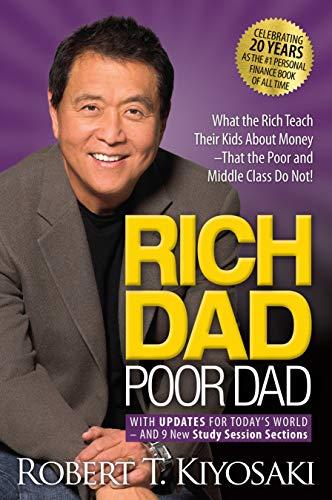
The book "Rich Dad Poor Dad" was mentioned as having an influence on Whitney's interest in real estate.
"
And so I kind of backed into real estate investing. And then from there, I was like, OK, how do I figure this out? And if I could double click really quickly on the 103% lending, what does that mean? So I had the primary loan on the property. So if I remember right, I think I had it 80 or 85% loan. Actually, it might have been more. It might have been 90. I would use the first time home buyers lending. Guys, this is 2002. So pardon me. I've slept a few nights over the past 22 years. That means like a 10% down payment. So you're doing 10% down payment. Yeah. And then I took out a second loan on the property, a HELOC and put. But at this point in time in 2002, they actually would refinance or allow you to pull out 103% of the home's value. We had not gone through 2008 or 2009 in this standpoint time. So in the bank's mind, real estate always goes up into the right. It always climbs. It doesn't take, right? Or I hadn't done so in over 25 years at that point in time. And so, yeah, I was like 103% finance, more money in my pocket. I was a little naive. I didn't know what that meant. I didn't know how risky that was. But they believed me and I'm like, oh, great. They believe in me. I should believe in myself. Let's go do it. So if you borrow more than 100%, you're underwater. Exactly. Not only did I owe the money to the bank for the loan, but say I took out 100, it's like buying $100,000 B and 103% means the bank gave me $103,000. If I lose the property or sell the property for anything less than $103,000, I now owe money back to the bank for that additional value that was not created on the deal.