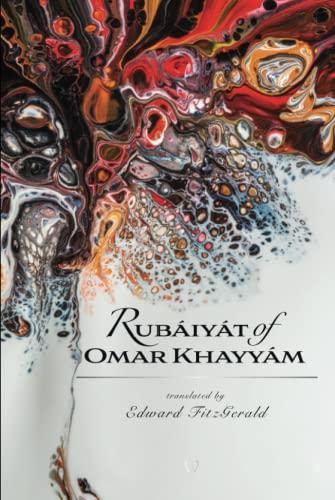
Rubáiyát of Omar Khayyám Cover
Podcast Mentions

Rubáiyát of Omar Khayyám

Omar Khayyám

Rubáiyát of Omar Khayyám is the title that Edward FitzGerald gave to his 1859 translation from Persian to English of a selection of quatrains (rubāiyāt) attributed to Omar Khayyam (1048–1131), dubbed “the Astronomer-Poet of Persia”. Although commercially unsuccessful at first, FitzGerald’s work was...

Podcasts 5
Quotes 32
Stuff You Should Know

It was mentioned as a 12th-century book of Persian poetry, translated into English, and the phrase "Tamm Shud" was found written in a copy, which was linked to the Somerton man.

"

That's from a 12th century book of Persian poetry called Rubaiyat of Omar Khayyam.

— Episode: Selects: The Baffling Case of the Body O...

Episode: Selects: The Baffling Case of the Body On Somerton...

It was mentioned as a 12th-century book of Persian poetry, translated into English, and the phrase "Tamm Shud" was found written in a copy, which was linked to the Somerton man.

"

That's from a 12th century book of Persian poetry called Rubaiyat of Omar Khayyam.

And it was kind of a big deal once it was translated into English.

And one of the reporters recognized it, right?

And specifically, it's the last words of the Rubaiyat.

And I have no idea whose it is.

Episode: Selects: The Baffling Case of the Body On Somerton...

It was mentioned as a 12th-century book of Persian poetry, translated by Edward Fitzgerald, and a key piece of evidence in the Somerton Man case, as the phrase 'Tamam Shud' was found in a copy of it.

"

That's from a 12th century book of Persian poetry called Rubaiyat of Omar Khayyam.

And it was kind of a big deal once it was translated into English.

And specifically, it's the last words of the Rubaiyat.

It's just been, I put it in my glove compartment. It's been sitting there until I read this article in the newspaper.
My Favorite Murder with Karen Kilgariff and Georgia Hardstark

They explained that the phrase "Taman Shud" came from the last two words of this Persian poetry collection.

"

The phrase Taman Shud was torn out of a poetry book, Persian poetry book that was extremely rare. And local librarians identified the phrase as the very last two words. It's the Rubaiyat of Omar Khayy...

— Episode: 50 - The Golden Anniversary Episode

Episode: 50 - The Golden Anniversary Episode

They explained that the phrase "Taman Shud" came from the last two words of this Persian poetry collection.

"

The phrase Taman Shud was torn out of a poetry book, Persian poetry book that was extremely rare. And local librarians identified the phrase as the very last two words. It's the Rubaiyat of Omar Khayyam.

So Supernatural

This 12th-century Persian poem, popular in the 1940s, was found with a torn page containing the phrase "Tamam Shud" near the body of the Somerton Man; this detail became a crucial part of the investigation.

"

Tamam should means it is finished.

— Episode: THE UNKNOWN: The Somerton Man

Episode: THE UNKNOWN: The Somerton Man

This 12th-century Persian poem, popular in the 1940s, was found with a torn page containing the phrase "Tamam Shud" near the body of the Somerton Man; this detail became a crucial part of the investigation.

"

Tamam should means it is finished.

The paper appears to be torn out of a copy of the book.

Criminal

Podcast

Criminal

It was mentioned as a popular book of poetry during World War II, and the last two words in the book are "tamam shud", a Persian phrase that means "it is ended".

"

This is the last words in a book of poetry called the Rubaiyat of Omar Khayyam, which I've done some historical research on this and it was actually a very popular book of poetry back in the war years...

— Episode: The Somerton Man

Episode: The Somerton Man

It was mentioned as a popular book of poetry during World War II, and the last two words in the book are "tamam shud", a Persian phrase that means "it is ended".

"

This is the last words in a book of poetry called the Rubaiyat of Omar Khayyam, which I've done some historical research on this and it was actually a very popular book of poetry back in the war years, back in World War II.

The poetry in the Rubaiyat of Omar Khayyam dates back to the 12th century.

It's attributed to Omar Khayyam, sometimes known as the astronomer poet of Persia.

The poetry in the book is about life and death and the very last two words are, tamam shud, a Persian phrase that means it is ended.

So they published this in the papers saying, oh, it's the Rubaiyat of Omar Khayyam. Has anyone got a copy with the back page torn out?

Stuff They Don't Want You To Know

It was mentioned as a source of a cryptic phrase found on the body of the Somerton Man, and discussed as a possibly related theme throughout the episode, with theories about its use as a code.

"

Awake! For morning in the bowl of night Has flung the stone that puts the stars to flight And glow! The hunter of the east has caught the sultan's turret In a moose of light

— Episode: CLASSIC: Unsolved - Tamam Shud

Episode: CLASSIC: Unsolved - Tamam Shud

It was mentioned as a source of a cryptic phrase found on the body of the Somerton Man, and discussed as a possibly related theme throughout the episode, with theories about its use as a code.

"

Awake! For morning in the bowl of night Has flung the stone that puts the stars to flight And glow! The hunter of the east has caught the sultan's turret In a moose of light

Dreaming when Don's left hand was in the sky I heard a voice within the tavern cry Awake, my little ones, and fill the cup Before life's liquor in its cup be dry And as the cock crew, those who stood before the tavern shouted Opened in the door

You know how little while we have to stay And once departed may return no more

That is from something called the Rubiot, which will, uh, specifically the English translation by a guy named Fitzgerald Which will become important, we promise, as this episode proceeds

TAMAM, TAMAMIN as in north this is the final phrase of an English translation by a guy named Edward Fitzgerald The thing he translated the actual rubyat of Omar Kayem is a bunch of poems It's an anthology of poems And they're about how you should live life to the fullest essentially

Episode: CLASSIC: Unsolved - Tamam Shud

It was mentioned as a popular book at the time and was a source of a mysterious phrase found on the body of the Somerton man. It was also featured in the beginning of the podcast episode.

"

Awake! For morning in the bowl of night Has flung the stone that puts the stars to flight And glow! The hunter of the east has caught the sultan's turret In a moose of light

Dreaming when Don's left hand was in the sky I heard a voice within the tavern cry Awake, my little ones, and fill the cup Before life's liquor in its cup be dry And as the cock crew, those who stood before the tavern shouted Opened in the door

You know how little while we have to stay And once departed may return no more

That is from something called the Rubiot Which will, uh, specifically the English translation by a guy named Fitzgerald Which will become important, we promise, as this episode proceeds

The thing he translated the actual rubyat of Omar Kayem is a bunch of poems It's an anthology of poems And they're about how you should live life to the fullest essentially

Episode: CLASSIC: Unsolved - Tamam Shud

It was mentioned as a popular book at the time, particularly around Valentine's Day, and is believed to possibly be used as a code or cipher in the Somerton Man case. A specific English translation by Edward Fitzgerald was mentioned repeatedly.

"

Awake! For morning in the bowl of night Has flung the stone that puts the stars to flight And glow! The hunter of the east has caught the sultan's turret In a moose of light

Dreaming when Don's left hand was in the sky I heard a voice within the tavern cry Awake, my little ones, and fill the cup Before life's liquor in its cup be dry And as the cock crew, those who stood before the tavern shouted Opened in the door

You know how little while we have to stay And once departed may return no more

Which will, uh, specifically the English translation by a guy named Fitzgerald Which will become important, we promise, as this episode proceeds

TAMAM, TAMAMIN as in north this is the final phrase of an English translation by a guy named Edward Fitzgerald The thing he translated the actual rubyat of Omar Kayem is a bunch of poems It's an anthology of poems

Note: The book recommendations on this page are discovered automatically from podcast transcripts, and may be incorrect or incomplete.