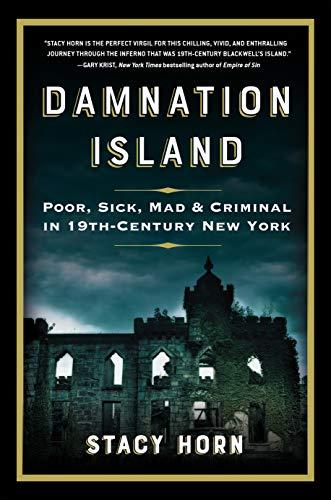
It was discussed as a source for the story of the asylum on Blackwell's Island, focusing on the poor, sick, mad and criminal within 19th-century New York.
"
Also a 1997 episode of PBS's American Experience called Around the World in 72 Days. The book Damnation Island, Poor, Sick, Mad and Criminal in 19th Century New York by writer Stacey Horn.
— Episode: 401 - Keep A Lid On It
Episode: 401 - Keep A Lid On It
It was discussed as a source for the story of the asylum on Blackwell's Island, focusing on the poor, sick, mad and criminal within 19th-century New York.
"
Also a 1997 episode of PBS's American Experience called Around the World in 72 Days. The book Damnation Island, Poor, Sick, Mad and Criminal in 19th Century New York by writer Stacey Horn.
The book focuses on the history of Blackwell's Island, later known as Roosevelt Island, in the 19th century, and its various institutions, including the asylum, prison, and workhouse. It describes the transition from moral treatment to harsh, inhumane conditions, highlighting the overcrowding and the lack of resources.
"
It was beautiful the way it's described it just sounds like this lovely adilic pastoral retreat.
— Episode: Send Her to the Island
Episode: Send Her to the Island
The book focuses on the history of Blackwell's Island, later known as Roosevelt Island, in the 19th century, and its various institutions, including the asylum, prison, and workhouse. It describes the transition from moral treatment to harsh, inhumane conditions, highlighting the overcrowding and the lack of resources.
"
It was beautiful the way it's described it just sounds like this lovely adilic pastoral retreat.
It was supposed to be one woman per room and she would have a window in a nice bed and what ended up happening is they would put anywhere from four to six women in a room that was meant for one and they started using interior rooms um so none of those rooms had windows and another thing um they saw they would never have is windows in the door so you can look in the room something that prisons have because they felt you know the women would feel like you know they were on view like being in a zoo
They really did see it as a sanctuary as a retreat you know to take these people away from Manhattan and all its temptations and dangers and give them a chance to rehabilitate it they're sick will help them get better if they have mental illnesses we'll try to cure them and if their convicts will try to rehabilitate them I mean they really were proud when they began they felt you know we're going to do this right and we're going to show the whole world.
It didn't really have any effect on the conditions there. It was just not enough to even be a blip in their lives. Exposey after exposey would come out about the lunatic asylum and the other institutions and the public will go, oh this is terrible. The city would make some sort of effort to address the situation and it was always enough to get the outrage people to go, okay good something's happening something's going to get better but it never really got very much better.
Stacey Horan says unlike prison inmates who received a sentence the women at the asylum had no idea how long they would have to stay and if they would ever go home. One report showed that a majority of patients had been at the asylum somewhere between 10 and 30 years.
Note: The book recommendations on this page are discovered automatically from podcast transcripts, and may be incorrect or incomplete.