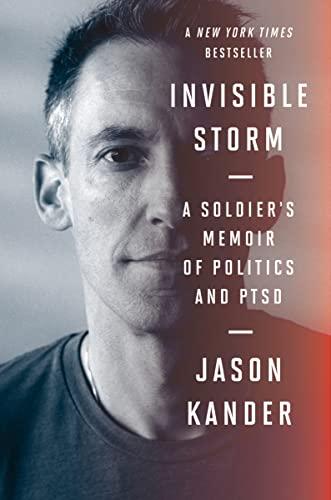

Invisible Storm: A Soldier's Memoir of Politics and PTSD Cover
Podcast Mentions

Invisible Storm A Soldier's Memoir of Politics and PTSD

Jason Kander

NEW YORK TIMES In 2017, President Obama, in his final Oval Office interview, was asked who gave him hope for the future of the country, and Jason Kander was the first name he mentioned. Suddenly, Jason was a national figure. As observers assumed he was preparing a run for the presidency, Jason anno...

Podcasts 5
Quotes 32
Pod Save America

It was mentioned that Jason Kander has a new book coming out, a soldier's memoir about politics and PTSD, with all royalties going to support veterans' causes. It was described as the book he wished he had 12 years prior.

"

I have a book coming out July 5th. It's called Invisible Storm, a soldier's memoir of politics and PTSD. It is the best thing I've ever written. I'm very proud of it.

— Episode: "Running the Ultra MAGAthon." (Live from...

Episode: "Running the Ultra MAGAthon." (Live from St. Louis...

It was mentioned that Jason Kander has a new book coming out, a soldier's memoir about politics and PTSD, with all royalties going to support veterans' causes. It was described as the book he wished he had 12 years prior.

"

I have a book coming out July 5th. It's called Invisible Storm, a soldier's memoir of politics and PTSD. It is the best thing I've ever written. I'm very proud of it.

Frankly, it's the book that I wish had been available to me to read, like, 12 years ago.

Episode: "Running the Ultra MAGAthon." (Live from St. Louis...

It was described as a memoir about politics and PTSD written by Jason Kander. All royalties from the book were donated to the Veterans Community Project's fight against veteran suicide and homelessness.

"

I have a book coming out July 5th. It's called Invisible Storm, a soldier's memoir of politics and PTSD. It is the best thing I've ever written. I'm very proud of it.

Frankly, it's the book that I wish had been available to me to read, like, 12 years ago. I think it would have...

You can get the book early, actually. If you go to jasonkander.com/launch team, you can join the launch team, pre-order the book and you can get it early. So I hope you all do that.

I'm going to say that again, it's jasonkander.com/launch team.

And... Oh, I should also add that all of the royalties for me go to Veterans Community Projects' fight against veteran suicide and veterans homelessness.

Breaking Points with Krystal and Saagar

The book is a memoir by Jason Kander, a former intelligence officer who served in Afghanistan. The book talks about his experiences in the military and his struggle with PTSD. Kander details his rapid rise in American politics and how his undiagnosed PTSD impacted his life. He ultimately made the difficult decision to step back from public life to get help at the VA.

"

I deployed as a military intelligence officer for the army in 2006 and then to give the short version proceeded to have a pretty fast rise uh in american politics from the state legislature to secreta...

— Episode: Mini Show #48: Kamala Staff, Fetterman C...

Episode: Mini Show #48: Kamala Staff, Fetterman Campaign, I...

The book is a memoir by Jason Kander, a former intelligence officer who served in Afghanistan. The book talks about his experiences in the military and his struggle with PTSD. Kander details his rapid rise in American politics and how his undiagnosed PTSD impacted his life. He ultimately made the difficult decision to step back from public life to get help at the VA.

"

I deployed as a military intelligence officer for the army in 2006 and then to give the short version proceeded to have a pretty fast rise uh in american politics from the state legislature to secretary state of missouri to just barely losing a u.s senate race in a very red state missouri uh and then you know was one of like i don't know there were a few dozen of us in 2018 who are thinking we were going to run for president in 2020 on the democratic side uh was running around doing that but the whole time i was having um you know untreated and diagnosed uh i had untreated and diagnosed ptsd from my time in afghanistan and i was basically trying to outrun it uh and that got harder and harder and right when i was you know really getting to the point where i was going to officially announce for president i was doing that soft running everybody knew i was running but i like legally couldn't say i was running thing uh it just it was getting bad enough where i just i couldn't keep going so i i decided well i'm gonna go back home i'm gonna run for mayor in my hometown kansas city and i'm gonna go get help at the va uh i kept half that promise to myself i started running for mayor it was going really well we were gonna win that race but i didn't go to the va uh like i told myself i would do and i just started getting worse faster and it went from you know the normal stuff that i was having night terrors hyper vigilance that kind of thing to also now including depression and suicidal thoughts and uh so you know about three months into that campaign for mayor despite how well the campaign was going i was not going well and i said you know what this ain't working and uh i dropped out of public life for a while to um go get help at the va

It was rock bottom it was just it's nice that people tend to give me like a lot of credit for making that decision but in my life at that moment it didn't feel like much of a decision i i knew that i didn't want to want to die and it was time to try to do something anything and i was running out of ideas so i actually called the veterans crisis line at the va and you know for all that time over a decade i had been telling myself this fiction that well it can't be ptsd and i had all these different reasons for that uh but when i heard the sound of the woman's voice on the other end of the line at the veterans crisis line it was just very evident to me that i didn't sound any different than anybody else she had talked to in that job and and that was a really important realization for me that helped me say you know what i i got to take this seriously uh and that's when i decided to uh to go get help and i the reason i decided to publicly state why i was dropping out and that i was going to go get help for ptsd is i just figured you know maybe if somebody had done that several years earlier uh on the platform that i was doing it on then maybe that would have encouraged me to take a look at my own symptoms and say maybe this is ptsd and it turns out it did have that effect for a lot of people which is maybe one of the you know definitely one of the most important things i've ever actually done

My job was to go out and to meet with people who uh were pretty unsavory characters in a lot of cases and there was always the uh possibility that my translator and i were being lured into a trap that there was a possibility of being kidnapped and killed and that is really the source of a lot of you know the cumulative trauma that i experienced just that constantly knowing where all the exits are how many people between me and my vehicle always being ready but the thing is i never fired my weapon my whole deployment and so i came home believing that that didn't count and that there's no way that could be traumatic i had friends who had been shot things like that and and so i went all these years saying like well if if i say that this is ptsd instead of just something wrong with me well that to me was like stealing bowler from my friends who had been physically wounded uh and the thing about that is is it's not just the military where that can happen i mean i meet so many people now who who will tell me about what they've been going through and then they'll caveat what they say with well i wasn't in a war or anything and i always say look you know i i spent a lot of years trying to rank my trauma out of existence by saying well it is not as bad as this person and that's a waste of time all it did was it delayed my opportunity to heal and to go get treatment trauma is trauma it doesn't make a car accident a bad divorce surviving cancer losing a loved one stuff that happens in your childhood like or point of war it doesn't matter if it's something that you haven't been able to move past in your brain and it's still affecting you well then it's something you have to deal with and there's no point in trying to compare it to someone else's

I went to the v a i did two types of therapy i did cognitive processing therapy and prolonged exposure therapy which the short explanation is is that cognitive processing therapy is a lot of it for me was just sort of being educated like going to graduate school about my brain learning about how the how the symptoms manifest and where they come from so that i could spot them and then the second thing prolonged exposure therapy is just you know kind of going straight to the trauma talking about those intrusive thoughts and and those memories and and talking about them enough where they no longer have the grip on you and then doing some other some other things but look whatever it is that people choose to do whatever treatment is their advice to do you know i i tell people like well that's what i did but if that hadn't been effective for me i would have gone on to try the next thing so it's really worth it there are people around us all the time who have achieved post-traumatic growth we don't ever see it depicted on film very rarely in the news but it's extremely common but we can be left with the impression that ptsd is a terminal diagnosis because all we ever see is this voyeuristic ptsd porn depiction where you have like a combat veteran who's been you know beating their spouse and abusing drugs and robbing a bank but that's not common what's common is people go to treatment and they get better and it's important for folks to know that so that they'll go pursue it

In fact all the royalties from invisible storm go to my royalties publisher likes to keep their part of the money go to veterans community project um so veterans community project is an organization based in my hometown canza city it was founded by some fellow combat veterans who set out to do a couple of things one to create a walk-in centers we call them outreach centers to where any veteran regardless of what their service was like there's no disqualifiers can come in and call qualify for 100 of our services which is everything from mental health treatment to dental to you know uh like seeing a physician to financial literacy to job training all sorts of stuff what we're much better known for is the residential side of what we do which is we build villages of tiny houses for homeless veterans with wraparound case management services and we have an 85 success rate of then transitioning homeless veterans into permanent housing in the community where they're fully contributing and you know fully uh like reintegrated members of of the community uh and so it's it's pretty miraculous work people can go to vcp like veterans community project dot org to learn more and i appreciate you asking me about it

Episode: Mini Show #48: Kamala Staff, Fetterman Campaign, I...

Jason Kander, a former army intelligence officer, discussed his new book "Invisible Storm" which details his experiences with PTSD and how he was forced to step back from political life to deal with his own internal struggles with the condition. The book was described as a soldier's memoir of politics and PTSD.

"

It's titled Invisible Storm a soldier's memoir of politics and PTSD

So I deployed as an army intelligence officer for the army in 2006 and then to give the short version proceeded to have a pretty fast rise in American politics from the state legislature to Secretary of State of Missouri to just barely losing a U.S. Senate race in a very red state Missouri and then you know was one of like I don't know there were a few dozen of us in 2018 who were thinking we were going to run for president in 2020 on the Democratic side was running around doing that but the whole time I was having you know untreated and diagnosed I had untreated and diagnosed PTSD from my time in Afghanistan and I was basically trying to outrun it and that got harder and harder and right when I was you know really getting to the point where I was going to officially announce for president I was doing that soft running everybody knew I was running but I like legally couldn't say I was running thing it just it was getting bad enough where I just I couldn't keep going so I I decided well I'm gonna go back home I'm gonna run for mayor in my hometown Kansas City and I'm gonna go get help at the VA I kept half that promise to myself I started running for mayor it was going really well we were gonna win that race but I didn't go to the VA like I told myself I would do and I just started getting worse faster and it went from you know the normal stuff that I was having night terrors hyper vigilance that kind of thing to also now including depression and suicidal thoughts and so you know about three months into that campaign for mayor despite how well the campaign was going I was not going well and I said you know what this ain't working and I dropped out of public life for a while to go get help at the VA

I describe it in the book as the international capital of zero f's left to give it was rock bottom it was just it's nice that people tend to give me like a lot of credit for making that decision but in my life at that moment it didn't feel like much of a decision I I knew that I didn't want to want to die and it was time to try to do something anything and I was running out of ideas so I actually called the veterans crisis line at the VA and you know for all that time over a decade I had been telling myself this fiction that well it can't be PTSD and I had all these different reasons for that but when I heard the sound of the woman's voice on the other end of the line at the veterans crisis line it was just very evident to me that I didn't sound any different than anybody else she had talked to in that job and and that was a really important realization for me that helped me say you know what I I got to take this seriously and that's when I decided to to go get help and I the reason I decided to publicly state why I was dropping out and that I was going to go get help for PTSD is I just figured you know maybe if somebody had done that several years earlier on the platform that I was doing it on then maybe that would have encouraged me to take a look at my own symptoms and say maybe this is PTSD and it turns out it did have that effect for a lot of people which is maybe one of the you know definitely one of the most important things I've ever actually done

I spent a lot of years trying to rank my trauma out of existence by saying well it is not as bad as this person and that's a waste of time all it did was it delayed my opportunity to heal and to go get treatment trauma is trauma it doesn't make a car accident a bad divorce surviving cancer losing a loved one stuff that happens in your childhood like or point of war it doesn't matter if it's something that you haven't been able to move past in your brain and it's still affecting you well then it's something you have to deal with and there's no point in trying to compare it to someone else's

In my case I was an army intelligence officer who my job was to go out and to meet with people who were pretty unsavory characters in a lot of cases and there was always the possibility that my translator and I were being lured into a trap that there was a possibility of being kidnapped and killed and that is really the source of a lot of you know the cumulative trauma that I experienced just that constantly knowing where all the exits are how many people between me and my vehicle always being ready but the thing is I never fired my weapon my whole deployment and so I came home believing that that didn't count and that there's no way that could be traumatic I had friends who had been shot things like that and and so I went all these years saying like well if if I say that this is PTSD instead of just something wrong with me well that to me was like stealing bowler from my friends who had been physically wounded and the thing about that is is it's not just the military where that can happen I mean I meet so many people now who who will tell me about what they've been going through and then they'll caveat what they say with well I wasn't in a war or anything and I always say look you know I I spent a lot of years trying to rank my trauma out of existence by saying well it is not as bad as this person and that's a waste of time all it did was it delayed my opportunity to heal and to go get treatment trauma is trauma it doesn't make a car accident a bad divorce surviving cancer losing a loved one stuff that happens in your childhood like or point of war it doesn't matter if it's something that you haven't been able to move past in your brain and it's still affecting you well then it's something you have to deal with and there's no point in trying to compare it to someone else's

Episode: Mini Show #48: Kamala Staff, Fetterman Campaign, I...

The book, "Invisible Storm: A Soldier's Memoir of Politics and PTSD", was written by Jason Kander, who served as an intelligence officer in the Army and then rose through the ranks of American politics before stepping back from public life to deal with his own struggles with PTSD. He describes the challenges of living with the condition and how he ultimately sought treatment at the VA.

"

It was rock bottom. It was just... It's nice that people tend to give me like a lot of credit for making that decision, but in my life at that moment it didn't feel like much of a decision. I knew that I didn't want to want to die, and it was time to try to do something, anything, and I was running out of ideas.

I describe it in the book as the international capital of zero f's left to give.

I spent a lot of years trying to rank my trauma out of existence by saying, well, it is not as bad as this person, and that's a waste of time. All it did was it delayed my opportunity to heal and to go get treatment.

Trauma is trauma. It doesn't make a car accident, a bad divorce, surviving cancer, losing a loved one, stuff that happens in your childhood, like, or point of war. It doesn't matter if it's something that you haven't been able to move past in your brain, and it's still affecting you, well, then it's something you have to deal with, and there's no point in trying to compare it to someone else's.

All the royalties from "Invisible Storm" go to my royalties publisher likes to keep their part of the money go to Veterans Community Project.

Chasing Life

It is a soldier's memoir focusing on politics and PTSD, offering an honest and vulnerable account of the author's experiences. The book was described as brave and powerful, offering a unique perspective on post-traumatic growth.

"

So if you like the podcast episode, which you will, his book's called Invisible Storm. It's a soldier's memoir of politics and PTSD.

— Episode: Chasing Life presents In the Bubble with...

Episode: Chasing Life presents In the Bubble with Andy Slav...

It is a soldier's memoir focusing on politics and PTSD, offering an honest and vulnerable account of the author's experiences. The book was described as brave and powerful, offering a unique perspective on post-traumatic growth.

"

So if you like the podcast episode, which you will, his book's called Invisible Storm. It's a soldier's memoir of politics and PTSD.

And I'm very excited about the book. And the book is sort of...I'm glad you put down into words the power of what you've been through and some of the things you were saying.

I think my version of your events of your life, which I'm sure you should care nothing about, but I'll give it to you anyway. I do care.

Is half the circle was written, the circle drawn of somebody in the public eye who was at the top of the world, admired, masculine, tough. But so what? But so what?

So the interviews I've done, this book is my way of frankly, just writing the book that doesn't exist until now and that I needed to read 14 years ago.

The MeidasTouch Podcast

The hosts praised the memoir as a crucial, emotionally honest account of Kander's battle with PTSD and his journey through politics, noting its focus on mental health and its impact on listeners.

"

Now, Jason Kander has a book which comes out today. It's called Invisible Storm, A Soldier's Memoir of Politics and PTSD.

— Episode: Democratic star and vet Jason Kander REV...

Episode: Democratic star and vet Jason Kander REVEALS ALL t...

The hosts praised the memoir as a crucial, emotionally honest account of Kander's battle with PTSD and his journey through politics, noting its focus on mental health and its impact on listeners.

"

Now, Jason Kander has a book which comes out today. It's called Invisible Storm, A Soldier's Memoir of Politics and PTSD.

What this book is heavily focused on and why I think this book is really one of the most important books I've read in a really long time ... is its focus on mental health through the lens of Jason Kander's experience being a soldier, running for public office, having this reckoning with his PTSD, confronting it, being treated, his focus on his family, his focus on making time for himself and his loved ones.

I also want to let all of our listeners know that if you buy Invisible Storm, a soldier's memoir of politics and PTSD by Jason Kander, all of the proceeds are going to the Veterans Community Project.

This book for me is the book that I wish had existed 14 years ago. If this book had existed 14 years ago and I'd have read it, I would have gone and gotten treatment for PTSD.

And this book does an incredible job at doing that and having that conversation. Invisible Storm, a soldier's memoir of politics and PTSD.

Note: The book recommendations on this page are discovered automatically from podcast transcripts, and may be incorrect or incomplete.