Secrets of a Marine's Wife
Shanna Hogan
Mentioned 3 months ago
The Unspeakable
Explore the dark side of the world’s most beautiful places with investigative journalist and park enthusiast Delia D’Ambra. Each week, Delia guides you deep into national parks and forests across the globe, uncovering stories where nature’s breathtaking beauty has masked sinister secrets. From infam...
Recently mentioned
Shanna Hogan
Mentioned 3 months ago
The Unspeakable
Gregg Olsen
Mentioned 5 months ago
The Boat Ramp
Jean-Patrick Manchette
Mentioned 5 months ago
The Boat Ramp
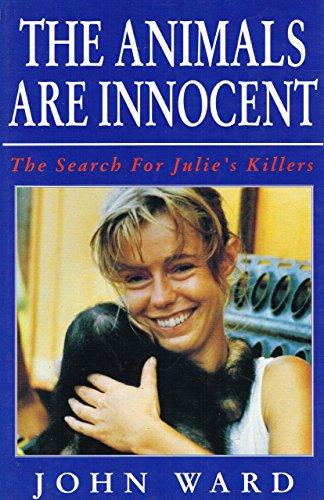
John Ward
Mentioned 5 months ago
REVISITED: The Reserve
Julie. Ward
Mentioned 5 months ago
REVISITED: The Reserve
Dr Grace A Musila
Mentioned 5 months ago
REVISITED: The Reserve
Corey Recko
Mentioned 6 months ago
The Attorney
Steve Stout
Mentioned 7 months ago
UPDATED: The Housewives
Laura Ingalls Wilder
Mentioned 8 months ago
INTRODUCING... Chameleon: The Weekly

Meg Cabot
Mentioned 8 months ago
INTRODUCING... Chameleon: The Weekly
Bob Flaws
Mentioned 10 months ago
The Ride
Caleb Hannan
Mentioned 11 months ago
REVISITED: The Husband

Classic Country Houses of Connecticut
The host mentioned William Stage's 1998 book as a source, noting it was still available for order and had provided valuable material for the episode.
I also want to mention that another great resource I used as source material for this episode was author William Stage's book titled Litchfield, A Strange and Twisted Saga of Murder in the Midwest, wh...
— Episode: The Fire
The host mentioned William Stage's 1998 book as a source, noting it was still available for order and had provided valuable material for the episode.
I also want to mention that another great resource I used as source material for this episode was author William Stage's book titled Litchfield, A Strange and Twisted Saga of Murder in the Midwest, which was initially published in 1998. You can still order copies online, which is what I did.
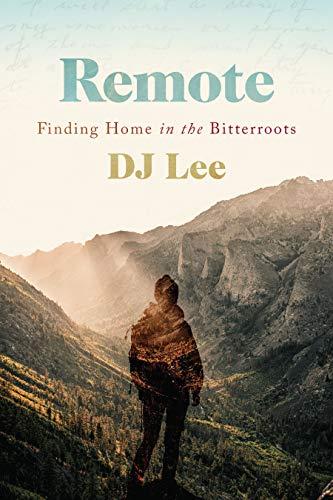
Finding Home in the Bitterroots
The host highlighted that a friend of Connie Johnson authored the book, which chronicles her story and reflections on wilderness, noting that her disappearance was incorporated into the manuscript before publication. The conversation emphasized the mystical quality of wilderness that the author and others learned from Connie.
The host noted that DJ Lee, a friend of Connie Johnson, authored a book titled Remote Finding Home in the Bitter Roots, which chronicles Connie's story and reflections on wilderness.
One of Connie's good friends, DJ Lee wrote a book titled Remote Finding Home in the Bitter Roots and told Washington State University professor Peter Chillson in an interview for OSU Press that so much of Connie's story, including her disappearance, had to be written into her manuscript before she could publish.
I think with the things I learned from Connie and that everybody learned from her is that wilderness is something almost mystical.

The host referenced the book as a source for historical incidents and context surrounding the murders, noting its descriptions of reported raids by Native American men, a survivor’s claim after a shootout, and earlier violent encounters in the region. The citations were used to provide background rather than to endorse the work.
The host cited the book as a source for historical incidents and context about the murders, noting it described reported raids and earlier violent encounters in the region.
According to author Asa Merrill Fairfield in his book, Fairfield's Pioneer History of Lassen County, California, there had been a number of reported incidents of Paiute men or Pit River Native American men raiding white settlers' camps who were venturing in small groups in the Black Rock Desert.
According to author Asa Merrill Fairfield reported in his book that it wasn't very long after Lamericus showed up at the ranch claiming he'd survived a shootout before the second group from the ranch made it to the canyon.
According to Asa Merrill Fairfield's book, in the early 1850s, so several years before the murders, Peter and 13 men killed a group of Pit River Native American men who'd kidnapped some women from a neighboring tribe.
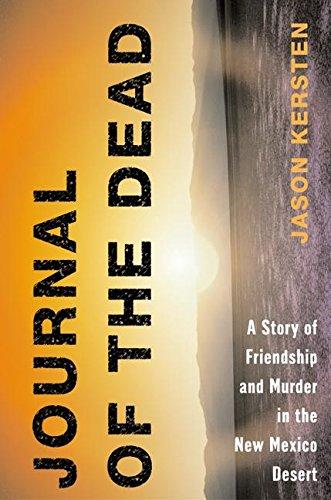
A Story of Friendship and Murder in the New Mexico Desert
The host highlighted that the author interviewed several medical doctors and explained the physiological effects of prolonged dehydration, noting the book's investigative approach to the topic.
The host noted that in Jason Kirsten's piece for Maxim Magazine and his book, The Journal of the Dead, he interviewed several medical doctors and explained the physiological effects of prolonged dehydration.
In Jason Kirsten's piece for Maxim Magazine and his book, The Journal of the Dead, he interviewed several medical doctors and sort of broke down what happens to a person when they go long periods of time without water.
Introduction to the Mystery
The host referenced the book to provide background on John Bamford, describing him as a rumored loner with a surly, hot‑tempered reputation. No endorsement or criticism of the title was offered.
The host cited the book to describe John Bamford as a rumored loner with a surly, hottempered reputation.
According to multiple indepth articles on John Bamford, as well as a detailed chapter in Keith Layden and Michael Ray's book, The One and God of Mystery, John was rumored to be kind of a loner.
Some people even described him as a, quote, surly and hottempered man that most folks avoided if they could.
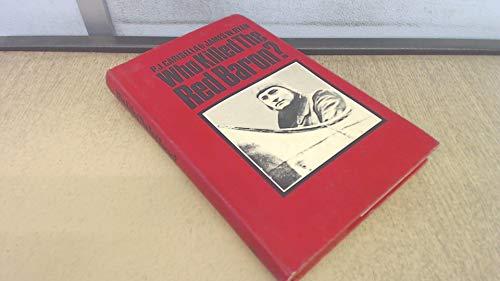
Baron Manfred Von Richthofen
The host reported that Mortimer suggested the story might be a malicious rumor spread to ruin Annie's reputation.
Wallace Mortimer wrote in his book Who Killed James Barclay that it's possible the entire thing was just a nasty rumor spread by someone who wanted to ruin Annie's reputation.
— Episode: The Station
The host reported that Mortimer suggested the story might be a malicious rumor spread to ruin Annie's reputation.
Wallace Mortimer wrote in his book Who Killed James Barclay that it's possible the entire thing was just a nasty rumor spread by someone who wanted to ruin Annie's reputation.
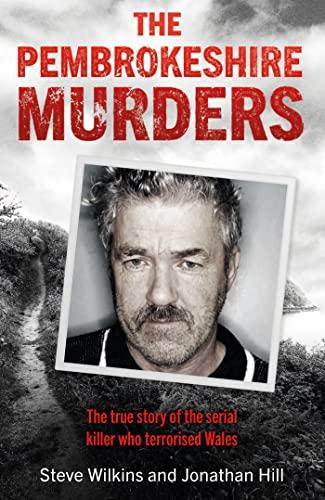
The dramatic true story of a 20-year hunt for a serial killer and the detectives who brought him to justice
The book was repeatedly cited by Delia DeAmbra as the authoritative source for factual details about the Dixon murders, including victim backgrounds, investigative actions, and specifics of the crime scenes. It provided the episode with concrete information that shaped the narrative of the hunt for the serial killer.
The book was repeatedly cited as the source for factual details about the Dixon murders, the victims' background, and investigative findings throughout the episode.
And according to the book, The Pembrokeshire Murders by Steve Wilkins and Jonathan Hill, the closeknit family planned to get together to share stories from their travels.
According to the book, The Pembrokeshire Murders, a guy staying at the park named Richard Lines came forward and told investigators that on Thursday, June 29th, around 9:30 in the morning, he'd talked with Peter and Gwenda at the campground.
According to the book The Pembrokeshire Murders, some of the investigators had to tie off the man's body with a rope to keep it from falling off the edge of the cliff.
According to the book The Pembrokeshire Murders, Gwenda had been shot twice with a shotgun, once in the back and once in the chest.
According to the book The Pembrokeshire Murders, the card's transaction history showed that the person had used it in a town about 15 miles away from Little Haven around 1:30pm on June29th to withdraw 10.

During the episode, host Delia Deambra repeatedly cited the book as the primary source for details about the ranger's initial investigation, the victim's family reaction, and subsequent police leads. She referenced its accounts to explain key moments in the case, indicating that the title was regarded as an authoritative account of the events.
The book was cited multiple times as the primary source for details about the ranger's discovery, the victim's family reaction, and later investigative leads.
According to the book Unsolved Australia by Justine Ford the park ranger who took the couple's report came out to investigate right away and it wasn't long before he found something awful.
According to the book Unsolved Australia her reaction was so severe her doctor felt it was medically necessary to inject her with sedatives to keep her calm.
According to Justine Ford's book Kathleen told police that on Wednesday morning she'd brought Nigel breakfast in bed like she usually did then he'd gotten up to take Stewart to school.
According to Justine Ford's book Unsolved Australia and Andrew Kouberithis reporting for news.com.au New South Wales police received three names of people who back in 1975 would have been teenagers living near Sutherland.
According to Unsolved Australia the detectives did a lot more digging into Nigel's movements leading up to his death and that's when they discovered some big revelations.
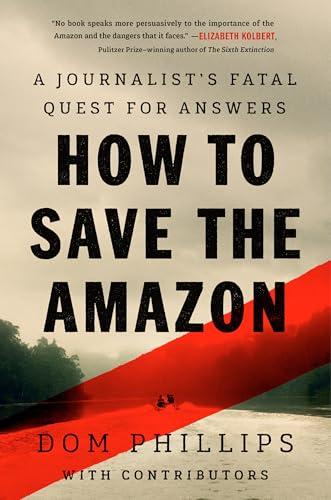
A journalist’s fatal quest for answers
The host explained that the author was writing the book about the dangers of unwarranted contact with remote indigenous tribes in the Javari Valley. It highlighted the focus on the messed‑up situation and potential solutions. The mention was informational rather than a strong endorsement.
Dom Phillips was writing the novel How to Save the Amazon, focusing on the dangers of unwarranted contact with remote indigenous tribes in the Javari Valley.
The whole reason he was traveling with Bruno in the summer of 2022 was because he was in the middle of writing a book about all the messed up things that were happening in the Javari Valley. He titled the novel How to Save the Amazon. A big focus of the book was going to be how unwarranted contact with remote indigenous tribes was extremely dangerous and what solutions could be generated in the future.
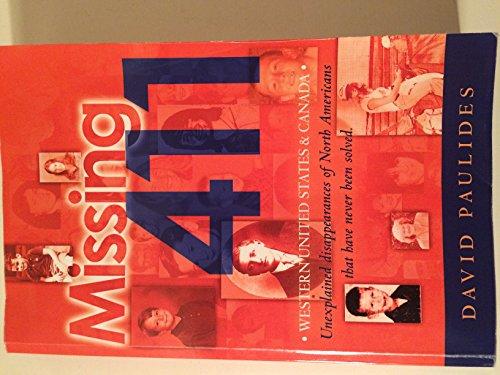
Unexplained Disappearances of North Americans that have never been solved
The host referenced the book when discussing the author's claim that the National Park Service repeatedly denied his Freedom of Information Act requests about the Stacey Arras case. They also noted that the author's lengthy YouTube video on the topic could leave viewers questioning the information presented.
The host noted that David Palladis, author of *Missing411*, claimed the National Park Service repeatedly denied his Freedom of Information Act requests concerning the Stacey Arras case.
A man named David Palladis, who authored a book called Missing 411, claimed for years that the National Park Service refused to grant his freedom of information act request to get more details about the Stacey Arras case.
Full disclosure, if you watch David's 41minute long YouTube video about this case, you'll probably get lost and question a lot of things he presents.
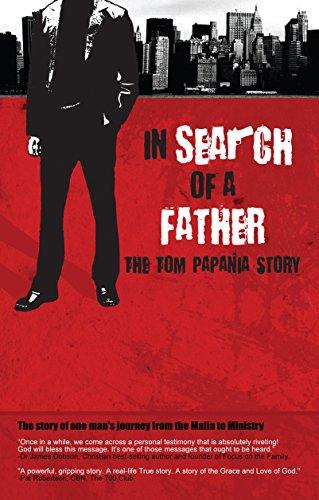
The episode used the self‑published work as a primary source to recount Mike Bradbury's perspective on the disappearance, describing his memories, guilt, and family reactions. It cited details from the book about the father's search, the children's experiences, and the author's background. The hosts referenced it mainly for factual context rather than endorsing it.
The selfpublished book recounted Mike Bradbury's perspective on the disappearance, detailing his memories of the day and his feelings of guilt and premonition. It was used as a source throughout the episode to describe events and family reactions.
According to the book a father's search when Travis got to the door of one of the restroom stalls He turned around and instructed his sister to stay put while he was using the bathroom
Mike went up to the Ranger station on site, but according to his book a father's search. He found it empty with the lights off
According to the book A Father's Search, 8 year old Travis had a particularly hard time dealing with his sister's disappearance
According to the book, A Father's Search Mike worked as an antique furniture restorer and Patty was a full-time stayathome mom
Mike channeled his sorrow Into a selfpublished book Titled A Father's Search He and his fatherinlaw coauthored the book And published a limited number of copies In 2010
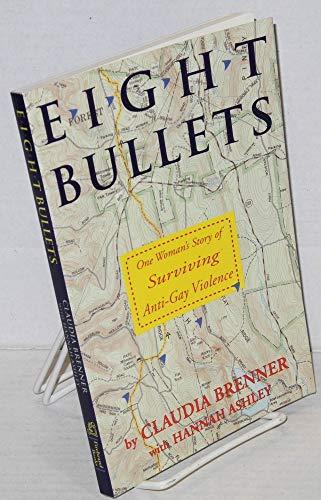
One Woman's Story of Surviving Anti-Gay Violence
The host highlighted the book as a 1995 memoir in which the author recounted her attack and its aftermath, noting that she wrote it to encourage LGBTQ individuals to speak out against anti‑gay violence. Delia D'Ambra explained that the author hoped the story would inspire many more people in the community to share their experiences. The discussion presented the title as a powerful, uplifting account for listeners.
The host noted that Claudia Brenner authored this 1995 paperback recounting her attack and its aftermath, aiming to inspire LGBTQ individuals to speak out against antigay violence.
In 1995, Claudia wrote a book about the attack and the aftermath and titled it Eight Bullets, One Woman's Story of Surviving Anti-Gay Violence. In it, she talked about how the impact of what she'd been through had made her more willing to share her story. She said she hoped it would inspire many more people in the LGBTQ community to speak out against the violence they'd endured because of their sexual orientation.
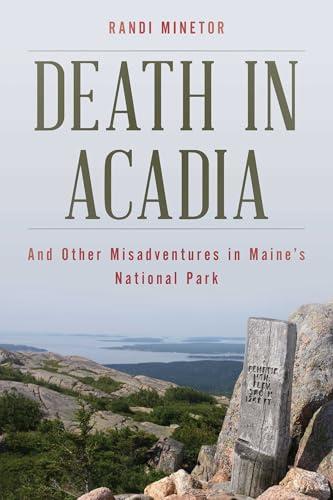
And Other Misadventures in Maine's National Park (Dear Earthling)
The host referenced the book as a source for the case, noting that it discussed how the victim was unknown to anyone and had not been encountered before. This citation highlighted the book's usefulness for providing background details on the incident.
The host cited Randy Minotaur's book as a source, noting it discussed the case and that no one seemed to have known the victim.
According to Randy Minotaur's report, Death in Acadia and Other Misadventures in Maines National Park,
According to Randy Minotaur's book, not one person seemed to have known the woman or even come across her path.
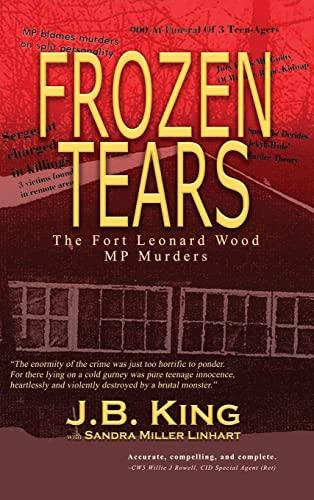
The Fort Leonard Wood MP Murders
The host highlighted that the book provided a firsthand account of the crime scene, detailing the victim's statement and the discovery of the victims. It also described how news of the missing teens spread among officers and how a formal search party was organized, as well as the involvement of military police and FBI agents. The discussion focused on the book's detailed chronology rather than offering a recommendation.
The host noted that the trooper's book recounted his firsthand observations of the crime scene, detailing Juanita's statement and the discovery of the victims.
In his book, Frozen Tears, J.B. wrote that from the moment he saw Juanita sitting in Mr. Needham's passenger seat, he knew something terrible had happened.
According to JB King's book, by two o'clock in the afternoon, news of the missing teens had made its way to more police officers in the area and a formal search party was organized.
JB wrote in his book that while he waited for the FBI agents to arrive from Kansas City, a few military police officers from the Army base came to the scene to get briefed on the situation.
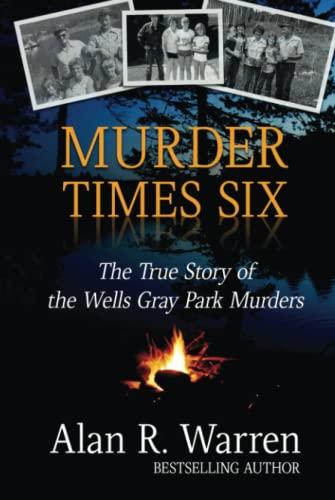
The True Story of the Wells Gray Park Murders
The host highlighted that the book recounted an in‑person interview with the convicted murderer, noting that he left prison convinced the killer was trying to appear reformed—a tactic the author said all serial killers use. She also described details of the murderer’s prison cell and daily routine.
The host noted that Alan Warren's book recounted his inperson interview with David, noting that Warren left the prison convinced the murderer was trying to appear reformed, a tactic Warren said all serial killers use.
Author Alan Warren wrote in his book Murder Times Six that after interviewing David in person he left the prison with the impression that the convicted murderer wanted to make himself out to be a changed and decent person, but Alan says that's what all serial killers do.
During his interviews with David Alan got to see the inside of David's prison cell; the small space was simple, had a TV and, on a regular basis, David could come and go as he pleased even finding time to tend a garden in the prison yard.

Address Book with Alphabetical Organizer, Names,Addresses, Mobile, Work & Home Phone Numbers, Birthdays and Social Media (Address Book 6x9)- Camo Print Cover
The book was cited as a 1988 guide that listed Presque Isle Park as a location where gay men could meet, noting a warning "AYOR" (at your own risk) beside the entry.
According to Bob Dameron's 1988 edition of his book the Dameron Address Book, Presque Isle Park was a wellknown location for gay men to meet up.
— Episode: The Isle
The book was cited as a 1988 guide that listed Presque Isle Park as a location where gay men could meet, noting a warning "AYOR" (at your own risk) beside the entry.
According to Bob Dameron's 1988 edition of his book the Dameron Address Book, Presque Isle Park was a wellknown location for gay men to meet up.
Presque Isle Park is listed as an address for gay men to meet up in the United States; Dameron's book pinpoints specific locations across the country that men can meet potential partners, and in Michigan it is highlighted as a place to go if you want to hook up with someone.
In the 1988 edition of that book the letters A Y O R are written in parentheses next to Presque Isle Park; AYOR stands for "at your own risk," indicating the location could be dangerous for a hookup.
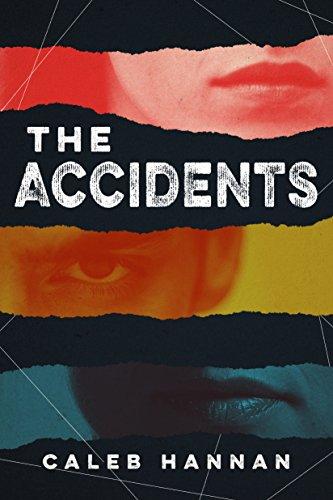
The book was referenced as the source for details about Toni's mother Yvonne speaking with Toni before her death, which helped set the context for the alleged accident. The hosts used it to provide background information rather than to endorse it.
The book was cited as the source for details about Toni's mother Yvonne's conversation with Toni before her death, providing context for the alleged accident.
According to Caleb Hannon's book, The Accidents, Toni's mother Yvonne got a chance to speak with Toni alone before her death.
The Disappearance of Albert and Henry Fountain (A.C. Greene Series)
The host highlighted the title as a deep dive into frontier lawlessness, offering extensive details on the Albert and Henry Fountain case and the legal proceedings surrounding it. She noted that it included specific anecdotes such as Pat Garrett’s bench warrants and the 32 indictments secured by Albert Fountain, and she urged listeners to order a copy. Overall, she highly recommended it for anyone interested in the period.
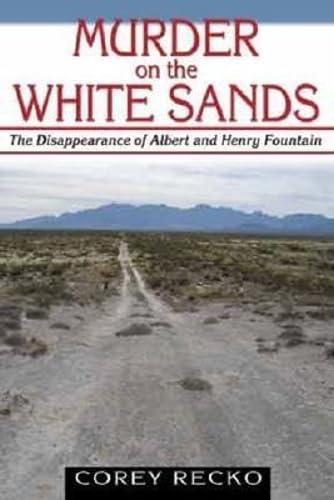
The host described the book as expanding on the era's frontier lawlessness and providing a wealth of information about the Albert and Henry Fountain case, recommending listeners order a copy to learn more.
A great book I read which expands even more about this characterization of the time period is Murder on the White Sands, The Disappearance of Albert and Henry Fountain, which was written by author Corey Recco. His novel provided a wealth of information about this case, so I highly recommend ordering a copy for yourself.
According to the book Murder on the White Sands, when Pat Garrett obtained bench warrants for the men he suspected had killed Henry and Albert, he managed to nab William McNew and another alleged suspect right away.
The book Murder on the White Sands also notes that Corey Recco wrote about the 32 indictments Albert Fountain helped secure in Lincoln, highlighting the extensive legal work behind the case.
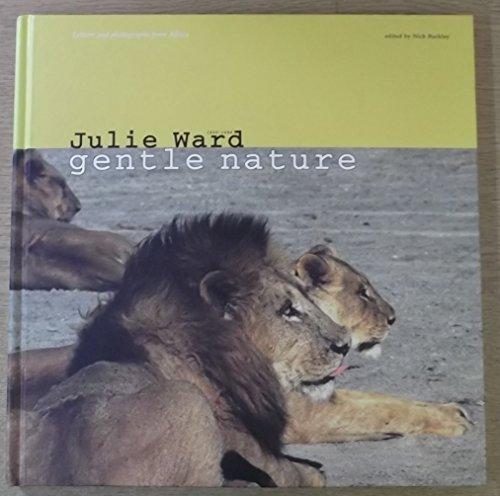
The host explained that Nick Buckley had detailed the book, highlighting Julie Ward's shared love of wildlife with her mother and the profound impact of her disappearance. The discussion also noted that Julie's mother later authored a book with the same title to recount the family's ordeal. The episode presented the book as a poignant account of personal loss and dedication to wildlife, without explicitly endorsing it.
The host noted that Nick Buckley detailed the book, describing Julie Ward's shared love of wildlife with her mother and the impact of her disappearance. Later the host also mentioned that Julie's mother, Jan Ward, wrote a book with the same title recounting the ordeal.
Author Nick Buckley detailed in Julie Ward, Gentle Nature, that it was mother and daughter's shared love of wildlife that got Julie interested in wildlife photography.
In 1998, Julie's mom, Jan, wrote in a book titled Julie Ward Gentle Nature, about how devastating the entire ordeal was on her family and how their pain never went away.
Kenya, Britain and the Julie Ward Murder (African Articulations, 2)
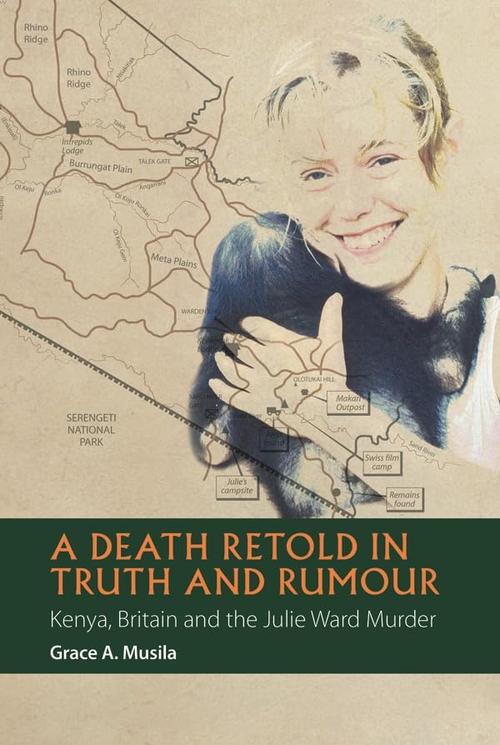
The host cited Grace Masilla's book, noting that it examined the racial and cultural discourses surrounding Julie Ward's case and the media attention it received.
Author Grace Massilla wrote in her book, A Death Retold in Truth and Rumor, that no one could deny the racial and cultural discourses swirling around Julie's case as it went through multiple criminal...
— Episode: REVISITED: The Reserve
The host cited Grace Masilla's book, noting that it examined the racial and cultural discourses surrounding Julie Ward's case and the media attention it received.
Author Grace Massilla wrote in her book, A Death Retold in Truth and Rumor, that no one could deny the racial and cultural discourses swirling around Julie's case as it went through multiple criminal trials and continued to stay in the media limelight.
Note: The book recommendations on this page are discovered automatically from podcast transcripts, and may be incorrect or incomplete.
Podcast Name