Secrets of a Marine's Wife
Shanna Hogan
Mentioned 3 months ago
The Unspeakable
Explore the dark side of the world’s most beautiful places with investigative journalist and park enthusiast Delia D’Ambra. Each week, Delia guides you deep into national parks and forests across the globe, uncovering stories where nature’s breathtaking beauty has masked sinister secrets. From infam...
Recently mentioned
Shanna Hogan
Mentioned 3 months ago
The Unspeakable
Gregg Olsen
Mentioned 5 months ago
The Boat Ramp
Jean-Patrick Manchette
Mentioned 5 months ago
The Boat Ramp
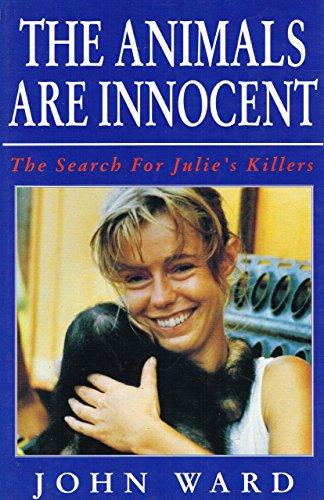
John Ward
Mentioned 5 months ago
REVISITED: The Reserve
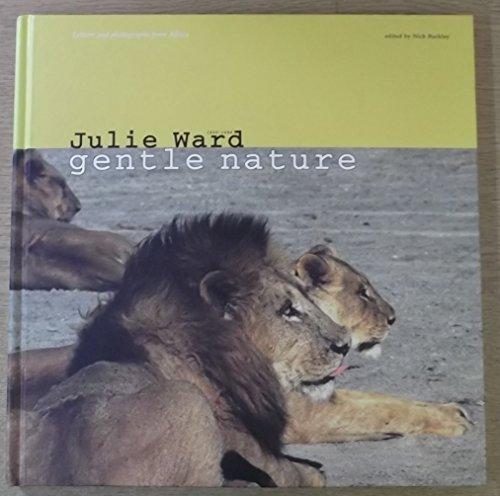
Julie. Ward
Mentioned 5 months ago
REVISITED: The Reserve
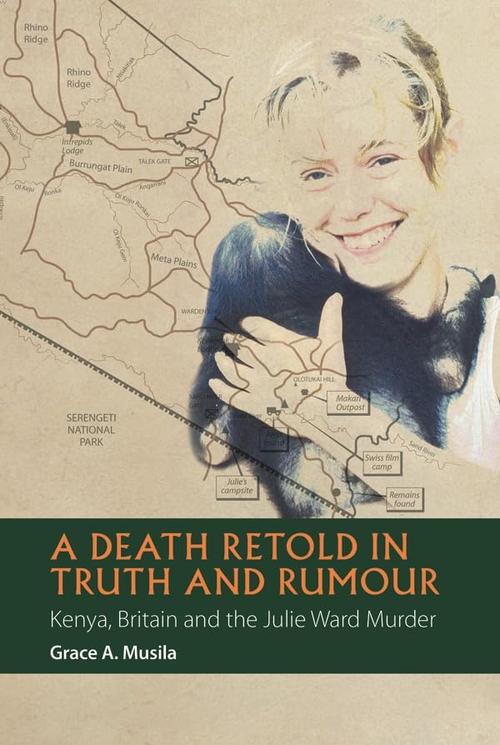
Dr Grace A Musila
Mentioned 5 months ago
REVISITED: The Reserve
Corey Recko
Mentioned 6 months ago
The Attorney
Steve Stout
Mentioned 7 months ago
UPDATED: The Housewives
Laura Ingalls Wilder
Mentioned 8 months ago
INTRODUCING... Chameleon: The Weekly
Meg Cabot
Mentioned 8 months ago
INTRODUCING... Chameleon: The Weekly
Bob Flaws
Mentioned 10 months ago
The Ride
Caleb Hannan
Mentioned 11 months ago
REVISITED: The Husband
The host referenced the book as a source that examined the case, noting it discussed how forensic technology of the era was limited. They suggested that the author assumed the lack of advanced sexual assault kits prevented definitive conclusions. The mention highlighted the book’s focus on historical investigative constraints without a strong endorsement.
The host noted that Steve Stout had written a book on the case, suggesting it covered details such as the limited forensic technology of the era.
I have to assume, and so did author Steve Stout, who wrote a book on this case called The Starved Rock Murders, that sexual assault kit collection and technology at the time just wasn't advanced enough to make that determination for certain in 1960.
The podcast cited Steve Stout's book as a key source that thoroughly researched the case and argued Chester Weger's guilt. It was mentioned twice as the author's comprehensive account of the murders.
The best I can guess and so does author Steve Stout who wrote a book on this case called The Starved Rock Murders is that technology at the time wasn't advanced enough ...
Something that stuck out to me after researching everything about this story was a detail that Steve Stout mentioned in his book The Starved Rock Murders ...
"The Search for Julie's Killers" by John Ward (26-Sep-1991) Hardcover
The host noted that the author wrote the book to expose police misconduct and coverups surrounding his daughter's murder, emphasizing the difficulty of an individual taking on the state. The discussion highlighted the book's focus on systemic failures in the investigation.
The host reported that John Ward authored the book to expose what he saw as police misconduct and coverups in the investigation of his daughter's murder.
He wrote in his book The Animals Are Innocent, The Search for Julie's Killers, quote, You say to yourself, no matter what it is going to take, these people are not going to get away with it. But in the end, you are one individual against a state and it is not easy.
John Ward's book was referenced as expressing his determination to fight the state and seek justice for his daughter, emphasizing the solitary struggle against powerful institutions.
He wrote in his book, The Animals Are Innocent, The Search for Julie's Killers, quote, You say to yourself, no matter what it is going to take, these people are not going to get away with it. But in the end, you are one individual against a state, and it is not easy.
A True Story of Three Lives, Three Cultures and the Search for Heaven on Earth
The host cited the book to illustrate how remote the trail to Havasupai is and to convey the tribe's concerns that media attention could harm their tourism industry. She also praised the author as a dedicated journalist who did a phenomenal job covering the case, using the book as a credible source for those details.
The host referenced Annette McGivney's book Pure Land to illustrate the remote difficulty of reaching Havasupai and to note the tribe's reaction to media attention surrounding the murder case.
As author Annette McGivney describes it in her book, Pure Land, when you start hiking from the Supai Trailhead at the dead end of Indian Road 18, you're roughly 80 miles from the nearest gas station.
Annette McGivney wrote in her book, Pure Land, that the council viewed the media attention the story was getting as a negative thing that would hurt the $2 million tourism industry in the region.
A remarkably ironic fact that I pulled out of the coverage on this story came from Annette McGivney, a dedicated journalist who did a phenomenal job covering this case, both in her articles for Backpacker magazine and her book, Pure Land.
Full Color Edition (Little House, 3)
The hosts referenced the classic children's story as an illustration of perseverance, noting how its characters kept moving west despite repeated hardships. Josh Dean highlighted this comparison while discussing a con artist's relentless comeback. The mention served as a brief analogy rather than a direct endorsement.
The hosts referenced the classic children's book as an example of perseverance, comparing the con artist's relentless comeback to the determined characters in the story.
I see that a lot with like children's literature, like Laura Ingalls. The author of Little House on the Prairie. They keep like locusts, you know, scarlet fever. Nothing stops them. They're kind of like Raphael of Fuliere. They just keep getting up and getting on that wagon and like driving further west.
The book was referenced by Josh Dean to illustrate the mythic status of a con artist, comparing his persona to the boyfriend from the popular teen novel series. The mention served as a cultural touchstone rather than a detailed endorsement, highlighting the title's recognizability among listeners.
The series was mentioned to illustrate the con artist's mythic status, likening his persona to a boyfriend from the popular teen novel series.
And yeah, he's created a myth and was boyfriend to the princess of Princess Diaries we all grew up with.
A True Story of Murder, Family Secrets, and the Unbreakable Bond of Sisterhood
The episode noted that a local author had published the book in 2025, covering a murder case that remains unsolved and mysterious. Delia D'Ambra referenced the title as a recent account of the crime without offering a recommendation.
A local author published a book about the crime in 2025.
In 2025, a local author published a book about the crime but to this day, no one knows who committed the murders and maybe just as important, why?
A convicted mobster named Donald Frankos published a book detailing various murder-for-hire jobs he had knowledge of, one of which mirrored the circumstances of the Boat Ramp murders.
Several years later, an investigator with the Manatee County Sheriff's Office learned that a convicted mobster named Donald Frankos had published a book about contract killings. The novel was presente...
— Episode: The Boat Ramp
A convicted mobster named Donald Frankos published a book detailing various murder-for-hire jobs he had knowledge of, one of which mirrored the circumstances of the Boat Ramp murders.
Several years later, an investigator with the Manatee County Sheriff's Office learned that a convicted mobster named Donald Frankos had published a book about contract killings. The novel was presented as a tell-all account of various murder for hire jobs that Frankos had knowledge of.
The host referenced the book as a source that detailed the investigation, trials, and the author's personal perspective on the Signal Mountain murders.
According to police records cited in a book about this case titled Statement of Facts, State v. Castile, an officer arrived at the Masons' home to take the missing persons report at 6.45 p.m. on Sunda...
— Episode: The Ride
The host referenced the book as a source that detailed the investigation, trials, and the author's personal perspective on the Signal Mountain murders.
According to police records cited in a book about this case titled Statement of Facts, State v. Castile, an officer arrived at the Masons' home to take the missing persons report at 6.45 p.m. on Sunday night.
According to the book Statement of Facts, Cecil had been displaying aggressive behavior like this for several years.
According to the book Statement of Facts, written by Frank's son, Franklin Trevor Castile, who most frequently I saw goes by Trevor, detectives had first spoken with Frank on the evening of Monday, July 11th at the sheriff's department's command post.
Frank's son Trevor, who's the author of the book I've mentioned throughout this episode titled Statement of Facts, State v. Castile, told the press that justice had not been served and he felt sorry for Kenneth, Earl, and Richard's families.
In April 2020, Frank's son published his book about the case titled Statement of Facts, State vs. Castile, which, though it does cite some investigative reports, is mostly his personal perspective of the events surrounding the crime.
The host referenced the book to describe a chilling scene where Toni's mother recalled a night at a mountain cabin where Toni was struck by a heavy weight and collapsed, suggesting the incident might not have been accidental. The discussion highlighted the book's role in revealing this unsettling detail from the story.
The host noted that, according to Caleb Hannon's book, Toni's mother Yvonne was able to speak with Toni alone before her death and recalled a disturbing incident at a cabin that hinted the accident might not have been accidental.
According to Caleb Hannon's book, The Accidents, Toni's mother Yvonne got a chance to speak with Toni alone before her death, and this was a very rare occasion that she visited Mississippi without Harold. Yvonne remembered that on that trip, Toni had mentioned a few months prior her and Harold and their daughter had been visiting Yvonne and Bob's mountain cabin near Denver. She said while they were there, the couple had started working outside at night to clear the debris around the cabin. It had been Harold's idea to have both he and Toni work together and leave Haley inside. Toni told her mother that while working and standing below a raised porch with her back turned, she suddenly felt a large weight hit her in the neck and upper back. After that impact, she just collapsed.
Lost in the Great Smoky Mountains
The host explained that the book, written by Michael Bouchard after obtaining FBI case files, was instrumental in her research for the episode. She noted that the author's persistence in securing Freedom of Information Act records ultimately made compiling the episode much easier, highlighting its value as a resource.
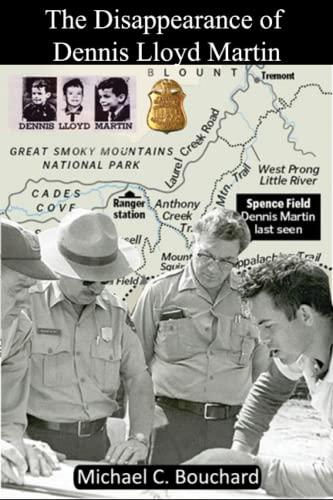
The host explained that Michael Bouchard authored a book titled The Disappearance of Dennis Lloyd Martin, Lost in the Great Smoky Mountains after obtaining FBI case files, and that the book greatly aided her research for the episode.
the only reason any of these documents were finally released was because of an author named Michael Bouchard.
Bouchard wrote a book about Dennis' case titled The Disappearance of Dennis Lloyd Martin, Lost in the Great Smoky Mountains. while conducting research for his novel, he tried several times to get the FBI's records via Freedom of Information Act requests, but each of his attempts were denied, and finally the FBI cooperated and gave Bouchard what he was after, which made my job of putting together this episode so much easier.

The host, Delia D'Ambra, said the book sparked her obsession with William McMullen's case and was repeatedly cited for historical details throughout the episode. She highlighted how the book provided specific context about the early residency of the basin, the circumstances of the shooting, and alleged illegal trapping in the park.
The host said the book sparked their obsession with William McMullen's case and was repeatedly cited for historical details throughout the episode.
I became obsessed with his case after reading a book by author John Dobie called The Itasca Story.
According to John Dobie's book, historians consider William the first permanent resident of the basin because technically he was the only person living in the area when Itasca Park was officially established as a state park in 1891.
According to John Dobie's book, he admitted to being careless with his gun and for shooting so suddenly in William's direction, but he was adamant that he never intended to harm his friend.
According to John Dobie's book, shortly after William was killed, several of his friends overheard Nelson talking about the incident, and not in a mournful way. Nelson was reported to have stated, quote, I plugged him. It was a center shot. End quote.
According to John Dobie's book, at some point between 1909 and 1913, while Martin was working as the park's commissioner, he was suspected of owning illegal animal traps and placing them in the park.
Stories of Accidents and Foolhardiness in the Most Popular Park (Death in the National Parks)
Delia D'Ambra cited the book to provide background on Jasper Mellinger's route and the hazardous terrain that contributed to his disappearance, noting familiar trails, steep rock faces, and dangerous gulches. It was used as a factual reference for the episode’s discussion of accidents in the park.
The book was used to explain Jasper Mellinger's journey and the discovery of his remains, providing context for the events in the Great Smoky Mountains.
In his book Death in the Great Smoky Mountains, author Michael Bradley explained that when Jasper made this trip, he would have tracked the backbone of the Great Smoky Mountains in the direction of the Elkmont, Tennessee area and Cherokee, North Carolina, which would have put him on trails he was familiar with and lessened the amount of elevation he had to climb.
According to author Michael Bradley's book, in September of 1905, two men named Bouse and Stuart O'NB, yes, members of the same O'NB family that Jasper Mellinger had stayed with, were on a hunting trip in the Great Smoky Mountains when they stopped at a natural pool they suspected game animals were using as a source of water.
Author Michael Bradley explains in his book that there were sheer rock faces, slopes, gulches, and even waterfalls along that route, none of which were particularly safe.
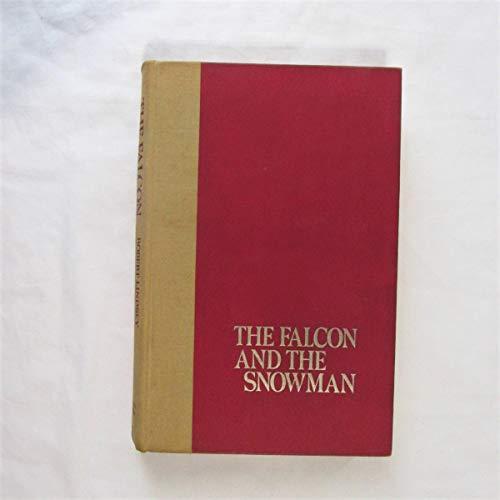
A True Story of Friendship and Espionage
The hosts noted that the book was one of two titles written by Robert Lindsay about Christopher Boyce's espionage story, originally released in the late 1970s. They highlighted its historical context without offering a deeper evaluation, mentioning it briefly as part of the discussion.
The book was noted as one of two titles written by Robert Lindsay about Christopher Boyce's espionage story, originally published in the late 1970s.
An author named Robert Lindsay also wrote two books about the story titled The Falcon and the Snowman and The Flight of the Falcon, which were released in the late 70s and early 80s.
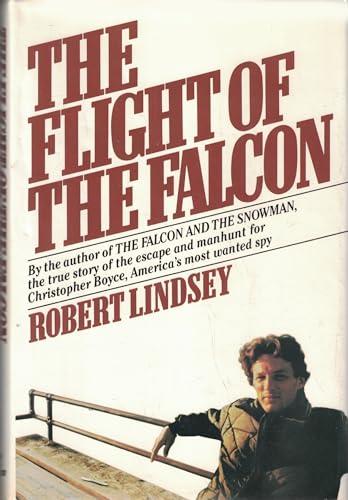
The book was noted as another title by Robert Lindsey that covered the Christopher Boyce case, released in the late 1970s and early 1980s, and was mentioned alongside a related work. It was presented as a factual reference rather than a recommendation.
The book was mentioned alongside The Falcon and the Snowman as another title by Robert Lindsay covering the Christopher Boyce case, released in the early 1980s.
An author named Robert Lindsay also wrote two books about the story titled The Falcon and the Snowman and The Flight of the Falcon, which were released in the late 70s and early 80s.
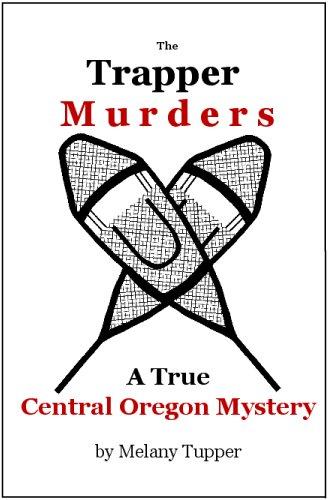
a true central Oregon mystery
The episode cited the book repeatedly as the primary source for the 1924 trapper murders, using it to provide background on the investigation, the second search effort, and the foxskin transaction. The host highlighted the author's detailed analysis of the case, including the prominent family of the young woman, the press coverage, and the later police lineup. Overall, the book was presented as an essential reference for understanding the mystery.
The book was cited repeatedly as the primary source for details about the 1924 lavalake trapper murders, providing background on the investigation, the second search effort, the foxskin transaction, and later analysis of the case.
In fact, according to Melanie Tupper's book, The Trapper Murders, and coverage by the Bend Bulletin, Hervey and Owen had been informed before heading out to the cabin that food for the foxes had been delivered around January 13, 1924.
Melanie Tupper's book, The Trapper Murders, refers to this search effort as the second search effort conducted for the men, since, you know, Hervey and Owen had technically been to the cabin first on their own.
According to Melanie Tupper's book that I've mentioned a few times already, on April 19th, just a few days into law enforcement's investigation, authorities learned that four of the five missing fox skins ... had been sold to a fur trading business in Portland called the Schumacher Fur Company.
Melanie Tupper wrote in her book The Trapper Murders that the young woman in that case came from a prominent family and after the trial concluded the whole thing was written about by the press at the time as sort of a laughable matter.
Melanie Tupper explained in her book that when Charles was brought back to Oregon in March 1933 he was questioned about The Trapper Murders and put in a police lineup; the Portland police officer who 10 years earlier had identified him from a photograph could no longer pick him out.
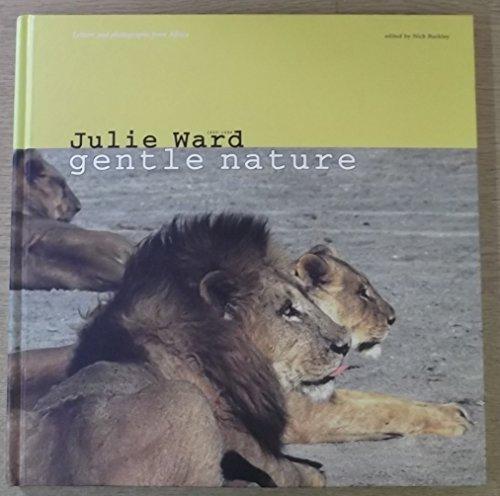
The host explained that the book described how Julie's shared love of wildlife with her mother sparked her career in wildlife photography, and noted that it was written by her mother to recount the family's devastation. The discussion highlighted the personal and emotional background behind her work.
The host said the book explained how Julie's shared love of wildlife with her mother sparked her career in wildlife photography, and later noted it was written by Julie's mother about the family's devastation.
Author Nick Buckley detailed in Julie Ward, Gentle Nature, that it was mother and daughter's shared love of wildlife that got Julie interested in wildlife photography.
In 1998, Julie's mom, Jan, wrote in a book titled Julie Ward, Gentle Nature about how devastating the entire ordeal was on her family and how their pain never went away.
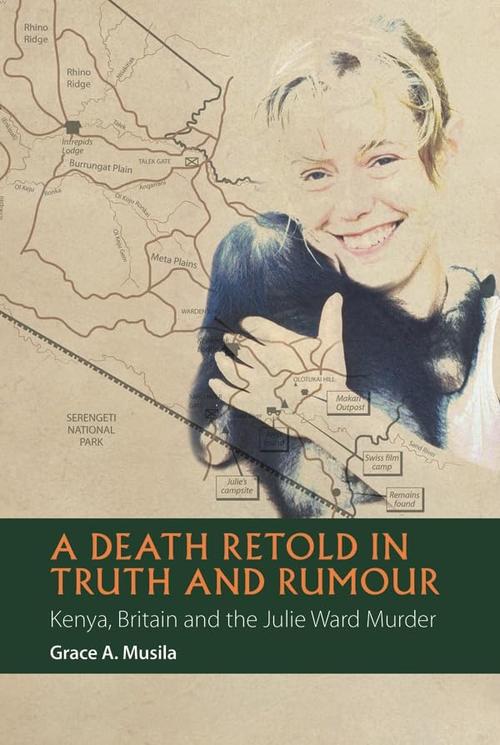
Kenya, Britain and the Julie Ward Murder (African Articulations, 2)
The host cited the book as a primary source for the timeline of Julie's trip to the reserve and highlighted the author's examination of the racial and cultural narratives surrounding the case, indicating it was valued for its detailed insight. The discussion conveyed a strong endorsement of the work as an informative reference.
The host referenced the book as a source for details about Julie's trip with Glenn Burns and later mentioned the author used it to discuss racial and cultural discourses surrounding the case.
According to Grace Missilla's book, A Death Retold in Truth and Rumor, he and Julie had traveled from Nairobi to the reserve together on Friday, September 2nd to watch the Wildebeest migration.
Author Grace Masilla wrote in her book A Death Retold in Truth and Rumor that no one could deny the racial and cultural discourses swirling around Julie's case as it went through multiple criminal trials and continued to stay in the media limelight.
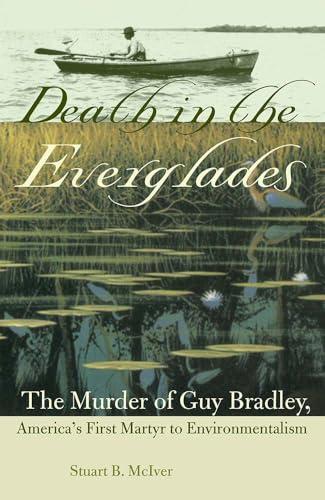
The Murder of Guy Bradley, America's First Martyr to Environmentalism (The Florida History and Culture Series)
The host highlighted the book as a nonfiction novel published in 2003 that served as the primary source for the episode's content. She described it as a fantastic read and highly recommended it to listeners. The material from the book informed details such as the timing of events and the prosecution's handling of the case.
The host described it as a nonfiction novel published in 2003, called it a fantastic read, and said it served as the primary source material for the episode.
my friend saw a small book titled Death in the Everglades, The Murder of Guy Bradley, America's First Martyr to Environmentalism.
Stuart MacGyver's nonfiction novel published in 2003 is a fantastic read, and I highly recommend it.
It was a piece of source material I leaned heavily on to put this episode together.
According to the available source material and Stuart McIver's book, it was around this time that Gene broke the bad news to Franny, Guy's wife, as well as Guy's older brother Lou and some of Guy's friends living in Flamingo.
Yeah, according to Stuart MacGyver's book, prosecutors on the case didn't make a strong enough effort to present a solid case to the grand jury.
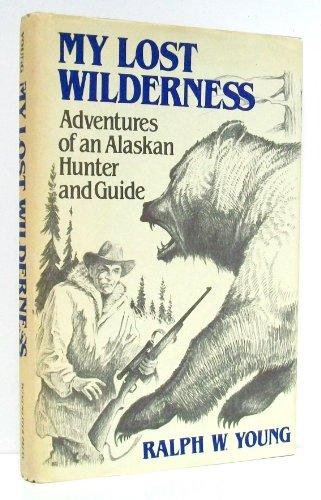
The host explained that the author had speculated in the book about why a game officer might have left his firearms behind, noting the oddity of the officer not carrying a gun during his disappearance. The discussion focused on possible explanations for this detail rather than endorsing the work, and the book was mentioned mainly as a source of the speculation.
The host explained that Ralph Young speculated in his book My Lost Wilderness that the fact Hosea was not carrying a firearm was odd and offered possible explanations for why the game officer might have left his guns behind.
I imagine one reason some folks thought this was because of the firearms that had been abandoned in Hosea's drifting boat. Author Ralph Young speculated in his book about Hosea's disappearance titled My Lost Wilderness, that the game officer not having a firearm on his person, if in fact he had gotten out of his boat on his own, was very odd.
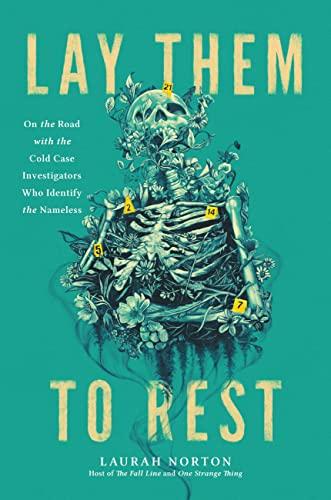
On the Road with the Cold Case Investigators Who Identify the Nameless
In the episode, the host explained that she first learned about the case after reading the book and described it as fantastic. She urged listeners to obtain a copy, emphasizing its value for anyone interested in cold case investigations. The overall tone was an enthusiastic endorsement.
The host said she discovered the case after reading Laura Norton's nonfiction book and urged listeners to get a copy because it was fantastic.
I first learned about it after reading my friend Laura Norton's nonfiction novel, Lay Them to Rest, which came out in October 2023. If you haven't gotten a copy yet, I highly recommend you go out and grab one. It's fantastic.
Note: The book recommendations on this page are discovered automatically from podcast transcripts, and may be incorrect or incomplete.
Podcast Name