
Podcast
Behind the Bastards
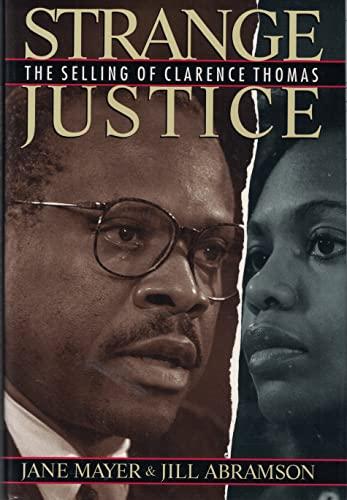
The title was repeatedly highlighted by host Robert Evans as an essential source for a thorough, detailed account of Clarence Thomas's confirmation process and the Anita Hill allegations, as well as for background on his early life and controversial behavior. It was cited throughout the series to support narrative details about Thomas's personal conduct, career shifts, and family dynamics, and Evans explicitly recommended it for listeners seeking deep insight. The podcast’s consistent use of the book as a primary reference conveyed strong endorsement of its value.
Episode: Part Four: The Clarence Thomas Story
It was recommended as providing a tremendously detailed look at Clarence Thomas's confirmation process and the reasons behind his selection for the Supreme Court.
If you want a tremendously detailed look at how the confirmation process went or precisely why Thomas was picked, all of that stuff, I really do recommend the book Strange Justice by Meyer and Abramson.
I'm going to quote from Strange Justice again.
Thomas began to ask her out socially three to five months after she began working for him in July 1981, according to Hill. His approach was unusual. Rather than asking her to join him for a specific date or event like a movie or dinner, he expressed his interest as a casual command, saying 'you ought to go out with me sometime'.
She turned him down firmly, she recalled, explaining that she enjoyed her work and believed it ill advised to date a supervisor, but he would not take no for an answer.
Instead, she testified in the following weeks. He continued to ask me out on several occasions. He pressed me to justify my reasons for saying no to him.
Episode: Part Three: The Clarence Thomas Story
The book was mentioned several times throughout the podcast, and was used as a source for several details in the narrative about Clarence Thomas, including his apartment dcor and his first wife leaving him. The details shared provided background for the events discussed.
Terrell H. Bell, who was secretary of education at the time, recalled in his memoirs being shocked at the sick humor and racist cliches voiced by some Reagan appointees who, for instance, referred to Martin Luther King Jr. as Martin Lucifer, who called Arabs sand in words and described Title four, which prohibits sexual or Title nine, which prohibits sexual discrimination as the lesbians Bill of Rights.
According to Sam Williams, Thomas's lack of gratitude for what his grandfather and the civil rights movement had done for him formed the beginning of an estrangement that became so irreparable, the two were barely on speaking terms at the time of Anderson's death in the spring of 1983.
What made his grandfather's bitterness particularly sharp was the sense that Thomas had betrayed him, according to Williams, who said that early on, Thomas used to tell his grandfather he was going to be a civil rights lawyer and come back here and help his people. Instead, Thomas just helped Thomas.
He saw that the money and career opportunities were on the other side. His grandfather was so disappointed, he hardly spoke of Thomas in the later years.
Thomas just said those things to make him seem black, but all along he's been making choices to benefit Thomas and no one else.
Episode: Part Two: The Clarence Thomas Story
It was referenced as a source multiple times throughout the episode and provided insight into Thomas's past, particularly his views on sex, women, and his political transformation.
While Thomas argued against premarital sex and adultery, telling one friend that he would leave a wife on the spot if she was unfaithful to him, he also showed an unusual interest in talking about sex in gross and explicitly anatomical language, according to several college classmates.
By the time he reached Yale Law School, Thomas was known not only for the extreme crudity of his sexual banter, but also for avidly watching pornographic films and reading pornographic magazines, which he would describe to friends in detail.
An interest in pornography might ordinarily be considered a private matter, but colleagues recall that Thomas was notable for the unusually public nature of his enthusiasm for pornographic materials.
Less than a year after arriving in Washington over lunch with the reporter in the Washington Bureau of the St. Louis Post-Dispatch, Thomas mentioned that he had his eye on a better job.
John Sawyer, now the paper's Washington bureau chief, recalled being astonished when Thomas, who was an affable but completely unknown aide to a freshman senator, announced that the spot he wanted was nothing less than a seat on the US Supreme Court.
Episode: Part Two: The Clarence Thomas Story
The book was referenced multiple times throughout the episode, detailing Thomas's early career, political shifts, and his alleged obsession with pornography and crude behavior towards colleagues.
Clarence Martin who visited Thomas in Missouri found the transformation in his formerly liberal friend with whom he had worked only the summer before to be quite remarkable gone was Thomas's college dorm room poster of Malcolm X replaced by an oversized poster of a Rolls Royce no longer dwelling on being shut out of private practice.
He also showed an unusual interest in talking about sex and gross and explicitly anatomical language according to several college classmates by the time he reached Yale Law School Thomas was known not only for the extreme crudity of his sexual banter, but also for avidly watching pornographic films and reading pornographic magazines, which he would describe to friends and lurid detail.
an interest in pornography might ordinarily be considered a private matter but colleagues recall that Thomas was notable for the unusually public nature of his enthusiasm for pornographic materials his detailed descriptions of the movies and magazines. He had seen where an open form of socializing during these years that seemed funny to some offensive to others and odd to many.
It was in this interview that Thomas first publicly denounced his sister's reliance on public assistance. She is so dependent Thomas told the post she gets mad when the mailman is late with her welfare check.
What's worse? He continued is that now her kids feel entitled to the check to they have no motivation for doing better or getting out of that situation.
Episode: Part One: The Clarence Thomas Story
It was referenced throughout the episode as a source for information regarding Clarence Thomas's early life, particularly regarding his difficult upbringing and family dynamics.
he starts out as a little black boy not accepted in the black world. He has no money, no family. This puts him at the bottom of the pecking order among southern blacks, a community that is far more closed minded and rigid than many whites imagine. As soon as he was born, he was just out there a floater.
Thomas's recollection of how Myers Anderson came to intercede is somewhat different. He has told a number of people over the years that at about this that time his mother became romantically involved with a man who had no interest in taking on her children as his friend Michael Middleton remembers it Thomas told me his mother dumped him and his brother on the grandfather because she'd met some man.
So Thomas and his brother were made to rise before dawn and help their grandfather deliver coal and oil and spent their holidays and weekends doing heavy farm work for him. There seemed to be a tinge of cruelty in some of Anderson's weekend and some of Anderson's actions Thomas, for instance recalled that his grandfather had removed the heater from the fuel delivery truck because he felt that even on freezing winter mornings heat was not conducive to good work habits in the old-fashioned way of make of many such families challenges to Authority were met with frequent and humiliating corporate punishment. A particular torture was the front hall coat closet where according to Leola Williams Anderson used to lock the boys when they misbehaved my daddy was hard. The kids couldn't get away with nothing.
Episode: Part One: The Clarence Thomas Story
It was referenced multiple times throughout the podcast episode as a source of information about Clarence Thomas's early life and upbringing, including his family and experiences with racism and colorism.
he starts out as a little black boy not accepted in the black world. He has no money, no family.
Thomas's recollection of how Myers Anderson came to intercede is somewhat different. He has told a number of people over the years that at about that time, his mother became romantically involved with a man who had no interest in taking on her children.
So Thomas and his brother were made to rise before dawn and help their grandfather deliver coal and oil and spent their holidays and weekends doing heavy farm work for him. There seemed to be a tinge of cruelty in some of Anderson's weekend and some of Anderson's actions.
Anderson wouldn't let Thomas or his brother wear work gloves on the family farm as they cut sugar cane or helped butcher livestock. He never praised the boys or showed them affection. He feared the evil consequences of idleness. Thomas wrote in my grandfather's son and so made sure that we were too busy to suffer them. In his presence, there was no play, no fun and little laughter.
in Thomas's first year of life, President Harry Truman, in a controversial State of the Union address, called for more extensive civil rights laws, including the establishment of some sort of fair employment practices program. The bud of the idea that eventually grew into the EEOC.
Episode: Part Four: The Clarence Thomas Story
It was recommended as a book that gave a detailed and in-depth account of Clarence Thomas's confirmation process, including the Anita Hill allegations.
If you want a tremendously detailed look at how the confirmation process went or precisely why Thomas was picked, all of that stuff, I really do recommend the book Strange Justice by Meyer and Abramson.
I'm going to quote from Strange Justice again.
Thomas began to ask her out socially three to five months after she began working for him in July 1981, according to Hill.
His approach was unusual. Rather than asking her to join him for a specific date or event like a movie or dinner, he expressed his interest as a casual command, saying 'you ought to go out with me sometime'.
In the hearings, Thomas sounded equally baffled and offended by such language. Asked by Senator Orrin Hatch if he had ever said such a thing, Thomas replied, 'No, absolutely not'.
Episode: Part Three: The Clarence Thomas Story
The book was referenced multiple times, particularly for details about Clarence Thomas's early career, home decor, and the views of his coworkers in the Reagan administration.
Terrell H. Bell, who was secretary of education at the time, recalled in his memoirs being shocked at the sick humor and racist cliches voiced by some Reagan appointees who, for instance, referred to Martin Luther King Jr. as Martin Lucifer, who called Arabs sand in words and described Title nine, which prohibits sexual discrimination as the lesbians Bill of Rights.
According to Sam Williams, Thomas's lack of gratitude for what his grandfather and the civil rights movement had done for him formed the beginning of an estrangement that became so irreparable, the two were barely on speaking terms at the time of Anderson's death in the spring of 1983.
What made his grandfather's bitterness particularly sharp was the sense that Thomas had betrayed him, according to Williams, who said that early on, Thomas used to tell his grandfather he was going to be a civil rights lawyer and come back here and help his people.
Instead, Thomas just helped Thomas. He saw that the money and career opportunities were on the other side. His grandfather was so disappointed, he hardly spoke of Thomas in the later years.
Yet, in his public speeches, including his Supreme Court confirmation hearings, Thomas spoke often about how much he loved and admired his grandfather.
Episode: Part Two: The Clarence Thomas Story
It was mentioned as a source of information about Clarence Thomas's life, including his views on sex, and how he talked about pornography with his coworkers.
While Thomas argued against premarital sex and adultery, telling one friend that he would leave a wife on the spot if she was unfaithful to him, he also showed an unusual interest in talking about sex in gross and explicitly anatomical language, according to several college classmates.
By the time he reached Yale Law School, Thomas was known not only for the extreme crudity of his sexual banter, but also for avidly watching pornographic films and reading pornographic magazines, which he would describe to friends in detail.
An interest in pornography might ordinarily be considered a private matter, but colleagues recall that Thomas was notable for the unusually public nature of his enthusiasm for pornographic materials.
Less than a year after arriving in Washington over lunch with a reporter in the Washington Bureau of the St. Louis Post-Dispatch, Thomas mentioned that he had his eye on a better job.
John Sawyer, now the paper's Washington bureau chief, recalled being astonished when Thomas, who was an affable but completely unknown aide to a freshman senator, announced that the spot he wanted was nothing less than a seat on the US Supreme Court.
Episode: Part Two: The Clarence Thomas Story
It was referenced multiple times and described as a critical biography of Clarence Thomas, detailing his career and alleged behavior, including his interest in pornography.
Clarence Martin who visited Thomas in Missouri found the transformation in his formerly liberal friend with whom he had worked only the summer before to be quite remarkable gone was Thomas's college dorm room poster of Malcolm X replaced by an oversized poster of a Rolls Royce no longer dwelling on being shut out of private practice. Thomas now had a new Avenue for his ambitions as a Republican.
Well Thomas argued against premarital sex and adultery telling one friend that he would leave a wife on the spot. If she was unfaithful to him. He also showed an unusual interest in talking about sex and gross and explicitly anatomical language according to several college classmates by the time he reached Yale Law School Thomas was known not only for the extreme crudity of his sexual banter, but also for avidly watching pornographic films and reading pornographic magazines, which he would describe to friends and lurid detail.
an interest in pornography might ordinarily be considered a private matter but colleagues recall that Thomas was notable for the unusually public nature of his enthusiasm for pornographic materials his detailed descriptions of the movies and magazines. He had seen where an open form of socializing during these years that seemed funny to some offensive to others and odd to many.
It was in this interview that Thomas first publicly denounced his sister's reliance on public assistance. She is so dependent Thomas told the post she gets mad when the mailman is late with her welfare check. What's worse? He continued is that now her kids feel entitled to the check to they have no motivation for doing better or getting out of that situation
Episode: Part One: The Clarence Thomas Story
It was referenced throughout the episode, specifically regarding Thomas's background, and was used to provide details about his upbringing and family.
he starts out as a little black boy not accepted in the black world. He has no money, no family. This puts him at the bottom of the pecking order among southern blacks, a community that is far more closed minded and rigid than many whites imagine. As soon as he was born, he was just out there a floater.
Thomas's recollection of how Myers Anderson came to intercede is somewhat different. He has told a number of people over the years that at about this that time his mother became romantically involved with a man who had no interest in taking on her children as his friend Michael Middleton remembers it Thomas told me his mother dumped him and his brother on the grandfather because she'd met some man.
So Thomas and his brother were made to rise before dawn and help their grandfather deliver coal and oil and spent their holidays and weekends doing heavy farm work for him. There seemed to be a tinge of cruelty in some of Anderson's weekend and some of Anderson's actions Thomas, for instance recalled that his grandfather had removed the heater from the fuel delivery truck because he felt that even on freezing winter mornings heat was not conducive to good work habits in the old-fashioned way of make of many such families challenges to Authority were met with frequent and humiliating corporate punishment. A particular torture was the front hall coat closet where according to Leola Williams Anderson used to lock the boys when they misbehaved my daddy was hard. The kids couldn't get away with nothing.
Thomas still bears a thin scar from a whipping his grandfather administered with an electrical cord.
Episode: Part One: The Clarence Thomas Story
It was referenced multiple times as a source of information about Clarence Thomas's early life and upbringing, particularly his relationship with his family.
he starts out as a little black boy not accepted in the black world. He has no money, no family. This puts him at the bottom of the pecking order among southern blacks, a community that is far more closed minded and rigid than many whites imagine. As soon as he was born, he was just out there, a floater.
Thomas's recollection of how Myers Anderson came to intercede is somewhat different. He has told a number of people over the years that at about that time, his mother became romantically involved with a man who had no interest in taking on her children.
So Thomas and his brother were made to rise before dawn and help their grandfather deliver coal and oil and spent their holidays and weekends doing heavy farm work for him. There seemed to be a tinge of cruelty in some of Anderson's weekend and some of Anderson's actions.
Anderson wouldn't let Thomas or his brother wear work gloves on the family farm as they cut sugar cane or helped butcher livestock. He never praised the boys or showed them affection. He feared the evil consequences of idleness. Thomas wrote in my grandfather's son and so made sure that we were too busy to suffer them. In his presence, there was no play, no fun and little laughter.