
Podcast
Stay Tuned with Preet
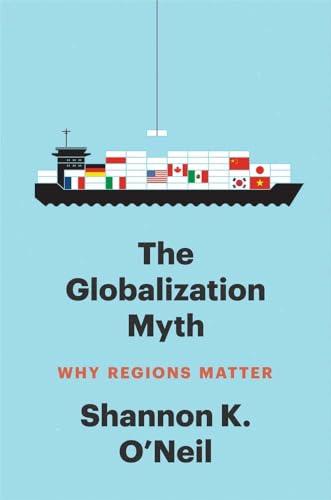
It was discussed that the book challenges the notion of a universally expansive globalization, instead focusing on regional economic growth clusters. It also suggests that the United States should collaborate with its regional partners to grow its economy.
The myth is two things. The myth is we think about globalization as this all pervasive, expansive event that's happened over the last 40 years. And the reality is that we've only seen about two dozen...
— Episode: In Brief: What's Going On in Mexico? (wi...
Episode: In Brief: What's Going On in Mexico? (with Shannon...
It was discussed that the book challenges the notion of a universally expansive globalization, instead focusing on regional economic growth clusters. It also suggests that the United States should collaborate with its regional partners to grow its economy.
The myth is two things. The myth is we think about globalization as this all pervasive, expansive event that's happened over the last 40 years. And the reality is that we've only seen about two dozen countries transform since 1980 in terms of globalization where they've really grown and globalized.
So partly not much of the globe has actually participated in, quote-unquote, globalization. And the other myth is that when companies went abroad and money and people and ideas and patents and royalties and the like, they usually didn't go to the other side of the world. They much more were likely to go next door.
So what we've seen over this last 40 years is not globalization, but the rise of three big regions, an Asian one, a European one and a North American one.
And I argue in the book that the way forward for the United States, the way to bring back good jobs in the United States and grow the U.S. economy is one, you can't do it alone. And two, you have to turn to those in your region.