Podcast
The Jordan Harbinger Show
It was discussed in the context of the CIA's unique challenges and tactics in the Soviet Union during the Cold War, particularly regarding surveillance, disguise, and handling of assets.
That's why we we invented Moscow rules. We didn't have like Paris rules or Tokyo rules or this is the only city in the world where the opposition was just so leaning on us so hard that we trained, we...
— Episode: 1028: Jonna Mendez | The Moscow Rules (R...
Episode: 1028: Jonna Mendez | The Moscow Rules (Redux)
It was discussed in the context of the CIA's unique challenges and tactics in the Soviet Union during the Cold War, particularly regarding surveillance, disguise, and handling of assets.
That's why we we invented Moscow rules. We didn't have like Paris rules or Tokyo rules or this is the only city in the world where the opposition was just so leaning on us so hard that we trained, we deployed everything we did there was unique because of that embrace that we were in of surveillance.
I think the first case we talked about was really our first big case there that was in '63 that was at the beginning when we were unable to basically manage an espionage case in in Moscow.
it would be easier to run an agent on Mars that was Dick Helms one of one of our legendary chiefs of CIA that was his comment and it was right on the mark there's something like 50,000 KGB agents in Moscow to counter the CIA and other foreign intelligence agencies.
that number came from Oleg Kalugin and Oleg was a KGB officer he didn't defect Oleg lives in the United States now he transplanted himself he became disenchanted with KGB and he went into politics in Russia he was in the parliament for a while and then he decided that he'd start a new life over here they had already taught him as a spy in the KGB perfect English.
This book, Moscow Rules, is about really is the broader office not just disguise not just documents but the people that did bugs the people that built them the people that turned into third-story guys that would go in and install those bugs it's about the people that did all the research R&D on batteries for their entire careers they're trying to make those batteries smaller and smaller and stronger and stronger.
Episode: 1027: Jonna Mendez | A Woman's Life in the CIA
The book outlines 42 rules for CIA agents, including a new rule that was added: never fall in love with your agent.
we wrote a book called The Moscow Rules and at the front of that book we list the rules, there were 42 of them and we added a rule to never fall in love with your agent.
Episode: 344: Jonna Mendez | The Moscow Rules
It discussed the CIA's tactics for espionage and deception in the Soviet Union, particularly the challenges of conducting operations under constant surveillance and the development of disguise techniques.
It's almost sounds like a nice little KGB hug that you had going there.
I think the first case we talk about was really our first big case there that was in '63 that was at the beginning when we were unable to basically manage an espionage case in Moscow.
It would be easier to run an agent on Mars than it was to run an agent in Moscow.
That's what this book, 'Moscow Rules', is about really is the broader office not just disguise, not just documents but the people that did bugs, the people that built them, the people that turned into third story guys that would go in and install those bugs.
They were into bubble memory long before the private industry was. We were looking into areas that the small batteries for instance, that eventually spilled out into the commercial market and they're in hearing aids and our watches and our phones and all that stuff today.
Episode: 344: Jonna Mendez | The Moscow Rules
It was discussed throughout the podcast episode, with specific examples of its contents, including anecdotes about CIA operations and disguise techniques employed during the Cold War in Moscow.
For those of us that have seen James Bond, she was basically Q but for the CIA.
I think in the book I think the first case we talk about was really our first big case there that was in 63 that was at the beginning when we were unable to basically manage an espionage case in Moscow.
It would be easier to run an agent on Mars than it was to run an agent in Moscow.
That number came from Oleg Kalugin and Oleg was a KGB officer, he didn't defect, he calls it lives in the United States now, he transplanted himself, he became disenchanted with the KGB and he went into politics in Russia.
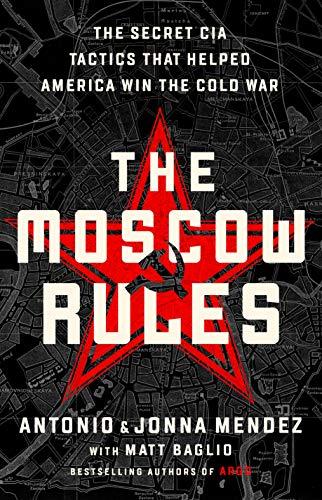
The book title is The Moscow Rules, the secret CIA tactics that helped America win the Cold War.
Episode: 344: Jonna Mendez | The Moscow Rules
It detailed the CIA's tactics used in Moscow during the Cold War, including disguise and deception, due to the intense surveillance they faced.
It was a smothering kind of surveillance and that's why we invented Moscow rules.
It would be easier to run an agent on Mars.
There's something like 50,000 KGB agents in Moscow to counter the CIA and other foreign intelligence agencies.
I think the first case we talk about was really our first big case there that was in '63.
The Soviets in in in Washington DC insisted on bringing all their own workers and no American touched anything, not a brick when they built the Soviet embassy.