Podcast
This Is Actually Happening
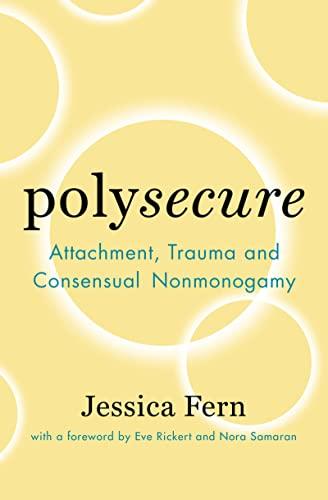
The book was highlighted by Jessica Fern, who praised it as essential for grasping how attachment styles and trauma affect consensual non‑monogamous relationships. In the episodes, both Fern and the hosts cited it as a primary resource for navigating polyamory and improving relational security. The discussion emphasized its practical insights into attachment insecurity, legal complexities, and personal growth, reflecting a strong endorsement.
Episode: 325: The 82 Percent: Bonus Conversation with Jessi...
Jessica Fern strongly recommends this book for understanding attachment styles, trauma and consensual non-monogamy. Fern states that attachment styles are a vital part of understanding why people have challenges with non-monogamy.
I started to really just have primarily individuals, couples, or even polycules that were non-monogamous. And I would see the challenges they were going through. And one of the main challenges was attachment insecurity or attachment ruptures that were happening. And so I was like, okay, this is what they're bringing to me. And then when I would share with them what attachment styles are and how we can work to become more secure, it made such a difference.
And one of the first ones was him and I would have said we were securely attached and he especially had secure attachment. And when we opened up, he went, I mean, panic attack anxious.
So it really awoke me to the visceral nests of attachment. And then through my own experiences of dating and even seeing like, oh, I'm not going to have structural security with this partner because I have a partner and a kid and they have a partner that they live within a kid. So what's going on within me and feeling a lot of disorganized tendencies from my past show up. Interestingly, a lot of step-parent trauma.
So I think that's a big part of it or I think of someone like Esther Perel's work who, you know, mating in captivity, right? She was bringing awareness to this idea of what are we doing? You know, that we're expecting what we used to get from a village in terms of relational, experiential, social needs, you know, and we're expecting all of that now in one person. And we're seeing the divorce rate so high.
And it's interesting because it's one thing to say polyamorous people are protected class, which is necessary, right? To say you can't get fired because you're polyamorous. You can't be denied housing because you're polyamorous. But how that then extends to, well, can we have multiple legal marriages? Can we buy group insurance for the polycule? I mean, people are really getting creative or how do you have a trust with multiple people and what's the legal divorce of three people versus two people?
Episode: 326: The 82 Percent #3: What if you discovered a n...
The book explores polyamory, attachment, and opening up. It was mentioned as a resource for understanding and navigating polyamorous relationships.
This week we'll also be releasing a bonus content conversation between me and Jessica Fern, author of Polysecure and Polywise, two books that explore polyamory, attachment, and opening up.
Terminology, books like Polysecure, Jessica Fern and of course the Ethical Select. That's the bible right?
I know enough now because of books like the ethical slut because of poly secure because of more than one I know how to navigate I know what I have to offer a relationship my identity in itself I know is valuable and definitely worth a certain type of person