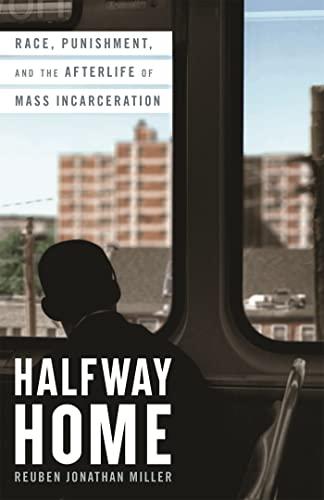

Halfway Home: Race, Punishment, and the Afterlife of Mass Incarceration Cover
Podcast Mentions

Halfway Home Race, Punishment, and the Afterlife of Mass Incarceration

Reuben Jonathan Miller

A "persuasive and essential" (Matthew Desmond) work that will forever change how we look at life after prison in America through Miller's "stunning, and deeply painful reckoning with our nation's carceral system" (Heather Ann Thompson). Each year, more than half a million Americans are released fro...

Podcasts 2
Quotes 2
The Ezra Klein Show

It investigates the lasting social and economic impacts on people returning from incarceration, framing it as a modern form of caste.

"

Second book I want to recommend is Halfway Home by Ruben Miller. It's an incredible book about the ways in which after people have allegedly returned home from being incarcerated that the shadow of in...

— Episode: Critical Race Theory, Comic Books and th...

Episode: Critical Race Theory, Comic Books and the Power of...

It investigates the lasting social and economic impacts on people returning from incarceration, framing it as a modern form of caste.

"

Second book I want to recommend is Halfway Home by Ruben Miller. It's an incredible book about the ways in which after people have allegedly returned home from being incarcerated that the shadow of incarceration relegates them to a completely different class status.

The Daily Stoic

This memoir details Adam Hochschild's relationship with his father, exploring the challenges and eventual reconciliation they experienced. It was described as a story of an ordinary family with a universal theme.

"

I interviewed these two writers earlier today who who have been writing about Mr. Rodgers, you know Fred Rogers and um it struck me that what you didn't have is what Fred Rogers tried to so gracefully...

— Episode: Adam Hochschild on Our Obligation to the...

Episode: Adam Hochschild on Our Obligation to the Common Go...

This memoir details Adam Hochschild's relationship with his father, exploring the challenges and eventual reconciliation they experienced. It was described as a story of an ordinary family with a universal theme.

"

I interviewed these two writers earlier today who who have been writing about Mr. Rodgers, you know Fred Rogers and um it struck me that what you didn't have is what Fred Rogers tried to so gracefully give to so many young people which was this idea that I like you for who you are or you are you are I'm proud of you for who you are I love you for who you are

Note: The book recommendations on this page are discovered automatically from podcast transcripts, and may be incorrect or incomplete.