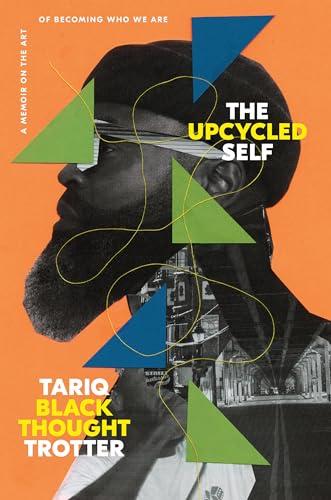

The Upcycled Self: A Memoir on the Art of Becoming Who We Are Cover
Podcast Mentions

The Upcycled Self A Memoir on the Art of Becoming Who We Are

Tariq Trotter

NEW YORK TIMES upcycle

Podcasts 2
Quotes 27
Fresh Air

Podcast

Fresh Air

Tariq Trotter talked about his new memoir, describing it as a reflection on his life, the fire incident, and the process of becoming who he is.

"

Trotter's new book, The Upcycled Self, a memoir on the art of becoming who we are.

— Episode: Best Of: Barbra Streisand / Tariq Trotte...

Episode: Best Of: Barbra Streisand / Tariq Trotter (Black T...

Tariq Trotter talked about his new memoir, describing it as a reflection on his life, the fire incident, and the process of becoming who he is.

"

Trotter's new book, The Upcycled Self, a memoir on the art of becoming who we are.

His new memoir, The Upcycled Self, a memoir on the art of becoming who we are.

Trotter, a.k.a. Black Thought, on his new book, The Upcycled Self, a memoir on the art of becoming who we are.

Episode: Tariq Trotter (Black Thought), Co-Founder Of The R...

The memoir explored Trotter's childhood trauma, the fire that shaped his early life, and his journey toward selfunderstanding, framing his story as an art of becoming who we are.

"

And Trotter's new book, The Upcycled Self, a memoir on the art of becoming who we are, the Grammy awardwinning rapper and cofounder of the hip hop group The Roots examines the shame of that moment, as well as other harrowing events growing up in Philadelphia, intertwined with joyful moments like discovering music and meeting his fellow bandmate Amir Questlove Thompson.

Today we're talking to Grammy Award winning rapper and performer Black Thought, also known as Tariq Trotter, about his new memoir, The Upcycled Self, a memoir on the art of becoming who we are.

Tariq Trotter, aka Black Thought, on his new book, The Upcycled Self, a memoir on the art of becoming who we are.

You write about it in your book.

The Breakfast Club

The book was highlighted as a self‑help memoir that reframes past trauma into tools for personal growth, with Black Thought describing the writing process as therapeutic and cathartic. He emphasized that the work encourages listeners to shed outdated emotional armor and use their experiences for a better future, noting its impact on his own healing. The overall tone was strongly supportive, positioning the title as a valuable resource for anyone seeking to understand and transform their past.

Highly Recommended

Episode: The Breakfast Club Best Of Episode(Nick Cannon Int...

It was described as a self-help memoir about repurposing past experiences for a better future and accepting the present; the author discussed the process of writing it as therapeutic and cathartic.

"

Essentially, it's about putting those parts of ourselves, of our past, you know what I'm saying, that are no longer going to serve us or no longer going to serve us in the same way to a different use, you know what I'm saying, to a better use.

It's a self-help memoir of sorts. Yeah, the art of becoming who we are.

It was really a cathartic sort of experience and more so than I'd expected.

It's about that armor that you know at one point in time it might it might serve as a defense mechanism. It might you know protect you but as we move through life and you get into different spaces you start to interact with different people and you know you're now you in these different dynamics they no longer service in the same way.

Um you know if if one person is able to see themselves and you know better understand themselves or better understand you know their their path their their lived experience if this is going to be you know an entree into someone else being able to start to work through their stuff and you know shed some of those layers of of armor that are no longer useful you know what I mean um those layers of of callous and and scar tissue then uh yeah then it's a win and I've already you know experienced that you know I've already had some of those conversations so I feel this book has already been helpful.

Episode: FULL SHOW: Tamar Braxton Addresses Chrisean Rock A...

It is a memoir on the art of becoming who we are, and it was described as a self-help memoir that was also cathartic for the author to write. The book details the author's childhood trauma, including the murders of his parents.

"

You know, essentially it's about putting those parts of ourselves, of our past, you know what I'm saying, that are no longer going to serve us or no longer going to serve us in the same way to a different use, you know what I'm saying, to a better use.

It was really, you know, a cathartic sort of experience and more so than I'd expected.

Our lives are our response to the call of our childhoods.

It's about confronting, you know, our demons, you know, head on.

So much of who I am. So much of my identity is associated with my Philadelphia-ness.

Episode: INTERVIEW: Black Thought Opens Up On Childhood Tra...

It is a self-help memoir that focuses on repurposing past experiences and trauma to create a better future. The author stated that writing the book was a cathartic experience that allowed him to process and address his trauma.

"

You put out an amazing book. Called The Upcycled Self.

You know, essentially it's about putting those parts of ourselves, of our past, you know what I'm saying, that are no longer going to serve us or no longer going to serve us in the same way to a different use, you know what I'm saying, to a better use.

It's a self-help memoir of sorts. Yeah, the art of becoming who we are.

And that's what made it, you know, just like this was my therapy. It was really a cathartic sort of experience and more so than I'd expected.

When you have it on the cue cards and you're reading it in a linear sort of way, I mean, it just hits different, man. It hits differently.

Episode: INTERVIEW: Black Thought Opens Up On Childhood Tra...

It is a self-help memoir about reusing past experiences to improve one's life. The author described the process of writing it as therapeutic and cathartic, helping him address past trauma and gain a new understanding of his identity.

"

You know, essentially it's about putting those parts of ourselves, of our past, you know what I'm saying, that are no longer going to serve us or no longer going to serve us in the same way to a different use. You know what I'm saying? To a better use.

It's a self-help memoir of sorts. Yeah, the art of becoming who we are.

And that's what made it, you know, just like this was my therapy. It was really a cathartic sort of experience. And more so than I'd expected.

When you have it on the cue cards and you're reading it in a linear sort of way, I mean, it just hits different, man. It hits differently.

If one person is able to see themselves, better understand themselves, or better understand their path, their lived experience. If this is going to be an entree into someone else being able to start to work through their stuff and shed some of those layers of armor that are no longer useful, you know what I mean? Those layers of callus and scar tissue. Then yeah, it's a win.

Note: The book recommendations on this page are discovered automatically from podcast transcripts, and may be incorrect or incomplete.