
Podcast
On Being with Krista Tippett
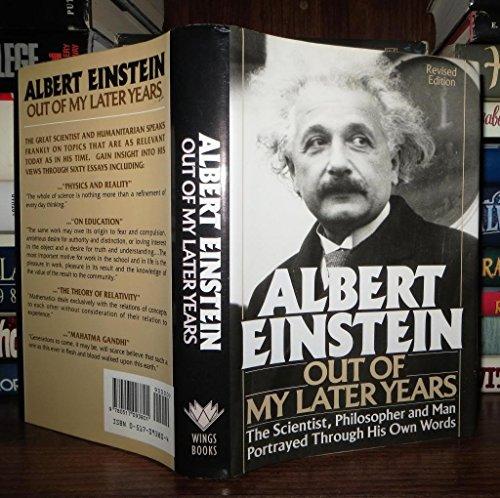
This book contains an essay where Einstein discusses his views on race in America, expressing his pain at the racial double standard and his determination to speak out against it. It was referenced as containing impactful quotes on the subject.
In the United States, everyone feels assured of his worth as an individual. No one humbles himself before another person or class. Even the great differences in wealth, the superior power of a few, ca...
— Episode: S. James Gates and Thomas Levenson — Ein...
Episode: S. James Gates and Thomas Levenson — Einstein's Et...
This book contains an essay where Einstein discusses his views on race in America, expressing his pain at the racial double standard and his determination to speak out against it. It was referenced as containing impactful quotes on the subject.
In the United States, everyone feels assured of his worth as an individual. No one humbles himself before another person or class. Even the great differences in wealth, the superior power of a few, can not undermine this healthy self-confidence and natural respect for the dignity of one's fellow man.
There is, however, a somber point in the show shall outlook of Americans. Their sense of equality and human dignity is mainly limited to men of white skins.
The more I feel American, the more this situation pains me. I can escape a feeling of complicity only by speaking out.
Many of you, in the United States, are at a two towards Negroes as a result of unfavorable experiences which we have had living side by side with Negroes in this country. They are not our equals in intelligence, sense of responsibility or reliability.
I am firmly convinced that whoever believes is suffers from a fatal misconception. Your ancestors drag these black people from their homes by force and in the white man's quest for wealth and an easy life, they were ruthlessly suppressed and exploited and degraded into slavery.
Episode: [Unedited] S. James Gates with Krista Tippett (On...
This book contains an essay by Einstein where he expresses his views on race relations in the United States, specifically mentioning the limited sense of equality and human dignity towards African Americans and expressing his pain about this situation. He also challenges the misconception that African Americans are inferior in intelligence or reliability.
In the United States everyone feels assured of his worth as an individual; no one humbles himself before another person or class; even the great differences in wealth, the superior power of a few, cannot undermine this healthy self-confidence and natural respect for the dignity of one's fellow man.
There is, however, a somber point in the social outlook of Americans. This sense of equality and human dignity is mainly limited to men of white skins.
The more I feel American the more this situation pains me. I can escape a feeling of complicity only by speaking out.
Many a sincere person will answer me: our attitude towards Negroes is a result of unfavorable experiences which we have had living side by side with Negroes in this country; they are not our equals in intelligence, sense of responsibility, or reliability.
I am firmly convinced that whoever believes this suffers from a fatal misconception. Your ancestors dragged these black people from their homes by force; and in the white man's quest for wealth and an easy life, they were ruthlessly suppressed and exploited, degraded into slavery.
Episode: S. James Gates and Thomas Levenson — Einstein's Et...
This book contains an essay where Einstein expresses his pain at the racial inequality in the United States and pledges to speak out against it.
In the United States, everyone feels assured of his worth as an individual. No one humbles himself before another person or class.
Their sense of equality and human dignity is mainly limited to men of white skins.
The more I feel American, the more this situation pains me. I can escape a feeling of complicity only by speaking out.
Episode: [Unedited] S. James Gates with Krista Tippett (On...
This book contains an essay by Einstein expressing his views on race relations in America, specifically focusing on the inequality faced by African Americans. He expressed his deep pain at the disparity and felt compelled to speak out against it.
In the United States everyone feels assured of his worth as an individual; no one humbles himself before another person or class. Even the great differences in wealth, the superior power of a few, cannot undermine this healthy self-confidence and natural respect for the dignity of one's fellow man. There is, however, a somber point in the social outlook of Americans. This sense of equality and human dignity is mainly limited to men of white skins.
The more I feel American the more this situation pains me. I can escape a feeling of complicity only by speaking out.
Many a sincere person will answer me: our attitude toward Negroes is a result of unfavorable experiences which we have had living side by side with Negroes in this country; they are not our equals in intelligence, sense of responsibility, or reliability.
I am firmly convinced that whoever believes this suffers from a fatal misconception. Your ancestors dragged these black people from their homes by force; and in the white man's quest for wealth and an easy life, they were ruthlessly suppressed and exploited, degraded into slavery.