Podcast
On Being with Krista Tippett
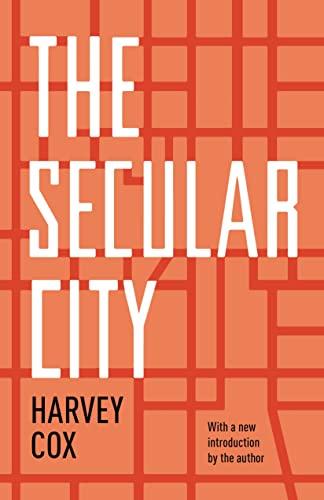
Published in 1965, it was a best-selling book about secularism in America. It offered a theological response to observations about the decline of religion due to urbanization, technology, and increased literacy.
The original title was God in the secular city...the publishers said no, no, no, that's not a good title. That's too elaborate. Let's just call it the secular city.
— Episode: Harvey Cox, Jr. — Beyond the Atheism-Rel...
Episode: Harvey Cox, Jr. — Beyond the Atheism-Religion Divi...
Published in 1965, it was a best-selling book about secularism in America. It offered a theological response to observations about the decline of religion due to urbanization, technology, and increased literacy.
The original title was God in the secular city...the publishers said no, no, no, that's not a good title. That's too elaborate. Let's just call it the secular city.
What I was doing was trying to make some kind of a theological response to what all of the cultural observers and sociologists and so on were saying about the decline, the imminent decline of religion due to urbanization and technology and higher literacy rates and all that. I'm really asking the question, what does this mean for Christianity to live in such a world?
Episode: Harvey Cox, Jr. — Beyond the Atheism-Religion Divi...
It was initially titled "God in the Secular City", and was written as a theological response to observations about religion's decline due to urbanization, technology, and literacy. The publisher changed the title to be more concise.
And the original title, you'll love this, Chris, the original title was God in the secular city.
That was the original title and the publishers, because I wanted to say, look, the marginalization of religious institutions, for example, does not mean that God is not confined to religious institutions.
A biblical understanding of God as God is present in history and nature and people and institutions and all that.
But the publisher said no, no, no, that's not a good title. That's too elaborate. Let's just call it the secular city.
The Secular City came out in the middle of the 60s when everybody was open to a lot of new and interesting things religion, Second Vatican Council was happening, it just finished, and then there was the religious opposition to the war in Vietnam.
Episode: Harvey Cox, Jr. — Beyond the Atheism-Religion Divi...
It was Harvey Cox's first book, published in 1965, and it became a catalyst for national discussion regarding the decline of religion due to urbanization and technology. The publisher changed the original title, "God in the Secular City", to make it more marketable.
The original title was God in the secular city.
the marginalization of religious institutions, for example, does not mean that God is not confined to religious institutions.
A biblical understanding of God as God is present in history and nature and people and institutions and all that.
But the publisher said no, no, no, that's not a good title. That's too elaborate. Let's just call it the secular city.
What does Athens have to do with Jerusalem? What does secularization have to do with religious proliferation and pluralism?
Episode: Harvey Cox, Jr. — Beyond the Atheism-Religion Divi...
It was Harvey Cox's first book, published in 1965, and became a catalyst for national discussion. It responded to predictions about the decline of religion due to urbanization, technology, and increased literacy rates, exploring what this meant for Christianity.
The original title was God in the secular city. That was the original title and the publishers...said no, no, no, that's not a good title. That's too elaborate. Let's just call it the secular city.
What I was doing was trying to make some kind of a theological response to what all of the cultural observers and sociologists and so on were saying about the decline, the imminent decline of religion due to urbanization and technology and higher literacy rates and all that. I'm really asking the question, what does this mean for Christianity to live in such a world?