Podcast
On Being with Krista Tippett
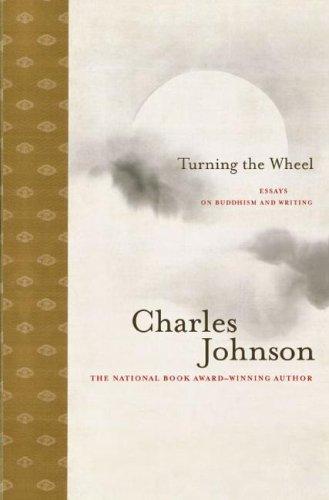
In this book of essays on Buddhism and writing, Charles Johnson connected the historic devotion to freedom of black American leaders with his embrace of Buddhist Dharma. He stated that without the Dharma, he wouldn't have been able to navigate his life as a black American artist.
the historic devotion to freedom by black American leaders...prepared him for embracing the Buddhist Dharma as the most revolutionary and civilized of possible human choices. As the logical extension...
— Episode: E. Ethelbert Miller — Black and Universa...
Episode: E. Ethelbert Miller — Black and Universal
In this book of essays on Buddhism and writing, Charles Johnson connected the historic devotion to freedom of black American leaders with his embrace of Buddhist Dharma. He stated that without the Dharma, he wouldn't have been able to navigate his life as a black American artist.
the historic devotion to freedom by black American leaders...prepared him for embracing the Buddhist Dharma as the most revolutionary and civilized of possible human choices. As the logical extension of King's dream of the beloved community and Du Bois' vision of what the world could be if it was really a beautiful world.
were not for the Buddha Dharma. I'm convinced that as a black American and an artist, I would not have been able to successfully negotiate my last half century of life in this country or at least not with a high level of creative productivity working in a spirit of metta toward all sentient beings and selfless service to others, which in my teens were ideals I decided I valued more than anything else.
Episode: E. Ethelbert Miller — Black and Universal
This book, a collection of essays on Buddhism and writing, was discussed. The interviewee noted how Charles Johnson's wide-ranging perspective, including his Buddhist practice, gave him a moral compass.
And who is a practicing Buddhist. He's always can give me a sense of that moral, you know, compass that I'm trying to follow.
In a book called Turning the Wheel, essays on Buddhism and writing, he writes that the historic devotion to freedom by black American leaders, prepared him for embracing the Buddhist Dharma as the most revolutionary and civilized of possible human choices.
were not for the Buddha Dharma. I'm convinced that as a black American and an artist, I would not have been able to successfully negotiate my last half century of life in this country or at least not with a high level of creative productivity working in a spirit of meta toward all sentient beings and selfless service to others, which in my teens were ideals I decided I valued more than anything else.