
Podcast
On Being with Krista Tippett
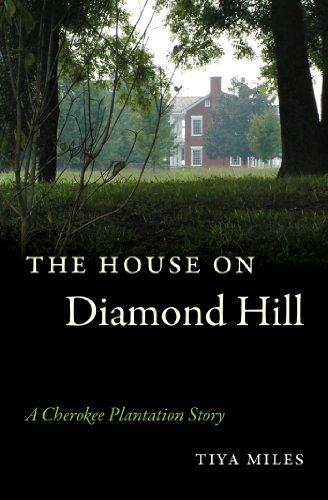
This book delves into the history of a Cherokee plantation, Diamond Hill, and its owner's practice of enslaving Black people. The podcast highlighted the author's personal connection to the house and how her exploration of the site led to a deeper understanding of the intersection of Cherokee and African American histories.
And then that gets out. The work of the historian and I, the discipline of that. And I see you in places. It seems to me that at different points in your career you've rediscovered the fact that telli...
— Episode: Tiya Miles — Toward Living Memory
Episode: Tiya Miles — Toward Living Memory
This book delves into the history of a Cherokee plantation, Diamond Hill, and its owner's practice of enslaving Black people. The podcast highlighted the author's personal connection to the house and how her exploration of the site led to a deeper understanding of the intersection of Cherokee and African American histories.
And then that gets out. The work of the historian and I, the discipline of that. And I see you in places. It seems to me that at different points in your career you've rediscovered the fact that telling history is never pure that you're always coming at it from some direction.
And you being, I don't know, maybe because you do then collect so much information. You know, in a way, and not being haunted but just being very keenly aware that there would be many ways to tell the same story that you're immersing yourself in.
Well, I think I came to historical scholarship from a sideways route. I never thought of myself as becoming a historian. I only was aware that I was interested in the past and it helped a good deal of power for me personally.
And then it seemed to hold a good deal of power for my family in terms of the ways in which we defined ourselves and thought about our place and society.
So I came to this work really with a feeling that setting the past and sharing the past was about making it usable for people today. And was at the same time about being a witness.
For people in the past whose lives have been forgotten about or he suffered unjustly, they would be honored by having me and other people who do this work. We remember them.
I went to the chief van house and took a tour. And this was in the late 90s. And part of me was taken by learning about the house itself, the structure, the architecture.
I was fascinated by a number of the architectural details such as all the little tiny Cherokee roses that are carved into the moldings at the house. But at the same time, I was quite focused on the question of slavery.
And throughout that whole tour we heard nothing about slavery. And nothing about how did you know that he specifically held slaves or did you just knew that the landowner of that wealth in that time would have had slaves?
I knew that he held slaves because at that point I had been doing enough research to know about the van family.
So I took the tour and slavery was it mentioned African Americans weren't mentioned. Although the van family's wealth was mentioned.
And of course these two things are tied, they're thanks you can't separate them. The van family's wealth came from slave labor.
So but into the tour, I was having this dual experience. One, I was enjoying the house aesthetically. And at the same time, I was sort of appalled.
At the way in which this house was being celebrated as a gorgeous architectural feat. And the way in which the family's wealth was being louted. And back people's suffering was completely invisible.
What did you do? Did you say anything at that point to the people who were curating or?
I did. Well I asked a question. I asked the tour guide where slaves lived on the plantation.
And the prison who was working at the time, I had to be fair and say that she was very young. Maybe she was a college student who was working there at the summer part time. She was completely flustered as if she had never thought about the question before.
Never heard it before. And she got a walkie-talkie and radiated back to the main office to ask how she should answer the question.
Episode: Tiya Miles — Toward Living Memory
This book focuses on the Diamond Hill plantation, owned by a wealthy Cherokee family who held over a hundred slaves in the early 19th century, using the plantation house as a central point to examine this painful history. The author's personal interest in old houses is connected to her work around this historic house.
The van family's wealth came from slave labor.
I knew that he held slaves because at that point I had been doing enough research to know about the van family.