
Podcast
On Being with Krista Tippett
Wilson details his experiment in applying evolutionary biology to urban renewal in Binghamton, New York, observing the city's history and institutions through an evolutionary lens and describing his efforts to improve the city, one block at a time.
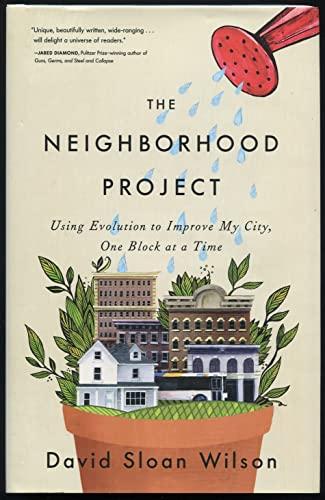
He describes where that question took him in his book called The Neighborhood Project, using evolution to improve my city one block at a time.
— Episode: David Sloan Wilson — Evolving a City
Episode: David Sloan Wilson — Evolving a City
Wilson details his experiment in applying evolutionary biology to urban renewal in Binghamton, New York, observing the city's history and institutions through an evolutionary lens and describing his efforts to improve the city, one block at a time.
He describes where that question took him in his book called The Neighborhood Project, using evolution to improve my city one block at a time.
In his book The Neighborhood Project, David Sloan Wilson observes Binghamton's architecture institutions and economy like fossil layers in terms of evolutionary progression.
In his book The Neighborhood Project, David Sloan Wilson writes, Change is not necessarily for the better.
David Sloan Wilson's books include Darwin's Cathedral and the Neighborhood Project, using evolution to improve my city one block at a time.
Episode: David Sloan Wilson — Evolving a City
In this book, Wilson details his experiment in applying evolutionary biology principles to improve his city, Binghamton, New York, one block at a time. He uses the city's history and evolution as a framework for urban renewal and community building.
Change is not necessarily for the better. Just as it is wrong to equate evolution with slow, it is also wrong to equate it with progress. Evolution doesn't make everything nice. It results in the full spectrum of outcomes that we associate with good and evil, thriving and decay. With the right conditions, the world becomes a better place. With the wrong conditions, evolution takes us where we don't want to go. That is why we must learn to become wise managers of evolutionary processes.
In his book The Neighborhood Project, David Sloan Wilson observes Binghamton's architecture institutions and economy like fossil layers in terms of evolutionary progression. He writes for example, Binghamton's era of prosperity might have ended with the 19th century except for two men, George F. Johnson and John B. Watson.