Podcast
On Being with Krista Tippett
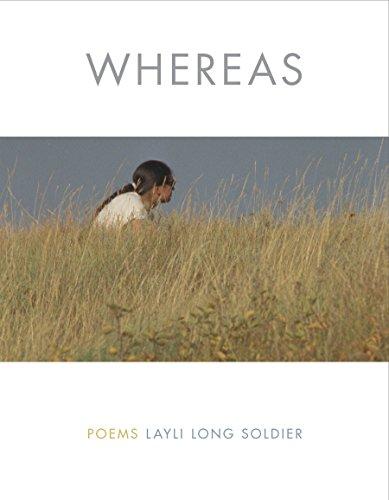
It is a book of poetry exploring the freedom that real apologies can bring, specifically in response to the U.S. government's 2009 apology to Native peoples. The author used constraints, such as writing in the first person and focusing on living memory, to shape the work.
Lely Long Soldier's lyrical first book, Whereas, explores the freedom real apologies can bring, and offers entry points for us all to histories that are not merely about the past.
— Episode: Layli Long Soldier — The Freedom of Real...
Episode: Layli Long Soldier — The Freedom of Real Apologies
It is a book of poetry exploring the freedom that real apologies can bring, specifically in response to the U.S. government's 2009 apology to Native peoples. The author used constraints, such as writing in the first person and focusing on living memory, to shape the work.
Lely Long Soldier's lyrical first book, Whereas, explores the freedom real apologies can bring, and offers entry points for us all to histories that are not merely about the past.
Whereas received multiple awards, including the Whiting Award, and it was a finalist for the National Book Award.
I've often said that I felt like this was a project of constraints. So when I sat down to work on this response, there were a lot of constraints that I placed on myself. And one of those was that I wanted all of the pieces to be written, number one, through first person, I. But number two, all of them had to be within living memory. I did not want to jump back 100 years.
I really wanted it to be grounded in the now, at least within my own lifetime. And I wanted as much as possible to avoid this sort of nostalgic portraiture of a Native life or life, my life.
In American culture, we've started to entertain some new kinds of language like truth and reconciliation. And is that something we might think about? With Native Americans, with slavery, or reparations, or, you know, words like redemption.
Episode: [Unedited] Layli Long Soldier with Krista Tippett
It is a collection of poems responding to the U.S. government's 2009 official apology to Native peoples; the author discussed the constraints she placed upon herself when writing it, including writing it in the first person and grounding it within her lifetime to avoid nostalgia.
Whereas Her Birth Signaled the Responsibility as a Mother to Teach What it Is to be Lakota.
in the arena of witness and longing
a fearless polyphonic crossing of cultures and languages in the service of both tenderness and trenchant critique
when offered an apology, I watch each movement, the shoulders high or folding tilt of the head, both eyes down or straight through. I don't know, I hope I listen for cracks and knuckles in the word choice.