Podcast
On Being with Krista Tippett
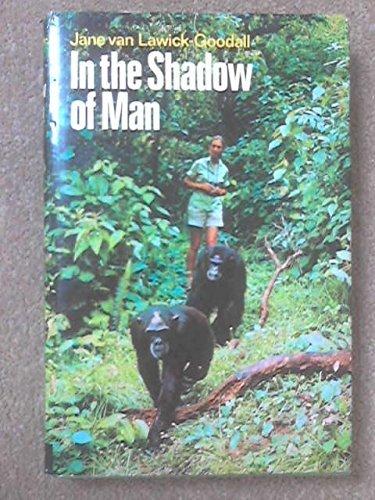
It was mentioned in the podcast as a book where Goodall discusses her early experiences studying chimpanzees in Gombe, including anecdotes and observations that helped transform the understanding of chimpanzee behavior and the relationship between humans and animals. It includes a story about Goodall naming aspects of the forest, which shows the human tendency to personify nature.
There's another story that struck me when I was reading, I think this was in In the Shadow of Man, about when your mother was with you for a while in the early part of the study. She went back to Engl...
— Episode: Jane Goodall – What It Means to Be Human
Episode: Jane Goodall – What It Means to Be Human
It was mentioned in the podcast as a book where Goodall discusses her early experiences studying chimpanzees in Gombe, including anecdotes and observations that helped transform the understanding of chimpanzee behavior and the relationship between humans and animals. It includes a story about Goodall naming aspects of the forest, which shows the human tendency to personify nature.
There's another story that struck me when I was reading, I think this was in In the Shadow of Man, about when your mother was with you for a while in the early part of the study. She went back to England.
Episode: [Unedited] Jane Goodall with Krista Tippett
It was published in 1971 and was said to have changed people's understanding of chimpanzees, animals, and themselves; the speaker reflected on stories from the book, including one about the author's mother visiting her in the early part of her study, and another about the author walking around the forest and giving things names.
And people read that and it changed their understanding, I think, not just of chimpanzees, but of animals and of themselves.
I was also struck, like the story you just told about watching the hen laying the egg, the stories about you taking worms to bed as a child or your love of your dog, Rusty.
There's another story that struck me when I was reading, I think this was in In the Shadow of Man, about when your mother was with you for a while in the early part of the study.
She went back to England, you're first alone and how you're walking around kind of naming the aspects of the forest, good morning peak, hello stream, oh wind for heaven's sake, calm down.
I think as a parent, children and adults in the presence of children see aspects of the natural world as animate and alive and they give things names, that the human imagination has always inclined this way.
Episode: [Unedited] Jane Goodall with Krista Tippett
This book, published in 1971, was discussed as having changed people's understanding of chimpanzees and themselves, showcasing the author's early observations and experiences at Gombe. The speaker recalled a story from the book about the author's interaction with the forest, giving it life through personification.
And I'm so aware that what you began to see and study and turn into scientific observation there, really transformed the world I grew up learning about.
So you wrote In the Shadow of Man in 1971. And people read that and it changed their understanding, I think, not just of chimpanzees, but of animals and of themselves.
There's another story that struck me when I was reading, I think this was in In the Shadow of Man, about when your mother was with you for a while in the early part of the study.
And then of course, that echoes stories that are so alive in our culture. Even the ones that influenced you, the Doolittles, Tarzan, Wind in the Willows.
I think as a parent, children and adults in the presence of children see aspects of the natural world as animate and alive and they give things names, that the human imagination has always inclined this way.