
Podcast
The Jordan Harbinger Show
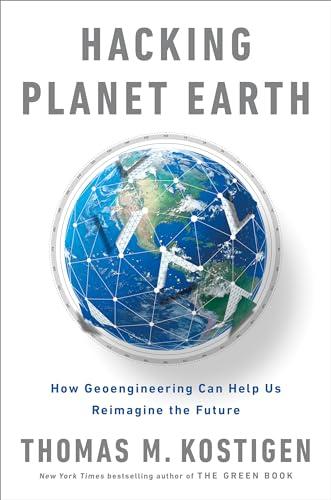
It explored various geoengineering technologies, including lasers to manipulate weather, sunshades to deflect sunlight, and artificial trees to absorb carbon, as potential solutions to climate change.
This book is interesting. I've read it and I thought, okay, there's some maybe there's some kind of quackery in here, I don't know. It's a little, it's different than what you normally hear when it co...
— Episode: 348: Thomas Kostigen | Hacking Planet Ea...
Episode: 348: Thomas Kostigen | Hacking Planet Earth
It explored various geoengineering technologies, including lasers to manipulate weather, sunshades to deflect sunlight, and artificial trees to absorb carbon, as potential solutions to climate change.
This book is interesting. I've read it and I thought, okay, there's some maybe there's some kind of quackery in here, I don't know. It's a little, it's different than what you normally hear when it comes to changing the climate.
The original title for the book was 'Frank the Planet'.
Hacking Planet Earth in the right way, we can do things more measured.
The book is really a solutions-based book and really calls for a solutions-based society.
The majority of the book is about technologies that are based in rigorous science, legitimate scientists, that innovations that recognized universities who are modeling things out, not doing anything recklessly, not doing anything without having a lot of peer review and not doing anything at a scale that is going to change things.
Episode: 348: Thomas Kostigen | Hacking Planet Earth
It was described as a solutions-based book on geoengineering, exploring various methods to combat climate change, from laser-based weather manipulation to artificial carbon-absorbing trees.
This book is interesting. I've read it and I thought, okay, there's some maybe there's some kind of quackery in here. I don't know, it's a little it's different than what you normally hear when it comes to changing the climate.
The original title for the book was 'Frank and Planet', so I wanted to look at, you know, that side of what happens if we do this, you know, this Frank and Planet would evolve, but then I realized, not if we do it, measure if we hack the planet, hence the new title, 'Hacking Planet Earth'.
The book is really a solutions-based book and really calls for a solutions-based society.
I really want to emphasize that while I talk about some far-fetched ideas like sunshades and things like that that admittedly are way out there, most of the book, the majority of the book is about technologies that are based in rigorous science, legitimate scientists, that innovations that recognized universities who are modeling things out, not doing anything recklessly, not doing anything without having a lot of peer review and not doing anything at a scale that is going to change things.
And that's what geoengineering in my mind is all about, and do you think that this is a government project or, you know, like a UN thing or is this private sector, because I think a lot of people are going to be pretty surprised if governments can get off there, you know, what and get it get this done, because it seems highly unlikely.
Episode: 348: Thomas Kostigen | Hacking Planet Earth
The book focuses on geoengineering solutions to climate change, exploring both more conventional and outlandish concepts, with a solutions-based approach.
This book is interesting. I've read it and I thought, okay, there's some maybe there's some kind of quackery in here. I don't know, it's a little, it's different than what you normally hear when it comes to changing the climate.
The original title for the book was 'Frank and Planet'.
The majority of the book is about technologies that are based in rigorous science, legitimate scientists, that innovations that recognized universities who are modeling things out, not doing anything recklessly, not doing anything without having a lot of peer review, and not doing anything at a scale that is going to change things.
Most of the technologies that are talked about in the book can be made to scale today, and we have to start to look at them like cool roofs and cool roads and cool alleys, somewhat analog in how they're actually put into practice, but could make a big, big difference all around the world if we just embraced reflecting the sun more, creating lighter surfaces, or if we we looked at things like that that we know can make a difference.
And that's what the book tries to explain is that no one's talking about just going out and like trying stuff like in a James Bond movie, right, for nefarious purposes. We're talking about doing things in a virtual world. We can create things in 3D with 3D printers now. We have entire lives that exist online. Most of what we're talking about can be looked at with artificial intelligence and algorithms and played out under in a so many scenarios in a millisecond. It's mind-blowing.