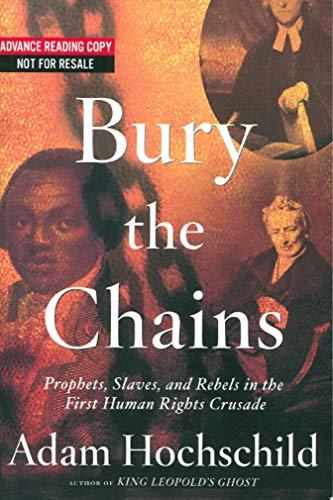

Bury the Chains: Prophets and Rebels in the Fight to Free an Empire's Slaves Cover
Podcast Mentions

Bury the Chains Prophets and Rebels in the Fight to Free an Empire's Slaves

Adam Hochschild

From the author of the prize-winning King Leopold's Ghost comes a taut, thrilling account of the first grass-roots human rights campaign, which freed hundreds of thousands of slaves around the world.

Podcasts 2
Quotes 9
The Jordan Harbinger Show

It was referenced as an example of a book that details a long, arduous process of social change, like the abolition of slavery, suggesting a similar effort is needed for social media reform.

"

a favorite book of mine is the book Burry the Chains which is about the British Empire's abandoning of slavery and how it took 100 years and advocacy with the Quakers and these networks of people who...

— Episode: 533: Tristan Harris | Reclaiming Our Fut...

Episode: 533: Tristan Harris | Reclaiming Our Future with H...

It was referenced as an example of a book that details a long, arduous process of social change, like the abolition of slavery, suggesting a similar effort is needed for social media reform.

"

a favorite book of mine is the book Burry the Chains which is about the British Empire's abandoning of slavery and how it took 100 years and advocacy with the Quakers and these networks of people who exposed these cruel you know ways of treating other human beings over and over again and we eventually did something that felt you know impossible and obviously we still live with the legacies of all that today but studying the history of unprecedented human social change is a really important discipline that I certainly wish I was spending more time on because I think that's where we are we're looking for the kind of changes that are unprecedented and dramatic but thoughtful in terms of what we have to address.

Episode: 533: Tristan Harris | Reclaiming Our Future with H...

It was mentioned as an example of a book that describes unprecedented human social change and how the British Empire abandoned slavery, taking 100 years of advocacy.

"

a favorite book of mine is the book Burry the Chains which is about the British Empire's abandoning of slavery and how it took 100 years and advocacy with the Quakers and these networks of people who exposed these cruel you know ways of treating other human beings over and over again and we eventually did something that felt you know impossible and obviously we still live with the legacies of all that today but studying the history of unprecedented human social change is a really important discipline that I certainly wish I was spending more time on because I think that's where we are we're looking for the kind of changes that are unprecedented and dramatic but thoughtful in terms of what we have to address.

The Daily Stoic

This book, about the freeing of slaves and the abolition movement, was called a must-read and core to the Stoic principle of justice. The podcast host highly recommended it.

"

His book, Barry the Chains about the the freeing of the slaves, the abolition movement, the ending of the slave trade. Absolutely must read core idea in this Stoic principle of justice.

— Episode: Adam Hochschild on Our Obligation to the...

Episode: Adam Hochschild on Our Obligation to the Common Go...

This book, about the freeing of slaves and the abolition movement, was called a must-read and core to the Stoic principle of justice. The podcast host highly recommended it.

"

His book, Barry the Chains about the the freeing of the slaves, the abolition movement, the ending of the slave trade. Absolutely must read core idea in this Stoic principle of justice.

Episode: Adam Hochschild on Our Obligation to the Common Go...

Ryan Holiday discussed how this book, about the abolition of slavery, changed his thinking on how to bring about change and highlighted its importance in his upcoming book on justice. He mentioned its exploration of the radical idea that slavery shouldn't exist simply because it always had.

"

Basically it's about abolition, that the idea that slavery shouldn't just exist because it has always existed.

it was a fascinating brilliant lovely book that I have been thinking about ever since I wrote it

it totally changed how I think about how to bring about change I think it's a vivid reminder of what the Stokes would say our obligation is as people to the common good

the famous slavery logo that he talks about in the book, the the question 'Am I not a man and a brother?', goes to the essence of what Marcus really is trying to get to, what Heirich Lee is trying to get to, that the victims of injustice have a nature not unlike our own and we own obligation to help them, to be of service to them, to make their lives better

I cannot recommend enough

Episode: Will MacAskill on Creating Lasting Change

The book details the creation of the abolitionist movement, highlighting how a small group of people initiated a movement that fundamentally altered the course of Western civilization. The book is described as highlighting moral innovation.

"

I would just read that book bury the chains about the creation of the abolitionist movement that like basically a group of like seven people got in a room and were like hey should we care about people who are enslaved and they came away with the answer yes and and the entire arc of Western civilization changes as a result of that that conversation not immediately and in many cases not in the lifetime of those people and they couldn't have anticipated where it would go exactly but yeah the moral innovation I'm thinking about that you have the graphic of that slave ship in the book but there's the you've seen this the famous drawing of the black man and it says am I a man and another am I not like an artist comes up with an idea that that represents a person that was previously to the vast majority of let's say white people in the world not seen as a human being and renders it artistically and creatively and you could even say propagandistically in a way that changes how people see things and over the course of 100 200 years an institution that no one would have questioned or predicted would go away does go away and that shows the seeds for the women's rights movement and the gay rights movement and so many different movements because a few people made a moral invention or innovate

Note: The book recommendations on this page are discovered automatically from podcast transcripts, and may be incorrect or incomplete.