Podcast
The Jordan Harbinger Show
It was discussed how certain nonverbal cues, like excessive scanning of a room, could reveal undercover officers. The book also details methods for building rapport, defusing anger, and understanding the 'spotlight effect'.
You mentioned some faux signals in the book and one thing I felt was particularly interesting was how I gaze a specific type of I gaze gives away undercover officers.
— Episode: 558: Jack Schafer | Flipping the Like Sw...
Episode: 558: Jack Schafer | Flipping the Like Switch Part...
It was discussed how certain nonverbal cues, like excessive scanning of a room, could reveal undercover officers. The book also details methods for building rapport, defusing anger, and understanding the 'spotlight effect'.
You mentioned some faux signals in the book and one thing I felt was particularly interesting was how I gaze a specific type of I gaze gives away undercover officers.
So if you look for the elements, you know there's a relationship going on or not a relationship and the way that this ends up sort of outing undercover cops is instead of looking like an actual criminal who walks into the bar and goes all right.
One concept that you have that I think is I don't want to say underrated but possibly one of the most useful from the book is making people feel good about themselves so that they seek to be around you and get those feelings again.
I know that you let people correct you in class when you make a mistake I'm wondering if you make the mistake deliberately to let people correct you but also why do you let people correct you in class or encourage people I should say to correct you in class what does that do
And in the interest of time but you mentioned a lot about anger towards the end of the book and you've said that why people get angry and get frustrated is not it's not always for the most obvious reasons right it's we're frustrated because of a lack of communication or we're talking about that.
Episode: 557: Jack Schafer | Flipping the Like Switch Part...
It was discussed how the book details the learnable skills used to recruit spies and influence people, which are applicable in various areas, such as business and relationships.
I absolutely would and that's what kind of motivated me to write the like switch and that is because I recognize all the tools I needed or what was required to learn to recruit spies and I said wow all we're doing is developing relationships with people and then influencing those people.
Those same skills that we can use to recruit spies, we can also use in business, dating, family and all any time you have to interact with somebody you can use these same skills.
I'd love to break that down the learnable and teachable elements of this. I know that's what you do in the like switch but there's a few really cool juicy morsels that I would love to talk about.
I think this is from the book as well from the like switch that people are slower to leave a parking space.
And that's what we look for those nuances you mentioned food forking early that food forking was another one right and that totally makes sense right I don't go I don't hang out with someone if I'm having lunch with you for the first time I don't go oh that looks good let me get some of those fries.
Episode: 467: Jack Schafer | Getting People to Reveal the T...
It was mentioned as a previous book by Jack Schafer, with the podcast host expressing interest in discussing it in the future.
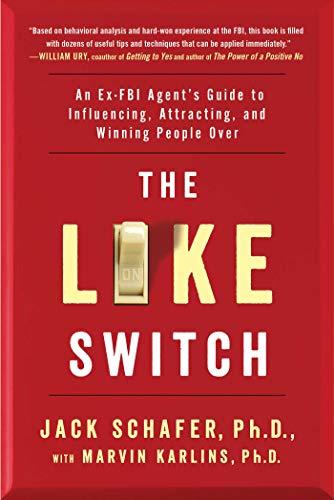
This is the follow-up from your previous book, The Like Switch which will definitely have to have you come by and talk about at some point.
Episode: 558: Jack Schafer | Flipping the Like Switch Part...
It was discussed how the book details how certain nonverbal cues, like eye gaze, can reveal undercover officers. Specific nonverbal cues like lip pursing were also described as ways to gauge a person's opinion.
You mentioned some faux signals in the book and one thing I felt was particularly interesting was how I gaze a specific type of I gaze gives away undercover officers.
If I'm going to go see my supervisor my chair in the department or supervisor in the FBI and I want to influence that person I always say sir you got a minute I want your advice on something and of course they go of course you do so they sit down and now you start using your techniques and one of the techniques I use is something called the lip purse and that is when you push your lips out a little bit.
One concept that you have that I think is I don't want to say underrated but possibly one of the most useful from the book is making people feel good about themselves so that they seek to be around you and get those feelings again and I can imagine that coming in extremely handy when recruiting intelligence agents and making friends making connections generating rapport.
There is a lot in the book about recognizing a plate knowing when to use empathic statements physical and non verbal communication observing other people and drills and exercises on how to do that I'll go for some of that in the show close but we'll put a little bit more in the worksheet.
There's a lot more in the book as well about empathetic statements how to use them generating rapport generating even romantic connections depending on how you want to use that I wouldn't say it's the kind of stuff you might use inside a marriage or inside a relationship but if you're dating a lot of this stuff can be very, very useful techniques like recognizing a plate right where you go to restaurant the servers really have an hectic day and you say something like boy you must be busy I could never keep up or the store is slam you say wow you must be on your feet all day I couldn't do it that will increase the quality of service and the quality of your rapport there's a lot of little techniques like that in the book again I do recommend this if you're in the service industry especially because while some of the techniques like shared experiences oh we're from the same place oh we're doing the same course of study oh we have the same type of religious faith whatever that may be those shared experiences those techniques might seem obvious there's also things like the misattribution principle that are less obvious right so you might anchor yourself to an experience they're having such as a workout or a benefit.
Episode: 557: Jack Schafer | Flipping the Like Switch Part...
It was discussed how the book details learnable skills for developing relationships and influencing others, drawing parallels to techniques used in spy recruitment and applicable to various social interactions.
I absolutely would and that's what kind of motivated me to write the like switch and that is because I recognize all the tools I needed or what was required to learn to recruit spies and I said wow all we're doing is developing relationships with people and then influencing those people.
Those same skills that we can use to recruit spies, we can also use in business, dating, family and all any time you have to interact with somebody you can use these same skills.
I'd love to break that down the learnable and teachable elements of this. I know that's what you do in the like switch but there's a few really cool juicy morsels that I would love to talk about.
I think this is from the book as well from the like switch that people are slower to leave a parking space you know it's something like you're pulling into the parking lot of target and you see somebody go to their car and they sit in the car and you're going what is taking so long
I've got your number
Episode: 468: Jack Schafer | Getting People to Reveal the T...
It was briefly mentioned as a book by Jack Schafer that Jordan Harbinger would like to discuss in a future episode.
I definitely want to have you back some time we'll talk about your other book the like switch obviously I could take a page or two out of that one I'm sure that you agree there could probably use a little polish myself