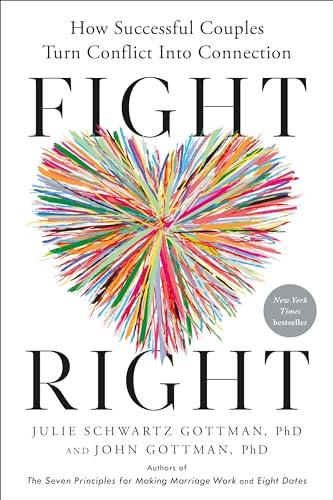

Fight Right: How Successful Couples Turn Conflict Into Connection Cover
Podcast Mentions

Fight Right How Successful Couples Turn Conflict Into Connection

Julie Schwartz Gottman PhD

NEW YORK TIMES How we fight predicts the future of our relationships. Most of us blunder into conflict without knowing what we are really fighting about and then quickly become overwhelmed by physiological responses we can’t control and emotions we don’t anticipate. The truth is the happiest and mo...

Podcasts 2
Quotes 20
The Diary Of A CEO with Steven Bartlett

The book was highlighted by Julie Gottman, who co‑hosted both episodes, as a guide to turning relationship conflict into connection. She explained that the title offered practical strategies for avoiding blame, understanding partners’ needs, and treating conflict as a shared problem rather than a fight. Steven Bartlett also endorsed its impact, noting its potential to foster peace one family at a time. The overall tone was strongly positive, positioning the book as essential reading for couples.

Highly Recommended

Episode: The Gottman Doctors: "Women Tend to Be More Unhapp...

The authors discussed their new book and explained how conflict can be a good thing in a relationship if it is approached correctly. They also provided insights into how couples can manage conflict by understanding their partner's needs and feelings, and by focusing on describing themselves rather than blaming their partner.

"

We can hope and pray for a ripple effect to move out into society and create more love out in the world too where we need it so much.

Making peace one family at a time.

I would tell my father would you please stay home at least one day a week instead of abandoning my mother every single day seven days a week.

I would tell my mother stop being critical stop being contentious try to look for what all of us are doing right and say that rather than only pointing out what we're doing wrong.

Conflict resolution knowing how to take on conflict knowing how to address it knowing how to be about a sparring partner in relationships so that it can be you and your partner versus the problem versus instead of you versus your partner.

Episode: The Gottman Doctors: Affairs Can Actually Save You...

The book was mentioned multiple times throughout the podcast; it was described as containing important information regarding conflict resolution in relationships and how to build a strong connection with one's partner.

"

That's why we wrote fight right,

It's really so important to not do that you, you, you, you. Blaming. That blaming.

10% Happier with Dan Harris

It was described as a new book by the Gottmans, who have completed over 40 years of research on couples, though the advice is applicable to all types of relationships. The book was discussed in the context of healthy conflict, how to have good arguments and how to avoid defensiveness in fights.

"

Fight Right: How Successful Couples Turn Conflict Into Connection is the name of a new book by esteemed guests Dr. John Gottman and Dr. Julie Gottman.

— Episode: Fight Right: The Science of Healthy Conf...

Episode: Fight Right: The Science of Healthy Conflict | Drs...

It was described as a new book by the Gottmans, who have completed over 40 years of research on couples, though the advice is applicable to all types of relationships. The book was discussed in the context of healthy conflict, how to have good arguments and how to avoid defensiveness in fights.

"

Fight Right: How Successful Couples Turn Conflict Into Connection is the name of a new book by esteemed guests Dr. John Gottman and Dr. Julie Gottman.

They have written several books together, including Eight Dates and The Love Prescription.

Even though the majority of the Gottmans' research is on couples, the advice is applicable to all types of relationships.

No conflict is not the answer. Yeah, conflict is a very natural part of all relationships. You know, we've even studied identical twins and they have conflict.

However, in unhealthy conflict, the speaker is oftentimes describing the other partner in very negative terms with criticism, put downs, contempt, to which that other person is going to respond with defensiveness.

We like to make a distinction between process and content. And what content means is what issue are you discussing and what are your thoughts and feelings about that particular issue?

The first three minutes of an argument are key, and if you want to start the argument, well, two things. First, use I language, talk about your own emotions, instead of characterizing the other person. Second, state a positive intention, something you would like to see instead of describing the universe or other people in negative terms.

It's okay to express your emotion and be real about feeling that emotion. But in the process, you're describing yourself, you're not describing the partner, that's the interesting and important part of it.

One of the things we discovered that I think is very important to tell people is that the first three minutes of a conflict discussion determine how it's going to go 96% of the time and also predict the future of the relationship. Those first three minutes are really critical.

If they do that, apologize right away. They really don't know what they're apologizing for because they haven't heard the impact of what happened on their partner.

And taking a break means going away from one another for a period of time. And I'll talk about the details of how long that break should be. That's the first part. The second part is that when the break is over, both individuals have to be self-soothing.

And finally, when there is abuse, either physical abuse, emotional abuse, or sexual abuse, that is really perpetrator, victim, and is causing harm. And that's really not a relationship. That's something very, very different.

We've done a lot of stuff on relationships and sex on this show, so we put a bunch of links in the show notes.

Note: The book recommendations on this page are discovered automatically from podcast transcripts, and may be incorrect or incomplete.