
Podcast
The Tucker Carlson Show
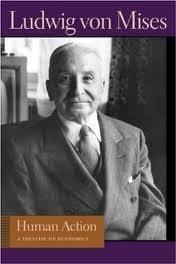
This book was mentioned as an example of Austrian economics literature that Ron Paul found fascinating early in his study of economics and monetary policy. It was described as not a little book and one that explores why people love liberty and how human action plays a factor in economics.
And the first campaign I ran in was purely out of just curiosity. It was in 1974. You know, the Republicans weren't doing very well in 1974. So I did it because nobody else would run. . . When I got r...
— Episode: Ron Paul’s Warnings Have Come True: Risi...
Episode: Ron Paul’s Warnings Have Come True: Rising Debt, E...
This book was mentioned as an example of Austrian economics literature that Ron Paul found fascinating early in his study of economics and monetary policy. It was described as not a little book and one that explores why people love liberty and how human action plays a factor in economics.
And the first campaign I ran in was purely out of just curiosity. It was in 1974. You know, the Republicans weren't doing very well in 1974. So I did it because nobody else would run. . . When I got really excited about it was when Bretton Woods broke down. You know, the Bratton Woods system. And that issue, it was just fascinating with me because the monetary issue was there. And I would look at all the literature. It turned out that what I was reading was Austrian economics, free market economics, and monetary policy. And to me, it's so exciting. It's because the other economic systems are pretty sterile. And they're pretty boring where Austrian economics takes into the factor of human action. Of course, that's Mises' book, Human Action.
And I remember one of the books I started when I got involved in economics was Human Action. And that's not a little book, you know.