Podcast
Hidden Brain
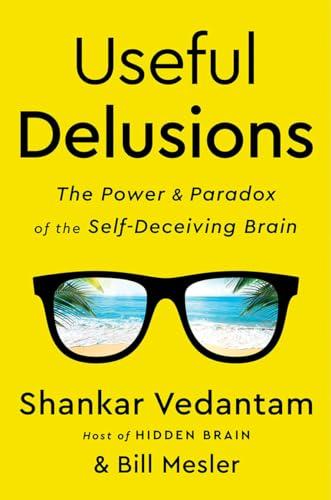
Shankar Vedantam repeatedly highlighted the book across several episodes, introducing it as his new work that explores how self‑deception can be both beneficial and harmful. He connected its themes to episode topics such as the power of stories, apologies, and the paradox of self‑deception, and announced its availability for pre‑order. The host presented the ideas as compelling and worthwhile for listeners.
Episode: The Power of Apologies
Shankar Vedantam's new book, 'Useful Delusions', was mentioned in the podcast's outro, acknowledging Johanna Ramos-Boyer's help in coordinating interviews related to it.
Johanna has helped me coordinate interviews that I've done about my new book, Useful Delusions.
Episode: The Story of Your Life
It is Shankar's new book and the episode's central theme of stories shaping how we see the world is also the main theme of the book.
Matt is my editor at Norton & Company, the publisher of my new book, Useful Delusions.
The idea that we explore today, how stories shape the way we see the world, is also a central theme of Useful Delusions.
Episode: The Snowball Effect
It was mentioned by the host as a book they had recently written and discussed at a conference with the podcast guest.
One of my fellow panelists was Damon Santola. I so enjoyed hearing about his ideas that I reached out to him shortly afterwards and asked him about coming on Hidden Brain.
Episode: Love is Blind
It was discussed as a new book by Shankar Vedantam that explores the paradox of self-deception and how it can have both positive and negative effects, using his parents' relationship as an example.
I have a new book out. It's called Useful Delusions and it looks at the paradox of self-deception.
You can find out more about how to make the paradox of self-deception work for you in my new book, Useful Delusions, The Power and Paradox of the Self-Deceiving Brain.
Episode: Our Brands, Our Selves
It was mentioned that Shankar Vedantam had written a new book, 'Useful Delusions', exploring rationality and its limitations, as well as the potential benefits of self-deception, and was available for pre-order.
Can self-deception ever be a good thing? Can we better address the problems with delusional thinking by understanding the emotional defense mechanisms that trigger such beliefs?
These counterintuitive ideas are at the core of a new book I've written. It's called Useful Delusions, and it's available now for pre-order. You can learn more at hiddenbrain.org books.
For more Hidden Brain you can follow us on Facebook and Twitter. Again if you'd like to learn more about my new book Useful Delusions go to hiddenbrain.org books.