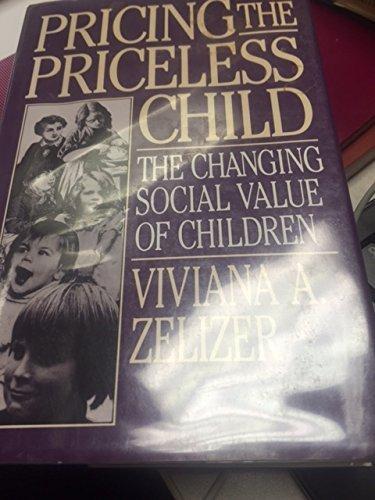

Pricing the Priceless Child: The Changing Social Value of Children Cover
Podcast Mentions

Pricing the Priceless Child The Changing Social Value of Children

Viviana A. Zelizer

Dramatically illustrates how the sentimentalizing of children led to the creation of the emotionally "priceless" child

Podcasts 2
Quotes 6
Freakonomics Radio

It explored the changing economic role of children over time, including the shift from children being seen as economic assets to being viewed as emotionally valuable.

"

In a 1994 book called Pricing the Priceless Child, Zelizer showed how the economic role of children has changed over time.

— Episode: 223. Should Kids Pay Back Their Parents...

Episode: 223. Should Kids Pay Back Their Parents for Raisin...

It explored the changing economic role of children over time, including the shift from children being seen as economic assets to being viewed as emotionally valuable.

"

In a 1994 book called Pricing the Priceless Child, Zelizer showed how the economic role of children has changed over time.

The Jordan Harbinger Show

The book details the author's experience as a senior investigator and founder of the FBI's national art crime team, including undercover work as a shady art dealer to rescue stolen treasures.

"

I was surprised actually to read that Art Crime is a $6 billion dollar a year industry.

— Episode: 401: Robert Wittman | The Undercover Hun...

Episode: 401: Robert Wittman | The Undercover Hunt for Stol...

The book details the author's experience as a senior investigator and founder of the FBI's national art crime team, including undercover work as a shady art dealer to rescue stolen treasures.

"

I was surprised actually to read that Art Crime is a $6 billion dollar a year industry.

I thought it was interesting in the book, you mentioned that these guys are not in it because they love art. It's just pure greed.

I read in your book that thieves, and this was, it made me like cringe so hard. Often thieves destroy the art if they know they're being investigated.

You wrote that you have to see the good in your target. Otherwise, you'll just see the people who stole the Zart as evil and that inhibits you in your undercover works.

You mentioned something that I thought was actually quite genius in the book. And I'm not sure if I'm reading into this too much, but you call this the decoy, where you find a bond with the target that doesn't have anything to do with the case at hand.

Note: The book recommendations on this page are discovered automatically from podcast transcripts, and may be incorrect or incomplete.