Podcast
Huberman Lab
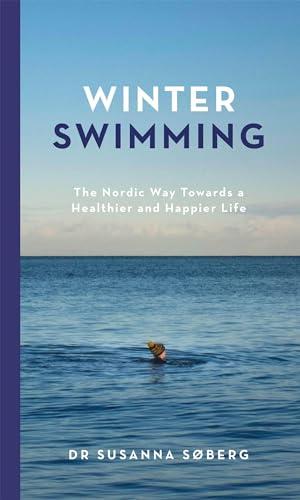
The book Winter Swimming is described as terrific because it explains cold acclimation, the cold shock response, the dangers and safeties of cold water, and the impact of cold and heat on human health, all in an easy-to-read and accessible format.
In fact she is the author of a recent book entitled Winter Swimming which is I have to say a terrific book because it breaks down chapter by chapter the different aspects of deliberate heat and delibe...
— Episode: Dr. Susanna Søberg: How to Use Cold & He...
Episode: Dr. Susanna Søberg: How to Use Cold & Heat Exposur...
The book Winter Swimming is described as terrific because it explains cold acclimation, the cold shock response, the dangers and safeties of cold water, and the impact of cold and heat on human health, all in an easy-to-read and accessible format.
In fact she is the author of a recent book entitled Winter Swimming which is I have to say a terrific book because it breaks down chapter by chapter the different aspects of deliberate heat and deliberate cold into its various constituent parts including cold acclimation, the cold shock response, dangers and safeties of cold water.
The impact of cold and the impact of heat on various aspects of human health as well as specifics relating to sauna versus ice versus cold swimming showers etc. It's a very thorough read and a very easy and accessible read that if you are interested in deliberate cold or deliberate heat exposure or both will allow you to embrace those protocols with the greatest degree of confidence that you're going to obtain the specific endpoints that you're interested in and to do so safely.
I also measured the temperature every time they went so I have this graph and it's actually in Winter Swimming book it shows the temperature and then mark going like from October to April and it's like it starts at 12 degrees uh I think it's around 12 degrees it sells you the water and then it goes down to two degrees in on average in January and then up again um so it's within the spectrum of very cold water I would say from around 15-15 degrees Celsius and down but it was actually not colder than like two to four degrees in on average when it was the coldest so it doesn't have to be that cold to be good enough and enough to activate our metabolism
And I had it in my book because people want to know if they have to swim with their bathing suit on or if they can take it off or what's the what's the difference is there any difference in this and if you ask me there is no difference oh if you have your little skinny be skinny on it's not going to do any difference to your cold exposure or your adaptation it's not going to do any difference for your benefits of course but I think that it has something else it has something to do with how you also observe yourself how your surroundings and it's some some sense of freedom in skinny dipping so I think people in Denmark who does this is they do the winter swimming because they feel free when they do they come home from work they go to this club and they skinny dip and they feel like in touch with nature and they have maybe done this their whole life so this is an old tradition in Denmark in some of the clubs um but the newer clubs that are coming they don't they don't the skinny dip so everyone has bathing suit I never skinny dip because there are people around people with phones and taking pictures all the time so this is different different nowadays everything is recorded yeah and also this this old tradition is also fading away because of that yeah I um I used sauna and cold at home but when I travel there there's a banya so russian banya has hot sauna and cold plunge there's one in san francisco called arcanadie's banya and that one is clothing optional so some people are clothes such as myself and then other people are not and it's co-ed most of the time I think they have male female separated evenings or something like that and then um the other banya's spa 88 which is on wall street in new york is an amazing banya as well and these are starting to crop up in different cities or maybe they've been there for a long time and as deliberate cold exposure in sauna gets more popular more people are using them the the one in new york that I that spa 88 is always clothed um and it's interesting because you know people here naked or skinny dipping and they they might get certain ideas in mind it yeah all these places are very well lit and they all have a tone of kind of of health that is about the kind of health and and wellness I guess the point being that there's no requirement to do one thing or the other although in the studies that you did obviously people were clothes but I I did I did pay attention to those pages in your book I thought it was interesting that you put some some dedicated passages in your book related to this and I think my publisher wanted that yeah yeah it was not me it was like my publisher really wanted to have a little discussion about that so it was like okay well I think it you know it points to a larger theme which is I think for a lot of people who already do these practices um there's no shock there um for people that do not do deliberate cold exposure or sauna I think that um you know there is this idea perhaps that oh you know these are um traditions that are are kind of fringe or that they're cut and I just I want to cue that point because there's so many things that are happening right now in biomedical research and medicine you know serious quality peer reviewed studies published in excellent journals like your paper on things like deliberate cold exposure sauna um the use of particular supplements natural natural herbs and supplements I mean there's an entire branch of the national institutes of health in the united states dedicated just to the study of supplements and behavioral interventions for health like meditation and breath work really incredible really incredible and psychedelics of course being something that for a long time was part of a certain community and feel and now is being um frankly adopted by mainstream medicine even pharma so the times are changing um and so uh yes I think it's important to know that um it's perfectly acceptable and encouraged to work clothing absolutely yeah yeah and one other thing that uh I wanted to to mention going back to your questions around with there were any observations in the studies which we really maybe haven't discussed yet and maybe it's in in the back of the the paper I'm not mentioned that much was one of the winter swimmers didn't have any brown fat when we measured him zero zero and uh in we do see this um in in in previous studies as well that some humans don't have any brown fat was he did he carry a lot of white fat out of post tissue was he was he obese no he wasn't no he was not obese because that he would not have been in the study then oh right yes you mentioned this earlier forgive me uh no no fine but he was um but what I did observe before I knew that he didn't have any brown fat was that during the cooling experiment where I cooled them for uh two hours before they go into the pet city scanner uh he was not able to control his uh shivering like the winter swimmers uh could so he got he got very uh cold very easily uh compared to the others so and without I didn't know what was different about him but we could all all or me and the three others were working on the experiment we were like okay what's going on because we turned down the temperature but he started like shivering and then we had to turn it off again and it was just all over the place the temperature is no it wasn't that controlled like the others it was pretty similar protocol I could just do pretty much the same because they were same size and they also same gender so it it was easier uh to like foresee what was going to happen and when will they start shivering I quickly learned that but with this subject it was just with this volunteer was just very much different and then when we scanned him and didn't find any brown fat I I I didn't even think about it so when we scanned him it didn't see anything I told the pet city people who like oh you put up the wrong uh scanning right like the technology yeah the technology was like this scanning looked like the thermonutral day the thermocomfortable day where we also scanned them to see if they have any brown fat so you have made a mistake I was pretty sure and they reanalyzed this scanning and they just concluded well the scanning was fine the experiment went well it was just that he didn't have any brown fat so he was like what we just in the paper called a brown fat negative so he didn't have any and in my studies he would be called a knockout so he didn't have any brown fat so what the observation with him and I think that would be that's interesting is that he both shivered very early on and didn't regulate his temperature as well he also told me that then he was like a five on the scale of how comfortable he felt with the cold and so it was from one to ten and five being thermocomfortable and ten being very cold and and one very hot so on this like scale up and up and down and he he was like more up and down on this scale than any of the others it was an observation that I did but we did see in his blood samples also that his blood samples looked a bit more like the control group um also his insulin levels were like the control groups are a little bit higher than the other winter swimmers and he also had um uh uh his blog glucose clearance was not as as fast as um as the the the other winter swimmers so he was like an outlier what we call it and in the analysis we also had to take him out of the analysis because he was an outlier so the results showing that the brown fat is more efficiently activated in the winter swimmers is without him having him in that group but it didn't ruin the study if we tried to put him in as well and didn't it didn't ruin the results or anything but just to to keep it more clear we put we took him out of the analysis yeah so he was a mutant anaka yeah and I'm sure they're out there um very interesting so if you shiver early um then perhaps you have less brown fat to begin with although it's hard to conclude from one person that's sort of the the implication there all you have an adaptive to the code so you should build that up yeah right so in addition to looking at regulation of blood sugar brown fat metabolism and so on were there any markers that you examined in the deliberate cold exposure group as compared to controls um that reveal to that deliberate cold exposure could have additional benefits um say for uh immune system function or for any function for that matter yeah so for um we looked at inflammation of course we measure the outcome of blood pressure and so on but we also measured the IL-6 in the study just to see also an inflammatory anti inflammatory marker so IL-6 went up and it also follows with IL-10 so that is like also very known in the literature so we measured that and I think it's very important to think about the cold exposure and the heat exposure as something that then lowers the inflammation in the body and what if we can do that we will have an open door for um a preventing lifestyle disease right so for um type 2 diabetes but actually also for some mental uh diseases as well so as known as depression and anxiety and also Alzheimer's disease which are all associated in uh research also newer research showing that uh that inflammation increases the risk of depression and anxiety and Alzheimer's if it neurological diseases so if we can decrease inflammation in the body we will decrease uh modern lifestyle diseases but also these increasing mental diseases that we see in these modern lifestyle times um so I think that it's I think it's very interesting that we can go out in nature and we can use these natural stressors and it don't want to have it sound very romantic or anything it's just it's just exposure to temperature actually just to cold or to heat that is going to trick our body into a natural state again and reset it where the the homoestasis the balance has lost a bit so the body is going to repair itself in that way and I think it's beautiful that we can do that just by changing the temperature of our body and although people are very scared of doing this because in our times we have been away from cold away from heat temperature uh for some for decades now um since we isolated our houses better and uh we are more sedentary we also sit more indoor we don't move as much so this very modern sedentary lifestyle has made us more temperature, comfortable just neutral so no no wonder I mean that obesity is increasing we don't expose ourselves to the natural stresses that we did earlier on um in in our involvement but also up until maybe the 70s the 60s where we started having more like a comfortable lifestyles right and obesity increases in the in the 80s we can see that from statistics so I think that if we can take in cold and heat and you mentioned other things also before but of course exercise is very important here and also a bit of fasting actually because it all increases the hermetic stress in the body so it's doesn't have to be uh other than natural stresses to the body which then could keep us in that natural balance again.