Podcast
Behind the Bastards
The hosts repeatedly highlighted the book as a dense but rewarding work that reexamines early human history, challenges the idea of linear societal evolution, and argues that labor and capitalism are recent constructs rather than constants. Andrew and Chris praised its depth while recommending listeners also explore critical reviews, and Robert Evans repeatedly urged the audience to read it as a worthwhile addition to their reading list. Overall, the podcast presented it as a thought‑provoking, essential read for understanding human freedom and social experimentation.
Episode: It Could Happen Here Weekly 78
The authors discussed how the term "noble savage" has been used to critique racist white fantasies and to bludgeon anyone who suggests another society may have been better.
And then in reading Dawn of Everything by David Graeber and David Wengroo, I ended up stumbling upon even further information on the subject.
In one of his recent posthumous works, Pirate Enlightenment, and in a lot of his other works as well, he sort of grapples with this idea of the Enlightenment, right?
So one interpretation of that story is that it's a metaphor for the dawn of agriculture and the Garden of Eden as a sort of nostalgic take.
What Ter Ellingson, a historian, discovered, or rather explored in his book The Myth of the Noble Savage, is that the term was coined over a century before Rousseau's birth by a French lawyer-ethnographer named Marc Lescarbut.
And even today, people decided for themselves how long they wanted to work on a particular day, what they would do, or if they would even work at all.
Episode: It Could Happen Here Weekly 35
Andrew, one of the podcast hosts, discussed the book, and highlighted chapter four, which explores the origins of culture and its diversity. He particularly appreciated the book's argument that the world became more complex as technology progressed, contrary to the common notion of technological progress leading to simplification.
I am happy to announce that I finally, finally finished Dawn of Everything by David Wernker.
It took a while, you know, there was some points in time, some weeks just went by where I didn't even like make a dent. You know, life got in the way and stuff but I finally, finally finished it.
And now I get to talk about it and say, you know, with some authority that I've read Dawn of Everything, you know.
Yeah, this is a very good book. I'm excited to talk about it because I read it like, oh, it was a while ago now. Like, it's like five months ago or something.
I've been picking up bits and pieces of it, but unfortunately my book list to get through is way too long at the moment. So I've not been able to actually dive fully into the text itself. But it is definitely on my list after I get through my 20 other books I need to read for my job.
Episode: It Could Happen Here Weekly 30
The book discusses a spectrum of subsistence modes, from hunting and foraging to pastoralism and farming, and how they co-exist in harmony for millennia.
Those of you who have read Dawn of Everything, you kind of see that picture coming into shape as it progressed through the book.
Episode: It Could Happen Here Weekly 23
This book outlines some of the discussions that were happening between Europeans and indigenous Americans at the time of arrival, and how those discussions were shaping the Europeans' views of society.
Interestingly, it's kind of like reflected here because you know, I had this white man who pulls up with all his English ideas and it's basically these indigenous inhabitants in Pala basically deconstructing his ideas through dialogue and through debate and discussion.
Episode: It Could Happen Here Weekly 16
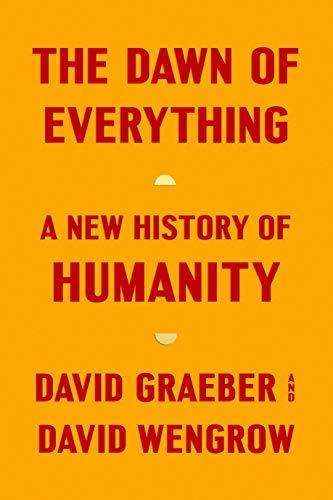
Robert Evans talked about "The Dawn of Everything" by David Graeber and David Wengrow, a book re-examining early human history and challenging the idea of linear societal evolution. He found it a fascinating and readable book that pushed for a re-imagining of human freedom and challenged the assumption that earlier civilizations were less intelligent than our own.
Yeah, it's definitely on my list That is a long one That's less of a read I think most people gonna be less of a read in one sweep than like maybe for over the course of the year like Yeah, yeah, it's very very dense and very long but very readable like not to say that it's like dense in the I Gotta like slog through this textbook. It's extremely readable It's just like there's a lot in there and you're gonna want to pause and think about shit Yeah, so so the not everything is this is the last book David Graeber ever wrote and it's David Wengro also They wrote it together and it's it's this basically an attempt to reassemble I guess early human history and but the thing that they're doing that that's that's really unique is that so they they're David Wengro as Archaeologist David Graeber's anthropologist and they're going you know, so they spent a whole bunch of time going through the sort of early archaeological records and what they find basically is that None of the things that you see make any sense at all unless you're willing to Unless you're willing to accept that people, you know 20 30 50 thousand years ago and then even you know people like four or five Thousand years ago were as smart as we are and have the have the capacity to recreate and redesign their own political arrangements self-consciously, which is something that doesn't sound that weird except everyone assumes that they can't and that you know everyone that's you know, one of the other things they're really sort of heavily doing here is trying to break this Idea that you know Human society sort of evolves and is this linear progression, you know You start out with like these small hunter-gatherer bands and they get more complex quote-unquote And eventually they develop farming farming develop the state and the answer is just you know When you look through the actual archaeological record, none of this is true You have you know, they have a lot of very interesting sort of Historical examples of this looking at like what looked like incredibly democratic and egalitarian cities and then you know on the outskirts of those cities you have the emergence of the states among of Things that look like states among barbarian groups and they have and What I think is maybe the most interesting part of it is that they're They're very concerned with the question of human freedom, but freedom in a way that like we don't Like Freedom on a level fundamental enough that like we can barely imagine it So they have these things called the three freedoms Which is one of them is so the first one is the freedom to just move leave and to It's a freedom to you know Be in a place and then leave and know that you will be cared for when you get to wherever you're going Yeah though these kind of networks that were set up so that people could travel that have like the Descendant of those ideas is sort of the way if you ever if you've ever spent time in the Middle East not in like hotels And shit, like it's that same idea that kind of deeper than religious belief about the importance of that has gotten added to like Islam and Into a number of other faiths in the area like but this idea that like there's nothing more sacred than taking care of it of a guest Like and and how that that that existed to enable kind of a sort of cross-cultural contract and Contact and like recreational travel in a way that I think is would be deeply surprising to people who just sort of assumed Everyone before a certain age died within five miles of their house or was yeah Yeah part of a band of wandering hunters yeah, and it's interesting in that like like you like we'd in a lot of ways travel less than early people did because you know the People would just leave and people you know people just didn't like their families And so they'd walk like 500 miles, and they did come to a place and they'd be accepted and yeah Yeah, you know the second one. I think The one that is the the one we have the least capacity. I think to understand which is just the ability to disobey orders To just like anyone tells you do something you could just tell them no At any time and it's not only can you just tell them no Like the social expectation is that you is that you don't act is that it's it's not just that you have the ability to do It's that someone giving you an order is treated as weird, and this is a thing that you know it But like this this is the thing this is a freedom that used to exist and no longer does And was sort of destroy in various ways along with sort of the third freedom. They talk about which is about how People have the right to sort of just shift and recreate their social political arrangements And yeah, and people used to do this sort of comedy people Yeah, a lot of the what their early part of the book is about is about how? Societies you there's a lot of societies that would you know flip seasonally right so what like one half of the year you have this Just like absolute decadence shift either half of the year. It's like well. It's looks like a hippie commune and You know the fact that we do not like the fact that like we we just don't Like it cannot conceive of completely shifting our political arrangements Like that is It's also. There's this fascinating discussion of like the the fact that And this is kind of counter to what I I had always kind of thought that like once as a group groups of people when They when they made the decision to like move to agriculture And like set founded cities that it was kind of a one-way street You know you you just keep going along that road And there's actually multiple examples of people's like this what happened to the British Isles or at least in what is currently Great Britain people's like Developing agriculture settling down and then being like oh, you know what fuck this and like going Yeah, like that that sure it should happen all the time and and one of the things that's really kind of optimistic about the vision of The sweep of human history in the dawn of everything is the idea that like no we don't have to keep Like it's not inevitable that we just keep doing more of what we're doing now all throughout history Large groups of people have been like it's time to let's do something else. Let's make a radical change like it happens And it's probably more normal to do that than it is to do what we've been doing and when you I think one of the things that kind of One of the things that leads to the sense of inevitability of development Along the lines that we have is the fact that we only really have about 10,000 years of even vaguely Reliable like data or vaguely comprehensive data on human history But people have been around for tens of thousands of years longer than that and for most of it We've been a lot more experimental than we are now and it's it's always possible For people to try different things in a way that maybe seems Impossible to us now, but but necessarily won't for our kids.
Episode: It Could Happen Here Weekly 11
It was mentioned as a book written by David Graeber and David Wengrow, that talks about how the idea of capitalism has a vested interest in you believing that the world was always hard in order to get basic necessities.
He did he recently deceased but a book that he wrote before he died with another Another fellow came out recently called the dawn of everything that talks a lot about how Yeah, these ideas that kind of capitalism has a vested interest in you believing that
Episode: It Could Happen Here Weekly 10
The Dawn of Everything was recommended as a good read. No specific details about the book were shared.
Go go read. Go read The Dawn of Everything. It's good. It's worth reading. Check it out.
Episode: It Could Happen Here Weekly 10
The hosts encouraged listeners to read The Dawn of Everything, calling it a worthwhile book.
Go read the Dawn of Everything. It's good.
Episode: It Could Happen Here Weekly 38
The authors discussed the book and how it highlighted how the American state is constantly evolving and responding to its conditions. The book uses the example of the American state to show that the state of 1900 was very different from the state of 2000.
I remember reading in Dawn of Everything, where the Davids were talking about how the state, they're using the example of the American state. They were saying, the American state of 1900 is completely different in a lot of ways from the American state of the 2000, because the state and statecrafters is constantly evolving, constantly expanding, constantly responding to the conditions that they face. We saw what happened in 20th century, the different movements that occurred in that time. The state was able to respond to those movements and adjust itself accordingly.
Episode: It Could Happen Here Weekly 35
The book was described as very dense but worth it. The authors explore the concept and origins of cultures, especially in the Upper Paleolithic period. There are critiques of the book, which are recommended to be reviewed alongside the book itself.
It took a while, you know, there was some points in time, some weeks just went by where I didn't even like make a dent. You know, life got in the way and stuff but I finally, finally finished it.
And now I get to talk about it and say, you know, with some authority that I've read Dawn of Everything, you know.
Yeah, it's a very dense book but it was 100% worth it.
I mean, there are some critiques that I've been digging into by some authors in the field. And so I highly recommend people look for critiques as well, not just, you know, taking it and consuming it wholesale.
But in addition to those critiques, like armed with those critiques, such as by people like What is Politics on YouTube, and also a couple academic writers as well. I think you could get a lot out of the book and I certainly have.
Episode: It Could Happen Here Weekly 30
The book was mentioned as a source for the information discussed about how humans have domesticated their environments and themselves through various activities.
But of course, James C. Scott also discussed it years before in Against the Green. So as he says, enter the domus. Just as we transformed our landscapes, we transformed ourselves.
Episode: It Could Happen Here Weekly 23
The authors outline some of the discussions that were happening between Europeans and indigenous Americans at the time of arrival, and how those discussions were shaping the Europeans' view of society.
Interestingly, it's kind of like reflected here because you know, I had this white man who pulls up with all his English ideas and it's basically these indigenous inhabitants in Pala basically deconstructing his ideas through dialogue and through debate and discussion.
Episode: It Could Happen Here Weekly 23
The book discusses interactions between Europeans and indigenous Americans during colonization, comparing these dynamics to the relationship between the outsider protagonist and the inhabitants of Pala in "Island."
For those who have been reading Dawn of Everything, um, recently, um, in chapter two, there, the authors, David Wengro and David Grieber, they sort of outline some of the discussions that were happening, that were happening between Europeans and indigenous Americans at the time of arrival and how those discussions were shaping both, but primarily the European's view of society.
Episode: It Could Happen Here Weekly 21
Mentioned as a book that highlights the mistake of looking at groups of people as one thing or another.
It's always a mistake and this is a good - one of the things that you get out of the dawn of everything. It's always a mistake to like look at any of these groups, hunter-gatherers, stateless societies as like one thing or another.
Episode: It Could Happen Here Weekly 16
The book challenges traditional ideas about early human history, suggesting that people in the past were more capable of self-organization and social experimentation than commonly believed.
Yeah, I'm down to talk about that at any point. Yeah, okay. Yeah, it's definitely on my list That is a long one That's less of a read I think most people gonna be less of a read in one sweep than like maybe for over the course of the year like Yeah, yeah, it's very very dense and very long but very readable like not to say that it's like dense in the I Gotta like slog through this textbook. It's extremely readable It's just like there's a lot in there and you're gonna want to pause and think about shit Yeah, so so the not everything is this is the last book David Graeber ever wrote and it's David Wengro also They wrote it together and it's it's this basically an attempt to reassemble I guess early human history and but the thing that they're doing that that's that's really unique is that so they they're David Wengro as Archaeologist David Graeber's anthropologist and they're going you know, so they spent a whole bunch of time going through the sort of early archaeological records and what they find basically is that None of the things that you see make any sense at all unless you're willing to Unless you're willing to accept that people, you know 20 30 50 thousand years ago and then even you know people like four or five Thousand years ago were as smart as we are and have the have the capacity to recreate and redesign their own political arrangements self-consciously, which is something that doesn't sound that weird except everyone assumes that they can't and that you know everyone that's you know, one of the other things they're really sort of heavily doing here is trying to break this Idea that you know Human society sort of evolves and is this linear progression, you know You start out with like these small hunter-gatherer bands and they get more complex quote-unquote And eventually they develop farming farming develop the state and the answer is just you know When you look through the actual archaeological record, none of this is true You have you know, they have a lot of very interesting sort of Historical examples of this looking at like what looked like incredibly democratic and egalitarian cities and then you know on the outskirts of those cities you have the emergence of the states among of Things that look like states among barbarian groups and they have and What I think is maybe the most interesting part of it is that they're They're very concerned with the question of human freedom, but freedom in a way that like we don't Like Freedom on a level fundamental enough that like we can barely imagine it So they have these things called the three freedoms Which is one of them is so the first one is the freedom to just move leave and to It's a freedom to you know Be in a place and then leave and know that you will be cared for when you get to wherever you're going Yeah though these kind of networks that were set up so that people could travel that have like the Descendant of those ideas is sort of the way if you ever if you've ever spent time in the Middle East not in like hotels And shit, like it's that same idea that kind of deeper than religious belief about the importance of that has gotten added to like Islam and Into a number of other faiths in the area like but this idea that like there's nothing more sacred than taking care of it of a guest Like and and how that that that existed to enable kind of a sort of cross-cultural contract and Contact and like recreational travel in a way that I think is would be deeply surprising to people who just sort of assumed Everyone before a certain age died within five miles of their house or was yeah Yeah part of a band of wandering hunters yeah, and it's interesting in that like like you like we'd in a lot of ways travel less than early people did because you know the People would just leave and people you know people just didn't like their families And so they'd walk like 500 miles, and they did come to a place and they'd be accepted and yeah Yeah, you know the second one. I think The one that is the the one we have the least capacity. I think to understand which is just the ability to disobey orders To just like anyone tells you do something you could just tell them no At any time and it's not only can you just tell them no Like the social expectation is that you is that you don't act is that it's it's not just that you have the ability to do It's that someone giving you an order is treated as weird, and this is a thing that you know it But like this this is the thing this is a freedom that used to exist and no longer does And was sort of destroy in various ways along with sort of the third freedom. They talk about which is about how People have the right to sort of just shift and recreate their social political arrangements And yeah, and people used to do this sort of comedy people Yeah, a lot of the what their early part of the book is about is about how? Societies you there's a lot of societies that would you know flip seasonally right so what like one half of the year you have this Just like absolute decadence shift either half of the year. It's like well. It's looks like a hippie commune and You know the fact that we do not like the fact that like we we just don't Like it cannot conceive of completely shifting our political arrangements Like that is It's also. There's this fascinating discussion of like the the fact that And this is kind of counter to what I I had always kind of thought that like once as a group groups of people when They when they made the decision to like move to agriculture And like set founded cities that it was kind of a one-way street You know you you just keep going along that road And there's actually multiple examples of people's like this what happened to the British Isles or at least in what is currently Great Britain people's like Developing agriculture settling down and then being like oh, you know what fuck this and like going Yeah, like that that sure it should happen all the time and and one of the things that's really kind of optimistic about the vision of The sweep of human history in the dawn of everything is the idea that like no we don't have to keep Like it's not inevitable that we just keep doing more of what we're doing now all throughout history Large groups of people have been like it's time to let's do something else. Let's make a radical change like it happens And it's probably more normal to do that than it is to do what we've been doing and when you I think one of the things that kind of One of the things that leads to the sense of inevitability of development Along the lines that we have is the fact that we only really have about 10,000 years of even vaguely Reliable like data or vaguely comprehensive data on human history But people have been around for tens of thousands of years longer than that and for most of it We've been a lot more experimental than we are now and it's it's always possible For people to try different things in a way that maybe seems Impossible to us now, but but necessarily won't for our kids. Oh Yeah, the last thing I would tell people to listen to if they're looking for a fictional optimistic thing is Cory Doctorow's Walk Away
Episode: It Could Happen Here Weekly 11
This book was said to be a recent work written by David Graeber before his death that talks about how capitalism has a vested interest in people believing that the world was always hard, especially in relation to labor and how it's not a constant in human civilization.
He did he recently deceased but a book that he wrote before he died with another Another fellow came out recently called "The Dawn of Everything" that talks a lot about how Yeah these ideas that kind of capitalism has a vested interest in you believing that The world was always hard in the way that it's hard by which I mean like in order to get basic necessities You have to make somebody else rich or find some grift of your own and as opposed to like Yeah Life is always hard But life wasn't didn't always involve labor the way we we think about it labor is not been a constant in human civilization in fact most of human civilization people have not done a thing that we would recognize as labor and And I think also even if you go towards things that like look more like labor to us, right? Like I don't know like look like if you look at like feudal levies, right? You're a peasant you have to give some amount of Grain to your Lord, but like okay We work way longer than medieval peasants Yeah and not only do we work longer? It is something Graeber and David Wenger talk about in that book is like yeah Like not only do we work much longer like the amount that we work would have been considered absolutely, like even even a feudal Lord would look at that much work and go no Like this is this is this is like yeah and you know I think there's there's another great person has another point He wrote a piece called turning modes of production inside out where yes this argument that like okay so if you take you know if you take like Plato right you're like you take any of the Greek philosophers even the conservative ones and You show them this the thing the thing that we do every day right? You're you know, you have to you're you're completely under the command of another person for like at least a third probably more of your day Yeah, I monitor you and garrisons bathroom breaks. Yep. I look at your texts with family and friends It's it's really not a situation. Yeah, it's an incredibly strict surveillance state. Mm-hmm. Yeah, Robert Evans Yeah, yeah, this is like like you know if you show a Greek person that this is like this is the apocalypse to them This is this is the worst thing that could possibly happen is every single person in society has like essentially been reduced to a slave and You know that's bad and it doesn't have to be like it's not that they've been
Episode: It Could Happen Here Weekly 11
The book "The Dawn of Everything" co-authored by David Graber and David Wengrow was mentioned as an anti-work book arguing that capitalism makes us believe that the world has always been hard, but that labor wasn't always a constant in human civilization.
And I think this is one of the things speaking of you talk about David Graeber earlier, who's an anarchist, anthropologist and widely seen to be like one of the most brilliant anthropologists of his generation. He recently deceased. But a book that he wrote before he died with another and another fellow came out recently called The Dawn of Everything that talks a lot about how, yeah, these ideas that kind of capitalism has a vested interest in you believing that the world was always hard in the way that it's hard.
Episode: It Could Happen Here Weekly 10
The podcast host Robert Evans recommended "The Dawn of Everything" by David Graeber and David Wengrow, saying it is worth reading.
Go go read. Go read The Dawn of Everything. It's good. It's worth reading. Check it out.
Episode: It Could Happen Here Weekly 11
It was mentioned as a book co-authored by David Graeber and a fellow, exploring how the modern notion of labor as a necessity is a relatively recent concept in human history.
A book that he wrote before he died with another and another fellow came out recently called "The Dawn of Everything" that talks a lot about how, yeah, these ideas that kind of capitalism has a vested interest in you believing that the world was always hard in the way that it's hard.
Labor is not been a constant in human civilization.
And I think also even if you go towards things that like look more like labor to us, right, like I don't know, like look like if you look at like feudal levies, right, you're a peasant.
And not only do we work longer, it is something Graber and David Wenger talk about in that book is like, yeah, like not only do we work much longer, like the amount that we work would have been considered absolutely like even even a feudal lord would look at that much work and go, no, like this is this is this is like.
And it's because like their attitude was they were looking at the lives these people were living in these cities and like, well, why would you agree to do that?
Episode: It Could Happen Here Weekly 10
The book is recommended by Robert Evans.
Go go read. Go read The Dawn of Everything. It's good. It's worth reading. Check it out.
Episode: It Could Happen Here Weekly 10
The book was recommended as a good read.
Go go read. Go read the dawn of everything. It's good.