1984
George Orwell
Mentioned 6 days ago
WORLD CUP Bonus Episode: Quarterfinals
Trevor currently hosts a weekly podcast titled What Now? with Trevor Noah. In this new podcast, listeners get a chance to hear Trevor like never before. Trevor is joined each episode by celebrities, thought leaders, athletes, and friends to chat about the contemporary topics on everyone’s minds. He...
Recently mentioned
George Orwell
Mentioned 6 days ago
WORLD CUP Bonus Episode: Quarterfinals
Mario Puzo
Mentioned 3 weeks ago
WORLD CUP Bonus Episode: Entering the Knockouts
L. Frank Baum
Mentioned 1 month ago
WORLD CUP Bonus Episode: First Week
Edward Fishman
Mentioned 1 month ago
Eddie Fishman: Understanding Iran
Tom Nichols
Mentioned 2 months ago
Katie Couric: Is Objectivity Dead?
Aditya Raj
Mentioned 2 months ago
Ian Bremmer: Who Is Actually Running the World?
F. Scott Fitzgerald
Mentioned 3 months ago
Oobah Butler: The Digital Mirage
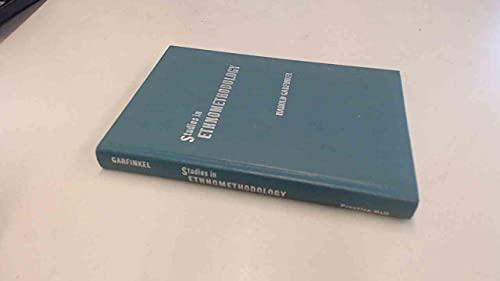
Harold Garfinkel
Mentioned 3 months ago
Oobah Butler: The Digital Mirage
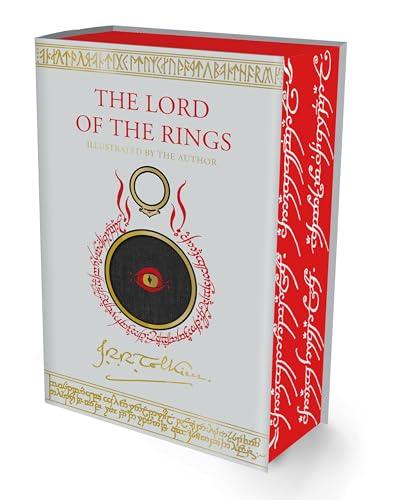
J. R. R. Tolkien
Mentioned 3 months ago
Atsuko Okatsuka: Can You Ever Really Go Home Again?
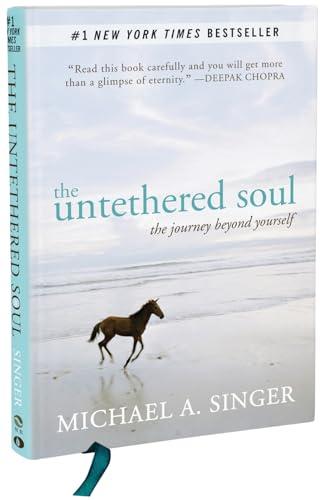
Michael A. Singer
Mentioned 4 months ago
Emily McDonald: Can You Rewire Your Brain?
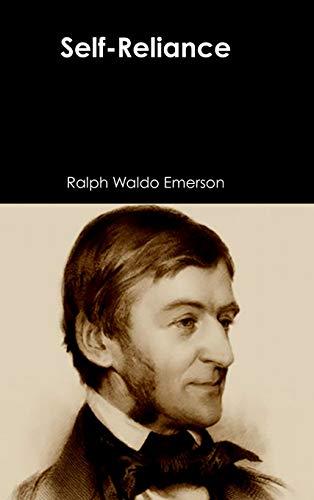
Ralph Waldo Emerson
Mentioned 4 months ago
Arthur C. Brooks: Are We Happy Yet?
Josef Pieper
Mentioned 4 months ago
Arthur C. Brooks: Are We Happy Yet?
How America Came Together a Century Ago and How We Can Do It Again
The book was referenced as a sweeping 125‑year history of American social trends and inequality. Robert Putnam himself highlighted it during the episode, noting that it covered the whole of American history over the last century and a quarter. The discussion presented the title as a comprehensive look at how the nation has changed over time.
Putnam's most recent book was referenced as a sweeping 125year history of American social trends and inequality.
In my last book, which was called The Upswing, I looked over the whole of American history over the last 125 years.
How to Help Your Children Live Together So You Can Live Too
In the episode, the host mentioned that they were reading the book and noted they were uncertain about how relevant it would be to their own family dynamics. No strong endorsement was given, and the discussion was limited to a brief personal observation.
They said they were reading the book and expressed uncertainty about its relevance to their family dynamics.
I'm reading this book called Siblings Without Rivalry.
Trevor announced that his new children's title was now available in stores and as an audiobook.
Trevor announced that his new children's book "Into the Uncut Grass" was now available in stores and as an audiobook.
My new book, Into the Uncut Grass, is available now wherever you get your books and audiobooks.

In the episode, the host interviewed the author and described the memoir as a compelling critique of meritocracy, arguing that opportunities are increasingly dictated by family background rather than hard work. The discussion highlighted the book’s focus on the concept of inheritocracy and its relevance in the age of AI, presenting it as an important antidote to prevailing narratives about merit and reward.
The book was described as a memoir that explores how opportunities are increasingly defined by family background rather than merit, arguing that society operates more as an inheritocracy than a meritocracy.
Eliza's writing has been published in The Times, The Guardian and The Financial Times and she's recently published her latest book, Inheritocracy.
And I feel like, Inheritocracy is inherently one of those topics. Like your book, the way you've thought about the subject, the way you speak about it.
It's the antidote to a meritocracy, a society that's built on merit, one that is to do with hard work and reward. Inheritocracy is to do with the lottery of birth. You can't choose who your parents are, but increasingly it's determining the opportunities you have.
Your opportunity is not defined by your wages. It's not defined by your education because as you said, the return on that investment, all that hard work is declining, particularly now in the age of AI. It's ever more defined by who your parents are and the leg up they give you and the safety net they create.
The book is, is essentially, it's a memoir. It's my own story, but I define an Inheritocracy as one where your opportunities in life are not defined by what you earn because wages are, have stalled, certainly in Europe.

Children of the Holocaust (The International Library of Group Psychotherapy and Group Process)
During the episode, the title was referenced as a work by a child of a Holocaust survivor that argued one sibling often bears the bulk of familial trauma. The hosts used it to illustrate patterns of intergenerational trauma within Holocaust families, but did not elaborate further or endorse it.
It was mentioned as a book by a child of a Holocaust survivor that argues within Holocaust families one child bears the brunt of the trauma more than others.
It also reminded me of a book that I read called Memorial Candles. I think it was called that, and it was a book by a child of a Holocaust survivor who argues that within Holocaust families one child bore the brunt of it a lot more than other people.
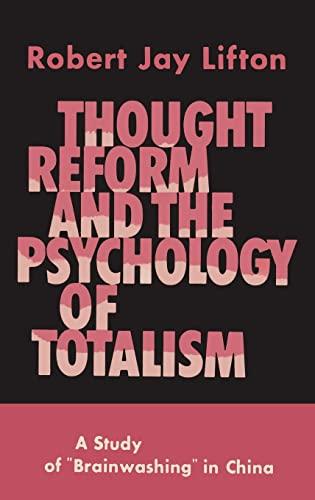
A Study of Brainwashing in China
Robert J. Lifton's book Thought Reform and the Psychology of Totalism, a study of brainwashing in China, was cited as a key source describing the eight criteria of mindcontrol techniques.
There was some red on the front cover, believe it or not. It's called Thought Reform and the Psychology of Totalism, A Study of Brainwashing in China by psychiatrist Robert J. Lifton,...
— Episode: Dr. Steven Hassan: Are You In a Cult?
Robert J. Lifton's book Thought Reform and the Psychology of Totalism, a study of brainwashing in China, was cited as a key source describing the eight criteria of mindcontrol techniques.
There was some red on the front cover, believe it or not. It's called Thought Reform and the Psychology of Totalism, A Study of Brainwashing in China by psychiatrist Robert J. Lifton, and he outlined eight criteria in chapter 22, how to evaluate whether environment does brainwashing.
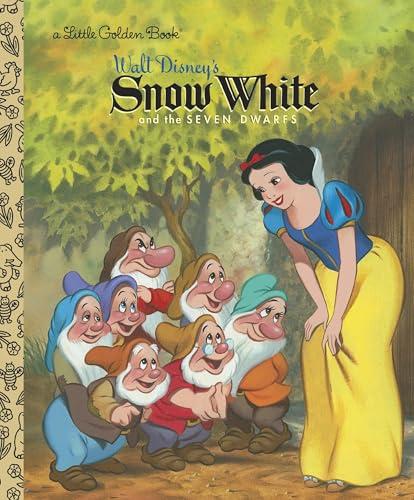
The speaker praised the early Disney version, noting it was astonishingly good compared to later adaptations.
Snow White is astonishingly good.
— Episode: Malcolm Gladwell: Do Fairytales Make Adu...
The speaker praised the early Disney version, noting it was astonishingly good compared to later adaptations.
Snow White is astonishingly good.
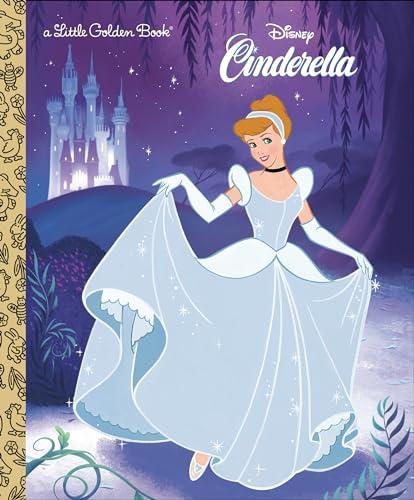
He highlighted the original film's long, whimsical digression featuring a mouse and a cat, appreciating the confidence of the filmmakers to let such scenes run.
And also, even more so, probably with Cinderella... 20 minutes on the mouse playing with the cat, Lucifer. And they leave the whole story, set it over here, and it's just the cat and the mouse.
— Episode: Malcolm Gladwell: Do Fairytales Make Adu...
He highlighted the original film's long, whimsical digression featuring a mouse and a cat, appreciating the confidence of the filmmakers to let such scenes run.
And also, even more so, probably with Cinderella... 20 minutes on the mouse playing with the cat, Lucifer. And they leave the whole story, set it over here, and it's just the cat and the mouse.
The Basis of Culture
Trevor recommended Pieper's book, explaining that true leisure is a cultivated skill rather than mere idleness.
There's a great book that was written by a German philosopher in the middle of the 20th century named Josef Pieper. He wrote this book called Leisure, the Basis of Culture. You're lik...
— Episode: Arthur C. Brooks: Are We Happy Yet?
Trevor recommended Pieper's book, explaining that true leisure is a cultivated skill rather than mere idleness.
There's a great book that was written by a German philosopher in the middle of the 20th century named Josef Pieper. He wrote this book called Leisure, the Basis of Culture. You're like, okay, so he's going to write a whole book about chilling on the beach. No, no, no. Chilling on the beach isn't Leisure. That's asedia, which means kind of a laziness. And there's nothing wrong with chilling on the beach from time to time, but that's not actual Leisure. Leisure, you have to be excellent at. You have to be excellent at Leisure.
They mentioned Garfinkel's 1960s work on ethnomethodology as an example of a funny and absurd academic experiment.
What is it? There's that book, Harold Garfinkel book in the 60s, studies of ethno methodology or something.
— Episode: Oobah Butler: The Digital Mirage
They mentioned Garfinkel's 1960s work on ethnomethodology as an example of a funny and absurd academic experiment.
What is it? There's that book, Harold Garfinkel book in the 60s, studies of ethno methodology or something.
I think there was... He just had a load of his students doing loads of really absurd things that subvert. ... It was in New York, maybe. Subvert the... rules of waiting in line or going into a restaurant.
Ian Bremmer said he had written *The J Curve*, a book examining how openness and stability of countries were linked, but noted that the original model had become outdated and now resembled a Ushape.
I wrote a book called The J CURVE and it was about a relationship between the company countries openness and its stability.
— Episode: Ian Bremmer: Who Is Actually Running the...
Ian Bremmer said he had written *The J Curve*, a book examining how openness and stability of countries were linked, but noted that the original model had become outdated and now resembled a Ushape.
I wrote a book called The J CURVE and it was about a relationship between the company countries openness and its stability.
At the time countries that were most open were also most stable. The J CURVE today looks more like a U.
American Power in the Age of Economic Warfare
In the episode, the author explained that the book examined how economic warfare and strategic choke points shape global power, using Iran and the petrodollar as case studies. He highlighted the thesis that we are living in an age of economic warfare and positioned the work as a key analysis of American power. The discussion presented the book as a valuable insight into contemporary geopolitical strategy.
Eddie explained that his book examines how economic warfare and strategic choke points shape global power, using Iran and the petrodollar as case studies.
the whole book I wrote about economic warfare
the thesis of my book, Choke Points, is that we're living in an age of economic warfare
Note: The book recommendations on this page are discovered automatically from podcast transcripts, and may be incorrect or incomplete.
Podcast Name