Podcast
Today, Explained
The author joined the show and explained how refrigeration transformed food, our environment, and daily life, while also highlighting its hidden costs such as climate impact and flavor loss. She discussed emerging sustainable cooling methods, the politics surrounding refrigerants, and urged listeners to reconsider the trade‑offs of our cold chain. The hosts emphasized the book’s thorough exploration of both benefits and drawbacks, presenting it as a valuable resource for anyone interested in food history and sustainability.
Episode: Is your refrigerator running?
The author discusses how refrigeration has changed our food, planet, and ourselves, highlighting the benefits of refrigeration while also exploring its downsides and the potential for more sustainable cooling methods.
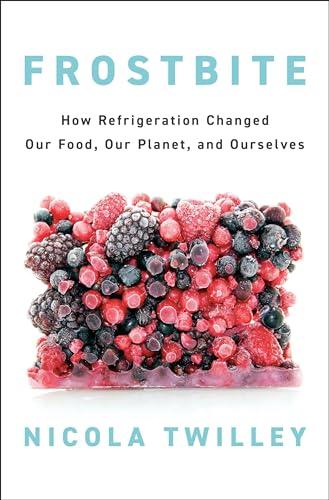
And I am the author of Frostbite, How Refrigeration Changed Our Food, Our Planet, and Ourselves.
I'm Nicola Twilley. I am co-host of Gastropod, the podcast that looks at food through the lens of science and history.
She's co-host of Gastropod and author of Frostbite, How Refrigeration Changed Our Food, Our Planet, and Ourselves.
Nicola Twilley, author of Frostbite, host of Gastropod.
Episode: Is your refrigerator running?
The author, Nicola Twilley, wrote about the history of refrigeration and how it has affected our food, planet and ourselves. She argues that while it has many benefits, it comes with costs, such as climate change and how it makes our food taste worse.
And I am the author of Frostbite, How Refrigeration Changed Our Food, Our Planet, and Ourselves.
And so that's what it's doing. It's slowing time. It's literally a time machine.
And I can report that the Internet, apart from being cat videos, is basically people piling onto each other about what they do put in the fridge and what they don't put in the fridge.
The classic is stone fruit or tomatoes or things like that. If you put them under 50 degrees for a length of time, you literally disable the genetic machinery inside the fruit, inside the tomato that can produce flavor.
Scientists call the fridge the stone fruit killing zone. Because it is... Scientists? Yeah. Don't put your stone fruit in the fridge. Don't put your tomatoes in the fridge. They will be tasting worst in the fridge.
But if you're the kind of person who eats ketchup once a year, put it in the fridge and just don't tell people because they'll get upset.
And he has gone the coatings route. Every plant on the planet has a protective barrier on the outside of it.
So we take that material and we recycle it back into a barrier that we apply back to the surface of the produce. And that allows the fruit to slow down the rate that it ages by a factor of two, three or four times.
So basically one of the ways you can slow down how fast your produce is breathing is not just cold, but you can actually tweak the atmosphere.
The great thing is it's made from food waste. It's made from food. It's made from the skins from tomato canneries and the leftover stuff from when you're making guacamole and things like that.
This gets sprayed on at the packing house. The cucumbers come off the vine. They go get washed and cooled, and you spray this on.
You can go to Walmart right now and buy produce that has been sprayed with this.
But now we are facing a much bigger problem. We have woken up to the fact that refrigeration is a huge contributor to climate change, and it does that in two ways.
And here's the thing, Noelle, like we have a cold chain. We have refrigerated warehouses and trucks and grocery stores. Much of the world is building that right now.
Now residents of Lamu at the Kenyan coast have for decades depended mainly on two industries for their livelihood, tourism and fishing.
As a county government, we've taken this opportunity to try and tap into the areas that before were nonexistent like cold chain storage, which is very, very critical for fisheries.
Places like Sub-Saharan Africa, much of Southeast Asia, India, they don't have this. And they are looking to build it right now.
And if they build it right now, that will be such a huge increase in power required to run it that one expert said to me, listen, if we build a US style cold chain for the entire world, there won't be a harvest to put in it because climate change will have made sure of that.
And that's just the power. The other big piece with refrigeration and climate change is the chemicals we use to create cold.
Many of them are what are called super greenhouse gases. So they have many thousands of times the global warming potential of carbon dioxide.
And that is why Project Drawdown, which was this group funded to sort of look at all the things we could do to mitigate climate change and which gave us the biggest bang for the buck, they ended up with refrigerant management as number one on their list.
Oh no, it's like refrigerant management. But it's true. It's, you know, seven, eight, nine thousand times more powerful than CO2 is the gases in our air conditioners and refrigerators.
Yeah, all the time people are working on more sustainable technologies, better refrigerants.
Unfortunately, the new generation of these refrigerating chemicals is harder to work with, more flammable, explosive, toxic, dangerous, just less global warming potential. So the replacement is not easy, nor is it necessarily popular.
People are working on making the actual process of refrigeration more efficient.
So you can use certain materials, produce a cooling effect if you use magnets. Magnets, how do they work?
Einstein came up with a design for a new fridge at one point.
No one can make it work.
Apparently howls like a jackal every time you switch it on. Ah! Ah! Ah!
I know. He was brilliant but not at everything.
And there's the Department of Defense briefly worked on a cooling device that was powered by acoustics, by sound waves.
None of these are at commercial scale right now. That's not to say they couldn't get there if we put the money in.
People are working on more sustainable cooling methods for sure.
Nicola Twilley, she said sustainable coming up.
She's co-host of Gastropod and author of Frostbite, How Refrigeration Changed Our Food, Our Planet, and Ourselves.
We start with a high school dropout in Boston. His name was Frederick Tudor.
His family was relatively wealthy. They had an ice house on their estate.
You would have your servants harvest blocks of ice from a local freshwater pond or lake, and you would stow it in an ice house where it would survive until summer.
And then you could have ice cream, and you could have wine slushies, and you could have chilled drinks.
And it was this very elite, decadent, luxurious thing.
And so Frederick drops out of school. He's tasked by his father with taking his brother who had tuberculosis to Cuba for a little bit of sun, R&R.
Hopefully it would make him better.
And these two New Englanders go to Cuba and they are so hot and so uncomfortable. They're like, imagine if only we had some of our chilled ice house cool drinks right now.
And then Frederick thinks, you know what? Cubans would love this. They would kill for this.
And so he comes up with his latest get-rich-quick scheme. And he comes home and he says, I am soon going to have more money than I know what to do with. It is a whole saga because super relatable guy, he hasn't thought anything through.
He hasn't thought about the fact that when he gets to Cuba, everyone's just going to look at this stuff that is melting and be like, you want money for this?
He hasn't counted on the fact that there isn't a natural appetite for cold.
When people take their first drink of an icy drink and someone are like, what? What is this? Ice notebooks, which still exist.
He has one page that just has the word anxiety in block caps repeatedly.
It's a struggle, but he eventually figures it out.
He figures out the practical side of things, how you store ice, how you harvest it most efficiently. And then he also figures out the business side of things. And it eventually works. And the ice business takes off to the extent that he becomes the ice king.
Millions of imitators get in on this.
North America's freshwater and cold winters is suddenly seen as like the equivalent of Saudi oil. It's like this great natural resource. American ice is shipped around the world and people start to realize you could use it to, I don't know, keep your fish cool.
You could use it if you're a farmer, if you're bringing butter or cheese milk to market.
And with this huge amount of ice, people suddenly start to realize, oh, if we could keep our food cold, this is actually a very useful way to preserve food.
We should get on it. And that is what inspired eventually engineers to figure out how to make cold.
Various engineers take chemicals that evaporate very fast to create mechanical cold.
And this is amazing to me. It's really recent. It's 1850s where we get the first machine that's capable commercially of producing ice artificially.
There was this sense that what is this new technology?
Previously, if you had seen a chicken that looked fresh, well, then you knew it had to have been slaughtered less than 48 hours ago and really within an 80 mile radius because that was the only way it could have got to you.
Now you have this technology where a chicken can be slaughtered six months ago, a year ago and then stored in the cold.
And that's freaky. People are genuinely afraid of it.
How do they know it's fresh?
How do they know it's good?
All the old certainties have been disrupted and they had no way of telling what was truly fresh anymore.
And so what ultimately changes people's expectations about what makes something fresh? The federal government hired a woman called Polly Pennington.
Mary Engle Pennington was her full name.
And she made refrigeration scientific.
She did the research both in the lab and traveling around the country on the refrigerated rail cars, sampling the chickens and figuring out where things were going wrong.
She did the research to say, here's how you store a chicken safely.
And she, by making refrigeration scientific and doing the research to say this is how you keep food safe, by the end of her life, she gave a speech just before the Second World War at MIT.
And she was like, when I started, Americans didn't think food was fresh if it had been refrigerated.
Things have changed so much that now they think food isn't fresh if it hasn't been refrigerated. That's the 180 flip that she managed to do.
Let me move us more into the present day.
Recently in the U.S., there's been a push against gas stoves.
And depending on what your politics were, you may have gone a little bit wild during that fight.
Is there the same kind of culture war themed conversation happening around refrigerators?
Unfortunately, there is. This was shocking to me, but sadly true in the world we live in.
Just the other week, the House Republicans passed a bill called the Refrigerator Freedom Act. No!
The Refrigerator Freedom Act will protect American consumers from unaffordable and unrealistic standards from the Department of Energy.
It's called the Refrigerator Freedom Act because what you are free to do is pollute.
Remember, I mentioned these refrigerants, the chemicals that we use to create cold that are the things that make sort of the machinery work and how polluting they are.
Well, the Biden administration had to introduce legislation to just phase out the most polluting.
You were still allowed refrigerants that had 700 times the global warming potential of carbon dioxide.
You just weren't allowed the ones that were like over a thousand times more polluting than carbon dioxide.
And so that was the bill. It was introduced. My bill, the Refrigerator Freedom Act, prohibits the Department of Energy from enforcing unrealistic energy standards for refrigerators that are not energy inefficient.
The House Republicans responded with this Refrigerator Freedom Act, which passed. It's not going to pass the Senate, but it is a sign of just like how politicized this has become.
So what do you think the future of refrigeration is?
Well, it depends on whether you catch me in an optimistic mood or not.
What I would like and why I wrote this book is I think, listen, refrigeration, we invented it. It has many benefits. It has brought us a lot of great things.
A cold beer is a beautiful thing, but that doesn't mean it isn't without costs.
And having implemented it and just accepted it into our lives in this way, we have never really accurately assessed the costs.
And now there's this big wake up around climate and, you know, the developing world building their own refrigeration systems.
My argument is let's have a step back here.
Let's say what has refrigerating our food system done to our food system? Do we like it?
Does our food taste better, have more nutrients?
Are there environmental costs that are unacceptable? If so, can we do something about them?
This is the history of humanity is figuring out ways to store our food better.
Let's turn our brains to this again and do it with an idea of some of the downsides of refrigeration that we'd really like to fix.
Nicola Twilley, author of Frostbite, host of Gastropod.
Peter Bellinon-Rosen produced today's episode and Matthew Collette edited.
Laura Bullard and Miles Bryan fact checked.
Patrick Boyd and Andrea Kristen's daughter are our engineers. I'm Noelle King.
It's Today Explained.