
Podcast
followHIM
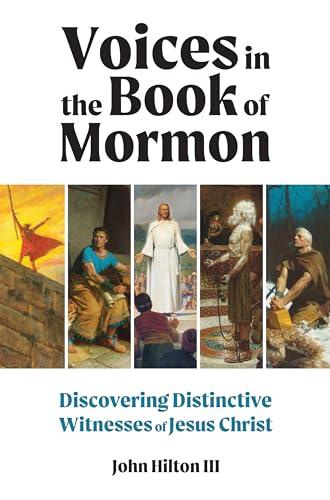
Dr. Hilton discussed his new book, "Voices in the Book of Mormon," which explores the distinctive voices and word prints of different authors within the Book of Mormon. He shared an example of how Jacob uses the word "God" more frequently than "Lord," while Nephi does the opposite, indicating their unique styles of writing.
He's published several books. His latest is called Voices in the Book of Mormon. I think it's behind him there.
— Episode: 1 Nephi 1-5 Part 1 • Dr. John Hilton III...
Episode: 1 Nephi 1-5 Part 1 • Dr. John Hilton III • Jan 8 -...
Dr. Hilton discussed his new book, "Voices in the Book of Mormon," which explores the distinctive voices and word prints of different authors within the Book of Mormon. He shared an example of how Jacob uses the word "God" more frequently than "Lord," while Nephi does the opposite, indicating their unique styles of writing.
He's published several books. His latest is called Voices in the Book of Mormon. I think it's behind him there.
It's something I'm super excited about. Many years ago, my grandfather studied word prints in the Book of Mormon.
Some people might be familiar with word prints, kind of statistically different patterns and how people speak.
We'll look at Nephi's voice mostly today, but when we get to Jacob, who speaks both in 2 Nephi and in the Book of Jacob, his voice is statistically different than Nephi's.
Jacob will use the word anxiety more than any other person in the Book of Mormon.
Episode: 1 Nephi 1-5 Part 1 • Dr. John Hilton III • Jan 8 -...
Dr. Hilton is excited about his book, which looks at distinctive voices in the Book of Mormon, such as Nephi and Jacob, based on their use of specific words and phrases. He explained how Jacob uses the word "God" more often than "Lord" while Nephi does the opposite, and how Jacob uses the word "anxiety" more than any other individual in the Book of Mormon.
Many years ago, my grandfather studied word prints in the Book of Mormon. Some people might be familiar with word prints, kind of statistically different patterns and how people speak. Once I became a religion professor at BYU, I started picking up some of the threads of that research. And it's really fascinating to see distinctive voices.
We'll look at Nephi's voice mostly today, but when we get to Jacob, who speaks both in 2 Nephi and in the Book of Jacob, his voice is statistically different than Nephi's. Here's just one simple little example. Think of the words God and Lord.
For me, I would think of those as interchangeable terms, but Jacob uses the word God more often than Lord, and Nephi's the reverse. When you look at 2 Nephi 9 and 10, this is right in the middle of all of Nephi's writings, but it's Jacob who's speaking.
In those two chapters, you get God way more than Lord, whereas in 2 Nephi 4, 5, 11, when Nephi's speaking, you get Lord more than God. I definitely wouldn't base my testimony of the Book of Mormon on little statistical nuances like this, but it's really cool.
Some of them are, I think, more intricate. Jacob will use the word anxiety more than any other person in the Book of Mormon. By looking specifically with the lens of the voice of the person who's speaking, you start to feel the distinctive witnesses of Jesus Christ.