
Podcast
followHIM
The book discusses the idea that if God is susceptible to immense pain, he is also capable of greater happiness. The presence of suffering serves God's master plan to maximize joy and bring to pass eternal life.
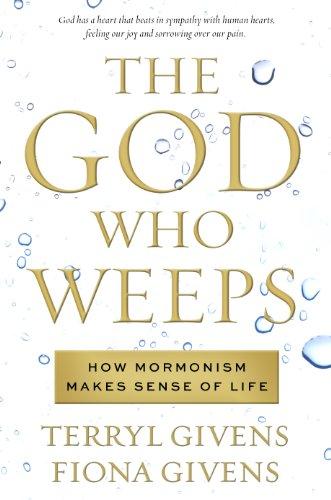
It's from The God Who Weeps by Terrell and Fiona Gibbons.
— Episode: 2 Nephi 1-2 Part 2 • Dr. Lili Anderson •...
Episode: 2 Nephi 1-2 Part 2 • Dr. Lili Anderson • Feb 5 - F...
The book discusses the idea that if God is susceptible to immense pain, he is also capable of greater happiness. The presence of suffering serves God's master plan to maximize joy and bring to pass eternal life.
It's from The God Who Weeps by Terrell and Fiona Gibbons.
In the garden story, good and evil are found on the same tree, not in separate orchards.
Good and evil give meaning and definition to each other.
If God, and this speaks to the opposition as well that Lehi talks about, so I'm kind of overlapping here a little bit.
If God like us is susceptible to immense pain, he is like us the greater in his capacity for happiness.
The presence of such pain serves the larger purpose of God's master plan, which is to maximize the capacity for joy.
Or in other words, to bring to pass the immortality and eternal life of man.
He can no more foster those ends in the absence of suffering and evil than one could find the traction to run or the breath to sing in the vacuum of space.
God does not instigate pain or suffering, but he can weave it into his purposes.
God's power rests not on totalizing omnipotence, but on his ability to alchemize suffering, tragedy and loss into wisdom, understanding and joy.