
Podcast
followHIM
The book was highlighted as a valuable commentary on the Book of Mormon, emphasizing Christ as the central theme and exploring concepts such as Jesus’s dual role as Father and Son, obedience, and the olive‑tree allegory of redemption. It was discussed by several hosts, including Dr. John Hilton and Dr. Ryan Sharp, who cited Elder Holland’s explanations and praised its insights into scriptural passages like Isaiah and Doctrine and Covenants. Listeners were presented with the view that the title offered deep doctrinal insight and was strongly endorsed as essential reading.
Episode: Mosiah 11-17 Part 2 • Dr. Ryan Sharp • May 13-19 •...
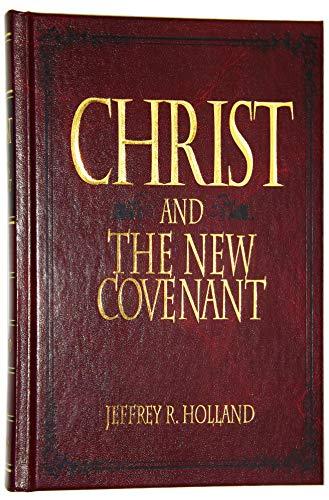
Elder Holland referred to this book in his explanation of how Jesus is both the Father and the Son, explaining that Jesus is both spiritual and physical son of God, and was given authority.
Besides being both the spiritual and physical Son of God, and in addition to acting with divine investiture of authority, another way Hank that he is the Father, Jesus claimed a major portion of this divine fatherly power through the fundamental gospel principle of obedience. Christ's final triumph and ultimate assumption of godly powers came not because he had a divine parent, not because he was given authority from the beginning, but ultimately because he was perfectly obedient. The flesh, the mortal side, submitting to his divine purpose.
Episode: Jacob 5-7 Part 1 • Dr. Matthew L. Bowen • April 8...
Elder Holland is quoted as saying that the atonement is hard, demanding, and deeply painful work for both the Lord of the vineyard and the trees, like the work of redemption always is. It involves digging, dunging, watering, nourishing, pruning, and grafting.
Clearly this at one moment is hard, demanding, and at times deeply painful work, not just for the Lord of the vineyard, but for the trees too, as the work of redemption always is. There is digging and dunging. There was watering and nourishing and pruning. And there was always the endless approaches to grafting all to one saving end, that the trees of the vineyard would, quote, thrive exceedingly and become, quote, one body. The fruits being equal, unquote, with the Lord of the vineyard having, quote, preserved unto himself the fruit. Now starting page 166.
Episode: Mosiah 11-17 Part 2 • Dr. Ryan Sharp • May 13-19 •...
Elder Holland talked about Jesus being the Father in his book, "Christ and the New Covenant," and highlighted the role of obedience in Jesus's assumption of divine power.
Besides being both the spiritual and physical Son of God, and in addition to acting with divine investiture of authority, another way Hank that he is the Father, Jesus claimed a major portion of this divine fatherly power through the fundamental gospel principle of obedience. Christ's final triumph and ultimate assumption of godly powers came not because he had a divine parent, not because he was given authority from the beginning, but ultimately because he was perfectly obedient. The flesh, the mortal side, submitting to his divine purpose.
Episode: Jacob 5-7 Part 1 • Dr. Matthew L. Bowen • April 8...
The book uses the olive tree allegory to illustrate the work of redemption as a demanding and painful process for both the Lord and the trees, emphasizing the need for grafting and uniting all to one saving end.
Clearly this at one moment is hard, demanding, and at times deeply painful work, not just for the Lord of the vineyard, but for the trees too. As the work of redemption always is. There is digging and dunging. There was watering and nourishing and pruning. And there was always the endless approaches to grafting all to one saving end, that the trees of the vineyard would, quote, thrive exceedingly and become, quote, one body. The fruits being equal, unquote, with the Lord of the vineyard having, quote, preserved unto himself the fruit.
Episode: 1 Nephi 1-5 Part 1 • Dr. John Hilton III • Jan 8 -...
Dr. Hilton mentioned Elder Holland's book, "Christ and the New Covenant." He highlighted that the Book of Mormon is referred to as the "New Covenant" in the Doctrine and Covenants, and Elder Holland's book is a commentary on the Book of Mormon, emphasizing its central theme of Jesus Christ.
In Elder Holland's book, Christ and the New Covenant, I tell my students, did you know the Book of Mormon is called the New Covenant in the Doctrine and Covenants?
It says, the first chapter of the first book of Nephi begins with Lehi's vision of one descending out of the midst of heaven, and he beheld that his lust was above that of the sun at noonday.
This book spoke of many great marvelous things, including the plain declaration of the coming of a Messiah and also the redemption of the world.
Thus, in the first verses of the first chapter of the first book in the Book of Mormon, the central and undeviating theme is struck.
The central and undeviating theme of the book. That's exactly what you said, John Hilton. This is the point right here. We're not reading to know Nephi, even though that's great, or Mormon, or Jacob. We're reading to get to know Christ.
Episode: 1 Nephi 1-5 Part 1 • Dr. John Hilton III • Jan 8 -...
Dr. Hilton mentioned Elder Holland's book "Christ and the New Covenant," calling it a commentary on the Book of Mormon. He referenced a passage from the book which discussed the central theme of the Book of Mormon, focusing on the premortal Christ and the redemption of the world.
In Elder Holland's book, Christ and the New Covenant, I tell my students, did you know the Book of Mormon is called the New Covenant in the Doctrine and Covenants? Because they might not know this book is Elder Holland's commentary on the Book of Mormon, but it's not called Elder Holland's commentary on the Book of Mormon.
It says, the first chapter of the first book of Nephi begins with Lehi's vision of one descending out of the midst of heaven, and he beheld that his lust was above that of the sun at noonday.
In this vision, the premortal Christ, accompanied by twelve others, brought forth a book in which Lehi was bidden to read.
This book spoke of many great marvelous things, including the plain declaration of the coming of a Messiah and also the redemption of the world. And Elder Holland says, thus, in the first verses of the first chapter of the first book in the Book of Mormon, the central and undeviating theme is struck.
Episode: Isaiah 1-12 • Part 2: Dr. Jason Combs
Elder Holland's book was referenced for his interpretation of Isaiah's Emmanuel prophecy as having both immediate and greater fulfillments, relating to Isaiah's wife and Jesus Christ respectively.
there are plural or parallel elements to this prophecy as with so much of Isaiah's writing. The most immediate meaning was probably focused on Isaiah's wife, a pure and good woman who brought forth a son about this time, the child becoming a type and shadow of the greater later fulfillment of that prophecy that would be realized in the birth of Jesus Christ.
The symbolism in the dual prophecy acquires additional importance when we realize that Isaiah's wife may have been of royal blood and therefore her son would have been royalty of the line of David. Here again is a type, a prefiguration of the greater Immanuel, Jesus Christ, the ultimate son of David, the royal King who would have been born of a literal virgin.
Episode: Doctrine & Covenants 84 Part 2 : Dr. Barbara Gardn...
It was mentioned that Elder Holland wrote his own Book of Mormon commentary called 'Christ and the New Covenant'. This commentary connects to a phrase in Doctrine and Covenants 84, referring to the 'new covenant'.
And this is the phrase here in verse 57, until they remember the new covenant even the Book of Mormon. So it's another name for it. It's interesting that it's a new covenant.